Silver Dollars & Trade Dollars of the United States - A Complete Encyclopedia
Q. David Bowers
1878-CC Trade Dollar: Market Value
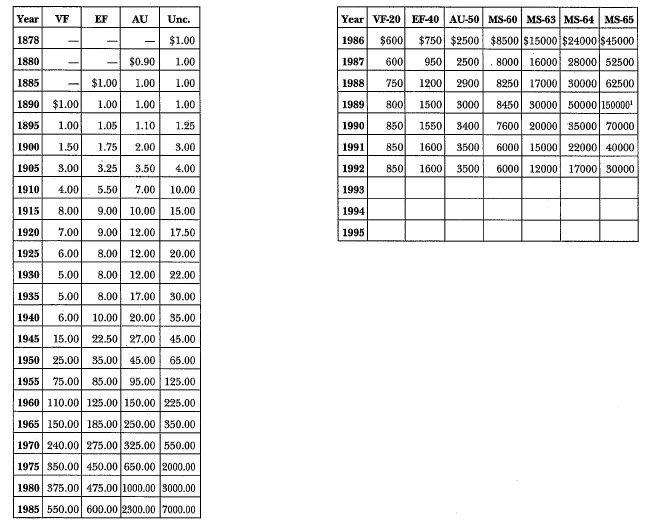
(1 $150,000 represents the Coin World "Trends" price on December 27, 1989.)
1878-CC Trade Dollar: Summary of Characteristics
Business Strikes:
Enabling legislation: Act of February 12, 1873
Designer: William Barber
Weight: 420 grains
Composition: .900 silver, .100 copper
Melt-down (silver value) in year minted: $0.9070
Dies prepared: Obverse: 2 or more; Reverse: 3 or more (including at least one held over from 1877)
Business strike mintage: 97,000 (44,148 melted; net mintage available for distribution: 52,852, probably all from the January mintage). Delivery figures by month: January: 56,000; February: 41,000.
Estimated quantity melted: Possibly nearly half (or even more) of the mintage, as part of 44,148 trade dollars melted at the Carson City Mint on July 19, 1878.
Approximate population MS-65 or better: 6 to 10 (URS-4)
Approximate population MS-64: 20 to 40 (URS-6)(This figure appears anomalous in relation to MS-63. The earlier-quoted footnote comment from Andrew P. Harris, M.D., indicates four resubmissions tbat should be canceled. If tbis is done, tbe population estimate drops to, say, 15 to 35.)
Approximate population MS-63: 15 to 25 (URS-5)
Approximate population MS-60 to 62: 20 to 40 (URS-6)
Approximate population VF-20 to AU-58: 125-250 (URS-8)
Characteristics of striking: Usually seen well struck and, in Mint State grades, with smooth, satiny lustre.
Known hoards of Mint State coins: None
Rarity with original Chinese chopmark(s): Rarest of all chop marked trade dollars.
Proofs:
None
Commentary
Very few were ever chopmarked; apparently, most remained in the United States. 1878-CC is considered by numismatists to be the key issue among business strike trade dollars. This is true except in grades of MS-64 and higher.