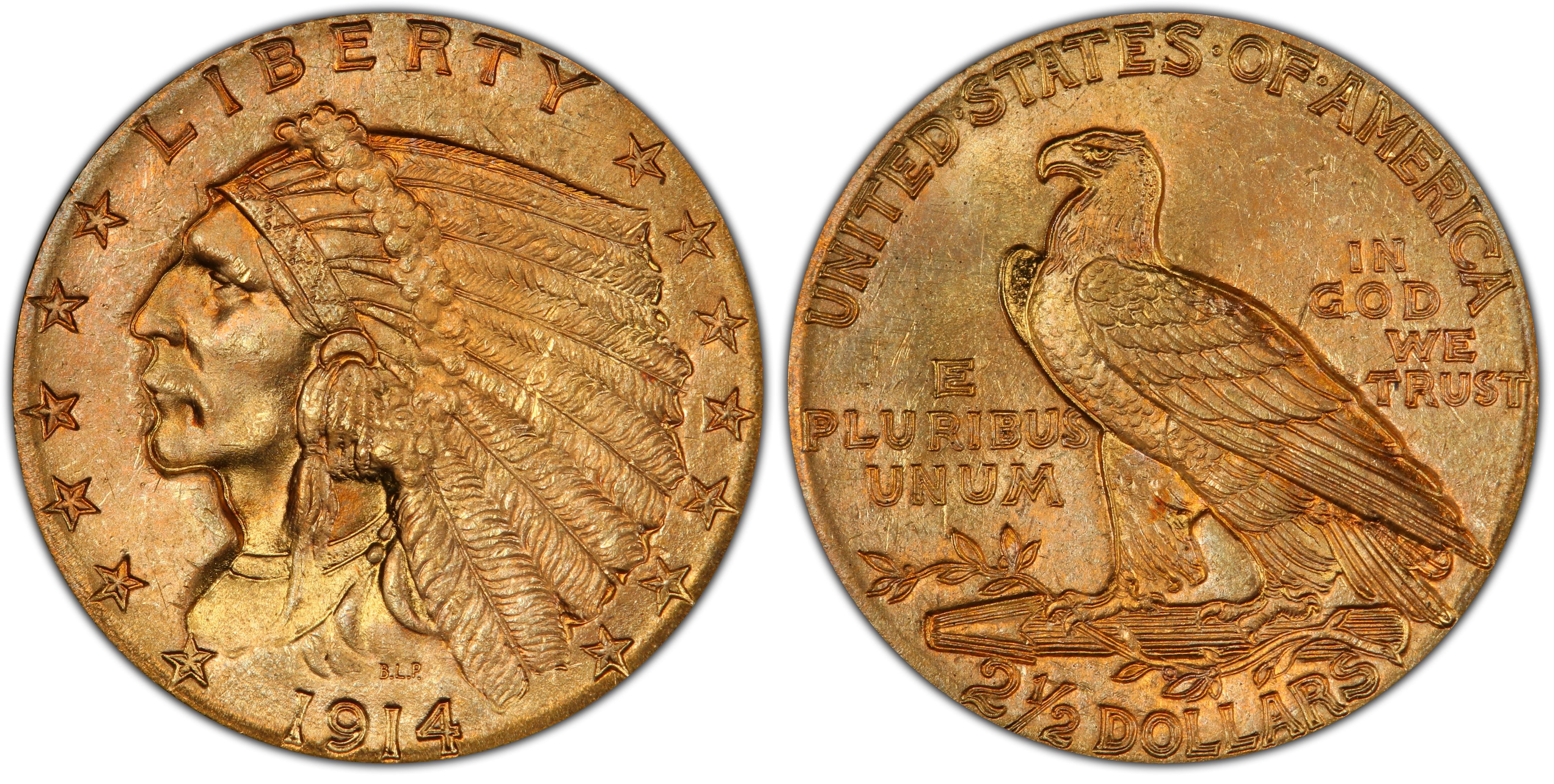

PCGS MS66

PCGS MS65+
- PCGS #:
- 7946
- Designer:
- Bela Lyon Pratt
- Edge:
- Reeded
- Diameter:
- 18.00 millimeters
- Weight:
- 4.18 grams
- Mintage:
- 240,000
- Mint:
- Philadelphia
- Metal:
- 90% Gold, 10% Copper
- Auction Record:
- $168,000 • MS67 • 01-19-2025 • Heritage Auctions
Major Varieties
- 1914 $2.50
Go To Grade
Current Auctions - PCGS Graded
Current Auctions - NGC Graded
For Sale Now at Collectors Corner - PCGS Graded
For Sale Now at Collectors Corner - NGC Graded
Rarity and Survival Estimates Learn More
| Survival Estimate | |
|---|---|
| All Grades | 15,666 |
| 60 or Better | 10,000 |
| 65 or Better | 105 |
| Numismatic Rarity | |
|---|---|
| All Grades | R-2.8 |
| 60 or Better | R-3.0 |
| 65 or Better | R-7.9 |
| Relative Rarity By Type All Specs in this Type | |
|---|---|
| All Grades | 2 / 15 |
| 60 or Better | 2 / 15 |
| 65 or Better | 3 / 15 |
| Relative Rarity By Series All Specs in this Series | |
|---|---|
| All Grades | 2 / 15 |
| 60 or Better | 2 / 15 |
| 65 or Better | 3 / 15 |
Condition Census What Is This?
|
#1 MS67 PCGS grade
Atherton Family Collection - Heritage 3/2010:2184, $103,500 |
| #2 MS66 PCGS grade |
|
#2 MS66 PCGS grade
|
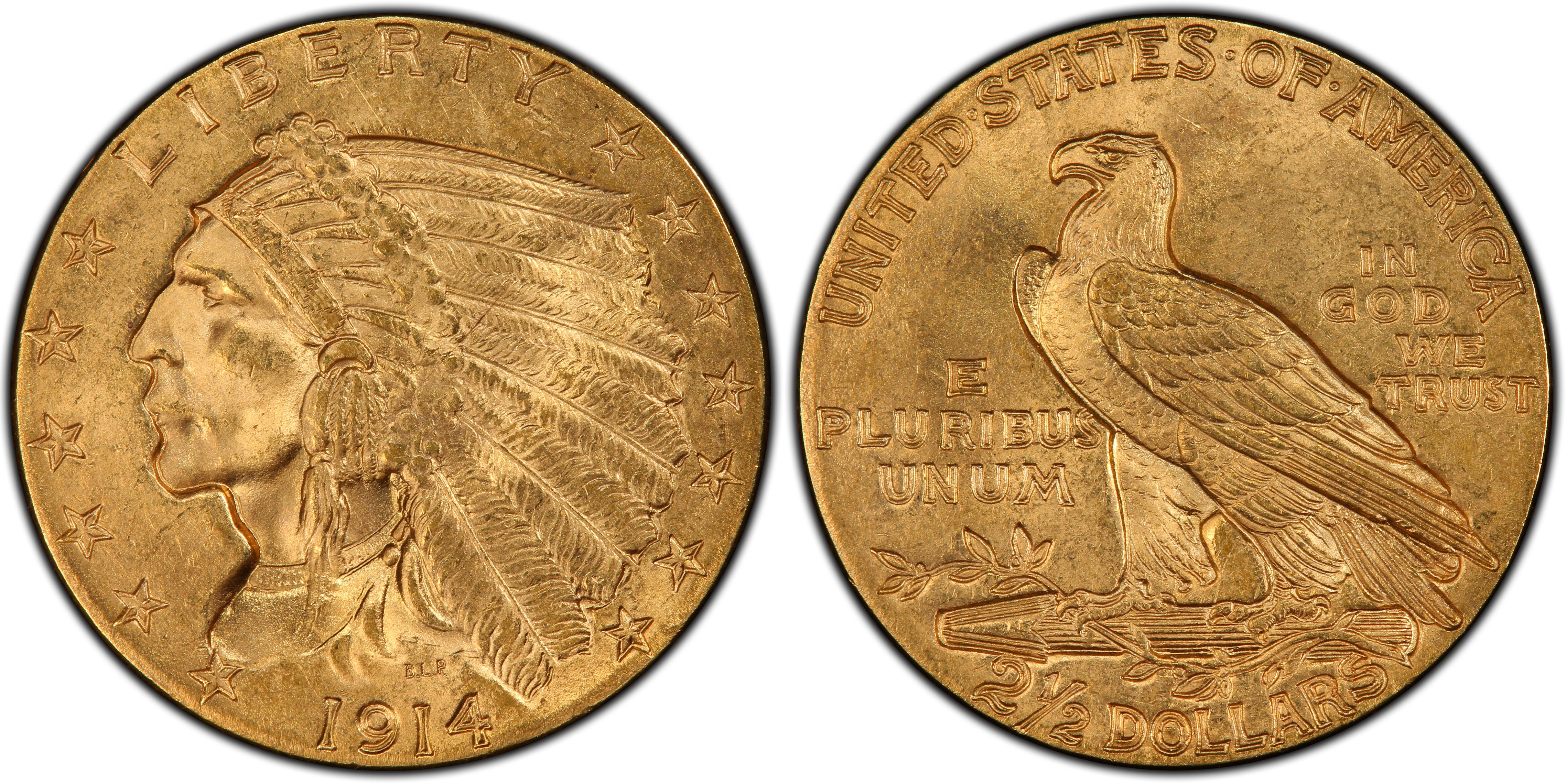 #4 MS65+ PCGS grade
|
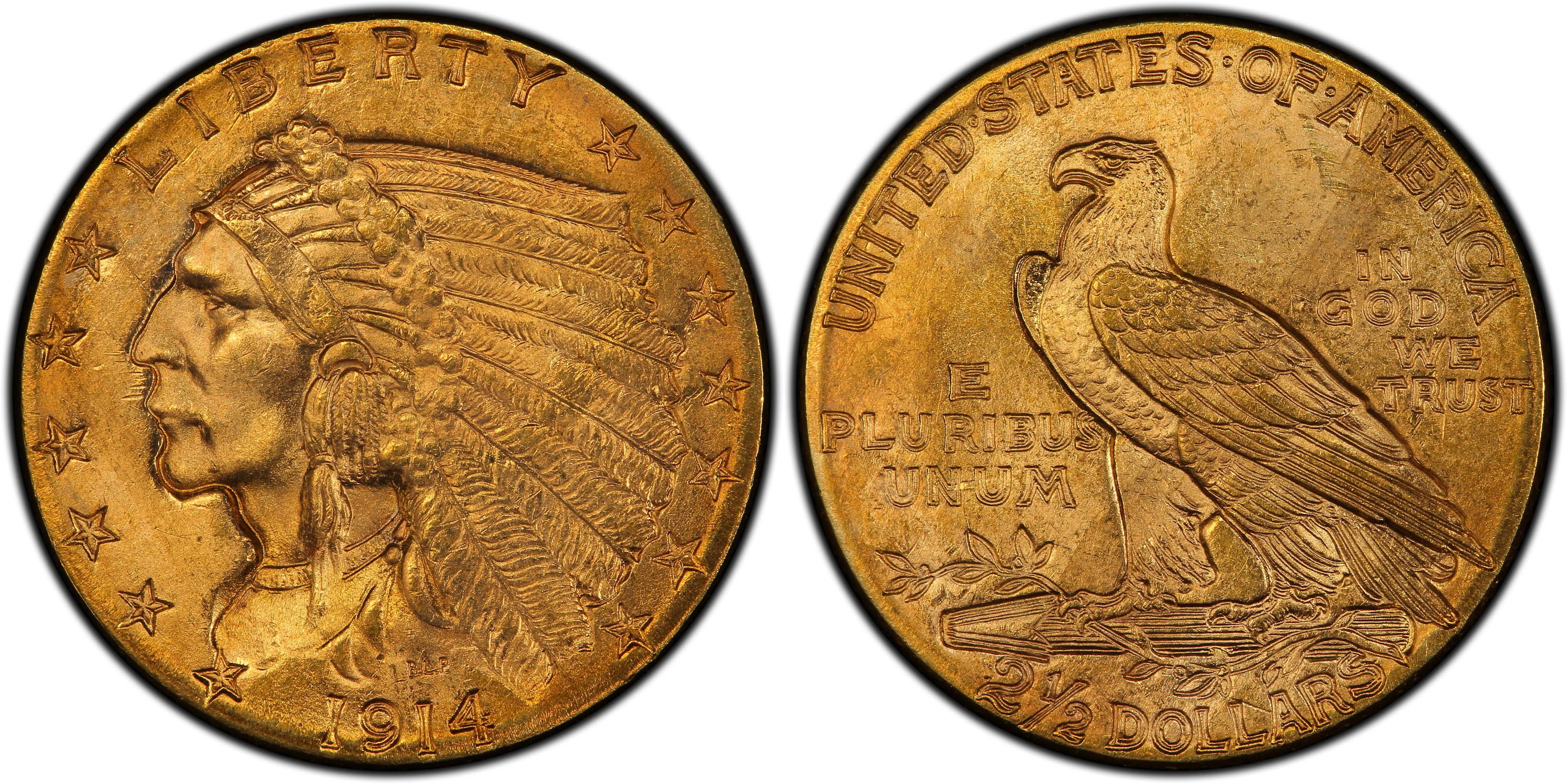 #5 MS65 PCGS grade
|
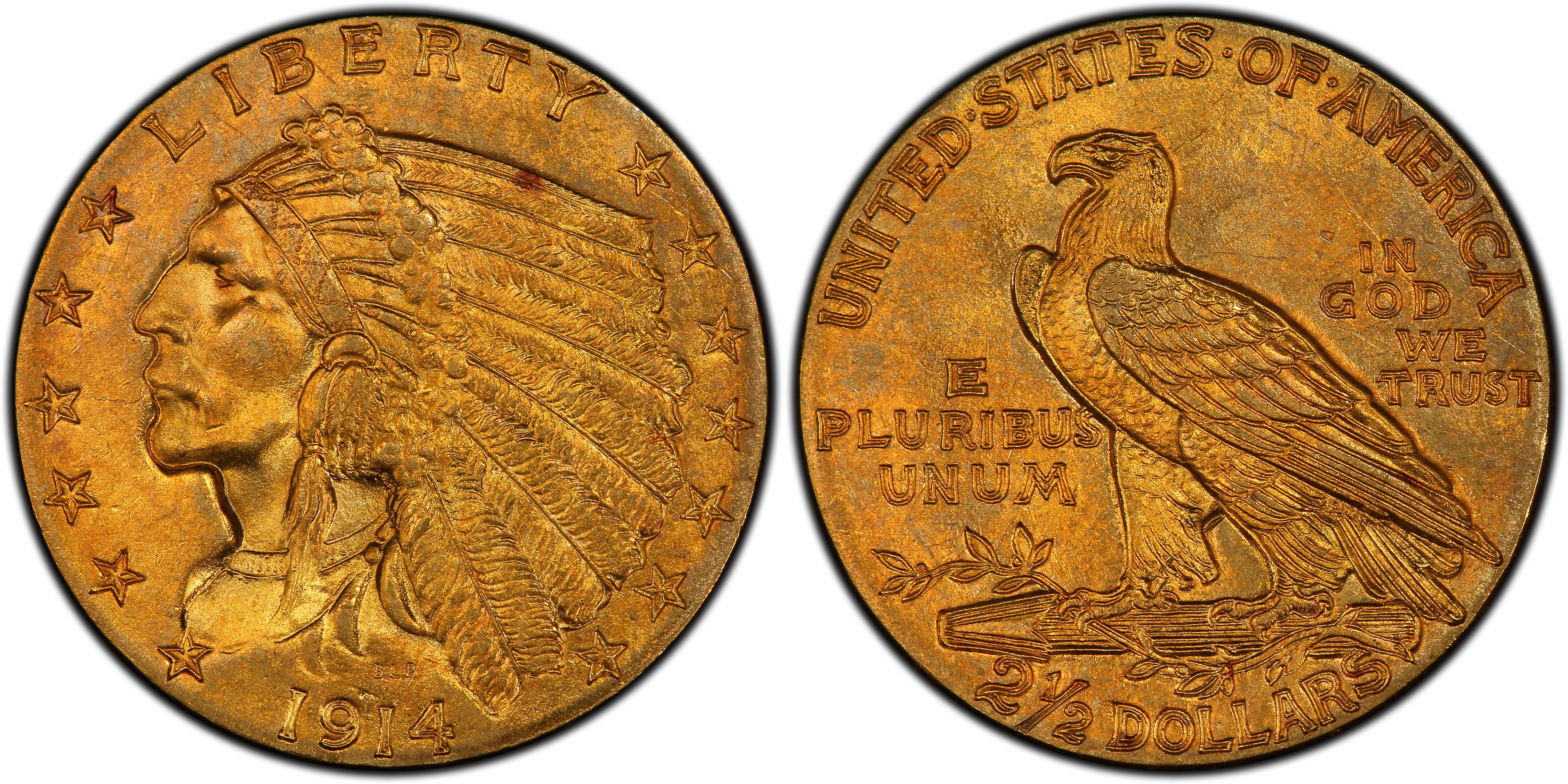 #5 MS65 PCGS grade
|
| #5 MS65 PCGS grade |
| #5 MS65 PCGS grade |
| #5 MS65 PCGS grade |
| #5 MS65 PCGS grade |
David Akers (1975/88):
In terms of overall rarity, the 1914 is the second rarest issue of the series, only slightly less rare than the lower mintage, higher priced 1911-D. However, in gem condition, i.e. MS-65 or better, the 1914 may well be just as rare as the 1911-D and there are some who feel it may indeed be even more rare. In my experience the 1914 is available a little more often in MS-65 than the 1911-D but one is more likely to find a superb 1911-D (there are a few around) than a superb 1914 (are there any?).
The typical 1914 is very sharply struck with above average luster for the series. Some specimens show evidence of die buckling near the rims but most do not. The surfaces are nearly always very finely granular and the color is most often a light to medium greenish yellow gold. However, a number of examples also exist that a light rose or coppery color.
The typical 1914 is very sharply struck with above average luster for the series. Some specimens show evidence of die buckling near the rims but most do not. The surfaces are nearly always very finely granular and the color is most often a light to medium greenish yellow gold. However, a number of examples also exist that a light rose or coppery color.