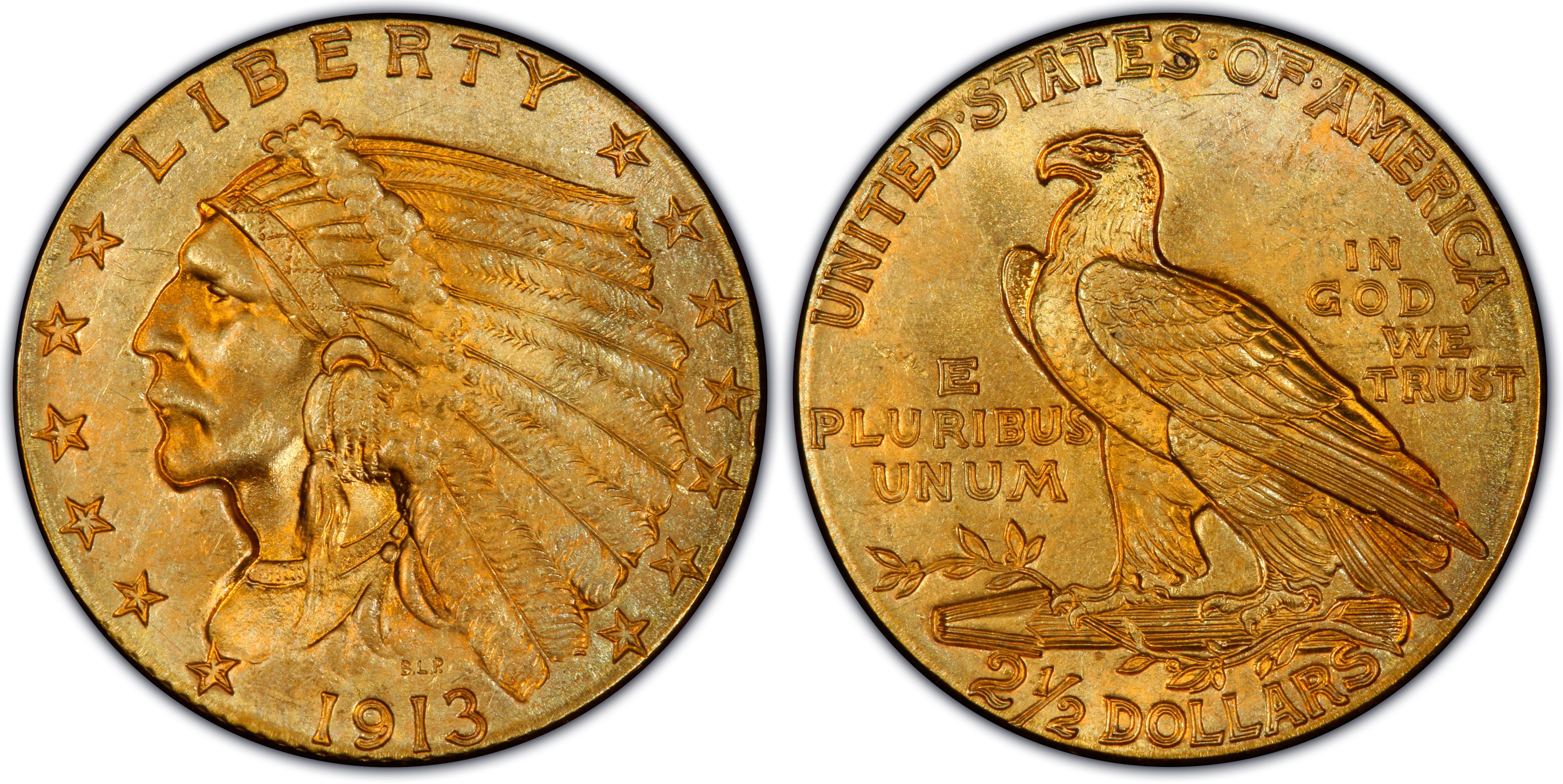
PCGS MS66

PCGS MS66
- PCGS #:
- 7945
- Designer:
- Bela Lyon Pratt
- Edge:
- Reeded
- Diameter:
- 18.00 millimeters
- Weight:
- 4.18 grams
- Mintage:
- 722,000
- Mint:
- Philadelphia
- Metal:
- 90% Gold, 10% Copper
- Auction Record:
- $38,400 • MS66 • 07-17-2022 • Heritage Auctions
Major Varieties
- 1913 $2.50
Go To Grade
Current Auctions - PCGS Graded
Current Auctions - NGC Graded
For Sale Now at Collectors Corner - PCGS Graded
For Sale Now at Collectors Corner - NGC Graded
Rarity and Survival Estimates Learn More
| Survival Estimate | |
|---|---|
| All Grades | 40,333 |
| 60 or Better | 24,833 |
| 65 or Better | 210 |
| Numismatic Rarity | |
|---|---|
| All Grades | R-2.5 |
| 60 or Better | R-2.7 |
| 65 or Better | R-6.9 |
| Relative Rarity By Type All Specs in this Type | |
|---|---|
| All Grades | 8 / 15 TIE |
| 60 or Better | 6 / 15 TIE |
| 65 or Better | 5 / 15 |
| Relative Rarity By Series All Specs in this Series | |
|---|---|
| All Grades | 8 / 15 TIE |
| 60 or Better | 6 / 15 TIE |
| 65 or Better | 5 / 15 |
Condition Census What Is This?
 #1 MS66+ PCGS grade
Stack's/Bowers 11/2013:2183, $28,200 - D.L. Hansen Collection |
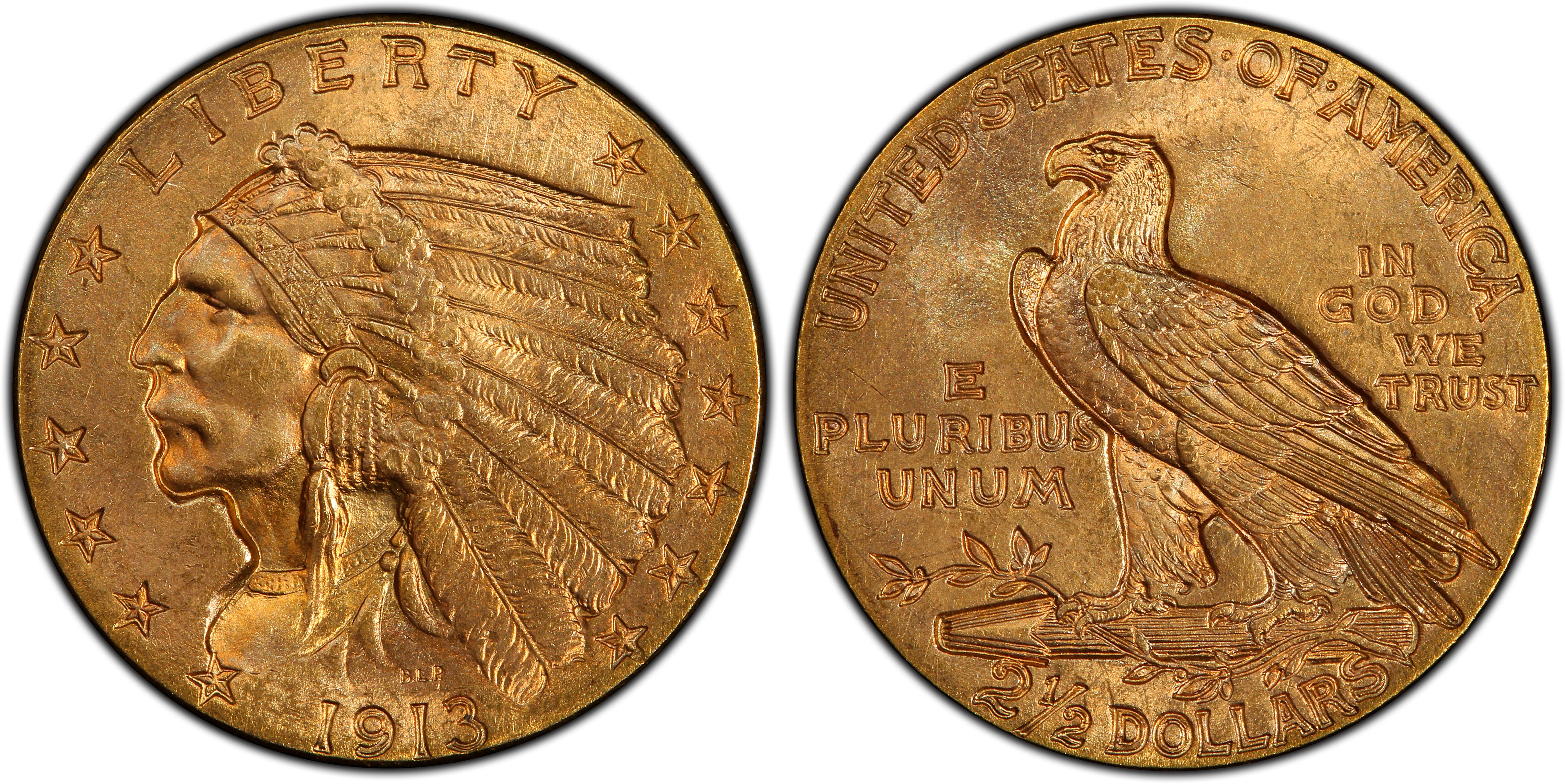 #2 MS66 PCGS grade
Donald A. Kutz $2 1/2 Indian Collection |
|
#2 MS66 PCGS grade
Legend Rare Coin Auctions 12/2016:443, $17,038 |
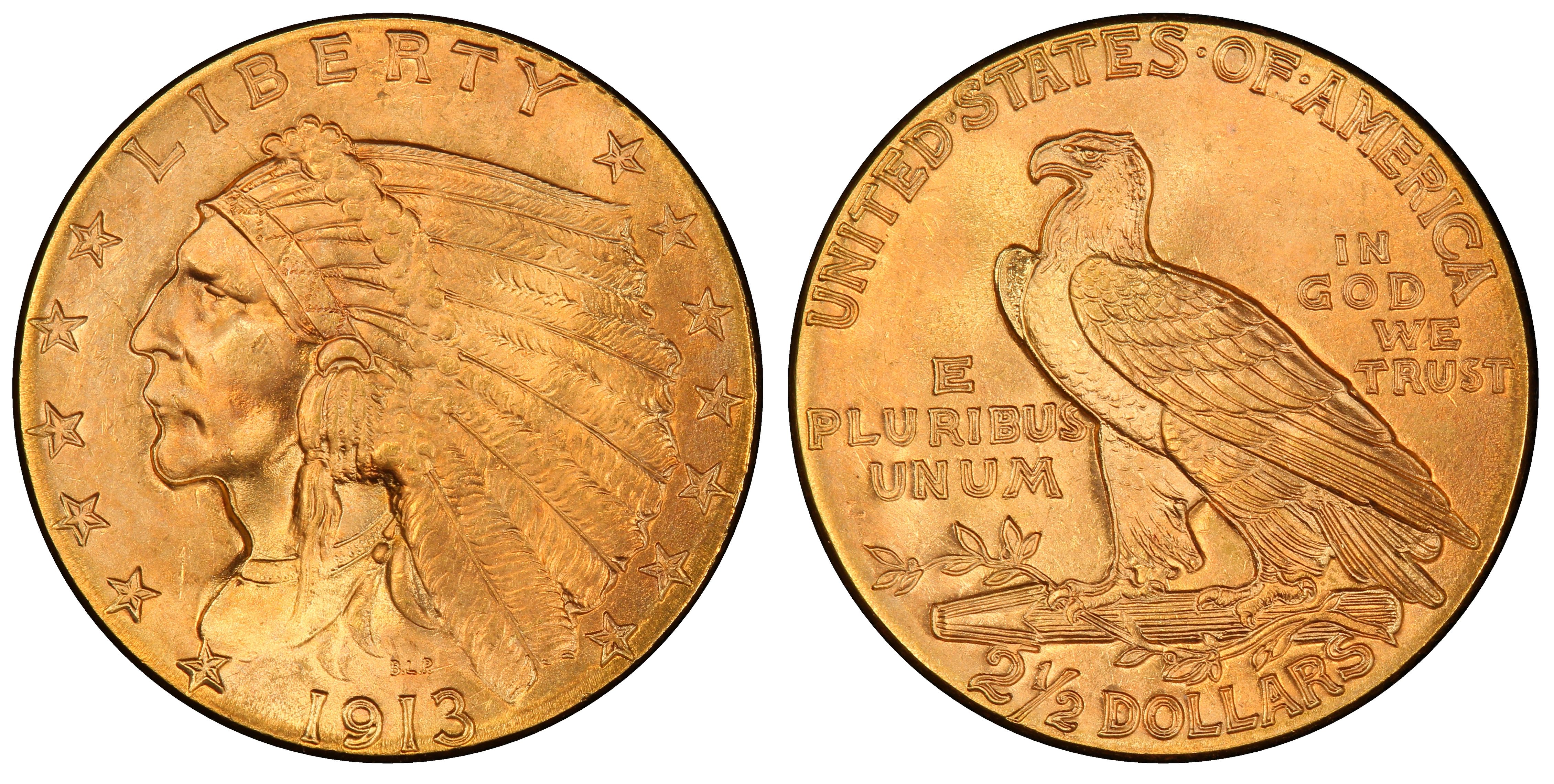 #2 MS66 PCGS grade
|
| #2 MS66 PCGS grade |
| #2 MS66 PCGS grade |
| #2 MS66 PCGS grade |
| #2 MS66 PCGS grade |
| #2 MS66 PCGS grade |
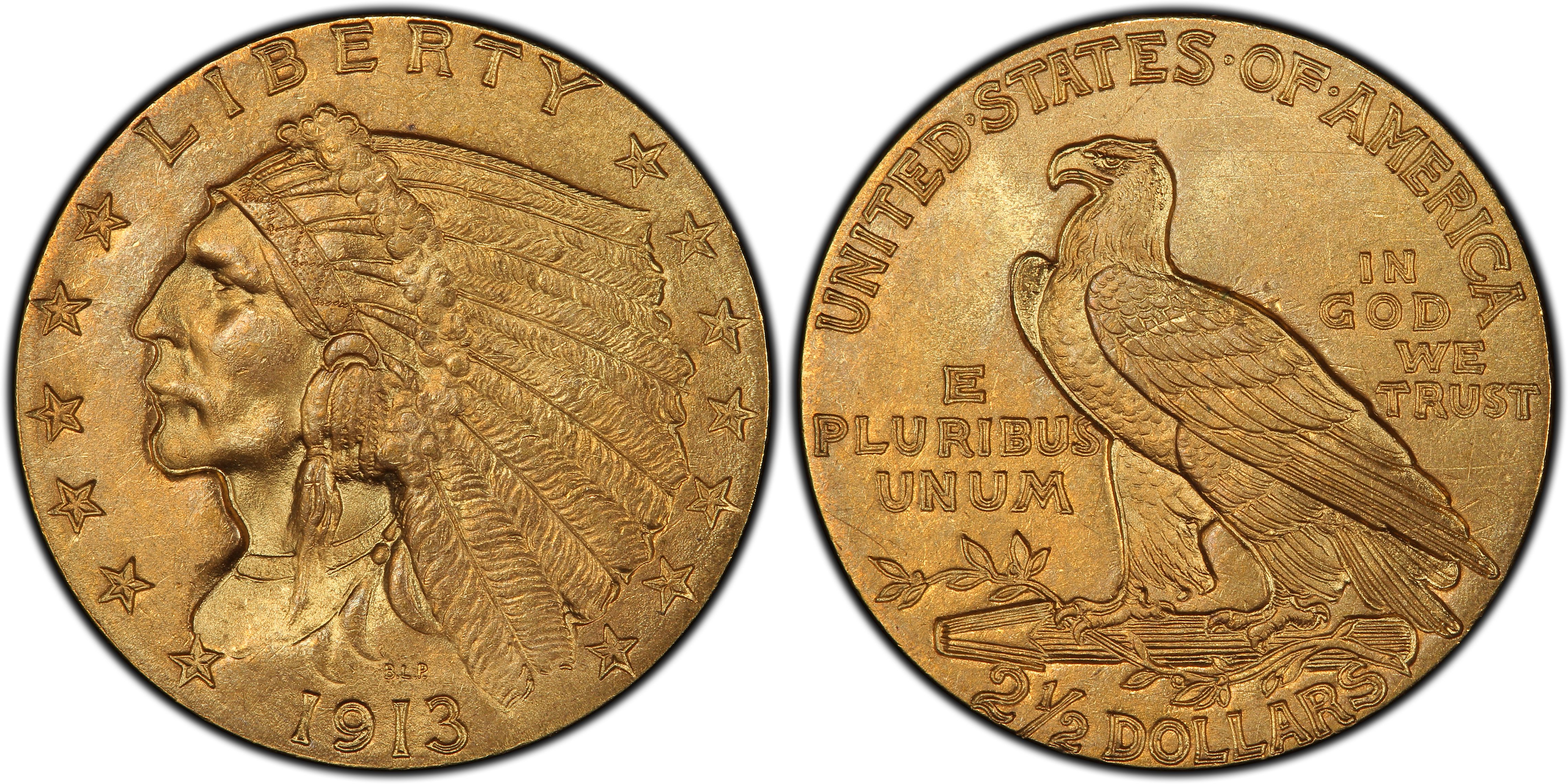 #10 MS65+ PCGS grade
|
David Akers (1975/88):
This is another unappreciated issue. It is only marginally less rare than the 1912 overall (the distinction between this issue and the 1912, 1909, 1910 and 1911 is really very slight) but in gem condition (MS-65 or better) it is just as rare, i.e. extremely difficult to locate. As with the 1912. a few superb (MS-67) quality examples are known but I do not know of any that have traded hands in recent years.
The 1913 is generally well struck with decidedly above average lustre for the series, certainly more lustre than the typical 1911 or 1912 has for example. As with almost all of the Indian Head $2.5 and $5 issues, the surfaces are somewhat granular as a rule. Color is usually a light to medium yellow gold as on the 1909 and 1910.
The 1913 is generally well struck with decidedly above average lustre for the series, certainly more lustre than the typical 1911 or 1912 has for example. As with almost all of the Indian Head $2.5 and $5 issues, the surfaces are somewhat granular as a rule. Color is usually a light to medium yellow gold as on the 1909 and 1910.