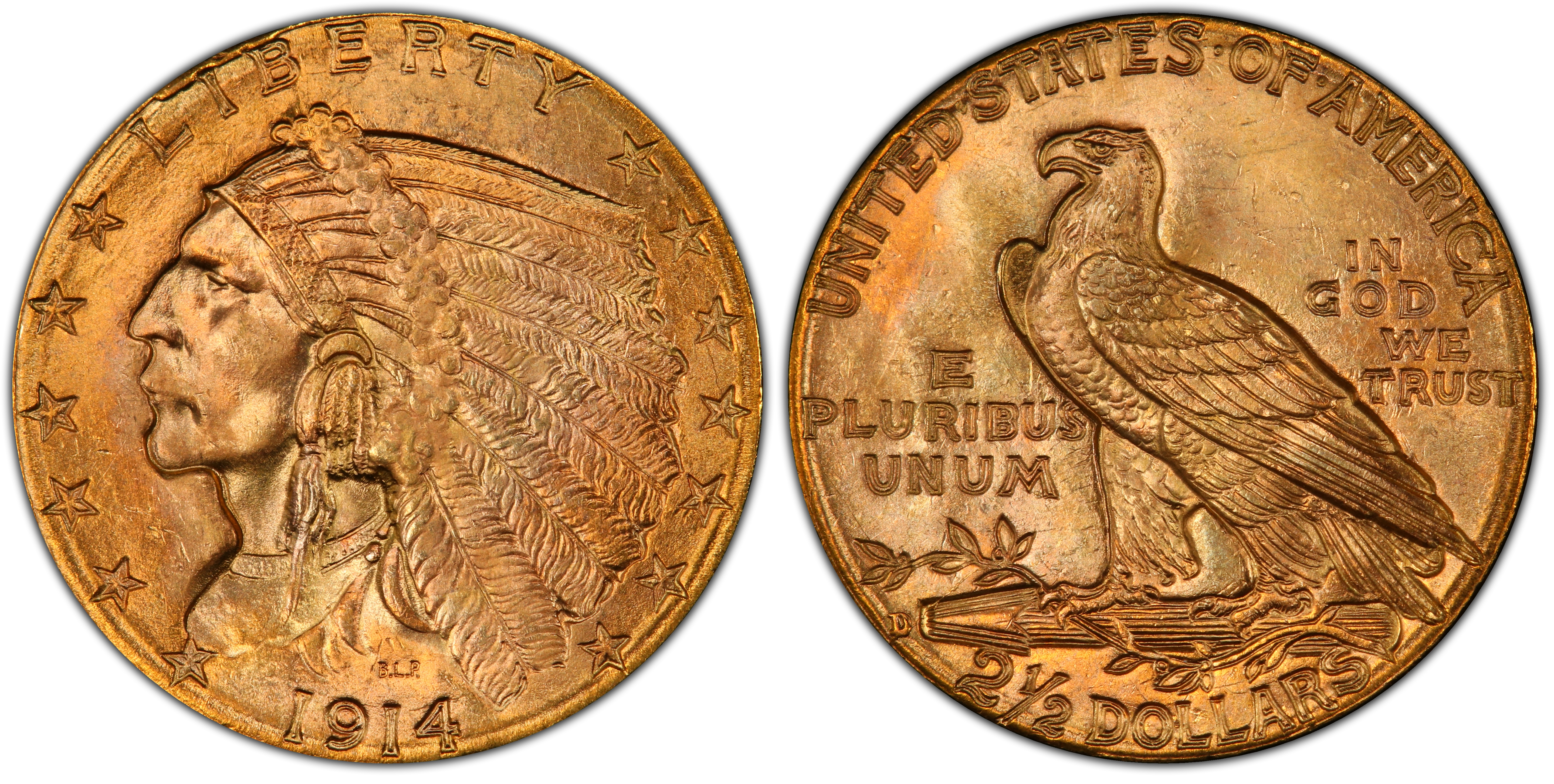
PCGS MS65+

PCGS MS65
- PCGS #:
- 7947
- Designer:
- Bela Lyon Pratt
- Edge:
- Reeded
- Diameter:
- 18.00 millimeters
- Weight:
- 4.18 grams
- Mintage:
- 448,000
- Mint:
- Denver
- Metal:
- 90% Gold, 10% Copper
- Auction Record:
- $80,500 • MS67 • 04-01-2009 • Heritage Auctions
Major Varieties
- 1914-D $2.50
Go To Grade
Current Auctions - PCGS Graded
Current Auctions - NGC Graded
For Sale Now at Collectors Corner - PCGS Graded
For Sale Now at Collectors Corner - NGC Graded
Rarity and Survival Estimates Learn More
| Survival Estimate | |
|---|---|
| All Grades | 35,000 |
| 60 or Better | 21,333 |
| 65 or Better | 80 |
| Numismatic Rarity | |
|---|---|
| All Grades | R-2.6 |
| 60 or Better | R-2.7 |
| 65 or Better | R-8.2 |
| Relative Rarity By Type All Specs in this Type | |
|---|---|
| All Grades | 6 / 15 TIE |
| 60 or Better | 6 / 15 TIE |
| 65 or Better | 2 / 15 |
| Relative Rarity By Series All Specs in this Series | |
|---|---|
| All Grades | 6 / 15 TIE |
| 60 or Better | 6 / 15 TIE |
| 65 or Better | 2 / 15 |
Condition Census What Is This?
|
#1 MS66 estimated grade
Dr. Thaine B. Price Collection - David Akers 5/1998:9 - Superior 2/2000:1023 - Heritage 4/2009:2680, $80,500 |
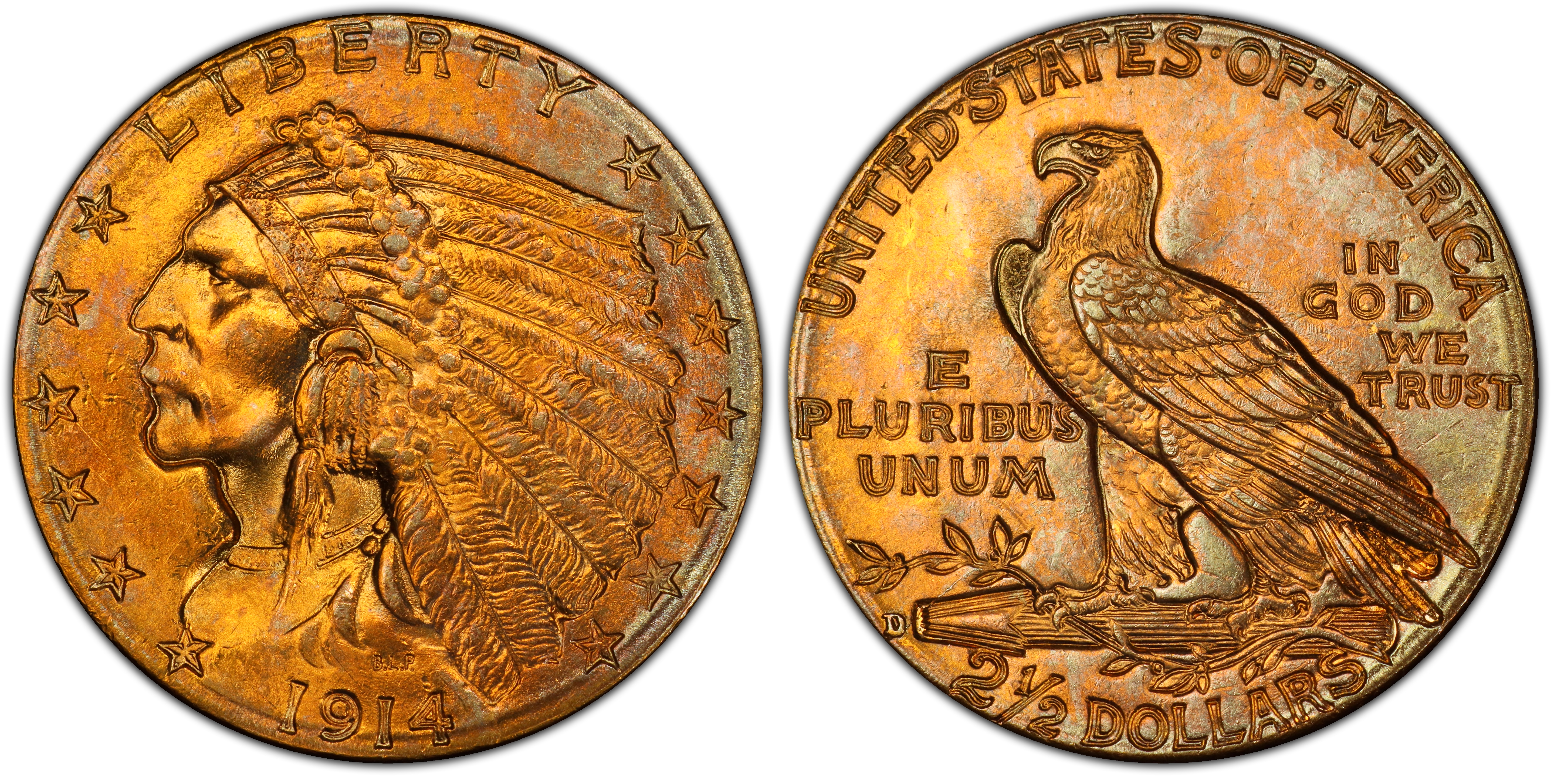
 #2 MS65 PCGS grade
|
 #2 MS65 PCGS grade
|
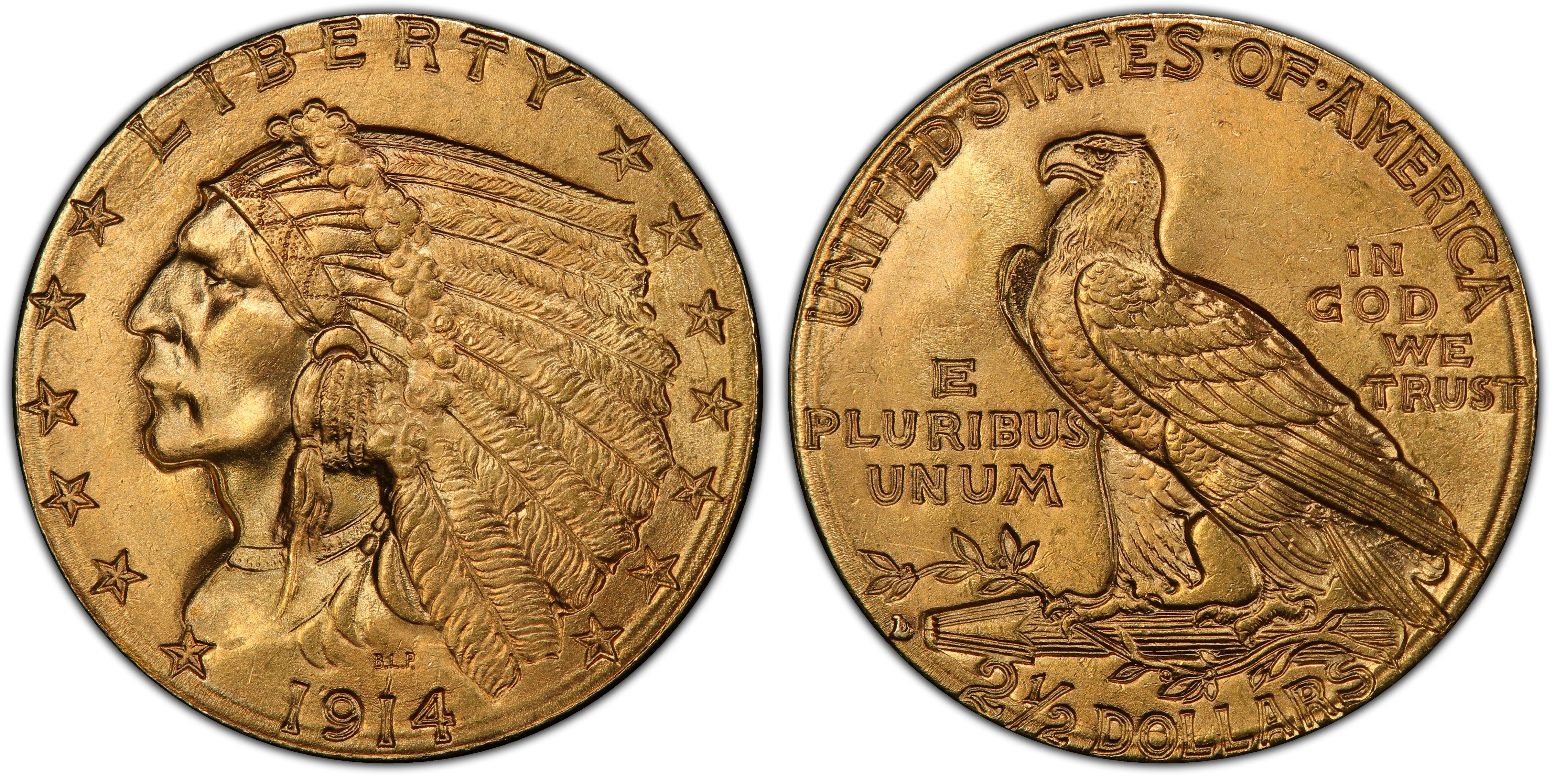 #2 MS65 PCGS grade
Heritage 4/2019:4667, $11,400 - Mike & Steve’s Indian Quarter Eagles Collection |
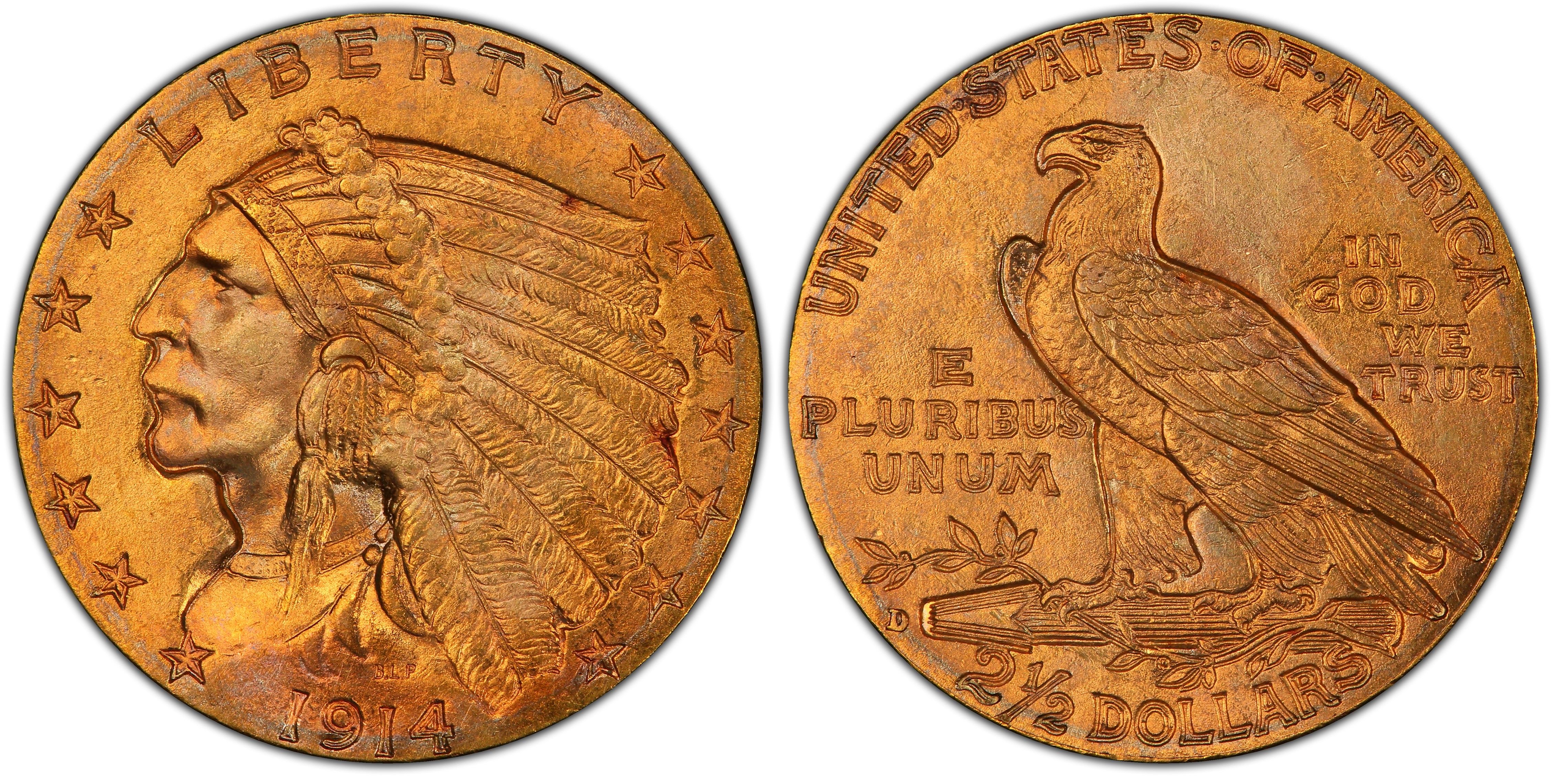 #2 MS65 PCGS grade
|
| #2 MS65 PCGS grade |
| #2 MS65 PCGS grade |
| #2 MS65 PCGS grade |
| #2 MS65 PCGS grade |
| #2 MS65 PCGS grade |
David Akers (1975/88):
The 1914-D is the third rarest issue of the series but there is more of a difference in rarity between it and the two dates ahead of it (1911-D and 1914) than there is between it and the five or six dates that follow it. Low grade Mint State specimens are not hard to find, but the population really drops off quickly after MS-63. I have seen a number of MS-65 pieces but I cannot recall ever seeing a superb MS-67 specimen, although a few have been reported by other specialists in the series. This issue is very underrated in top grade, and I dare say that even most experts have failed to recognize how difficult to find this issue is in MS-65 or better condition.
Not as well struck as the 1914; often softly struck on the eagle's leg and wing and the feathers on the headdress. Less gtranular than the 1911-D or the early Philadelphia Mint issues and generally with very good to excellent lustre. The color is typically a coppery gold but medium yellow gold specimens with a touch of green also exist. The mintmark is usually fairly sharp and clearly defined, much bolder than on most examples of the 1911-D or 1925-D. Some specimens are weak at the borders, again probably the result of buckled dies. Overall, the quality of manufacture of this issue was not to a very high standard, possibly the worst in the series.
Not as well struck as the 1914; often softly struck on the eagle's leg and wing and the feathers on the headdress. Less gtranular than the 1911-D or the early Philadelphia Mint issues and generally with very good to excellent lustre. The color is typically a coppery gold but medium yellow gold specimens with a touch of green also exist. The mintmark is usually fairly sharp and clearly defined, much bolder than on most examples of the 1911-D or 1925-D. Some specimens are weak at the borders, again probably the result of buckled dies. Overall, the quality of manufacture of this issue was not to a very high standard, possibly the worst in the series.