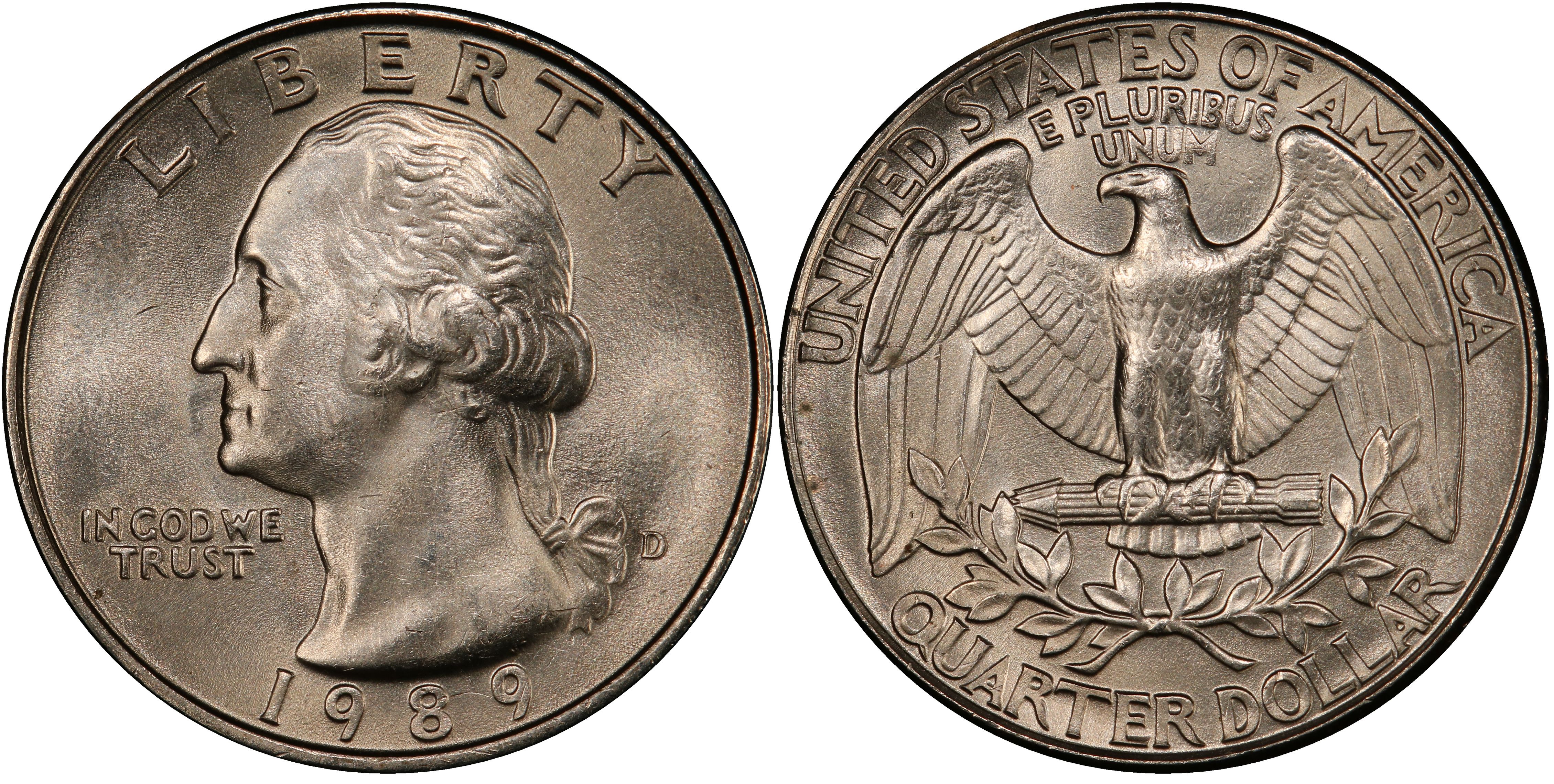
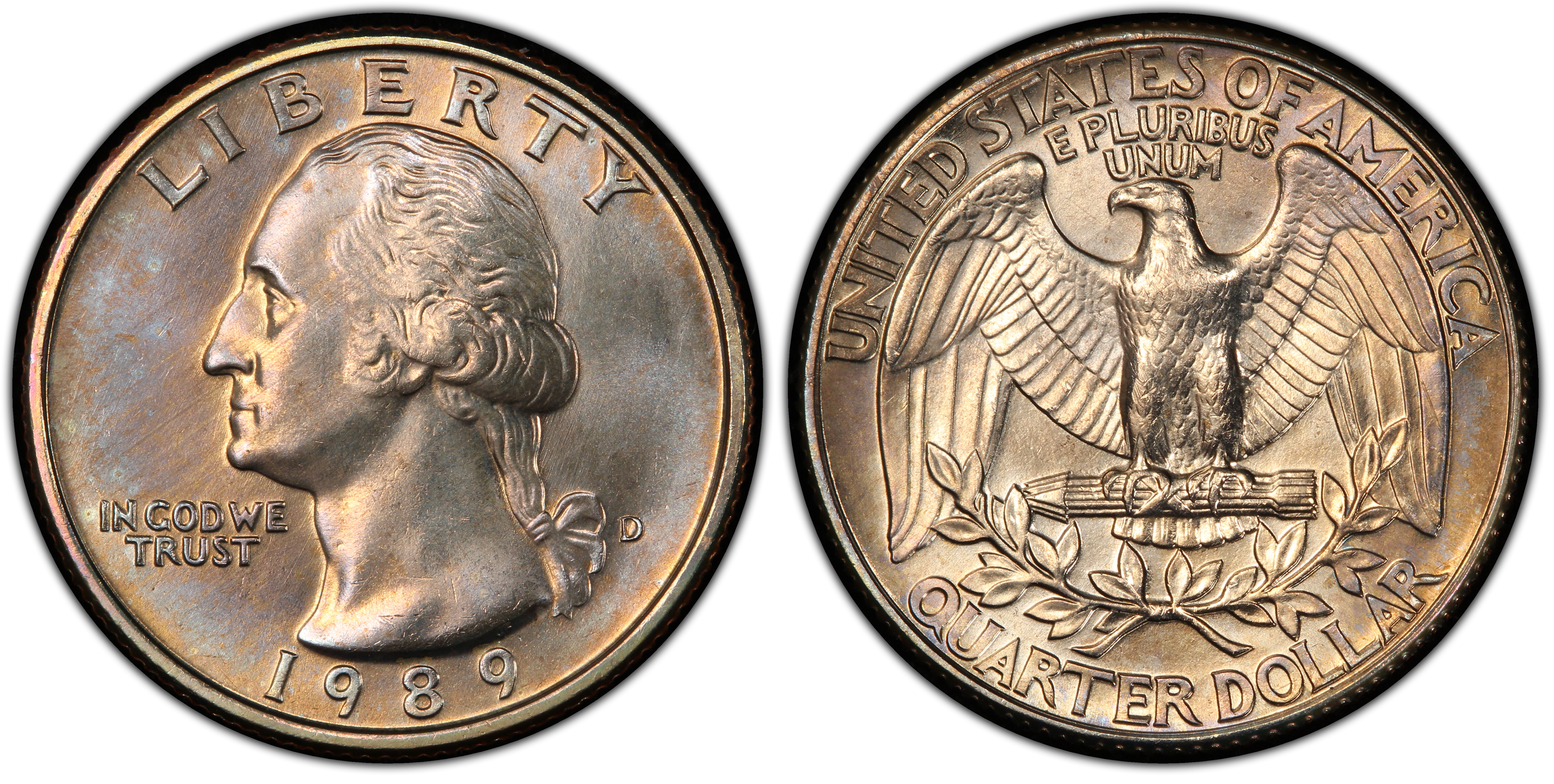
PCGS MS67
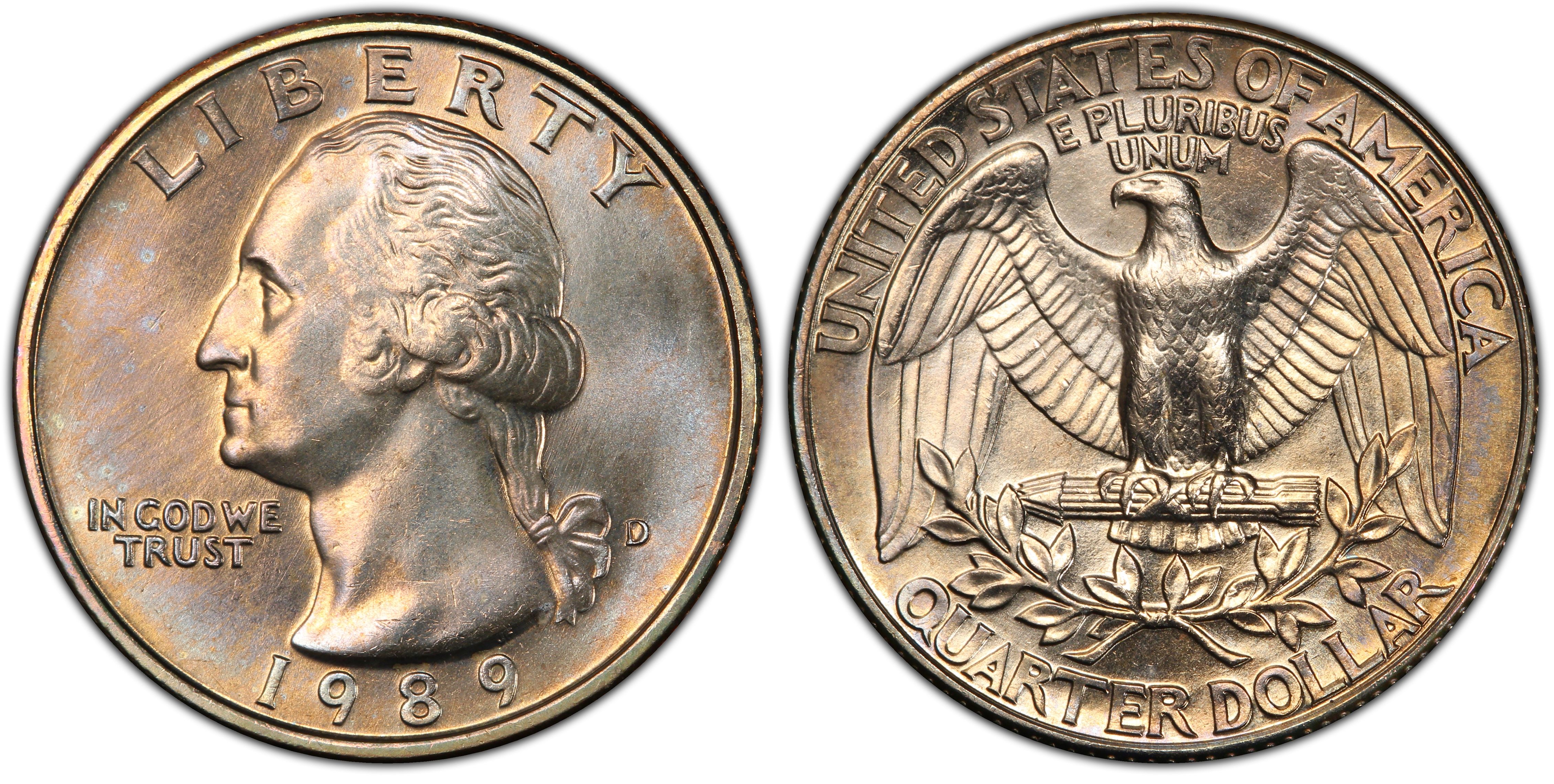
PCGS MS67
- PCGS #:
- 5927
- Designer:
- John Flanagan
- Edge:
- Reeded
- Diameter:
- 24.30 millimeters
- Weight:
- 5.67 grams
- Mintage:
- 896,535,597
- Mint:
- Denver
- Metal:
- 75% Copper, 25% Nickel over a pure Copper center
- Auction Record:
- $764 • MS67 • 06-08-2017 • Heritage Auctions
Major Varieties
- 1989-D 25C
Go To Grade
Current Auctions - PCGS Graded
Current Auctions - NGC Graded
For Sale Now at Collectors Corner - PCGS Graded
For Sale Now at Collectors Corner - NGC Graded
Rarity and Survival Estimates Learn More
| Survival Estimate | |
|---|---|
| All Grades | 313,787,458 |
| 60 or Better | 94,136,237 |
| 65 or Better | 18,827,247 |
| Numismatic Rarity | |
|---|---|
| All Grades | R-1.0 |
| 60 or Better | R-1.0 |
| 65 or Better | R-1.0 |
| Relative Rarity By Type All Specs in this Type | |
|---|---|
| All Grades | 1 / 61 TIE |
| 60 or Better | 3 / 61 TIE |
| 65 or Better | 6 / 61 TIE |
| Relative Rarity By Series All Specs in this Series | |
|---|---|
| All Grades | 1 / 64 TIE |
| 60 or Better | 4 / 64 TIE |
| 65 or Better | 7 / 64 TIE |
Condition Census What Is This?
| #1 MS67 PCGS grade |
| #1 MS67 PCGS grade |
| #1 MS67 PCGS grade |
| #1 MS67 PCGS grade |
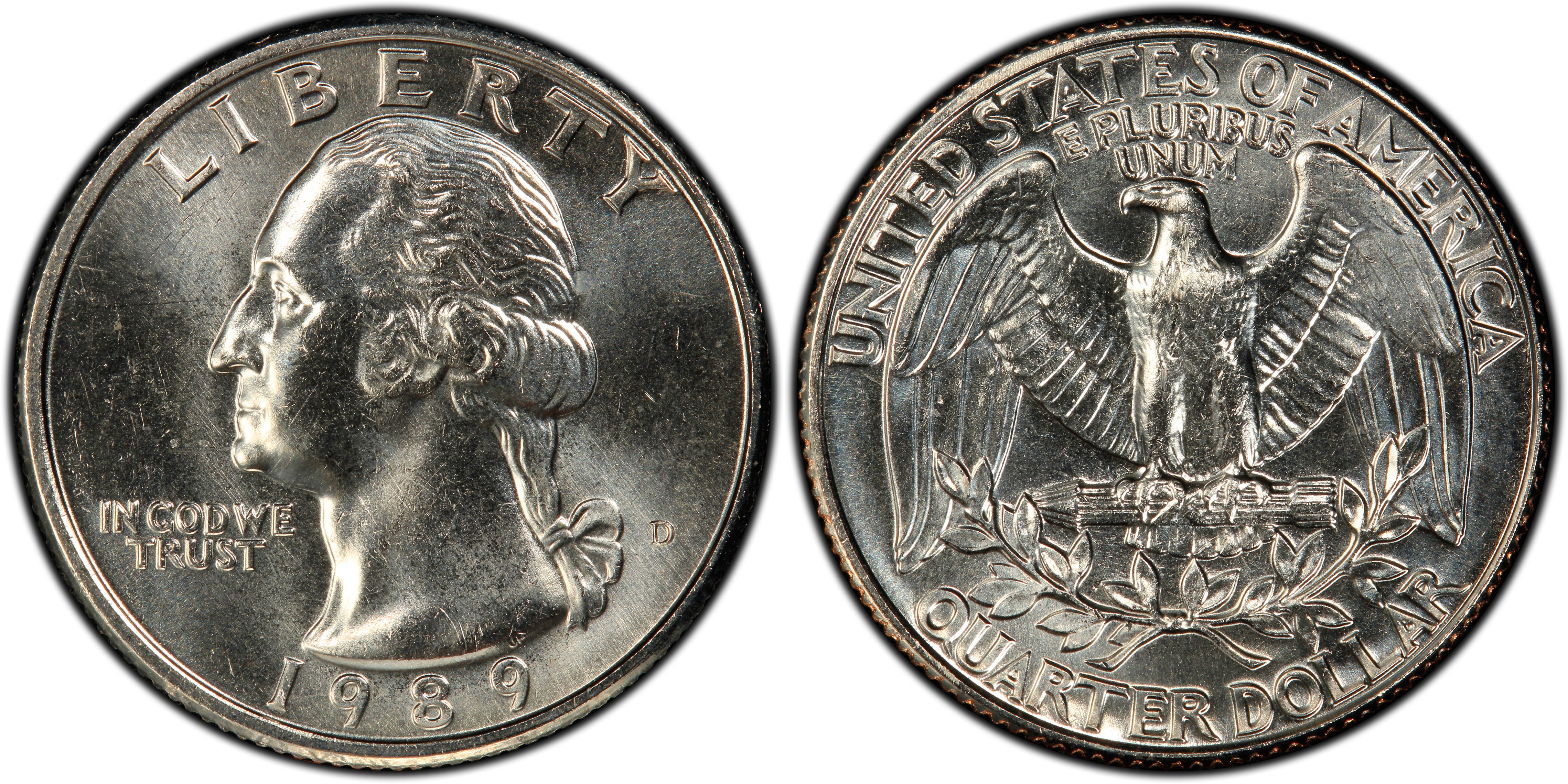 #5 MS66 PCGS grade
|
| #5 MS66 PCGS grade |
| #5 MS66 PCGS grade |
| #5 MS66 PCGS grade |
| #5 MS66 PCGS grade |
| #5 MS66 PCGS grade |
Jaime Hernandez:
Most circulation strike Washington Quarters from the 1980's were struck in very poor quality. For some issues it is even difficult to find examples in MS65 condition or higher, despite hundreds of millions of examples being produced. The 1989-D is one of the tougher dates. Although MS65 examples can be purchased inexpensively raw or graded, they are difficult to find in mint sets or rolls in this condition or higher. In MS66 condition they are underrated as they are really scarce with less than a few hundred examples known. In MS67 condition they are truly scarce with less than a dozen known and none existing in any higher condition.