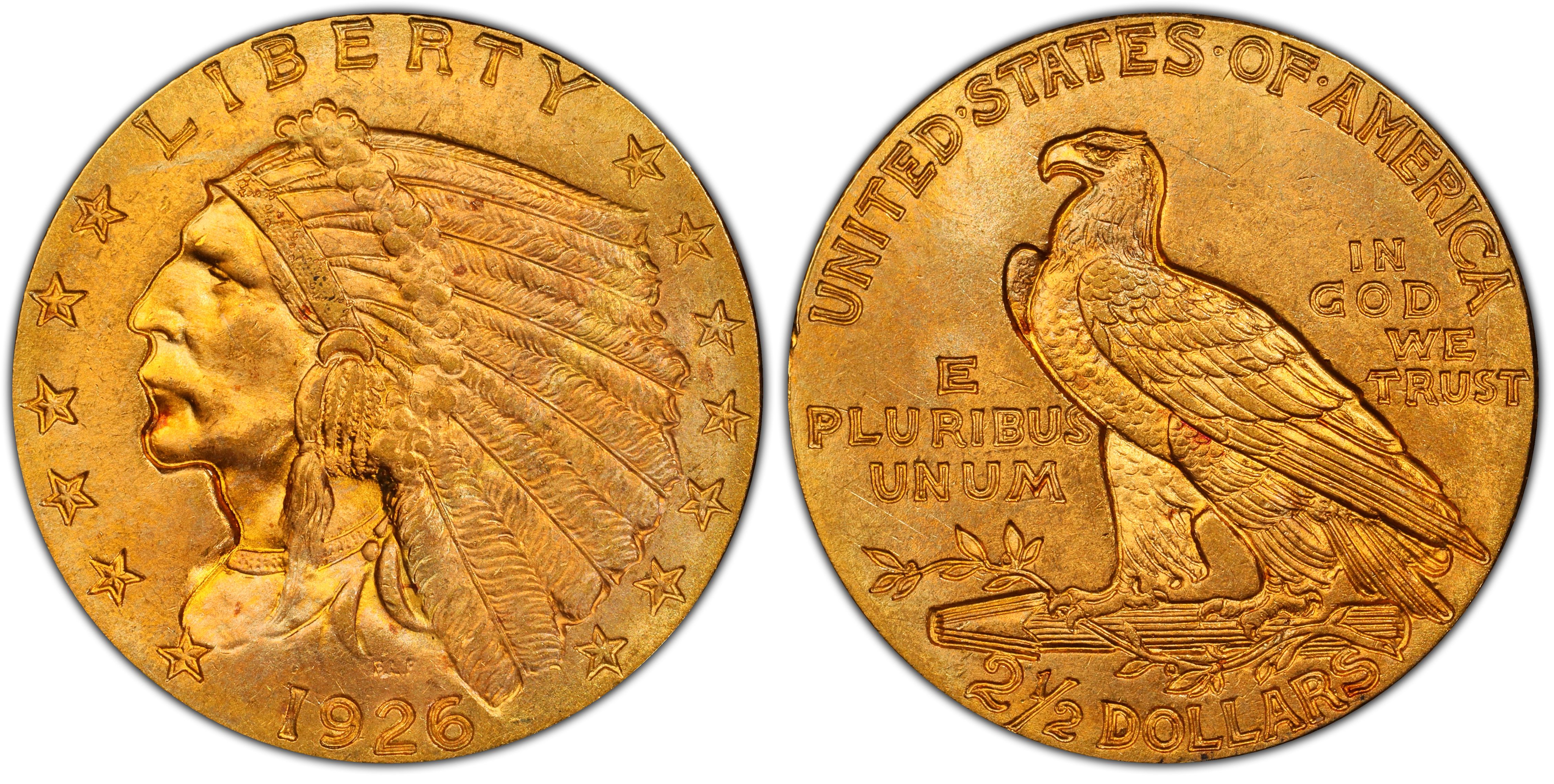
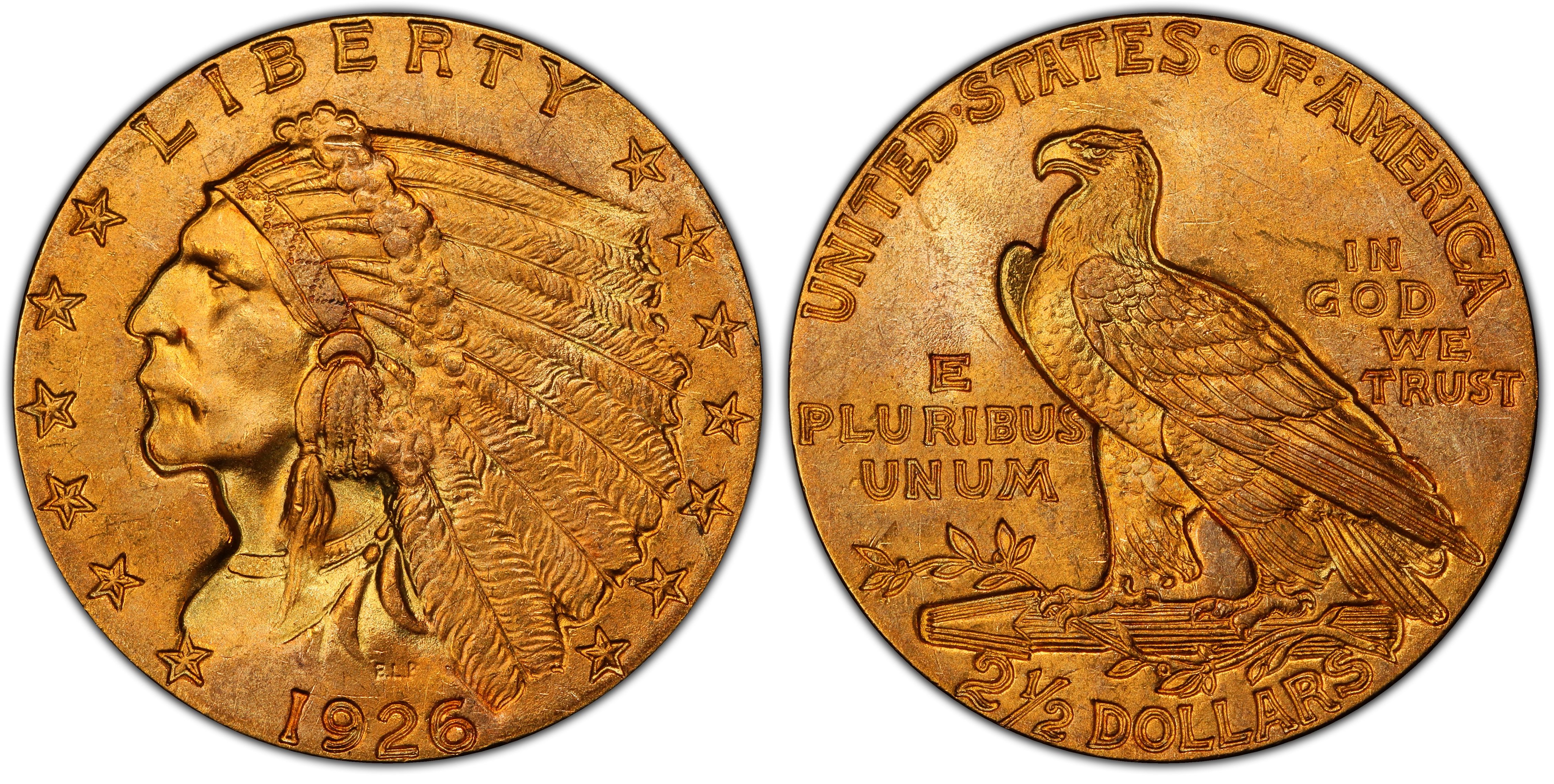
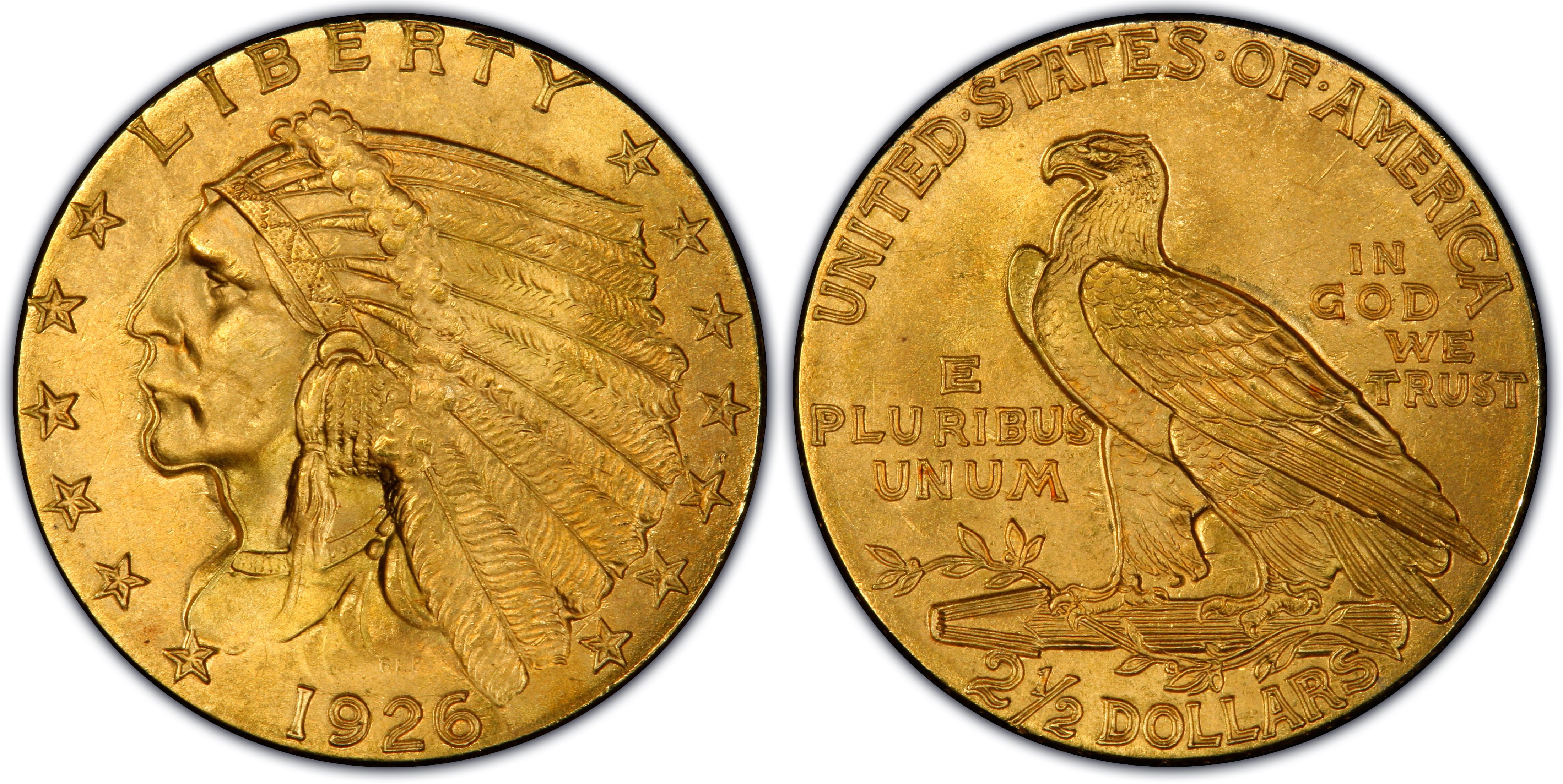
PCGS MS66+
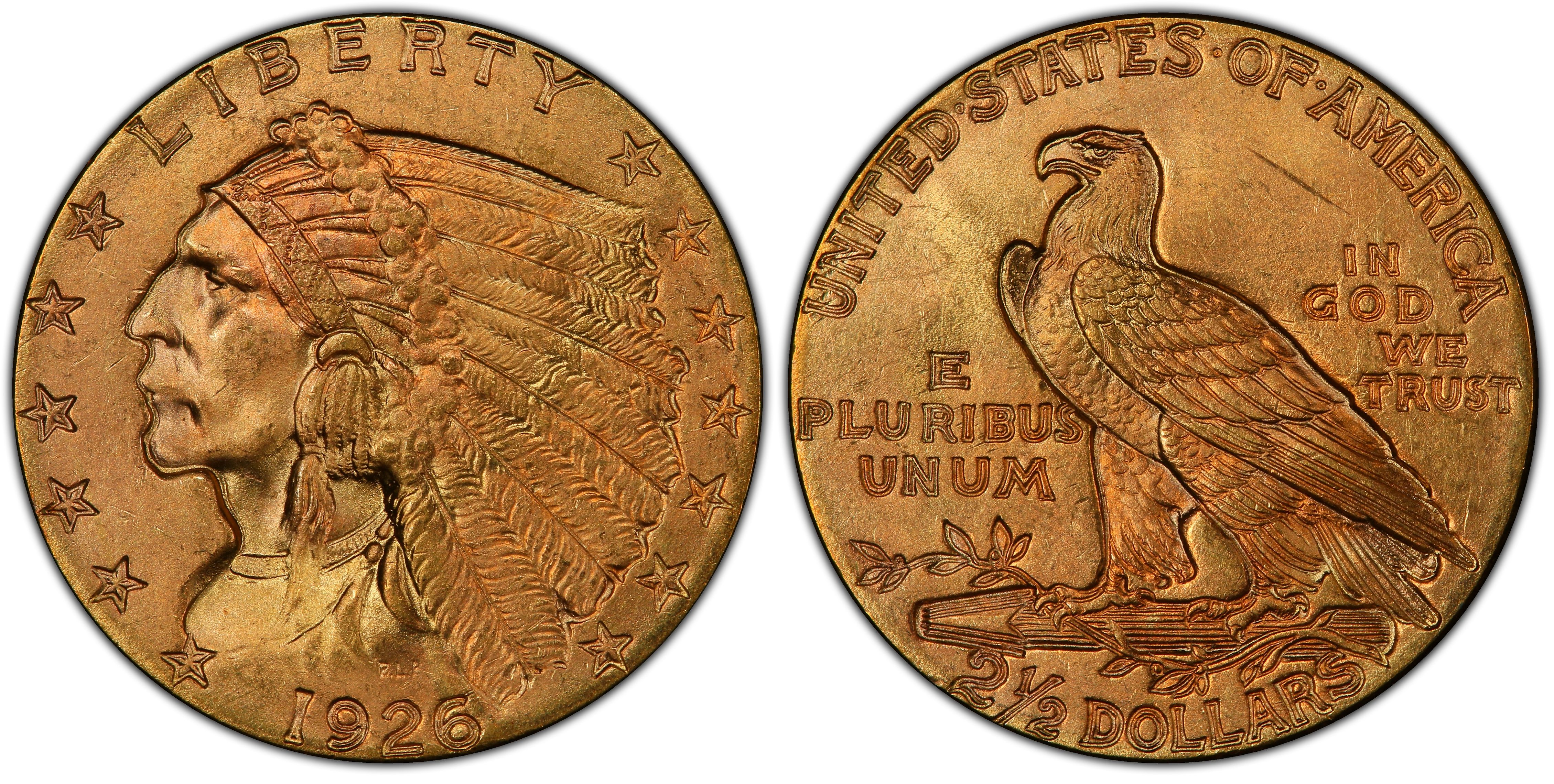
PCGS MS66+
- PCGS #:
- 7950
- Designer:
- Bela Lyon Pratt
- Edge:
- Reeded
- Diameter:
- 18.00 millimeters
- Weight:
- 4.18 grams
- Mintage:
- 446,000
- Mint:
- Philadelphia
- Metal:
- 90% Gold, 10% Copper
- Auction Record:
- $13,800 • MS66 • 07-01-2008 • Heritage Auctions
Major Varieties
- 1926 $2.50
Go To Grade
Current Auctions - PCGS Graded
Current Auctions - NGC Graded
For Sale Now at Collectors Corner - PCGS Graded
For Sale Now at Collectors Corner - NGC Graded
Rarity and Survival Estimates Learn More
| Survival Estimate | |
|---|---|
| All Grades | 65,000 |
| 60 or Better | 45,666 |
| 65 or Better | 1,616 |
| Numismatic Rarity | |
|---|---|
| All Grades | R-2.3 |
| 60 or Better | R-2.5 |
| 65 or Better | R-4.7 |
| Relative Rarity By Type All Specs in this Type | |
|---|---|
| All Grades | 13 / 15 TIE |
| 60 or Better | 13 / 15 TIE |
| 65 or Better | 14 / 15 |
| Relative Rarity By Series All Specs in this Series | |
|---|---|
| All Grades | 13 / 15 TIE |
| 60 or Better | 13 / 15 TIE |
| 65 or Better | 14 / 15 |
Condition Census What Is This?
 #1 MS66 PCGS grade
High Desert Collection (PCGS Set Registry) |
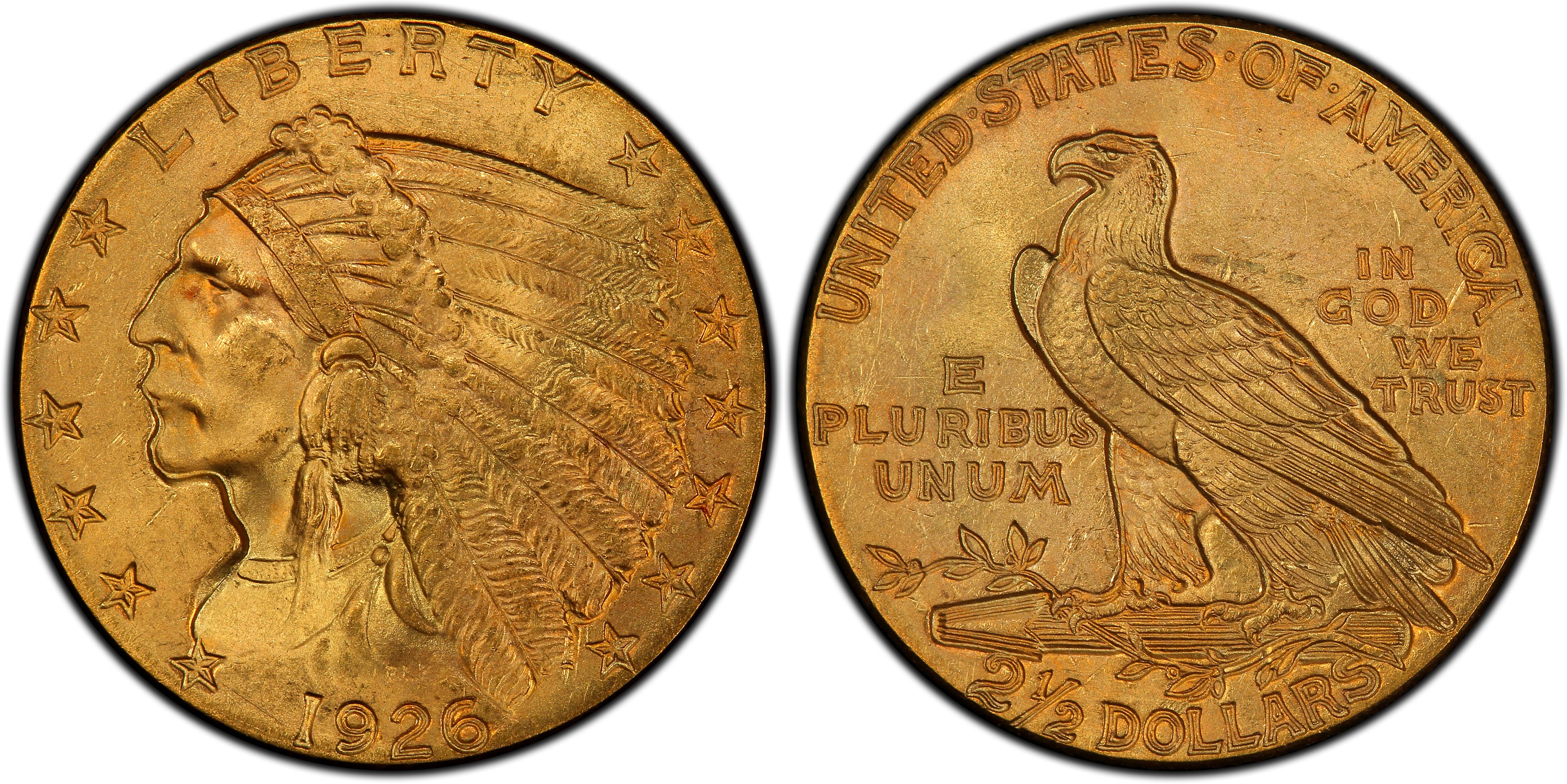 #1 MS66 PCGS grade
Heritage 1/2008:3110, $12,650 - Heritage 9/2011:4257, $11,213 - Simon’s Collection (PCGS Set Registry) |
 #1 MS66 PCGS grade
|
| #1 MS66 PCGS grade |
| #1 MS66 PCGS grade |
| #1 MS66 PCGS grade |
| #1 MS66 PCGS grade |
| #1 MS66 PCGS grade |
| #1 MS66 PCGS grade |
| #1 MS66 PCGS grade |
David Akers (1975/88):
The 1926 is one of the most common issues of the series and is only marginally more rare than the 1925-D. In MS-64 or less, the 1926 is not at all difficult to find. Of course, true gems are very scarce but they can be located with a little effort. Above MS-65, there is relatively little available although I have seen a few outstanding quality pieces, including several nearly perfect ones.
Most examples of this date are very frosty and lustrous with a sharp strike. Color varies, with some specimens having a pale rose gold color and others having a rich greenish gold color. The "eye appeal" of the top grade specimens of this issue is among the best, if not the absolute best, in the series.
Most examples of this date are very frosty and lustrous with a sharp strike. Color varies, with some specimens having a pale rose gold color and others having a rich greenish gold color. The "eye appeal" of the top grade specimens of this issue is among the best, if not the absolute best, in the series.