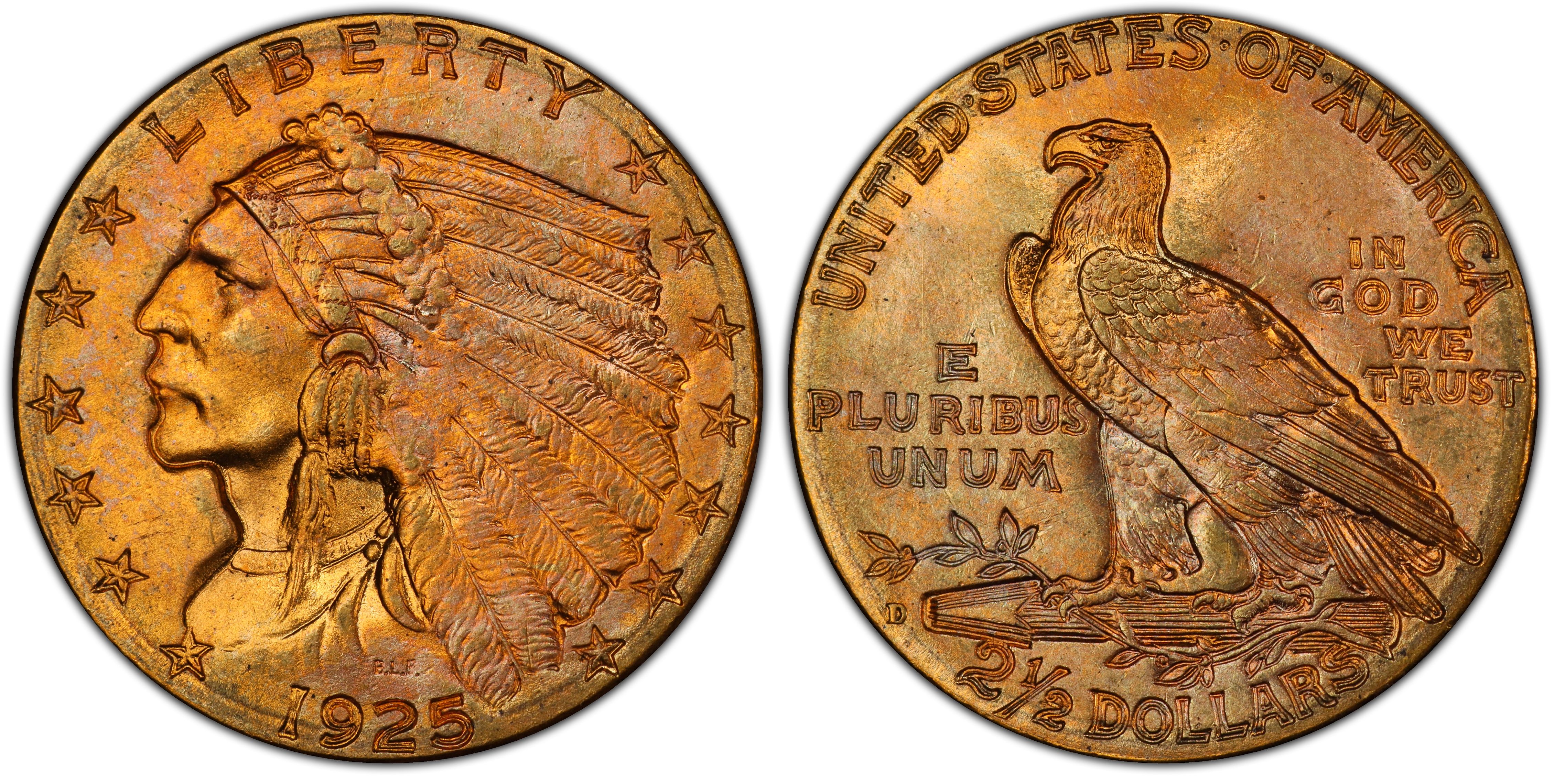
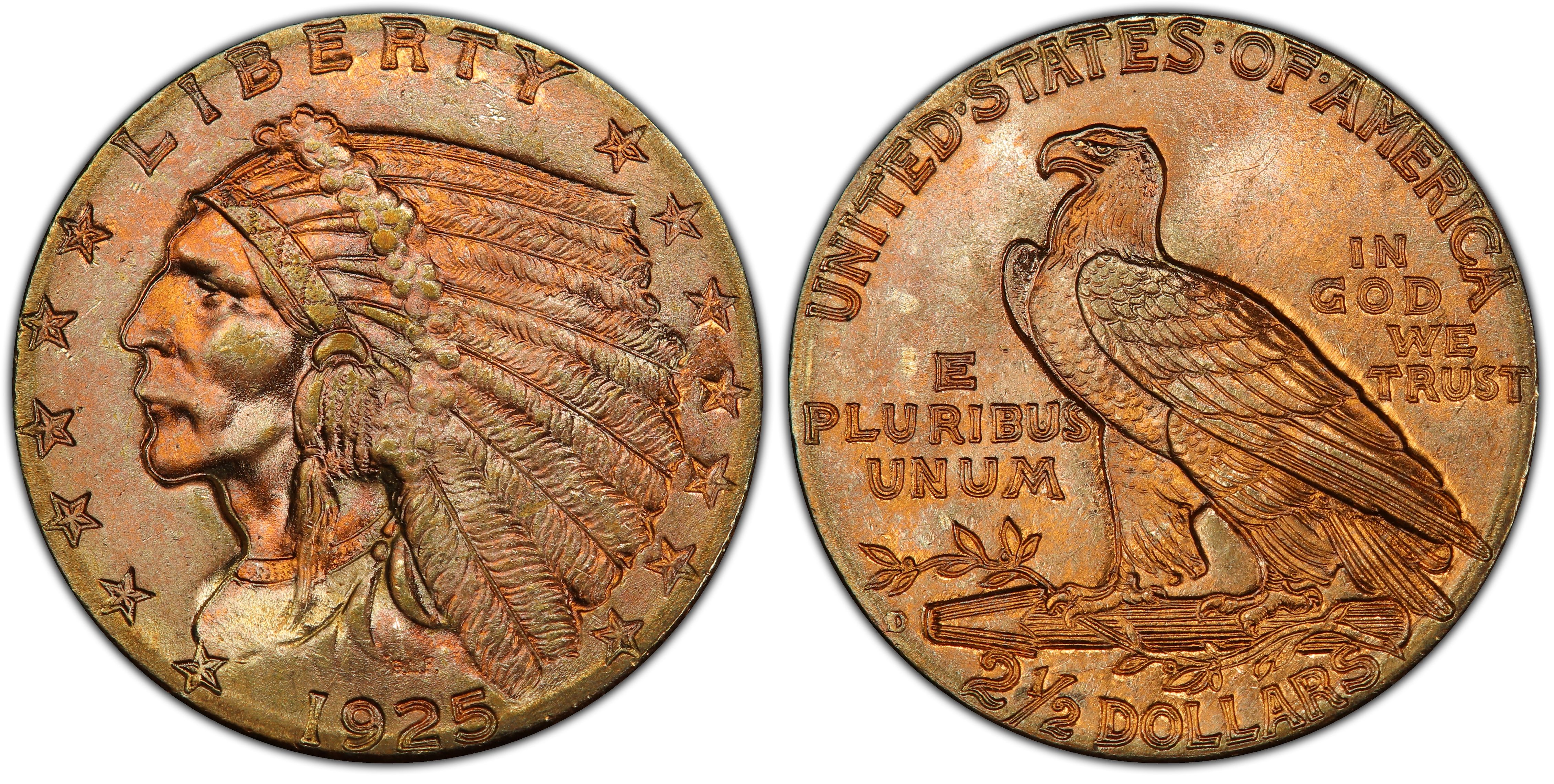
PCGS MS66+
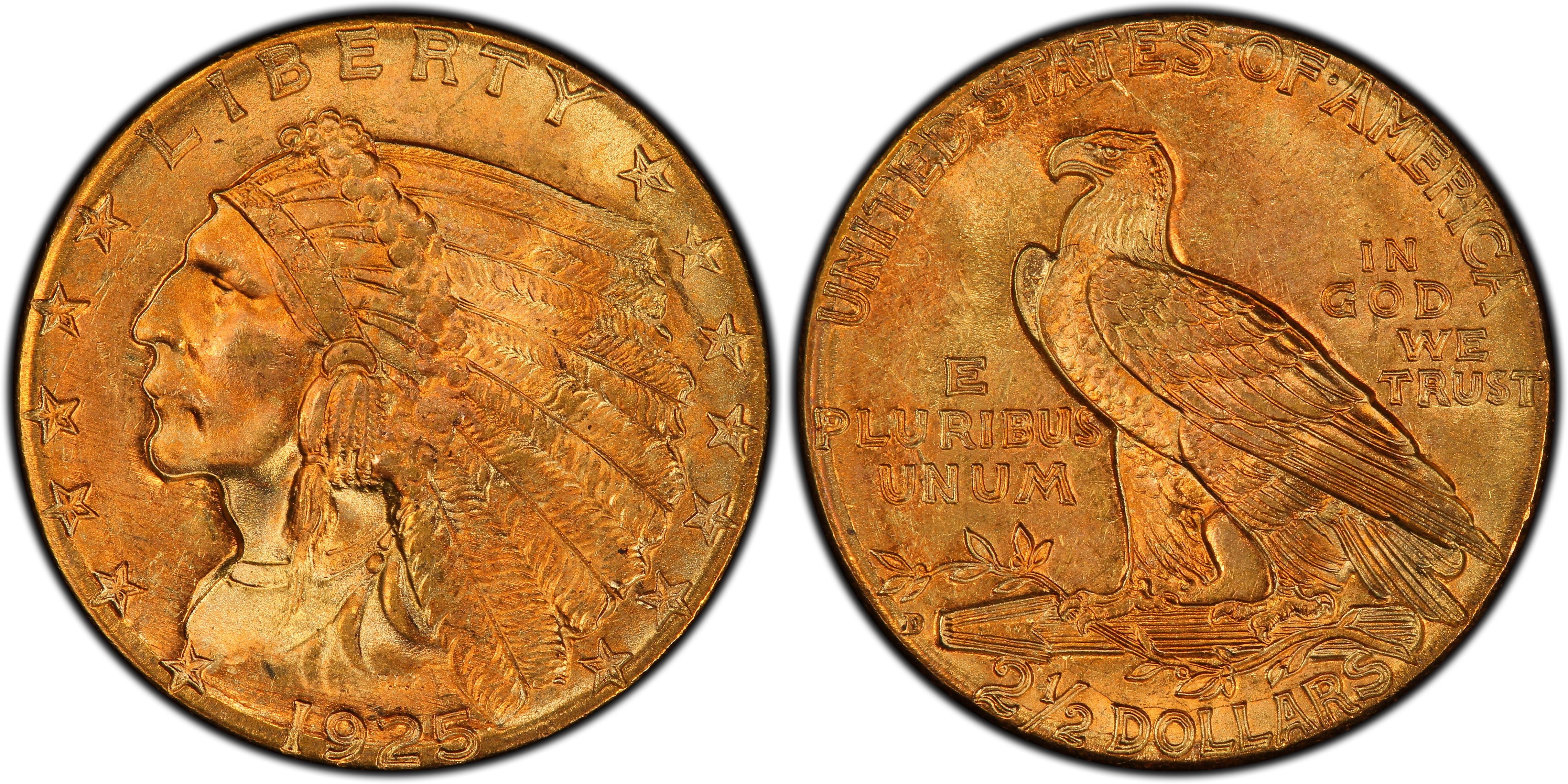
PCGS MS66+
- PCGS #:
- 7949
- Designer:
- Bela Lyon Pratt
- Edge:
- Reeded
- Diameter:
- 18.00 millimeters
- Weight:
- 4.18 grams
- Mintage:
- 578,000
- Mint:
- Denver
- Metal:
- 90% Gold, 10% Copper
- Auction Record:
- $66,125 • AU58 • 01-12-2005 • Heritage Auctions
Major Varieties
- 1925-D $2.50
Go To Grade
Current Auctions - PCGS Graded
Current Auctions - NGC Graded
For Sale Now at Collectors Corner - PCGS Graded
For Sale Now at Collectors Corner - NGC Graded
Rarity and Survival Estimates Learn More
| Survival Estimate | |
|---|---|
| All Grades | 70,000 |
| 60 or Better | 49,166 |
| 65 or Better | 1,766 |
| Numismatic Rarity | |
|---|---|
| All Grades | R-2.3 |
| 60 or Better | R-2.5 |
| 65 or Better | R-4.6 |
| Relative Rarity By Type All Specs in this Type | |
|---|---|
| All Grades | 13 / 15 TIE |
| 60 or Better | 13 / 15 TIE |
| 65 or Better | 15 / 15 |
| Relative Rarity By Series All Specs in this Series | |
|---|---|
| All Grades | 13 / 15 TIE |
| 60 or Better | 13 / 15 TIE |
| 65 or Better | 15 / 15 |
Condition Census What Is This?
|
#1 MS66+ PCGS grade
|
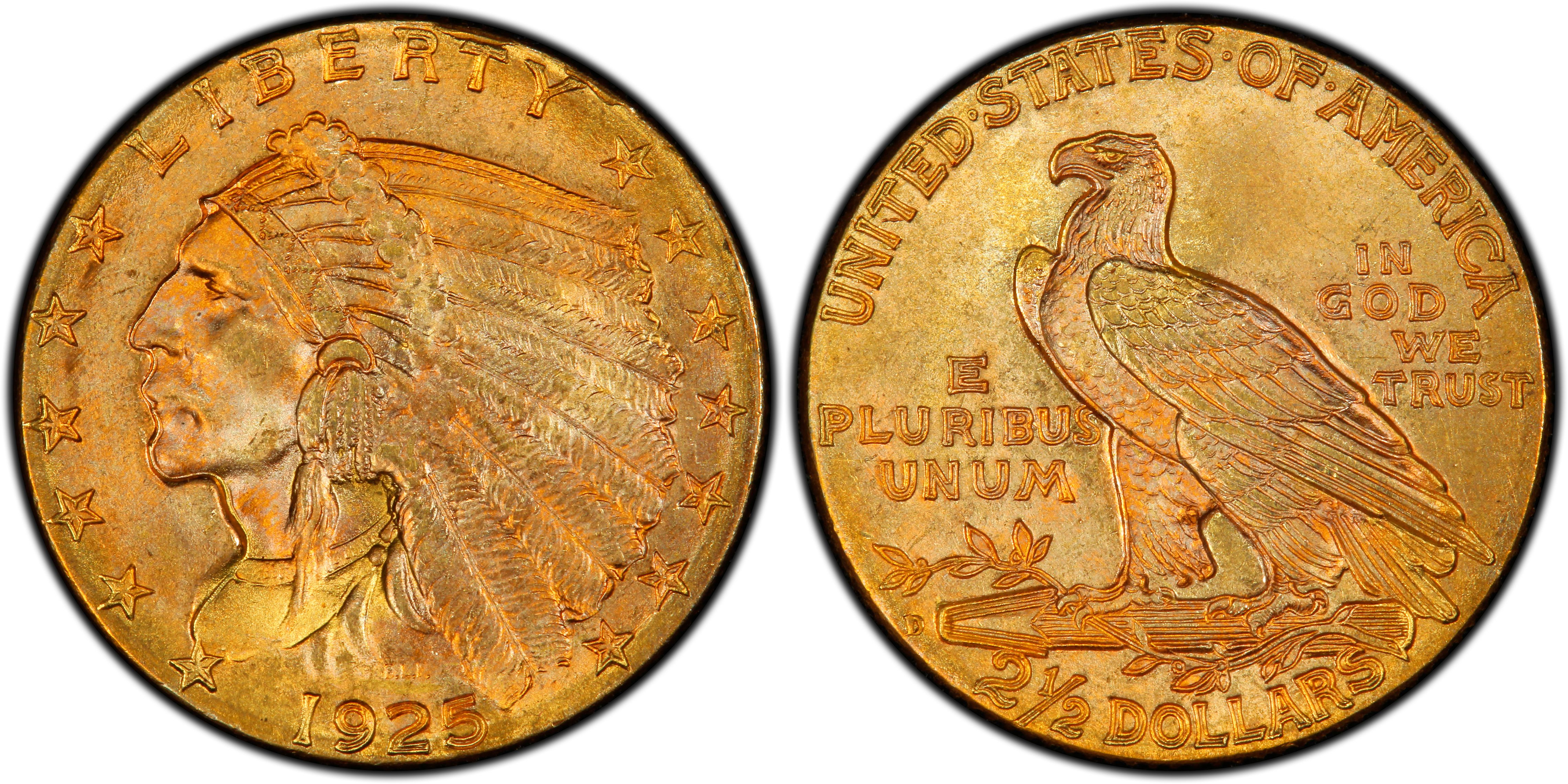 #2 MS66 PCGS grade
|
 #2 MS66 PCGS grade
|
| #2 MS66 PCGS grade |
| #2 MS66 PCGS grade |
| #2 MS66 PCGS grade |
| #2 MS66 PCGS grade |
| #2 MS66 PCGS grade |
| #2 MS66 PCGS grade |
| #2 MS66 PCGS grade |
David Akers (1975/88):
The 1925-D is the most common issue of the series in all Mint State grades except MS-65 or better. At that level, the 1908 is more obtainable. Up to MS64, the 1925-D can be obtained with no difficulty but strict MS-65 specimens, although available, are not really all that plentiful. Superb specimens(better than MS-65) are practically non-existent but, of course, this is true of virtually every issue of the Pratt-designed quarter eagle and half eagle series.
The 1925-D almost always has very good to excellent mint lustre but the striking quality varies greatly; some are very unevenly struck while others are well struck. Dies seem to have been a problem with this issue, and many specimens were clearly struck from buckled or deteriorated dies. The mint mark is usually a little weak but well defined. There are some specimens, however, where the mintmark is so weak that it is nearly invisible. The color is typically a rose tinted gold but there are also coppery colored specimens as well as ones with green and yellow gold shades. The surfaces are frosty with little or no granularity. This is a candidate with another Denver Mint issue, the 1914-D, for having the generally poorest minting quality in the series. Both issues are partially redeemed, however, by especially fine lustre and color.
The 1925-D almost always has very good to excellent mint lustre but the striking quality varies greatly; some are very unevenly struck while others are well struck. Dies seem to have been a problem with this issue, and many specimens were clearly struck from buckled or deteriorated dies. The mint mark is usually a little weak but well defined. There are some specimens, however, where the mintmark is so weak that it is nearly invisible. The color is typically a rose tinted gold but there are also coppery colored specimens as well as ones with green and yellow gold shades. The surfaces are frosty with little or no granularity. This is a candidate with another Denver Mint issue, the 1914-D, for having the generally poorest minting quality in the series. Both issues are partially redeemed, however, by especially fine lustre and color.