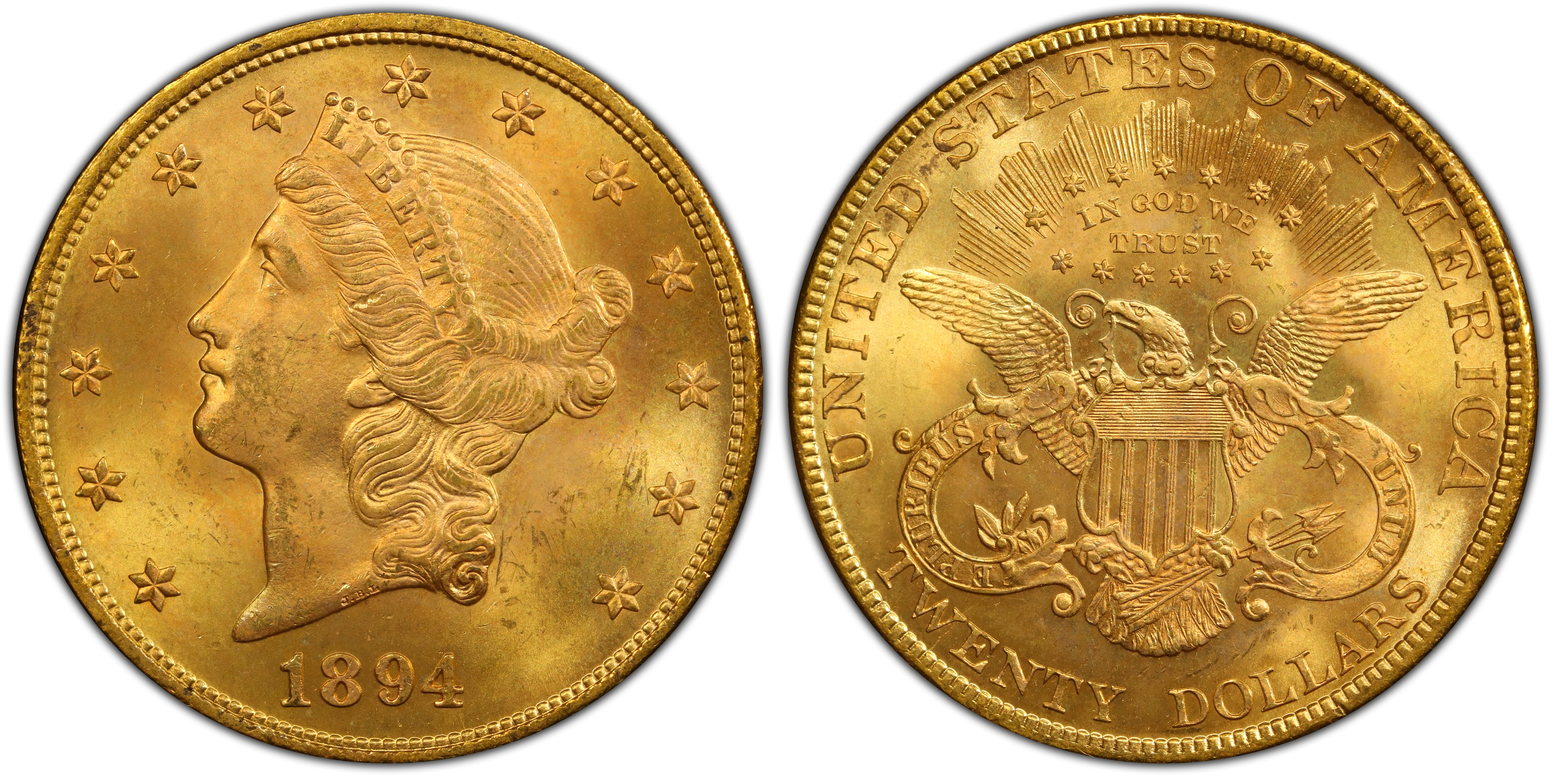

PCGS MS65

PCGS MS65
- PCGS #:
- 9025
- Designer:
- James Barton Longacre
- Edge:
- Reeded
- Diameter:
- 34.00 millimeters
- Weight:
- 33.40 grams
- Mintage:
- 1,368,940
- Mint:
- Philadelphia
- Metal:
- 90% Gold, 10% Copper
- Auction Record:
- $63,250 • MS67 • 02-26-2008 • Stack's
Go To Grade
Current Auctions - PCGS Graded
Current Auctions - NGC Graded
For Sale Now at Collectors Corner - PCGS Graded
For Sale Now at Collectors Corner - NGC Graded
Rarity and Survival Estimates Learn More
| Survival Estimate | |
|---|---|
| All Grades | 60,000 |
| 60 or Better | 16,250 |
| 65 or Better | 2 |
| Numismatic Rarity | |
|---|---|
| All Grades | R-2.4 |
| 60 or Better | R-2.8 |
| 65 or Better | R-9.9 |
| Relative Rarity By Type All Specs in this Type | |
|---|---|
| All Grades | 62 / 73 TIE |
| 60 or Better | 64 / 73 TIE |
| 65 or Better | 1 / 73 TIE |
| Relative Rarity By Series All Specs in this Series | |
|---|---|
| All Grades | 137 / 148 TIE |
| 60 or Better | 135 / 148 TIE |
| 65 or Better | 2 / 148 TIE |
Condition Census What Is This?
| #1 MS66 estimated grade |
| #2 MS65 PCGS grade |
 #3 MS64+ PCGS grade
|
| #3 MS64+ PCGS grade |
| #3 MS64+ PCGS grade |
| #3 MS64+ PCGS grade |
 #7 MS64 PCGS grade
|
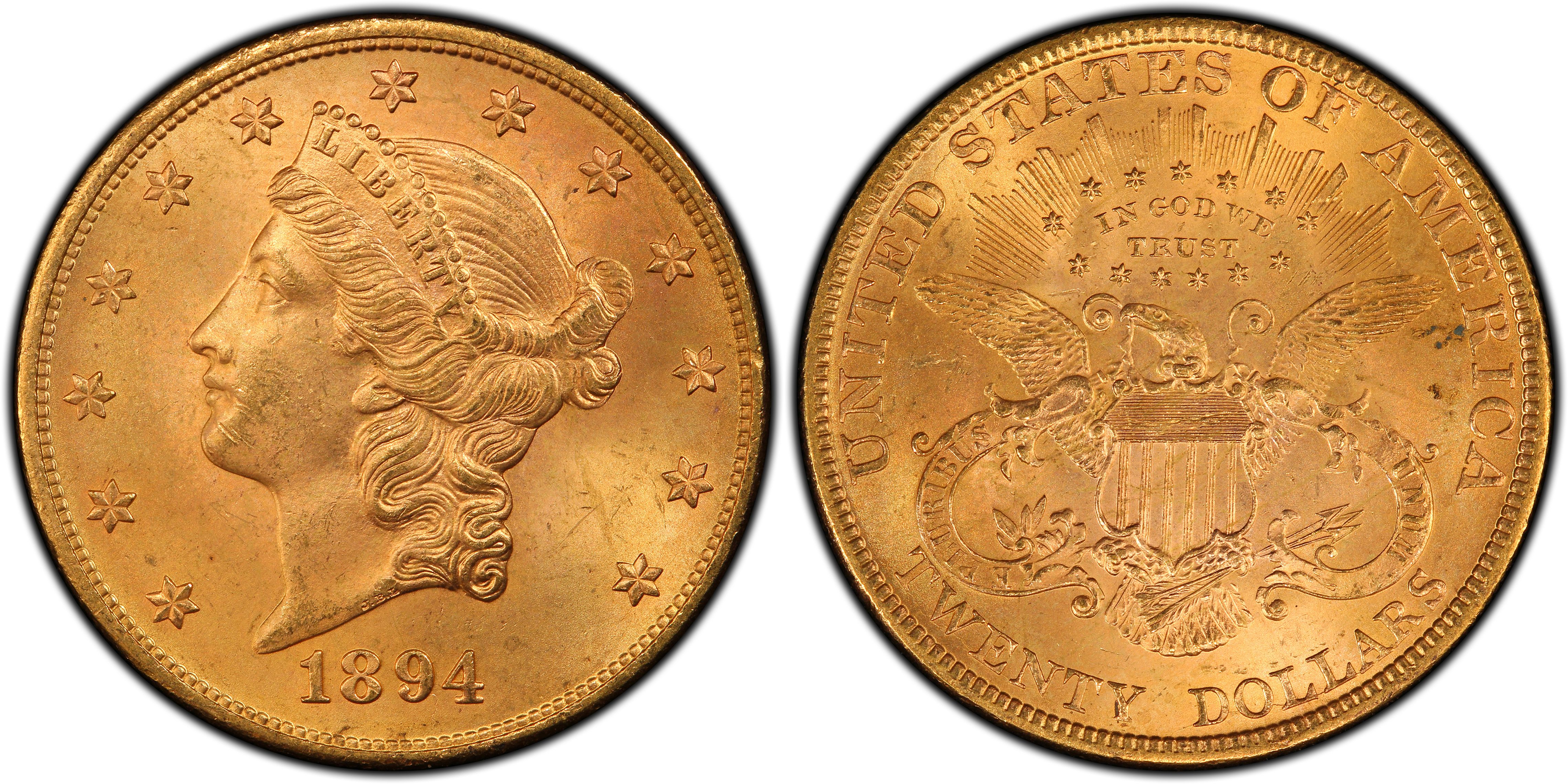 #7 MS64 PCGS grade
|
| #7 MS64 PCGS grade |
| #7 MS64 PCGS grade |
David Akers (1975/88):
The 1894 is one of the more common dates of the series. It is similar in rarity to the 1896 and 1897 and more rare than the 1895, 1899 and the much lower mintage 1901. The 1894 is readily obtainable in high circulated grades as well as Unc-60. Choice uncs are available quite often but in gem condition the 1894 is very scarce, as are nearly all Liberty Head Double Eagles, even the common dates.