

PCGS MS64+
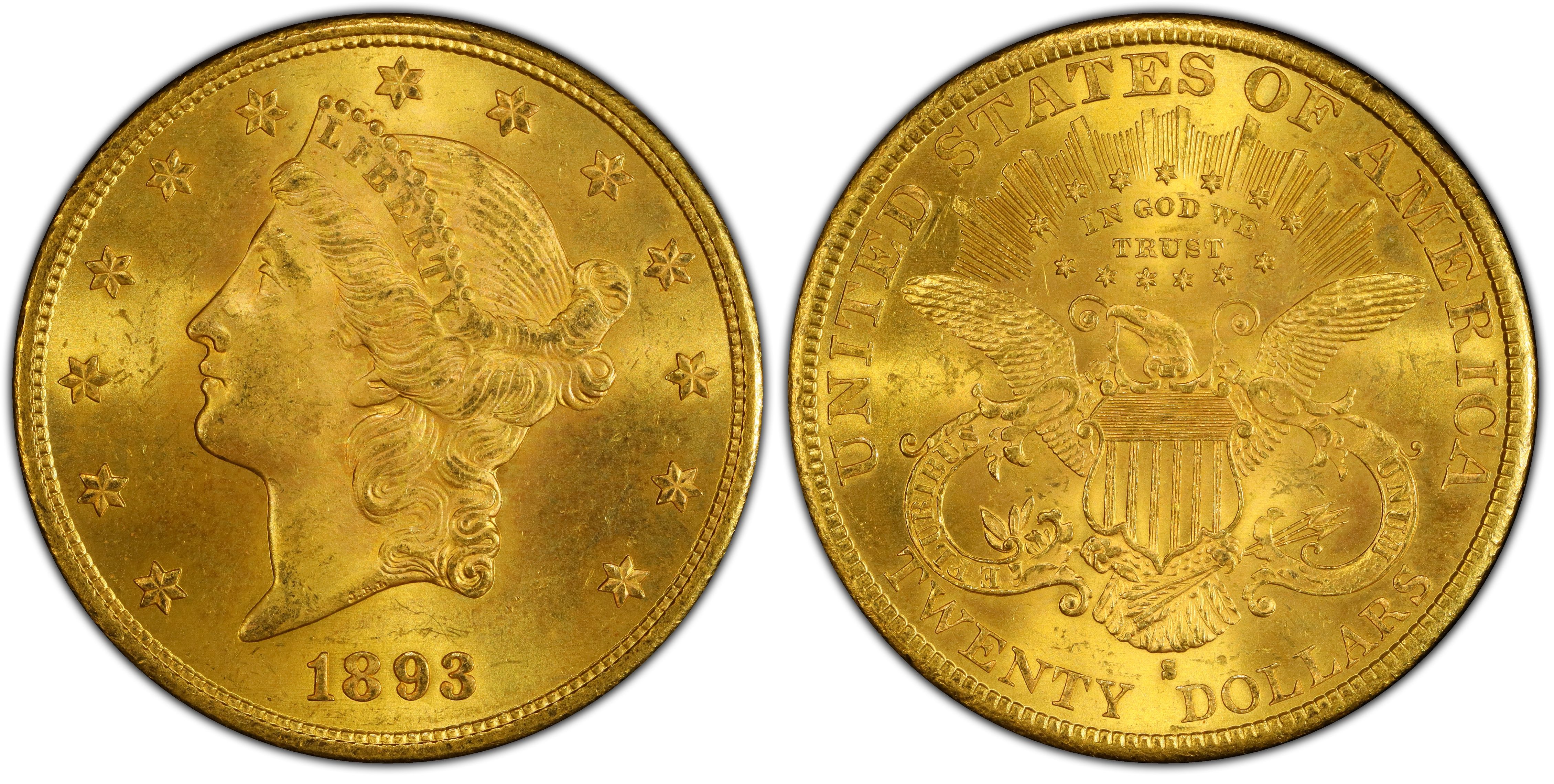
PCGS MS64+
- PCGS #:
- 9024
- Designer:
- James Barton Longacre
- Edge:
- Reeded
- Diameter:
- 34.00 millimeters
- Weight:
- 33.40 grams
- Mintage:
- 996,175
- Mint:
- San Francisco
- Metal:
- 90% Gold, 10% Copper
- Auction Record:
- $58,750 • MS65 • 10-20-2022 • Legend Rare Coin Auctions
Go To Grade
Current Auctions - PCGS Graded
Current Auctions - NGC Graded
For Sale Now at Collectors Corner - PCGS Graded
For Sale Now at Collectors Corner - NGC Graded
Rarity and Survival Estimates Learn More
| Survival Estimate | |
|---|---|
| All Grades | 33,500 |
| 60 or Better | 6,000 |
| 65 or Better | 2 |
| Numismatic Rarity | |
|---|---|
| All Grades | R-2.6 |
| 60 or Better | R-3.8 |
| 65 or Better | R-9.9 |
| Relative Rarity By Type All Specs in this Type | |
|---|---|
| All Grades | 54 / 73 TIE |
| 60 or Better | 50 / 73 TIE |
| 65 or Better | 1 / 73 TIE |
| Relative Rarity By Series All Specs in this Series | |
|---|---|
| All Grades | 129 / 148 TIE |
| 60 or Better | 120 / 148 TIE |
| 65 or Better | 2 / 148 TIE |
Condition Census What Is This?
| #1 MS65 PCGS grade |
| #1 MS65 PCGS grade |
| #3 MS64 PCGS grade |
| #3 MS64 PCGS grade |
| #3 MS64 PCGS grade |
| #3 MS64 PCGS grade |
| #3 MS64 PCGS grade |
| #3 MS64 PCGS grade |
| #3 MS64 PCGS grade |
| #3 MS64 PCGS grade |
David Akers (1975/88):
The 1893-S is a moderately scarce date, comparable overall to the 1879-S, 1882-S, 1885-S, 1888-S, 1892-S, 1901-S and 1905-S. Uncs are available more than any other individual grade but choice and gem quality specimens are very scarce, especially gems. I have seen a few really superb examples of this date, the finest being the nearly perfect coin that is in a prominent Dallas bank collection.