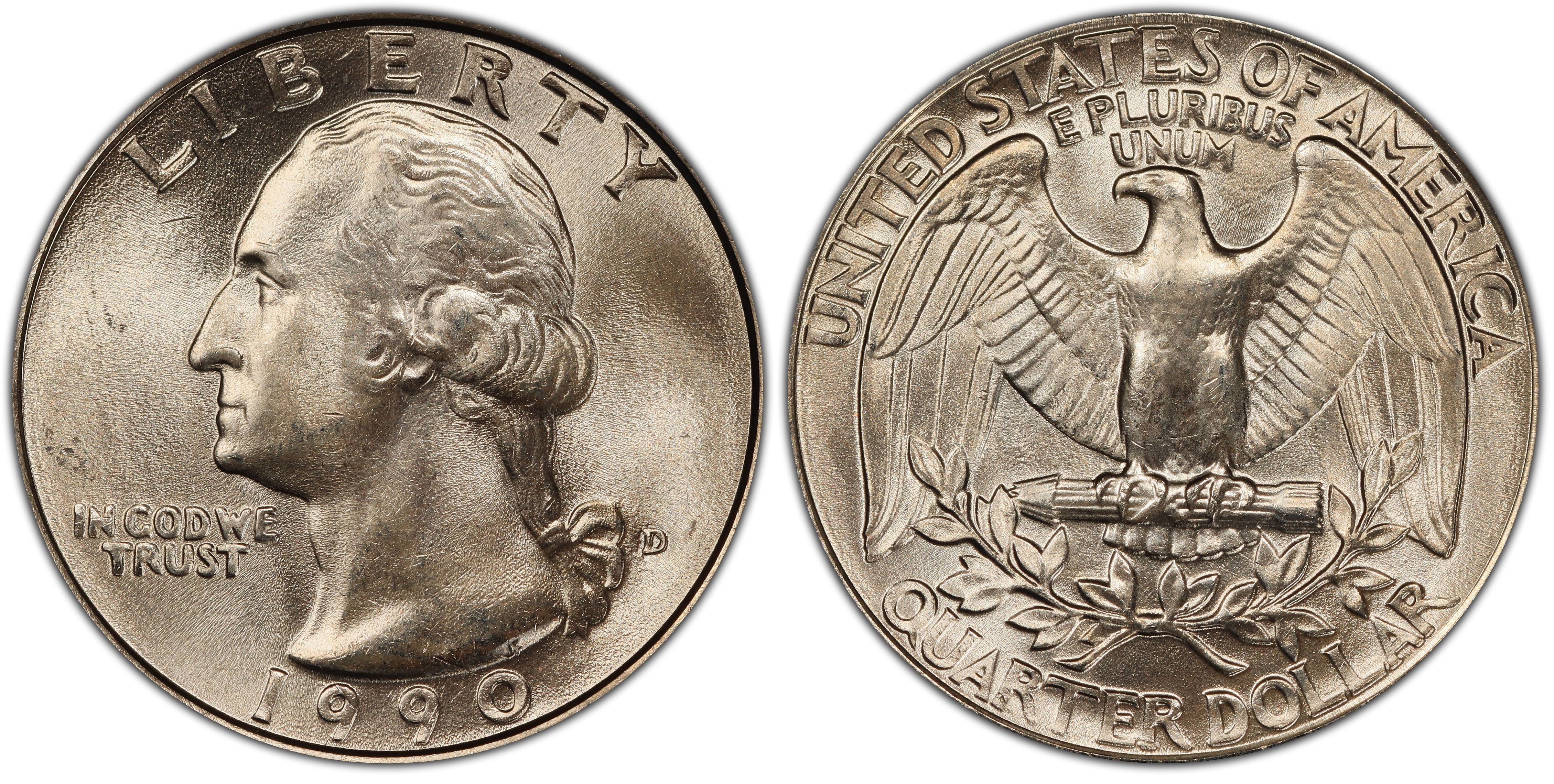
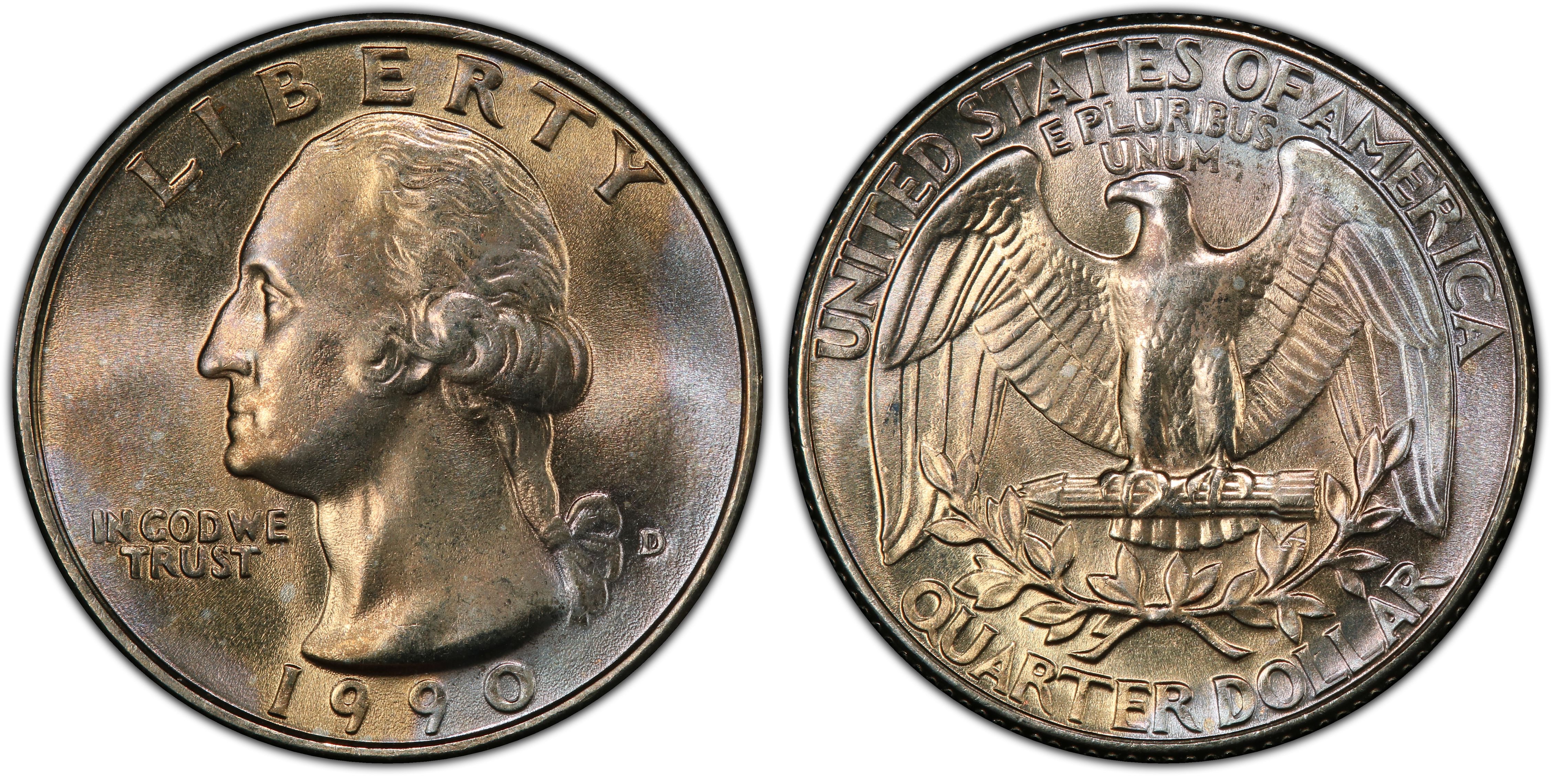
PCGS MS67+
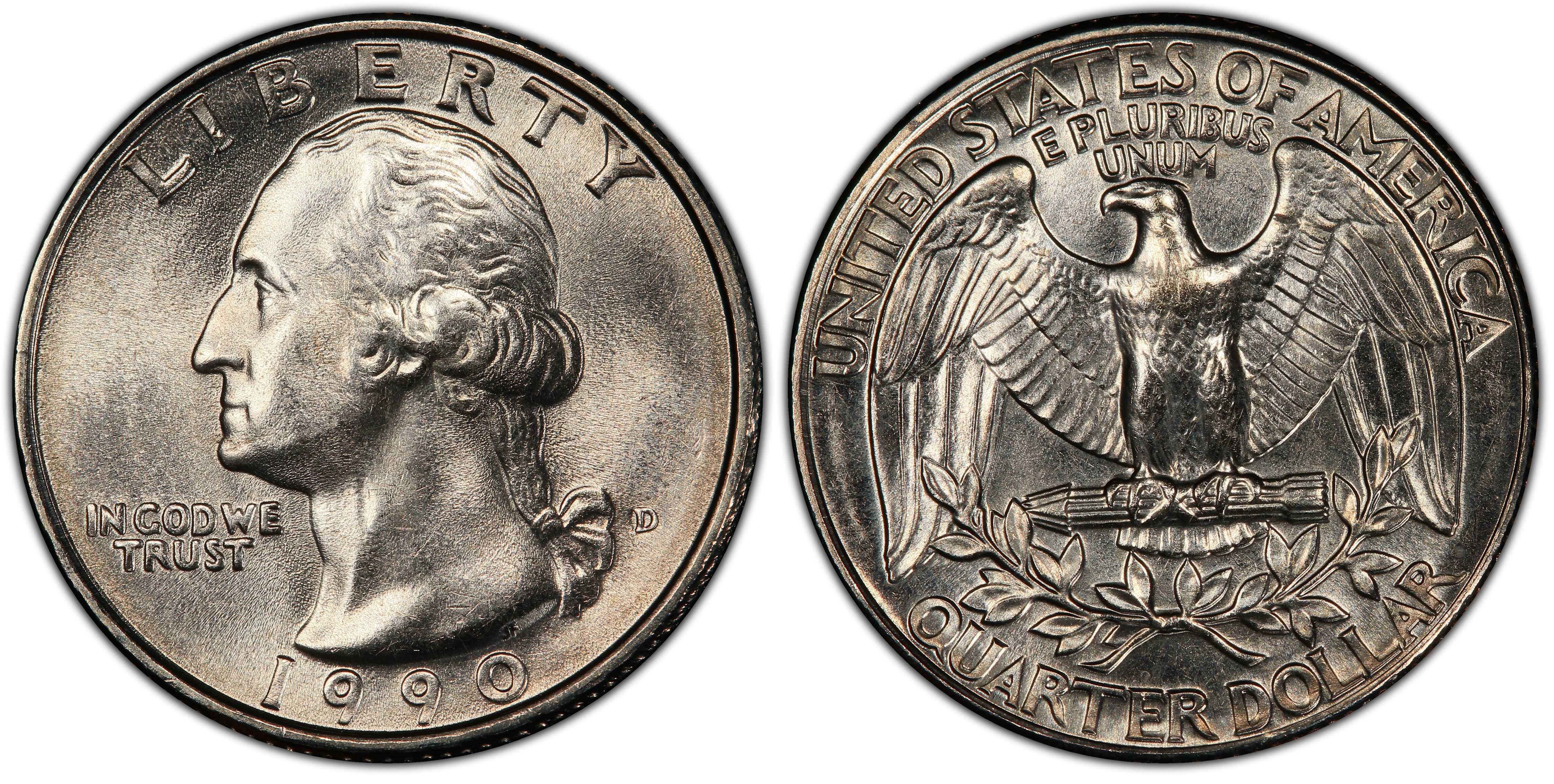
PCGS MS67+
- PCGS #:
- 5929
- Designer:
- John Flanagan
- Edge:
- Reeded
- Diameter:
- 24.30 millimeters
- Weight:
- 5.67 grams
- Mintage:
- 927,638,181
- Mint:
- Denver
- Metal:
- 75% Copper, 25% Nickel over a pure Copper center
- Auction Record:
- $1,440 • MS67+ • 01-03-2018 • Heritage Auctions
Major Varieties
- 1990-D 25C
Go To Grade
Current Auctions - PCGS Graded
Current Auctions - NGC Graded
For Sale Now at Collectors Corner - PCGS Graded
For Sale Now at Collectors Corner - NGC Graded
Rarity and Survival Estimates Learn More
| Survival Estimate | |
|---|---|
| All Grades | 463,819,090 |
| 60 or Better | 139,145,727 |
| 65 or Better | 27,829,145 |
| Numismatic Rarity | |
|---|---|
| All Grades | R-1.0 |
| 60 or Better | R-1.0 |
| 65 or Better | R-1.0 |
| Relative Rarity By Type All Specs in this Type | |
|---|---|
| All Grades | 1 / 61 TIE |
| 60 or Better | 3 / 61 TIE |
| 65 or Better | 6 / 61 TIE |
| Relative Rarity By Series All Specs in this Series | |
|---|---|
| All Grades | 1 / 64 TIE |
| 60 or Better | 4 / 64 TIE |
| 65 or Better | 7 / 64 TIE |
Condition Census What Is This?
| #1 MS67 PCGS grade |
| #1 MS67 PCGS grade |
| #1 MS67 PCGS grade |
| #1 MS67 PCGS grade |
| #1 MS67 PCGS grade |
| #1 MS67 PCGS grade |
| #1 MS67 PCGS grade |
| #1 MS67 PCGS grade |
| #1 MS67 PCGS grade |
| #1 MS67 PCGS grade |
Jaime Hernandez:
The 1990-D Washington Quarter is very common as the Mint struck them in the hundreds of millions. Only examples in MS66 appear to be somewhat scarce but still easily obtainable at a very small premium. Examples in MS67 condition are really scarce with less than a few dozen known. There is at least one known example in PCGS MS67+ condition but none have been graded higher.