
PCGS MS67

PCGS MS67
- PCGS #:
- 7425
- Designer:
- Frank Gasparro/Michael Collins & James Cooper
- Edge:
- Reeded
- Diameter:
- 38.50 millimeters
- Weight:
- 22.70 grams
- Mintage:
- 25,702,000
- Mint:
- Philadelphia
- Metal:
- 75% Copper, 25% Nickel over a pure Copper center
- Auction Record:
- $6,000 • MS67 • 01-15-2023 • Heritage Auctions
Major Varieties
- 1978 $1
Rarity and Survival Estimates Learn More
| Survival Estimate | |
|---|---|
| All Grades | 25,650,000 |
| 60 or Better | 514,000 |
| 65 or Better | 5,500 |
| Numismatic Rarity | |
|---|---|
| All Grades | R-1.0 |
| 60 or Better | R-1.5 |
| 65 or Better | R-3.9 |
| Relative Rarity By Type All Specs in this Type | |
|---|---|
| All Grades | 2 / 14 TIE |
| 60 or Better | 5 / 14 TIE |
| 65 or Better | 4 / 14 TIE |
| Relative Rarity By Series All Specs in this Series | |
|---|---|
| All Grades | 2 / 18 TIE |
| 60 or Better | 7 / 18 TIE |
| 65 or Better | 5 / 18 TIE |
Condition Census What Is This?
|
#1 PCGS MS67
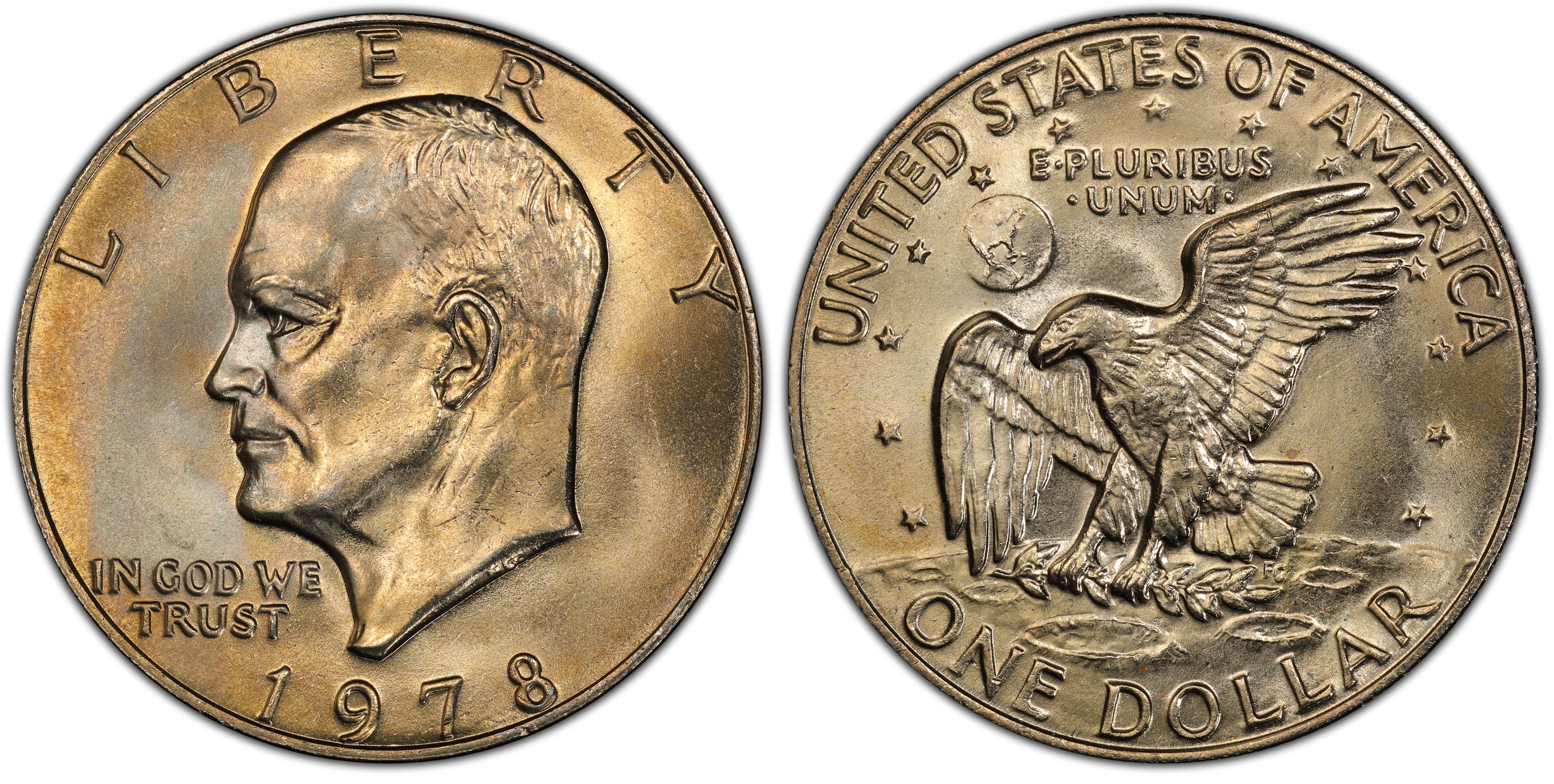
Stack's Bowers, August 30, 2025, Lot 6173 - $3,120. Brian Garcia's "The Taco Collection" (PCGS Set Registry). Brilliant. Two ticks at 3 o'clock in obverse field. Tick on the bust truncation. Diagonal mark on the eagle's left leg. |
 #1 PCGS MS67
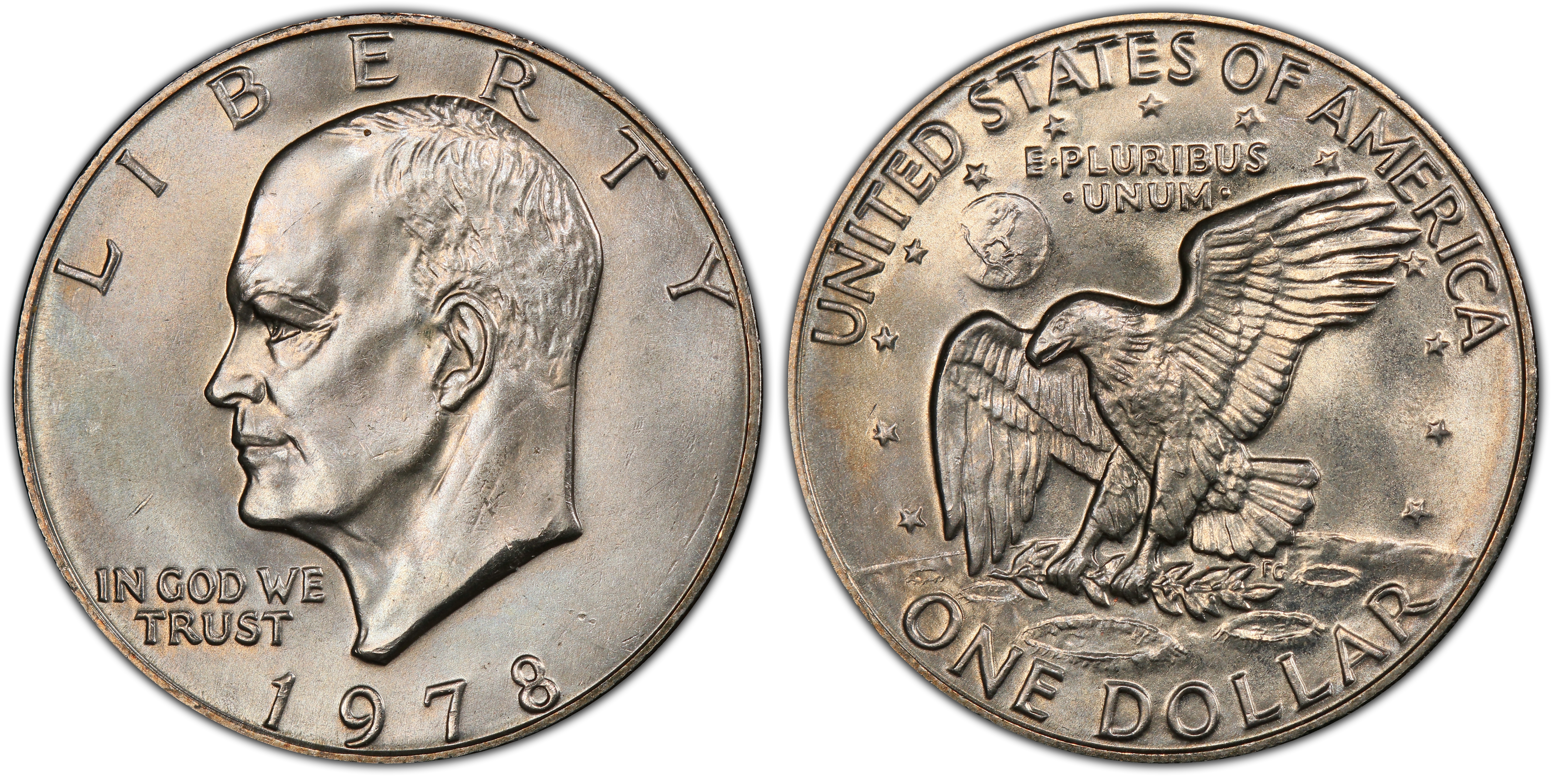
Heritage Auctions, January 12, 2023, Lot 3561 - $6,000. Faint golden toning on both sides. Light horizontal contact mark at Ike's temple. Spot above the eagle's tailfeather. |
 #1 PCGS MS67
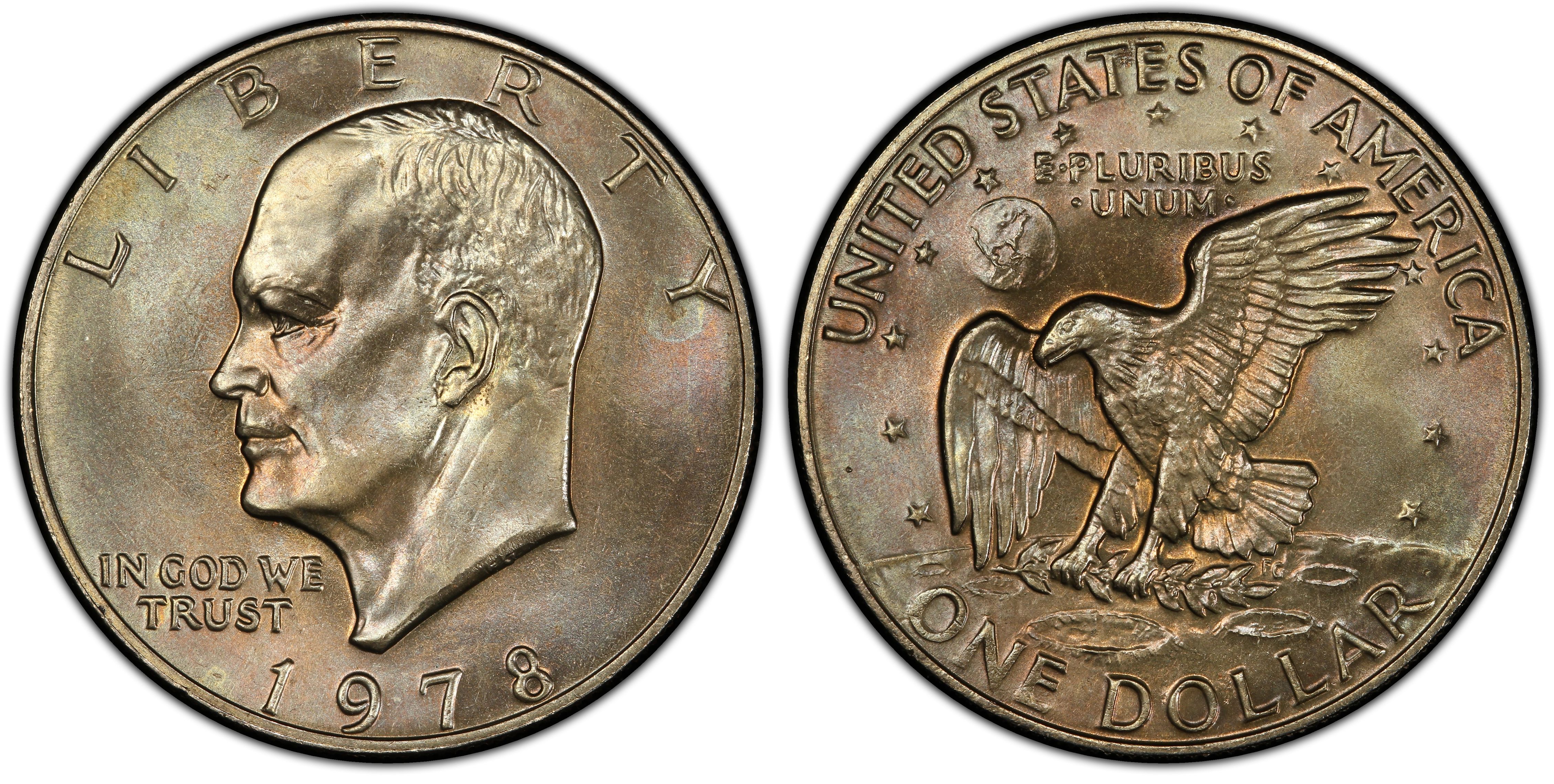
David Lawrence Rare Coins, July 17, 2022, Lot 7363 - $5,500. Small diagonal mark over N on IN. Curved mark at 4 o'clock near rim. |
 #1 PCGS MS67
"The Roger C. Wang Collection" (PCGS Set Registry). |
 #1 PCGS MS67
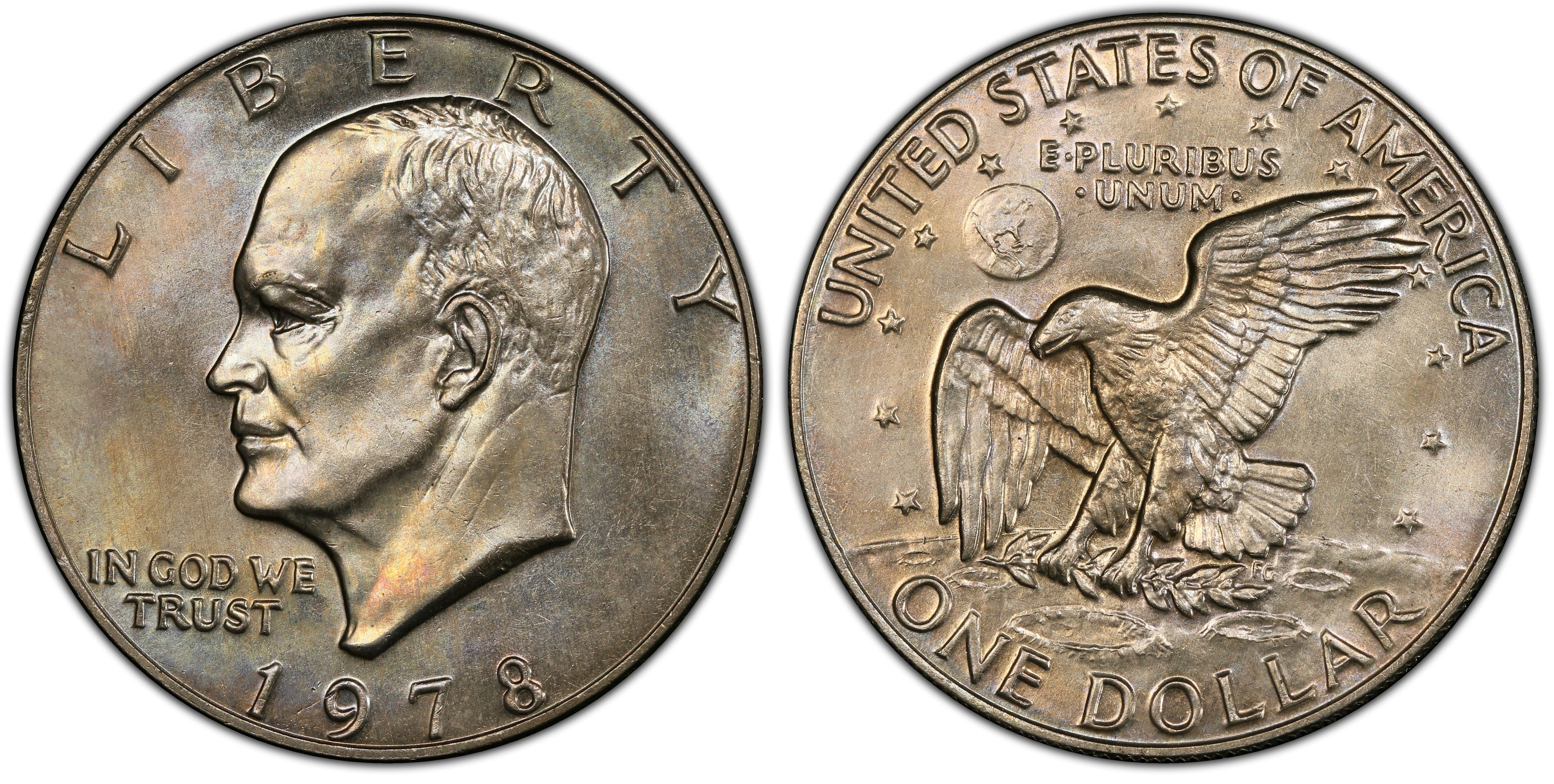
"The TWIN TIERS Collection" (PCGS Set Registry). |
 #1 PCGS MS67
"The oldsmagnet_ Collection" (PCGS Set Registry). |
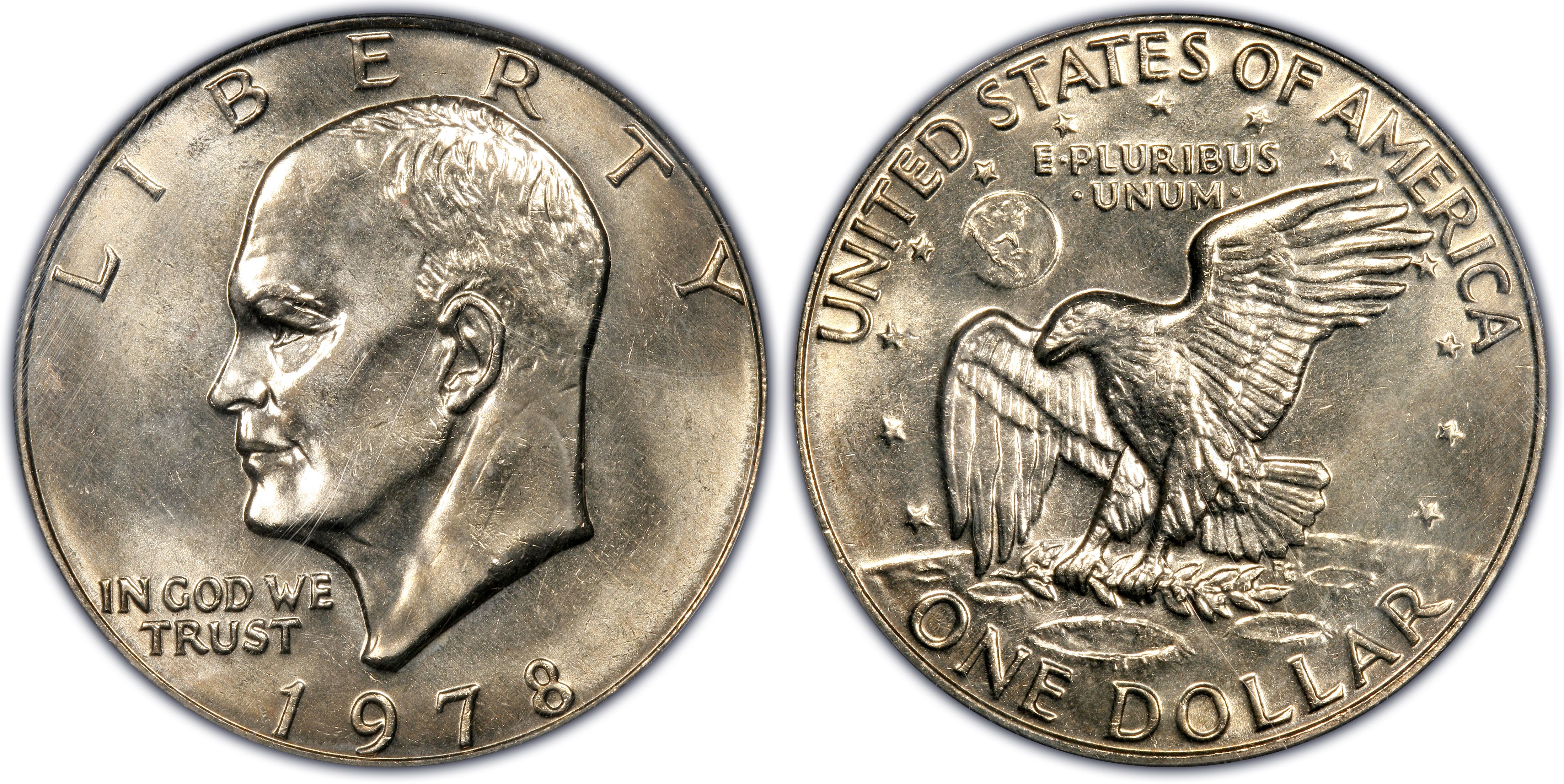 #1 PCGS MS67
"KHayse Ike Variety Set" (PCGS Set Registry). |
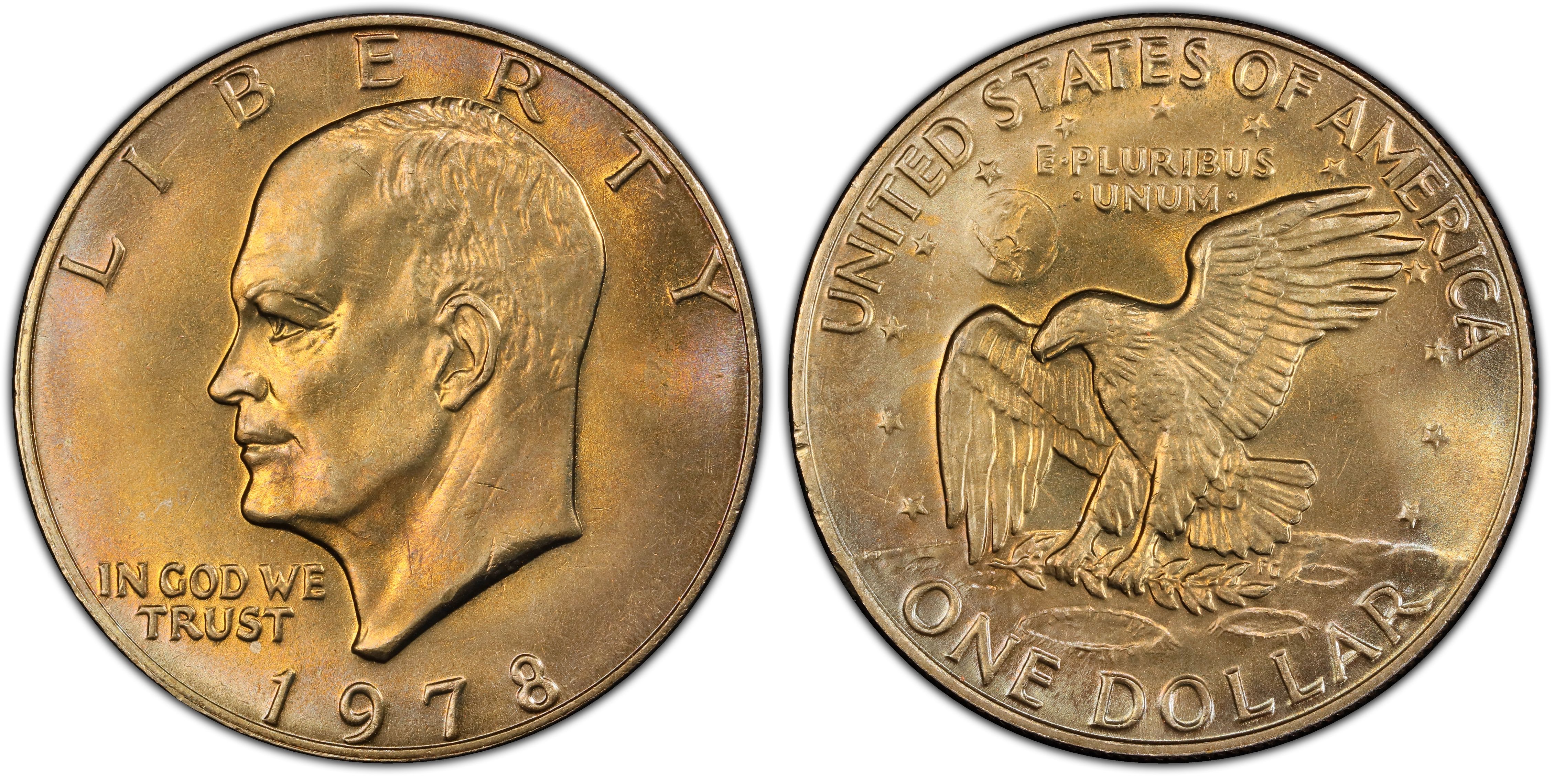 #1 PCGS MS67
"The rickypapabear Collection" (PCGS Set Registry). |
 #1 PCGS MS67
"The Rambert Registry" (PCGS Set Registry). Wispy golden toning at the bottom left of the obverse. |
 #1 PCGS MS67
"The fredegrar Collection" (PCGS Set Registry). |
|
#1 PCGS MS67
"The MysteryMan Collection" (PCGS Set Registry). |
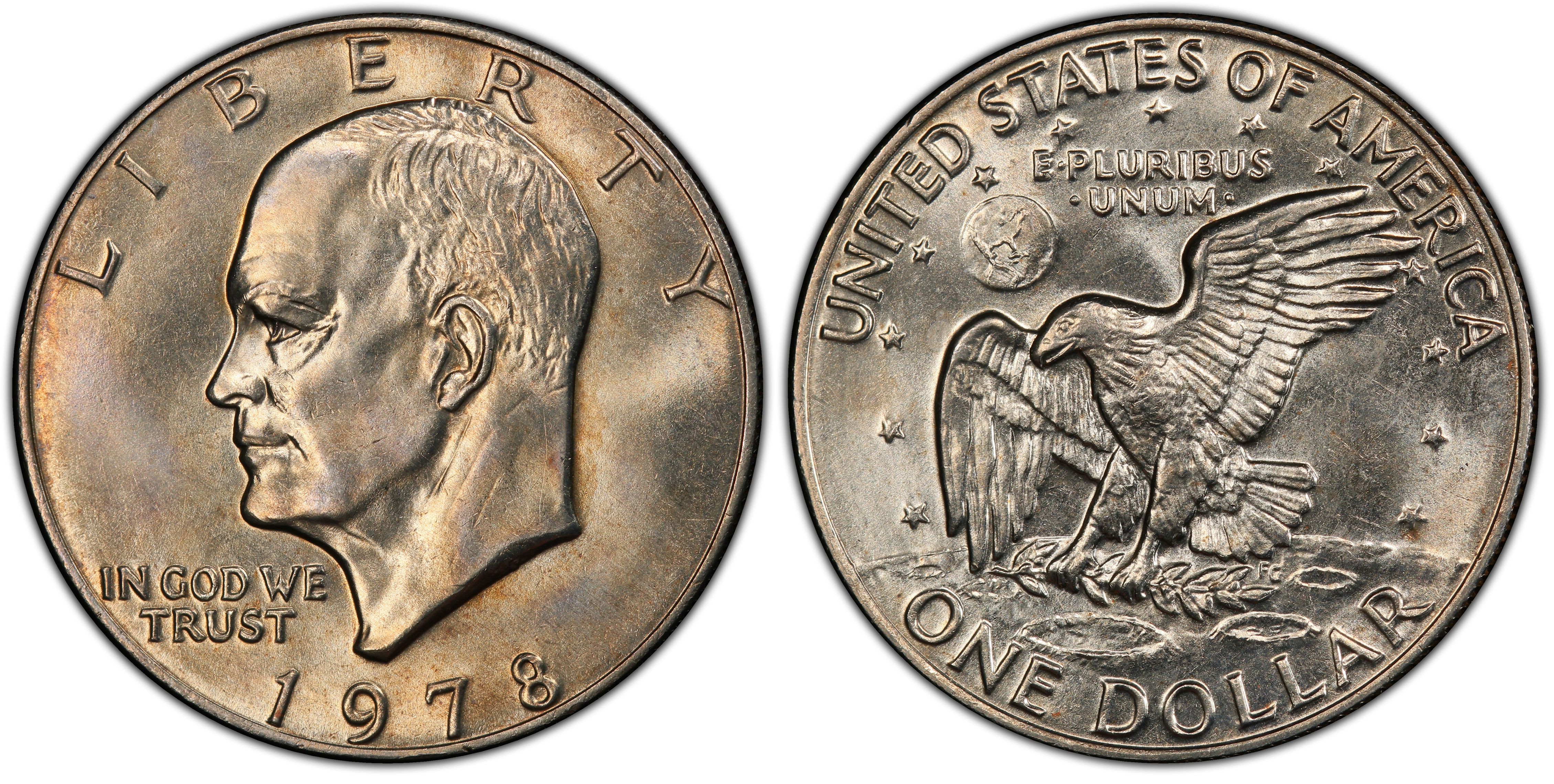 #1 PCGS MS67
|
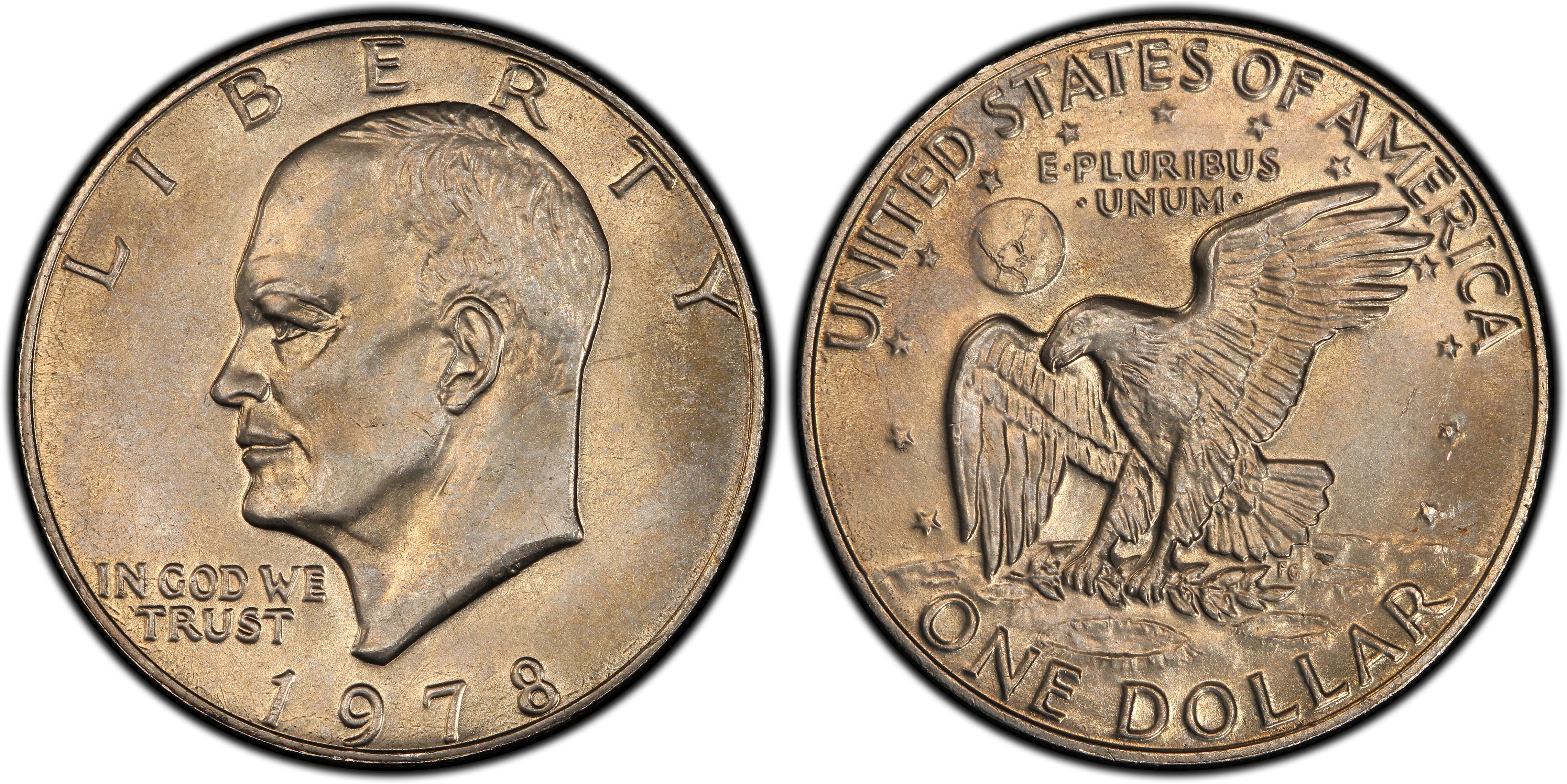 #1 PCGS MS67
|
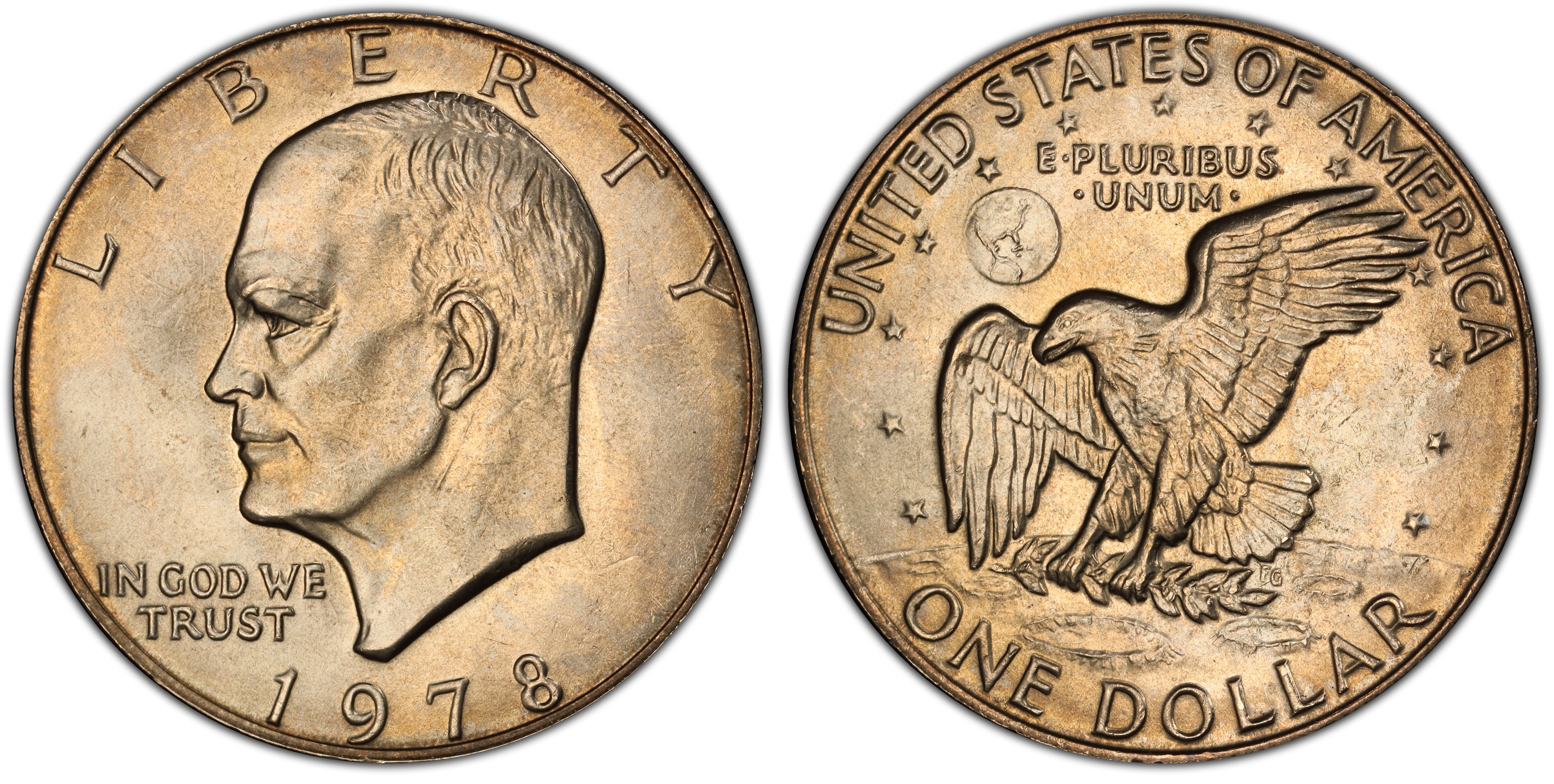 #1 PCGS MS67
|
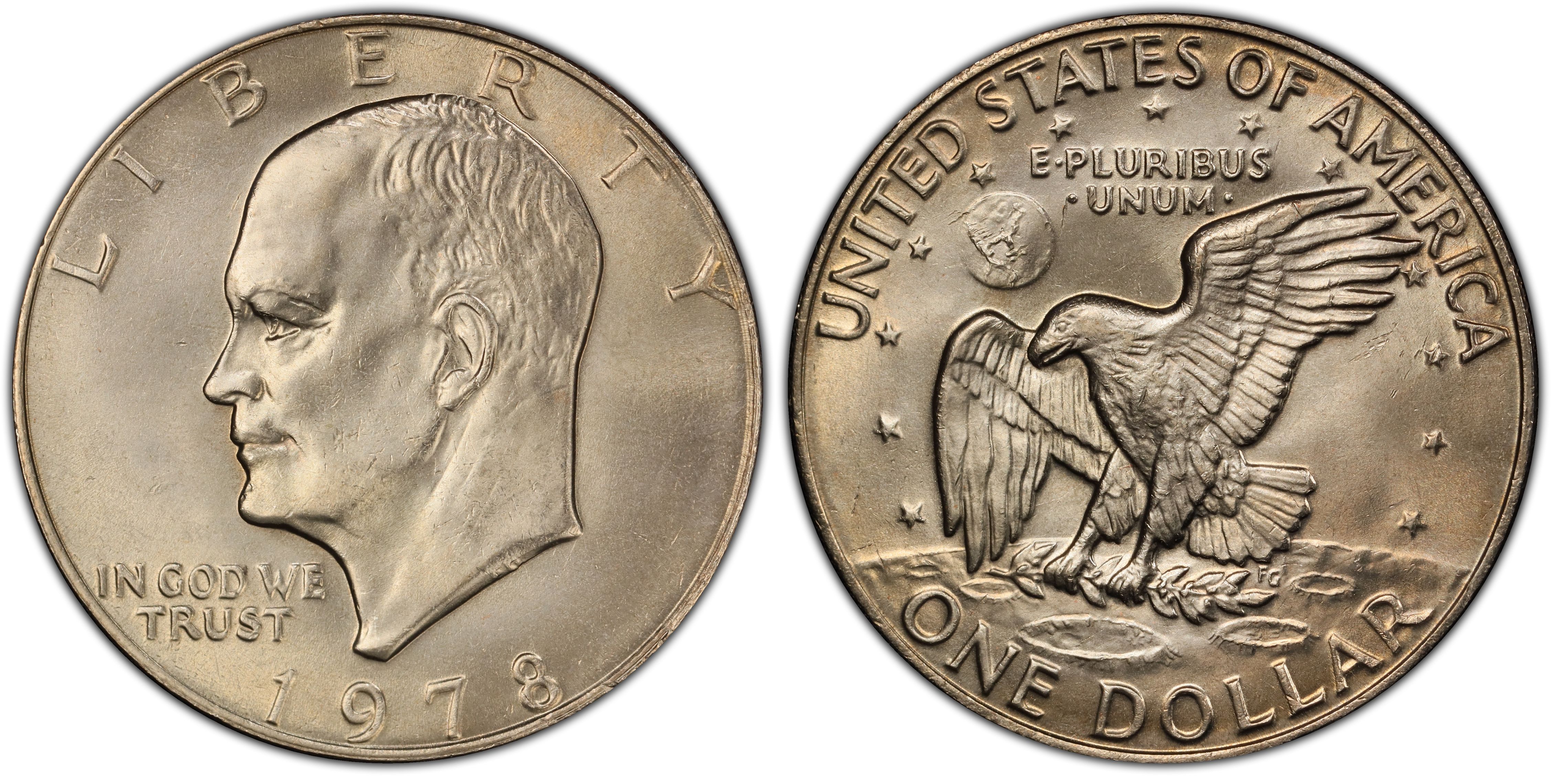 #1 PCGS MS67
|
 #1 PCGS MS67
|
|
#1 PCGS MS67
|
| #1 PCGS MS67 |
| #1 PCGS MS67 |
The Eisenhower Dollar was introduced into circulation in 1971 as a numismatic memorial to the popular war hero and President, but its utility as everyday tender was always a dubious proposition. The United States had long struggled with the widespread acceptance of its dollar coins, particularly since they circulated alongside the favored Federal Reserve Note, which offered superior foldability and a standard size. The Ike Dollar, on the other hand, was a heavy and cumbersome coin, struck to the same large size standards as the old silver dollars (such as the Morgan and Peace Dollars). However, unlike its predecessors, the circulation strike Eisenhower Dollar was not backed by intrinsic metal value, a consequence of the shift away from silver coinage.
Another Dollar Coin Boondoggle
Without the intrinsic value of silver to justify its size, the Ike Dollar's large diameter was a matter of tradition over practicality. While the coin found a niche with casino interests as an ideal replacement for the silver dollars used in slot machines, it was widely viewed by the rest of America as either a novelty or an example of wasteful government spending.
The Treasury Department's own actions mirrored these sentiments. No Eisenhower Dollars were struck for circulation in 1973, as tens of millions of coins struck in 1971 and 1972 languished unwanted in government vaults. Furthermore, by the time the regular design resumed following the Mint's two-year Bicentennial design observance, an effort in Congress was already underway to replace the large dollar coin with a smaller one. Even the 40% silver "collector" program, which ran from 1971 to 1974 and was replaced by a three-coin 40% silver Bicentennial coin program in 1975 and 1976, was not resumed for the series' final two years.
The Last of the Ike Dollars: The 1978 Issue
The 1978 Eisenhower Dollar (#7425) marks the final year of the large circulating dollar series. Throughout 1978, hearings were held to discuss a change in the dollar coin's size and design. In July 1978, the Senate Committee on Banking, Housing, and Urban Affairs proposed a bill to authorize a small dollar coin featuring Susan B. Anthony. Anthony was ultimately chosen for the obverse over other candidates, including Sacagawea—who's time would come in 2000.
The Philadelphia Mint struck 25.7 million 1978 Eisenhower Dollars as preparation got underway to replace it. On December 13, the striking of the first 1979-P Susan B. Anthony Dollars (#9571) formally ended the Eisenhower Dollar dollar production.
Collecting the 1978 Eisenhower Dollar
While seldom seen in circulation today, circulated Eisenhower Dollars still appear from time to time. Bank branches may occasionally have a few tucked away, but these worn coins are not "collectible" in any meaningful sense. Raw Mint State coins can be sourced from saved bank rolls and, most commonly, from the 1978 United States Mint Uncirculated Coin Set. 2,162,609 of these sets were produced, each containing one example of every circulating coin struck at the Philadelphia and Denver Mints. These sets can occasionally yield Gem-quality 1978 Eisenhower Dollars with good luster, but incidental contact marks often limit the coins' viability as a certified collectible. The typical uncirculated example likely grades MS63 to MS64. While the PCGS Population Report shows MS65 as a frequent grade, this figure is representative only of the coins that submitters felt were of sufficient enough quality to encapsulate.
As is true throughout the entire series, the Denver Mint strikes generally exhibit better quality, a fact reflected when comparing the certified populations of the 1978 and 1978-D (#7426) issues.
* * *