
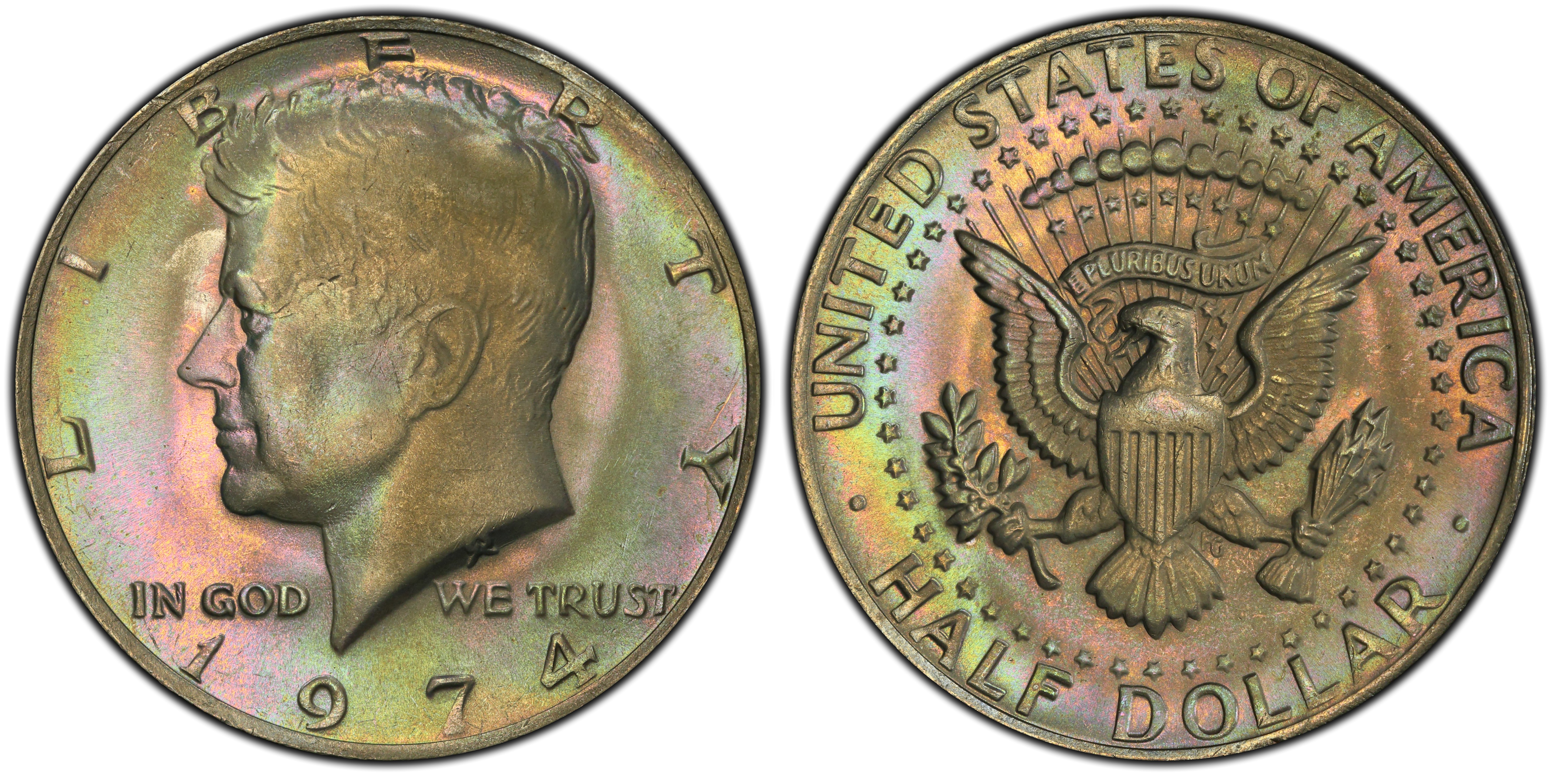
PCGS MS67+

PCGS MS67+
- PCGS #:
- 6722
- Designer:
- Gilroy Roberts/Frank Gasparro
- Edge:
- 150 Reeds
- Diameter:
- 30.61 millimeters
- Weight:
- 11.30 grams
- Mintage:
- 201,596,000
- Mint:
- Philadelphia
- Metal:
- 75% Copper, 25% Nickel over a pure Copper center
- Auction Record:
- $8,000 • MS68 • 03-15-2021 • eBay
Major Varieties
- 1974 50C
Go To Grade
Current Auctions - PCGS Graded
Current Auctions - NGC Graded
For Sale Now at Collectors Corner - PCGS Graded
For Sale Now at Collectors Corner - NGC Graded
Rarity and Survival Estimates Learn More
| Survival Estimate | |
|---|---|
| All Grades | 40,319,200 |
| 60 or Better | 4,031,920 |
| 65 or Better | 806,384 |
| Numismatic Rarity | |
|---|---|
| All Grades | R-1.0 |
| 60 or Better | R-1.0 |
| 65 or Better | R-1.2 |
| Relative Rarity By Type All Specs in this Type | |
|---|---|
| All Grades | 1 / 62 TIE |
| 60 or Better | 29 / 62 TIE |
| 65 or Better | 54 / 62 |
| Relative Rarity By Series All Specs in this Series | |
|---|---|
| All Grades | N/A |
| 60 or Better | N/A |
| 65 or Better | N/A |
Condition Census What Is This?
| #1 MS67 CGS grade |
| #1 MS67 CGS grade |
| #1 MS67 CGS grade |
| #1 MS67 CGS grade |
| #1 MS67 CGS grade |
| #1 MS67 CGS grade |
| #1 MS67 CGS grade |
| #1 MS67 CGS grade |
| #1 MS67 CGS grade |
| #1 MS67 CGS grade |
Jaime Hernandez:
The 1974 Kennedy Half Dollar is a very common coin as the Mint struck a little over 200 million examples for circulation. The mintage is also more than double than that of the Denver struck Kennedy Half Dollars from the same year. Only in MS66 condition or higher is the 1974-P considered scarce and any example in this condition or higher is definitely worth setting aside. In MS67 condition it is really scarce with several dozen confirmed. Anything grading higher than MS67 is considered very rare and should definitely be certified.