
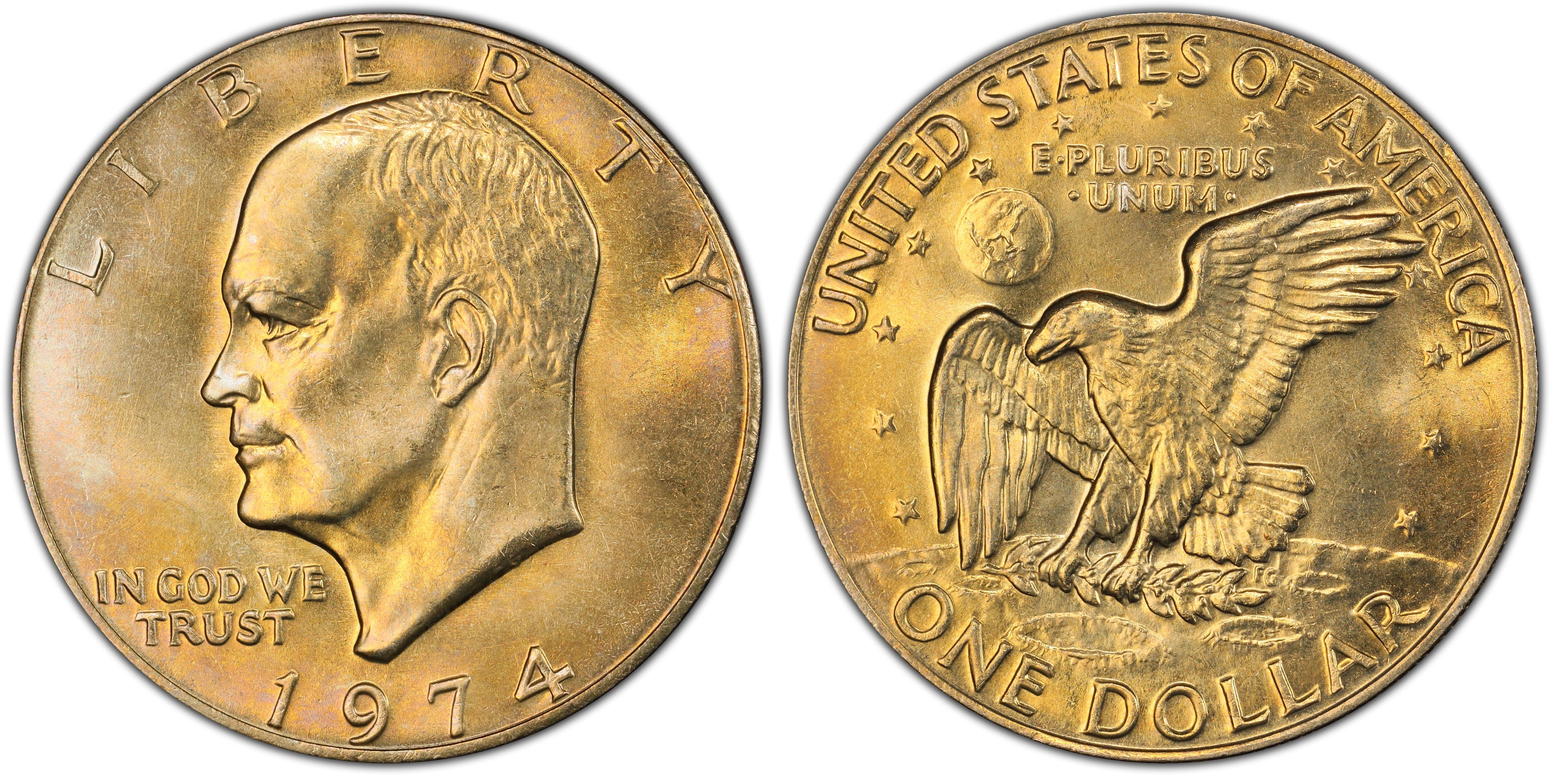
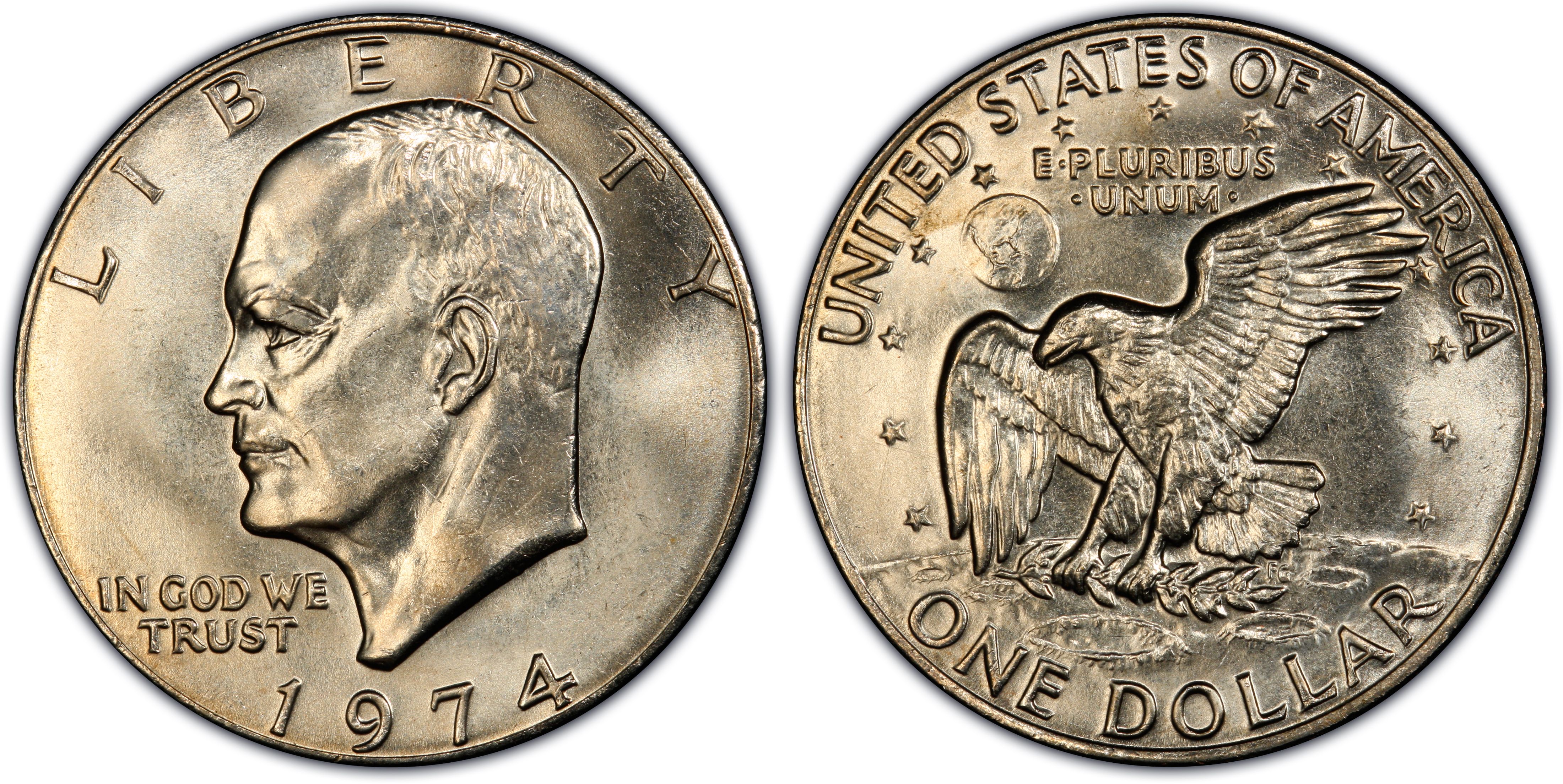
PCGS MS67
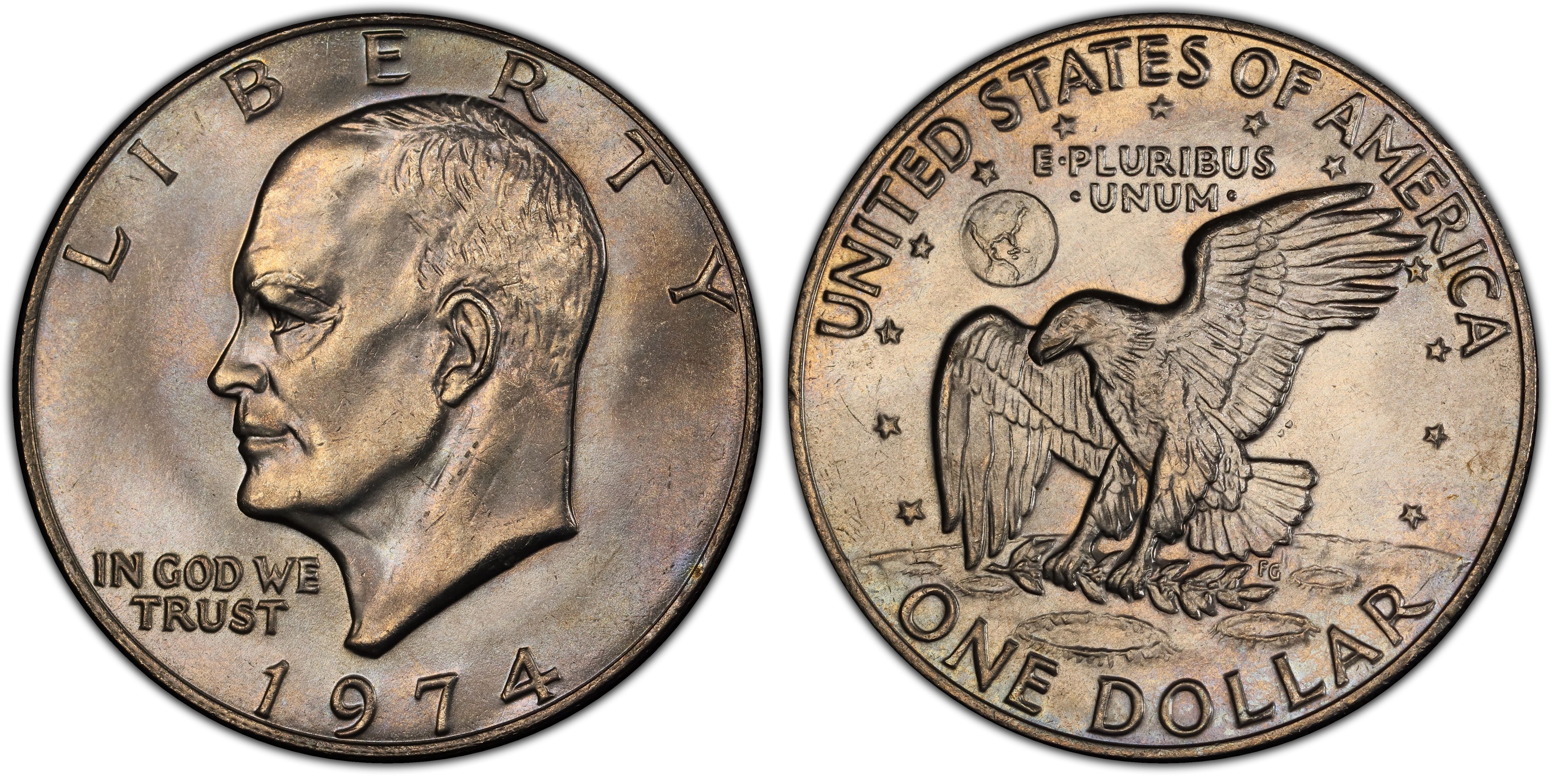
PCGS MS67
- PCGS #:
- 7415
- Designer:
- Frank Gasparro/Michael Collins & James Cooper
- Edge:
- Reeded
- Diameter:
- 38.50 millimeters
- Weight:
- 22.70 grams
- Mintage:
- 27,366,000
- Mint:
- Philadelphia
- Metal:
- 75% Copper, 25% Nickel over a pure Copper center
- Auction Record:
- $8,900 • MS67 • 02-01-2023 • eBay
Major Varieties
- 1974 $1
Go To Grade
Current Auctions - PCGS Graded
Current Auctions - NGC Graded
For Sale Now at Collectors Corner - PCGS Graded
For Sale Now at Collectors Corner - NGC Graded
Rarity and Survival Estimates Learn More
| Survival Estimate | |
|---|---|
| All Grades | 27,300,000 |
| 60 or Better | 540,000 |
| 65 or Better | 5,400 |
| Numismatic Rarity | |
|---|---|
| All Grades | R-1.0 |
| 60 or Better | R-1.5 |
| 65 or Better | R-3.9 |
| Relative Rarity By Type All Specs in this Type | |
|---|---|
| All Grades | 2 / 14 TIE |
| 60 or Better | 5 / 14 TIE |
| 65 or Better | 4 / 14 TIE |
| Relative Rarity By Series All Specs in this Series | |
|---|---|
| All Grades | 2 / 18 TIE |
| 60 or Better | 7 / 18 TIE |
| 65 or Better | 5 / 18 TIE |
Condition Census What Is This?
 #1 MS66 PCGS grade
GDaDIkes Collection (PCGS Set Registry) |
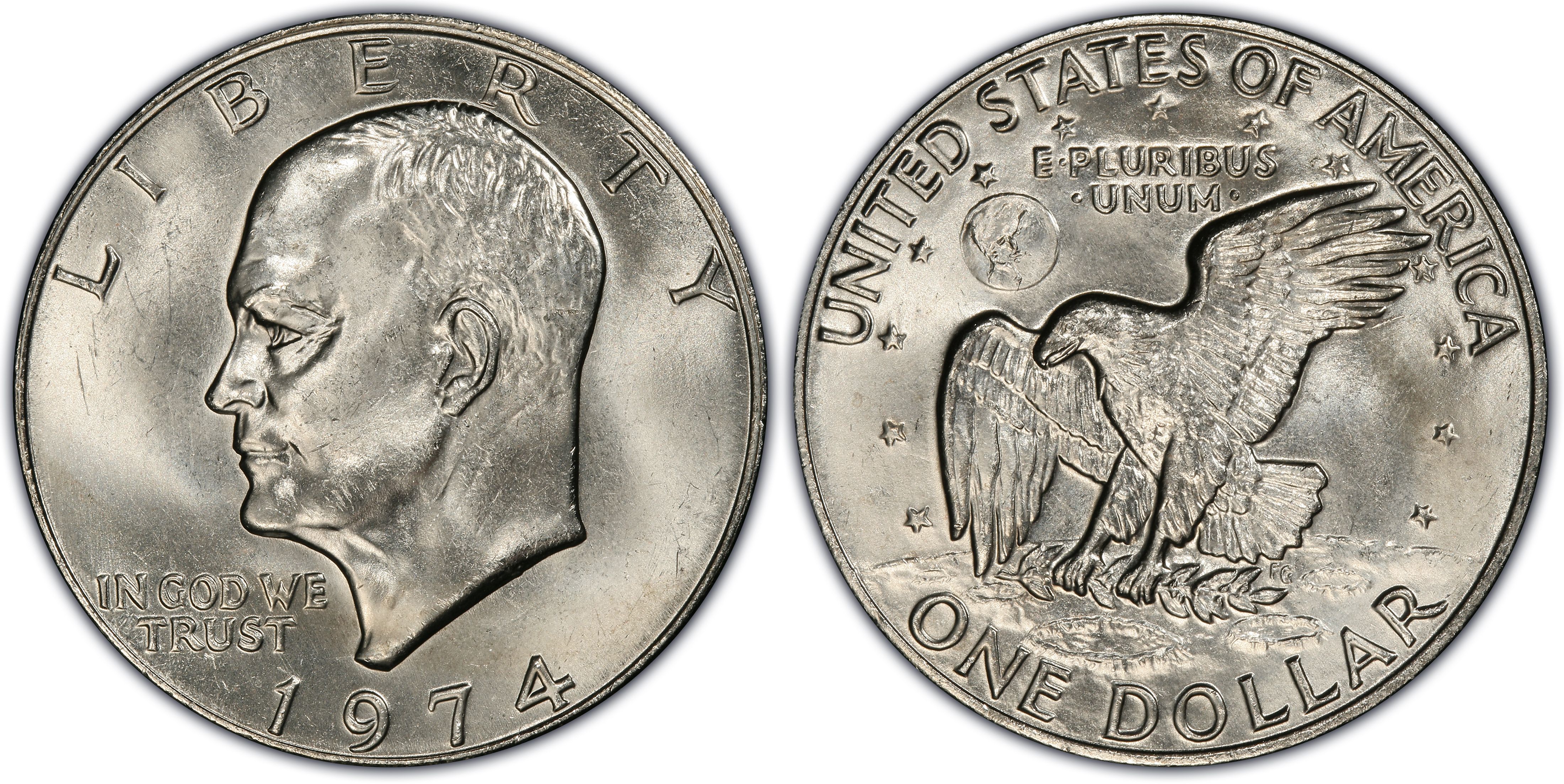 #1 MS66 PCGS grade
The Richland Ikes (PCGS Set Registry) |
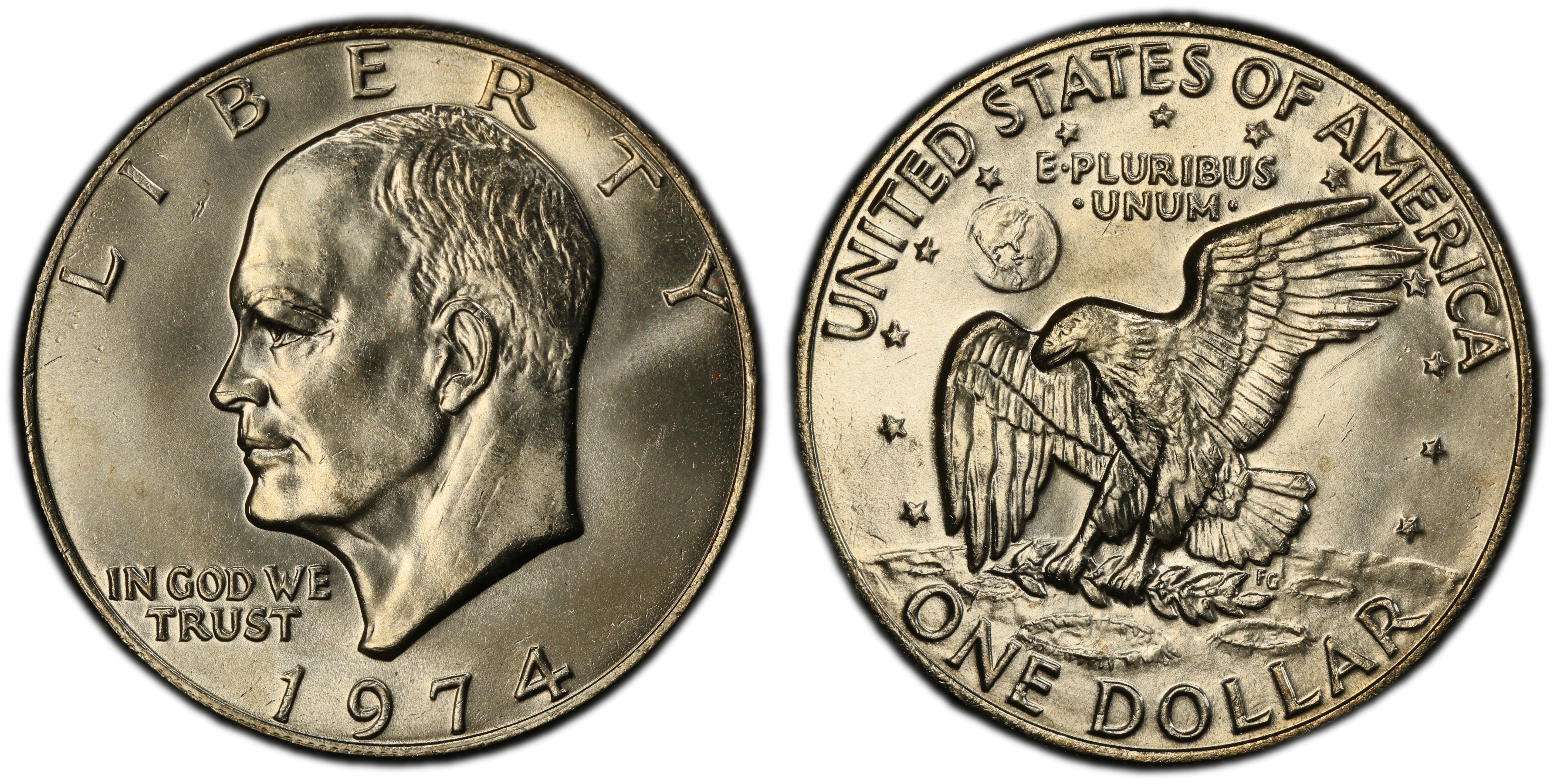 #1 MS66 PCGS grade
|
 #1 MS66 PCGS grade
|
 #1 MS66 PCGS grade
|
| #1 MS66 PCGS grade |
| #1 MS66 PCGS grade |
| #1 MS66 PCGS grade |
| #1 MS66 PCGS grade |
| #1 MS66 PCGS grade |
Jaime Hernandez:
The 1974 Eisenhower Dollar is very common in circulated grades as it has one of the higher mintages in the series. The Mint struck over 27 million coins for this issue and even in low Uncirculated grades it is very common. However, in MS65 and higher grades is one of the tougher issues of the Type 1 circulation strike Eisenhower Dollars. In MS66 it is even scarcer and only the coins truck in 1972 along with the 1971-P are tougher to find in MS66 and higher.