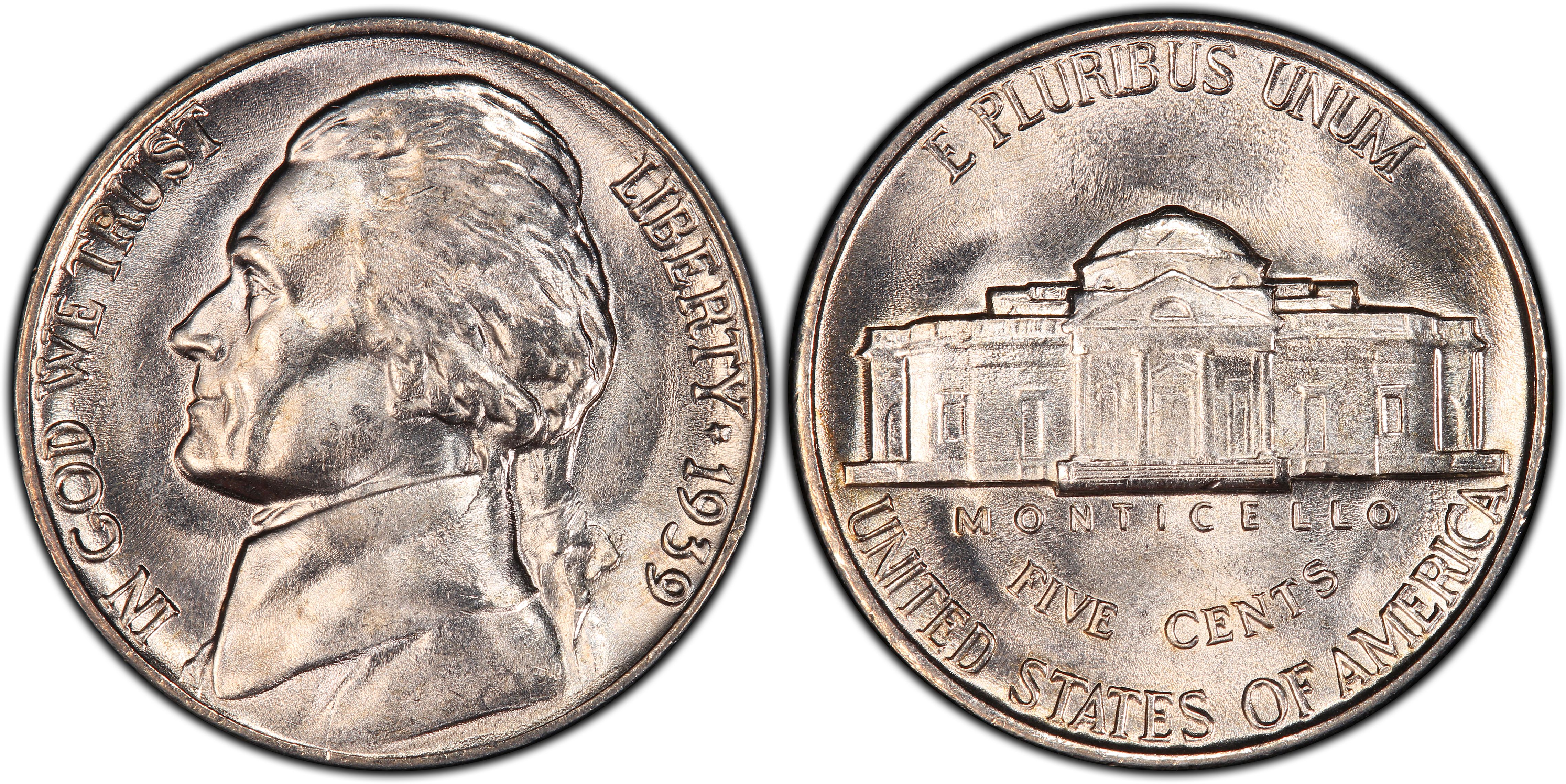
1939 5C Reverse of 1940 (Regular Strike)
Series: Jefferson Five Cents 1938-1964

PCGS MS67+

REVERSE COMPARISON

PCGS MS67+
- PCGS #:
- 94003
- Designer:
- Felix Schlag
- Edge:
- Plain
- Diameter:
- 21.20 millimeters
- Weight:
- 5.00 grams
- Mintage:
- 120,627,535
- Mint:
- Philadelphia
- Metal:
- 75% Copper, 25% Nickel
- Auction Record:
- $1,725 • MS67 • 09-19-2005 • Superior Galleries
Major Varieties
Go To Grade
Current Auctions - PCGS Graded
Current Auctions - NGC Graded
For Sale Now at Collectors Corner - PCGS Graded
For Sale Now at Collectors Corner - NGC Graded
Rarity and Survival Estimates Learn More
| Survival Estimate | |
|---|---|
| All Grades | 40,000,000 |
| 60 or Better | 135,000 |
| 65 or Better | 125,000 |
| Numismatic Rarity | |
|---|---|
| All Grades | R-1.0 |
| 60 or Better | R-1.9 |
| 65 or Better | R-1.9 |
| Relative Rarity By Type All Specs in this Type | |
|---|---|
| All Grades | 9 / 68 TIE |
| 60 or Better | 13 / 68 TIE |
| 65 or Better | 31 / 68 TIE |
| Relative Rarity By Series All Specs in this Series | |
|---|---|
| All Grades | 12 / 82 TIE |
| 60 or Better | 16 / 82 TIE |
| 65 or Better | 36 / 82 TIE |
Condition Census What Is This?
 #1 MS67 PCGS grade
|
| #1 MS67 PCGS grade |
| #1 MS67 PCGS grade |
| #1 MS67 PCGS grade |
| #1 MS67 PCGS grade |
| #1 MS67 PCGS grade |
| #1 MS67 PCGS grade |
| #1 MS67 PCGS grade |
| #1 MS67 PCGS grade |
| #1 MS67 PCGS grade |
Ron Guth:
The 1939 Reverse of 1940 is the predominant reverse of the year and is at least twice as common as the Reverse of 1938. The most frequently seen grade is MS66, where PCGS has certified over 200 examples. The best examples certified by PCGS include nearly two dozen MS67s.