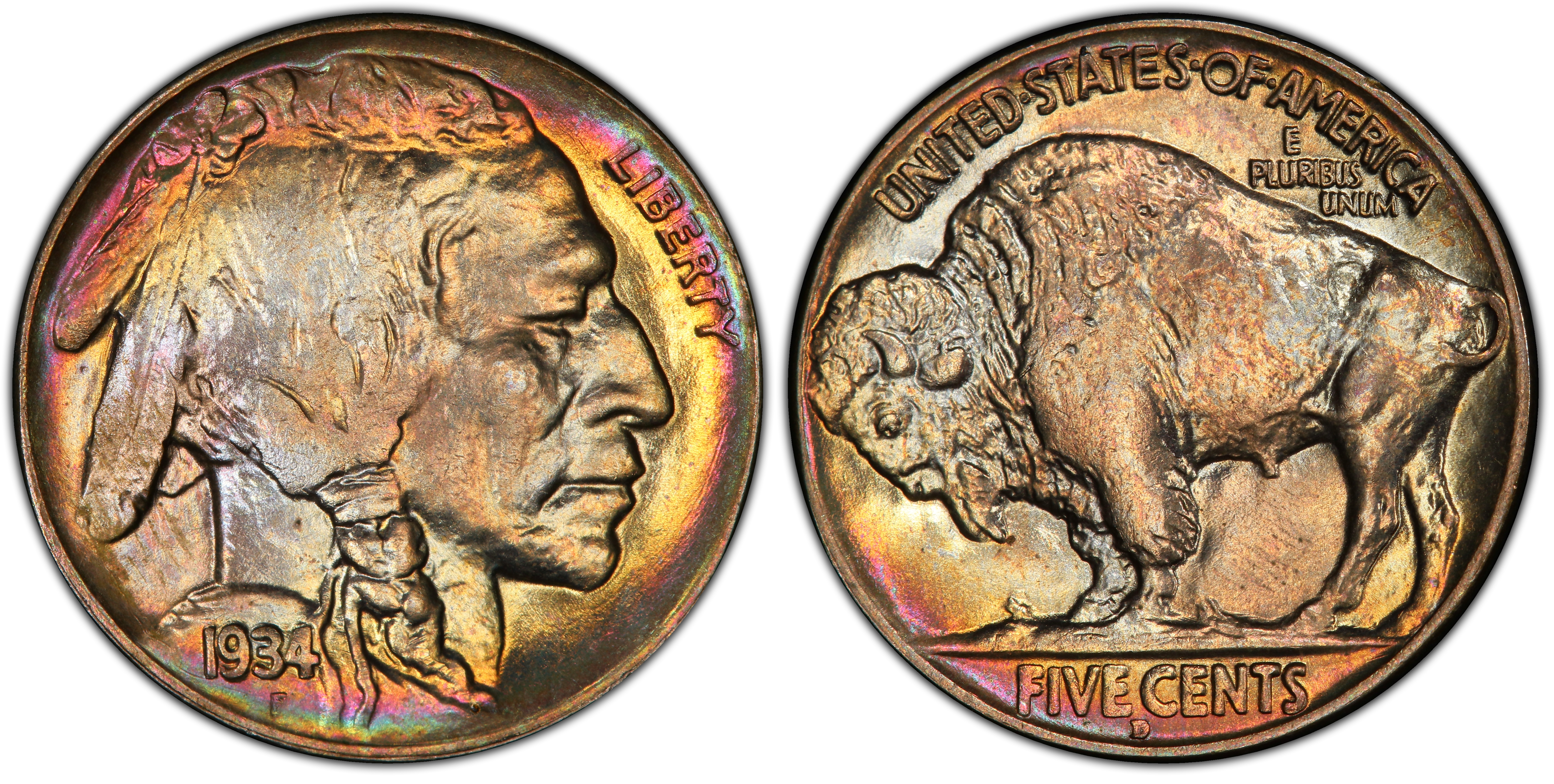

PCGS MS66+

PCGS MS66+
- PCGS #:
- 3973
- Designer:
- James Earle Fraser
- Edge:
- Plain
- Diameter:
- 21.20 millimeters
- Weight:
- 5.00 grams
- Mintage:
- 7,480,000
- Mint:
- Denver
- Metal:
- 75% Copper, 25% Nickel
- Auction Record:
- $23,500 • MS66+ • 01-30-2020 • Legend Rare Coin Auctions
Major Varieties
- 1934-D 5C
Go To Grade
Current Auctions - PCGS Graded
Current Auctions - NGC Graded
For Sale Now at Collectors Corner - PCGS Graded
For Sale Now at Collectors Corner - NGC Graded
Rarity and Survival Estimates Learn More
| Survival Estimate | |
|---|---|
| All Grades | 14,000 |
| 60 or Better | 3,500 |
| 65 or Better | 700 |
| Numismatic Rarity | |
|---|---|
| All Grades | R-2.9 |
| 60 or Better | R-4.3 |
| 65 or Better | R-5.6 |
| Relative Rarity By Type All Specs in this Type | |
|---|---|
| All Grades | 43 / 69 TIE |
| 60 or Better | 49 / 69 TIE |
| 65 or Better | 37 / 69 TIE |
| Relative Rarity By Series All Specs in this Series | |
|---|---|
| All Grades | 44 / 72 TIE |
| 60 or Better | 50 / 72 TIE |
| 65 or Better | 37 / 72 TIE |
Condition Census What Is This?
 #1 MS66+ PCGS grade
|
 #2 MS66 PCGS grade
High Desert Collection (PCGS Set Registry) |
 #2 MS66 PCGS grade
|
| #2 MS66 PCGS grade |
| #2 MS66 PCGS grade |
| #2 MS66 PCGS grade |
| #2 MS66 PCGS grade |
| #2 MS66 PCGS grade |
| #2 MS66 PCGS grade |
| #2 MS66 PCGS grade |
David Hall:
While not particularly rare in circulated grades, the 1934-D is the rarest Buffalo nickel of the 1930s in mint state and Gem condition. Strike can be a significant problem with this issue as many specimens have very weakly struck horn detail. Luster is usually quite nice and deeply frosty.