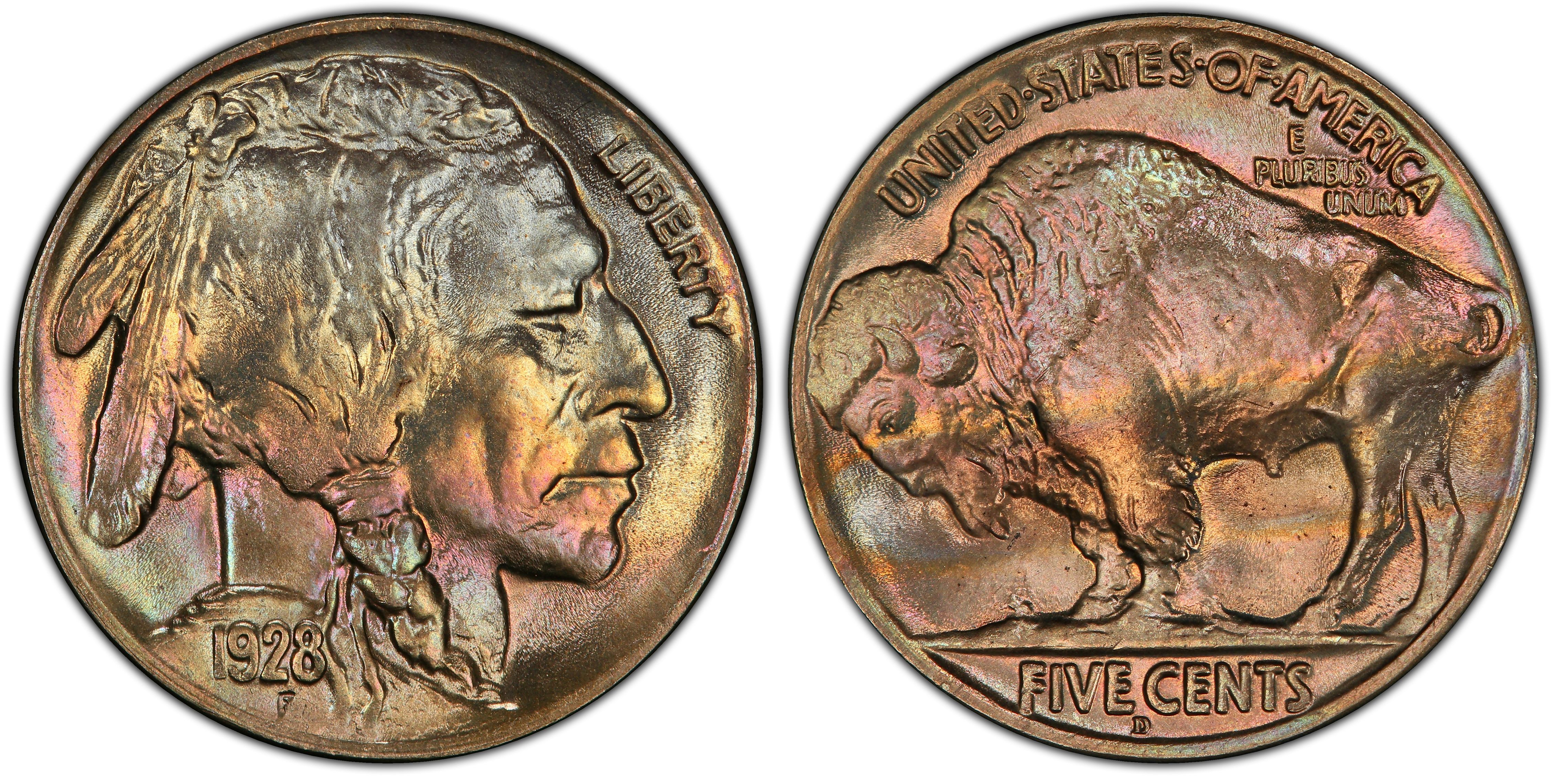

PCGS MS66+

PCGS MS66+
- PCGS #:
- 3964
- Designer:
- James Earle Fraser
- Edge:
- Plain
- Diameter:
- 21.20 millimeters
- Weight:
- 5.00 grams
- Mintage:
- 6,436,000
- Mint:
- Denver
- Metal:
- 75% Copper, 25% Nickel
- Auction Record:
- $17,250 • MS67* • 01-03-2012 • Heritage Auctions
Major Varieties
- 1928-D 5C
Go To Grade
Current Auctions - PCGS Graded
Current Auctions - NGC Graded
For Sale Now at Collectors Corner - PCGS Graded
For Sale Now at Collectors Corner - NGC Graded
Rarity and Survival Estimates Learn More
| Survival Estimate | |
|---|---|
| All Grades | 12,500 |
| 60 or Better | 4,000 |
| 65 or Better | 600 |
| Numismatic Rarity | |
|---|---|
| All Grades | R-2.9 |
| 60 or Better | R-4.2 |
| 65 or Better | R-5.8 |
| Relative Rarity By Type All Specs in this Type | |
|---|---|
| All Grades | 43 / 69 TIE |
| 60 or Better | 52 / 69 TIE |
| 65 or Better | 35 / 69 TIE |
| Relative Rarity By Series All Specs in this Series | |
|---|---|
| All Grades | 44 / 72 TIE |
| 60 or Better | 53 / 72 TIE |
| 65 or Better | 35 / 72 TIE |
Condition Census What Is This?
 #1 MS66 PCGS grade
|
 #1 MS66 PCGS grade
High Desert Collection (PCGS Set Registry) |
| #1 MS66 PCGS grade |
| #1 MS66 PCGS grade |
| #1 MS66 PCGS grade |
| #1 MS66 PCGS grade |
| #1 MS66 PCGS grade |
| #1 MS66 PCGS grade |
| #1 MS66 PCGS grade |
| #1 MS66 PCGS grade |
David Hall:
The 1928-D is a little less common in lower circulated grades than the dates that follow. It is scarce in grades EF40 and above. Interestingly, in mint state condition it is more common than either the 1928 or 1928-S. In fact, it is the most abundant mint state Buffalo nickel of the 1913 to 1930 era save for the very common 1913 Type 1. Apparently a good number of original uncirculated rolls were saved at the time of issue. In Gem MS65 condition, strike is sometimes a problem and the 1928-D is tougher to find than the 1928. And in Superb Gem MS66 condition, the 1928-D is quite rare. Luster is of the satiny semi-frosty type.