
PCGS MS66
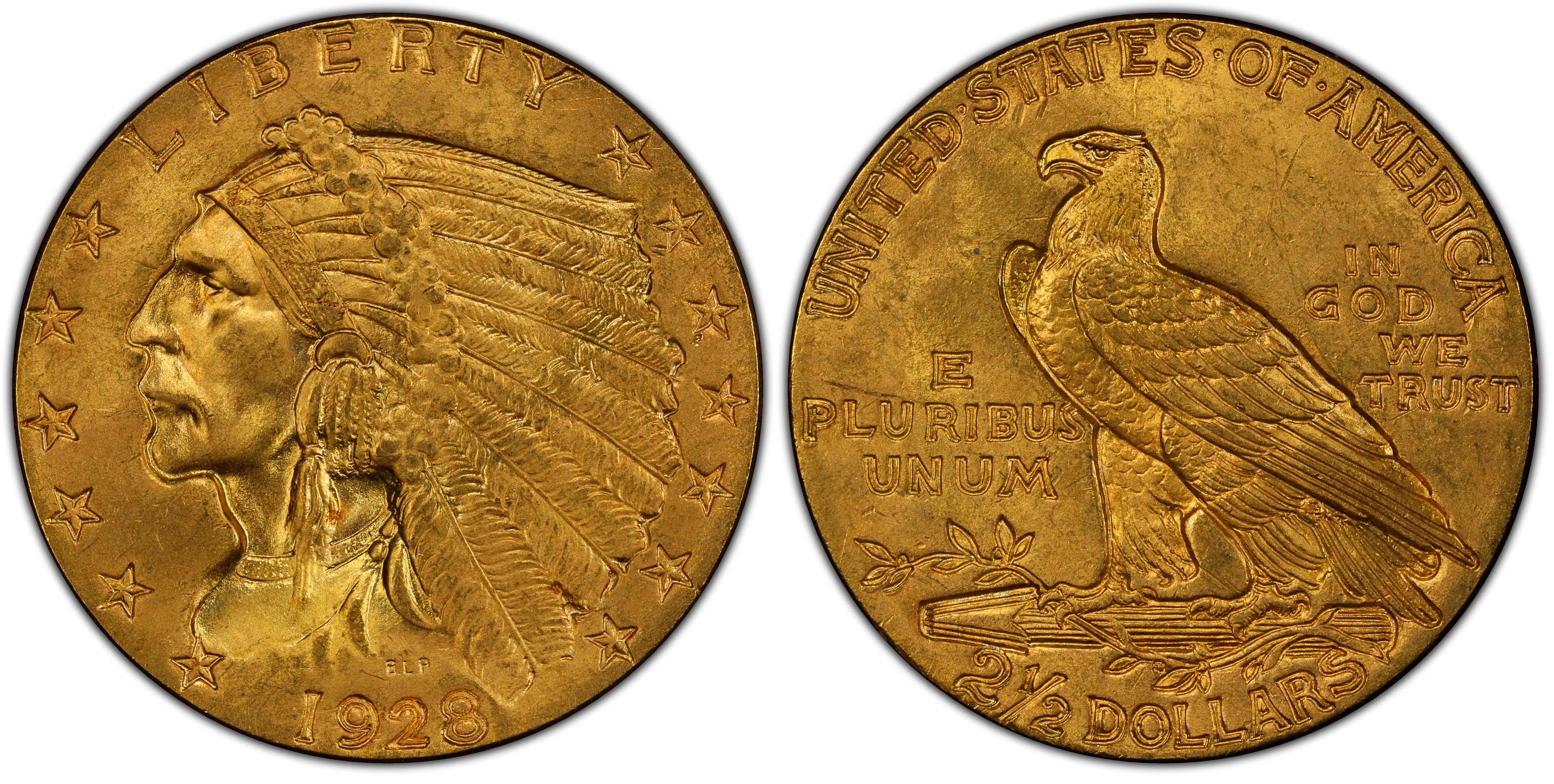
PCGS MS66
- PCGS #:
- 7952
- Designer:
- Bela Lyon Pratt
- Edge:
- Reeded
- Diameter:
- 18.00 millimeters
- Weight:
- 4.18 grams
- Mintage:
- 416,000
- Mint:
- Philadelphia
- Metal:
- 90% Gold, 10% Copper
- Auction Record:
- $19,200 • MS66 • 06-16-2024 • Heritage Auctions
Major Varieties
- 1928 $2.50
Go To Grade
Current Auctions - PCGS Graded
Current Auctions - NGC Graded
For Sale Now at Collectors Corner - PCGS Graded
For Sale Now at Collectors Corner - NGC Graded
Rarity and Survival Estimates Learn More
| Survival Estimate | |
|---|---|
| All Grades | 54,000 |
| 60 or Better | 39,666 |
| 65 or Better | 983 |
| Numismatic Rarity | |
|---|---|
| All Grades | R-2.4 |
| 60 or Better | R-2.6 |
| 65 or Better | R-5.0 |
| Relative Rarity By Type All Specs in this Type | |
|---|---|
| All Grades | 11 / 15 TIE |
| 60 or Better | 11 / 15 TIE |
| 65 or Better | 11 / 15 |
| Relative Rarity By Series All Specs in this Series | |
|---|---|
| All Grades | 11 / 15 TIE |
| 60 or Better | 11 / 15 TIE |
| 65 or Better | 11 / 15 |
Condition Census What Is This?
 #1 MS66+ PCGS grade
Heritage 4/2017:4216, $15,275 - D.L. Hansen Collection |
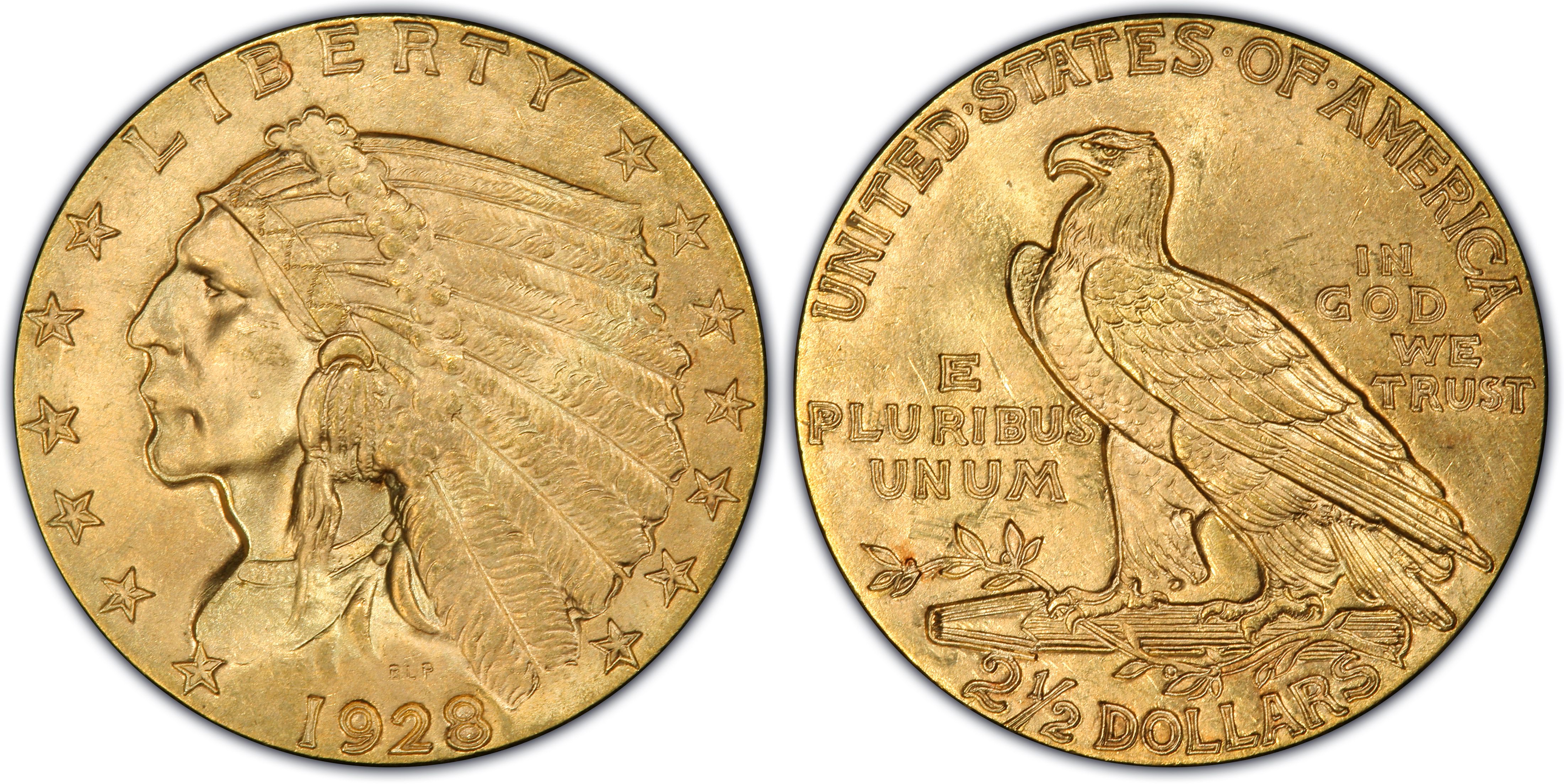 #2 MS66 PCGS grade
|
| #2 MS66 PCGS grade |
| #2 MS66 PCGS grade |
| #2 MS66 PCGS grade |
| #2 MS66 PCGS grade |
| #2 MS66 PCGS grade |
| #2 MS66 PCGS grade |
| #2 MS66 PCGS grade |
| #2 MS66 PCGS grade |
David Akers (1975/88):
The 1928 is slightly more rare overall than the 1926 and 1927 and although MS-63 or lesser quality specimens are easily obtainable, this issue is more elusive in MS-64 than many would suspect. Gems are very scarce, if not rare, and are considerably more difficult to find than those of 1926 and 1927, not to mention 1925-D and 1908. Relatively few specimens better than MS-65 are known, and such high quality examples can really be considered extremely rare.
The 1928 is usually fairly attractive in Mint State although not quite as much so as the typical 1926 or 1927. It is generally well struck with very frosty surfaces, very good lustre, and color that is most often light to medium gold with a greenish tint. Many examples do exist, however, that are a lighter rose coloered gold. Some specimens exhibit striking anomalies; these are the most noticeable at the borders but sometimes in the central portion of the design as well.
The 1928 is usually fairly attractive in Mint State although not quite as much so as the typical 1926 or 1927. It is generally well struck with very frosty surfaces, very good lustre, and color that is most often light to medium gold with a greenish tint. Many examples do exist, however, that are a lighter rose coloered gold. Some specimens exhibit striking anomalies; these are the most noticeable at the borders but sometimes in the central portion of the design as well.