
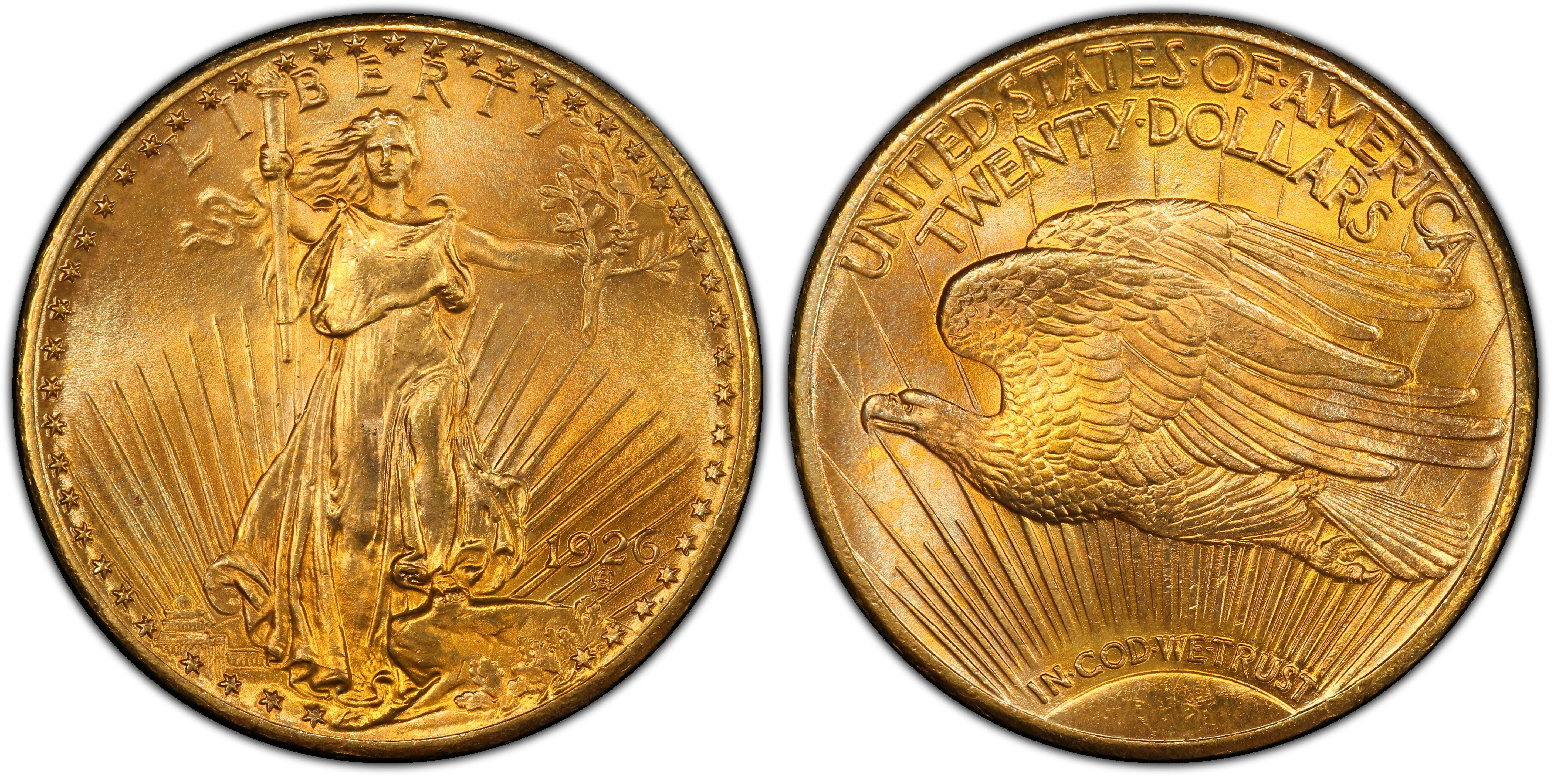
PCGS MS67
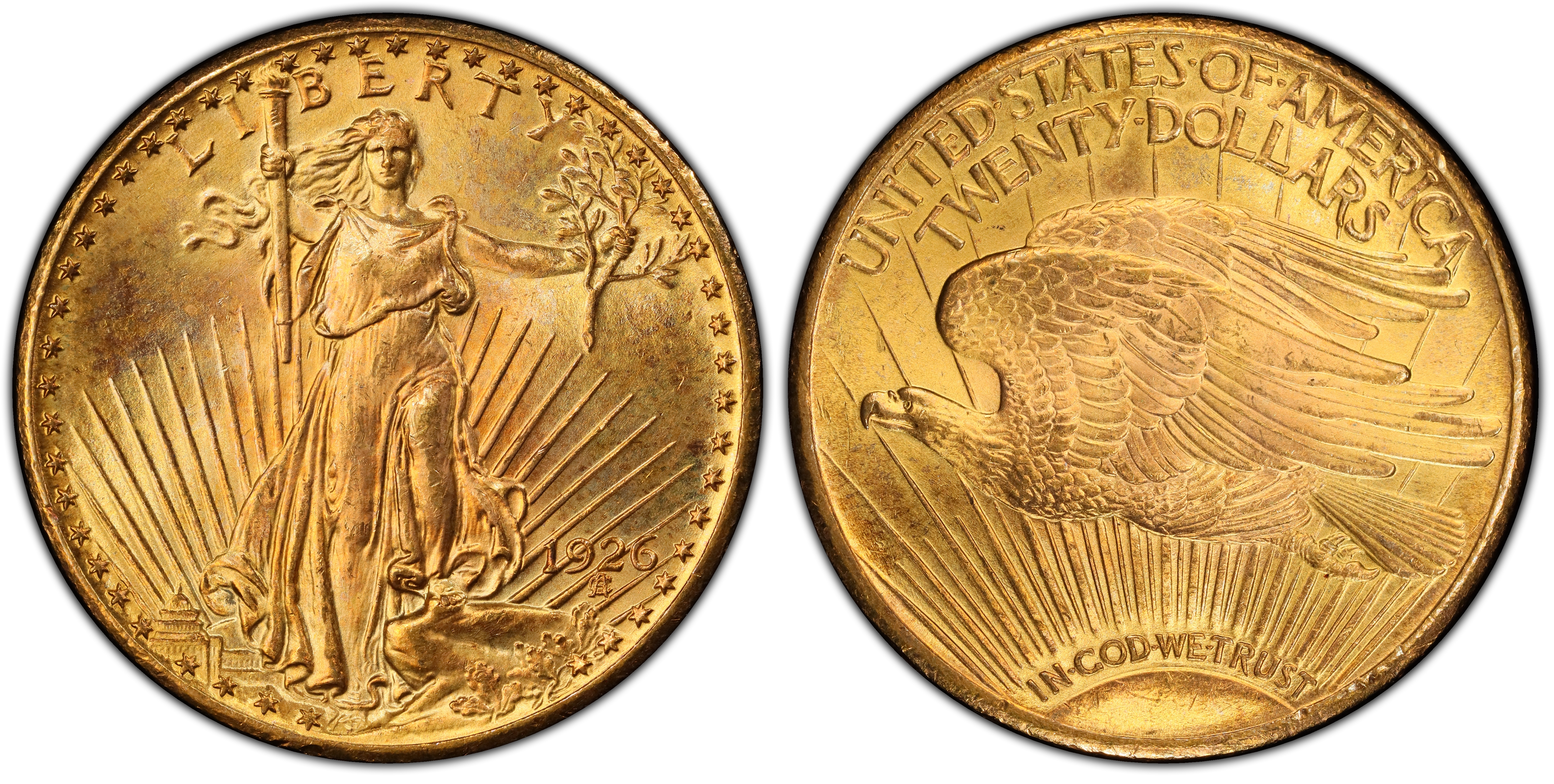
PCGS MS67
- PCGS #:
- 9183
- Designer:
- Augustus Saint Gaudens
- Edge:
- Lettered
- Diameter:
- 34.00 millimeters
- Weight:
- 33.40 grams
- Mintage:
- 816,750
- Mint:
- Philadelphia
- Metal:
- 90% Gold, 10% Copper
- Auction Record:
- $52,800 • MS67 • 01-15-2023 • Heritage Auctions
Major Varieties
- 1926 $20
Go To Grade
Current Auctions - PCGS Graded
Current Auctions - NGC Graded
For Sale Now at Collectors Corner - PCGS Graded
For Sale Now at Collectors Corner - NGC Graded
Rarity and Survival Estimates Learn More
| Survival Estimate | |
|---|---|
| All Grades | 149,166 |
| 60 or Better | 128,333 |
| 65 or Better | 20,000 |
| Numismatic Rarity | |
|---|---|
| All Grades | R-1.9 |
| 60 or Better | R-1.9 |
| 65 or Better | R-2.8 |
| Relative Rarity By Type All Specs in this Type | |
|---|---|
| All Grades | 42 / 49 TIE |
| 60 or Better | 43 / 49 TIE |
| 65 or Better | 45 / 49 |
| Relative Rarity By Series All Specs in this Series | |
|---|---|
| All Grades | 46 / 54 TIE |
| 60 or Better | 47 / 54 TIE |
| 65 or Better | 49 / 54 |
Condition Census What Is This?
 #1 MS67 PCGS grade
Simpson collection |
 #1 MS67 PCGS grade
|
| #1 MS67 PCGS grade |
| #1 MS67 PCGS grade |
| #1 MS67 PCGS grade |
 #6 MS66+ PCGS grade
|
| #6 MS66+ PCGS grade |
| #6 MS66+ PCGS grade |
| #6 MS66+ PCGS grade |
| #6 MS66+ PCGS grade |
David Akers (1975/88):
The 1926 is one of the most common issues of the Saint-Gaudens series, but it is still a distinct step higher in overall population rarity and condition rarity than such truly common issues as the 1924, 1927 and 1928 with which it is generally, but incorrectly, associated. Contrary to what some other experts have written, the 1926 is also significantly more rare than the 1925, especially in gem condition. A few superb (MS-67 or better) examples do exist but they are extremely rare.
The 1926 is always very sharply struck with full frosty surfaces and very good to excellent lustre. Color varies, but rich yellow orange gold or greenish gold are predominant. Many specimens have orange or rose-colored highlights and it is not unusual to see copper spots or stains. Top grade examples of this issue, like all the Philadelphia Mint issues from 1924 to 1932, are highly attractive, and it is obvious that all of these late issues were minted to a very high standard.
The 1926 is always very sharply struck with full frosty surfaces and very good to excellent lustre. Color varies, but rich yellow orange gold or greenish gold are predominant. Many specimens have orange or rose-colored highlights and it is not unusual to see copper spots or stains. Top grade examples of this issue, like all the Philadelphia Mint issues from 1924 to 1932, are highly attractive, and it is obvious that all of these late issues were minted to a very high standard.