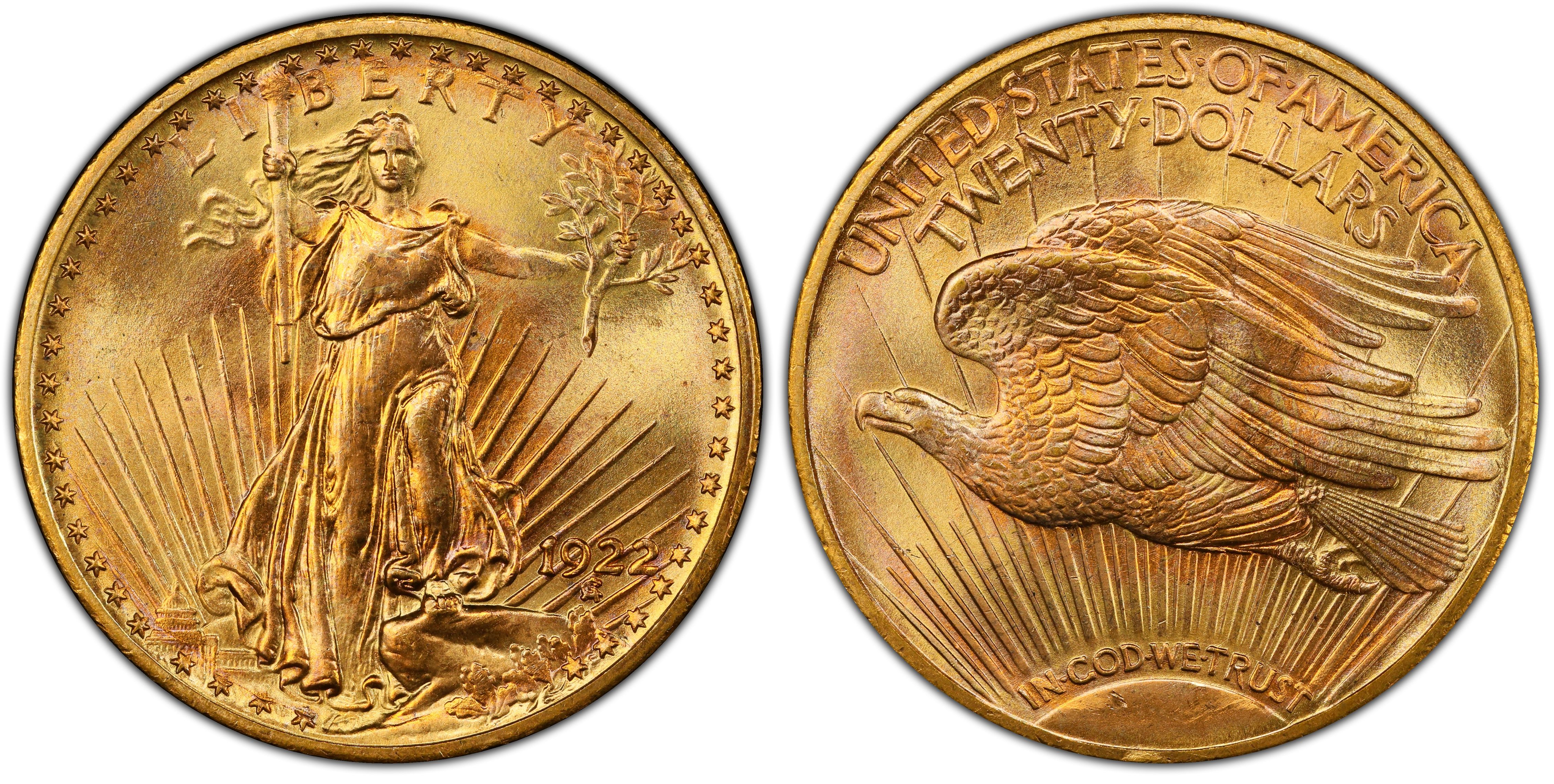

PCGS MS66

PCGS MS66
- PCGS #:
- 9173
- Designer:
- Augustus Saint Gaudens
- Edge:
- Lettered
- Diameter:
- 34.00 millimeters
- Weight:
- 33.40 grams
- Mintage:
- 1,375,500
- Mint:
- Philadelphia
- Metal:
- 90% Gold, 10% Copper
- Auction Record:
- $45,600 • MS66 • 05-08-2022 • Heritage Auctions
Major Varieties
- 1922 $20
Rarity and Survival Estimates Learn More
| Survival Estimate | |
|---|---|
| All Grades | 258,333 |
| 60 or Better | 183,333 |
| 65 or Better | 5,500 |
| Numismatic Rarity | |
|---|---|
| All Grades | R-1.8 |
| 60 or Better | R-1.9 |
| 65 or Better | R-3.9 |
| Relative Rarity By Type All Specs in this Type | |
|---|---|
| All Grades | 45 / 49 TIE |
| 60 or Better | 43 / 49 TIE |
| 65 or Better | 40 / 49 |
| Relative Rarity By Series All Specs in this Series | |
|---|---|
| All Grades | 49 / 54 TIE |
| 60 or Better | 47 / 54 TIE |
| 65 or Better | 43 / 54 |
Condition Census What Is This?
 #1 MS66 PCGS grade
Dr. Steven Duckor collection |
 #1 MS66 PCGS grade
Simpson collection |
 #1 MS66 PCGS grade
|
| #1 MS66 PCGS grade |
| #1 MS66 PCGS grade |
| #1 MS66 PCGS grade |
| #1 MS66 PCGS grade |
| #1 MS66 PCGS grade |
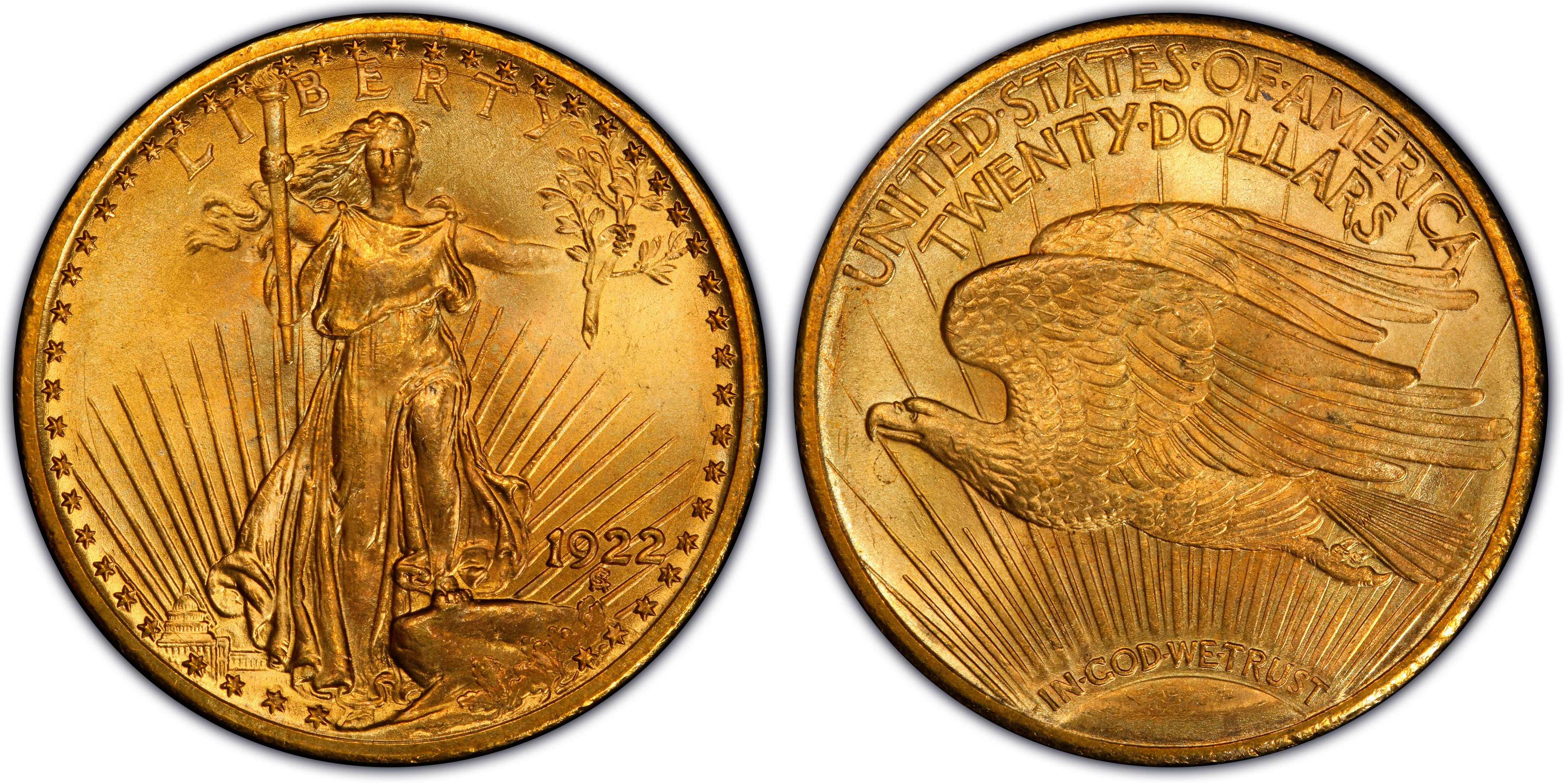 #9 MS65+ PCGS grade
|
| #9 MS65+ PCGS grade |
The 1922 is a very common issue in terms of total number of Mint State pieces known. Obtaining one in MS-63 or lower grade will present the collector with no problem at all. However, in MS-64 or better condition, this issue is decidedly scarce, and I feel it is underrated at that level. The 1922 is clearly not in the same rarity category as the 1920 or 1923, but gems are surprisingly difficult to locate. A few superb MS-67 or better examples also exist. The nearly perfect Amon Carter, Jr. specimen now owned by Dr. Steven Duckor is such a coin, and I have seen several others that, if not quite the equal of the Duckor piece, still grade a full MS-67.
The 1922 is usually fairly well struck, but some specimens do have a slight weakness at the Capitol building and the stars near it. Most specimens are frosty, but many of the top grade ones have a satiny sheen to the surfaces. Color and lustre are generally very good. Most specimens have an appealing rich orange color, sometimes with coppery highlights.