
PCGS MS66+
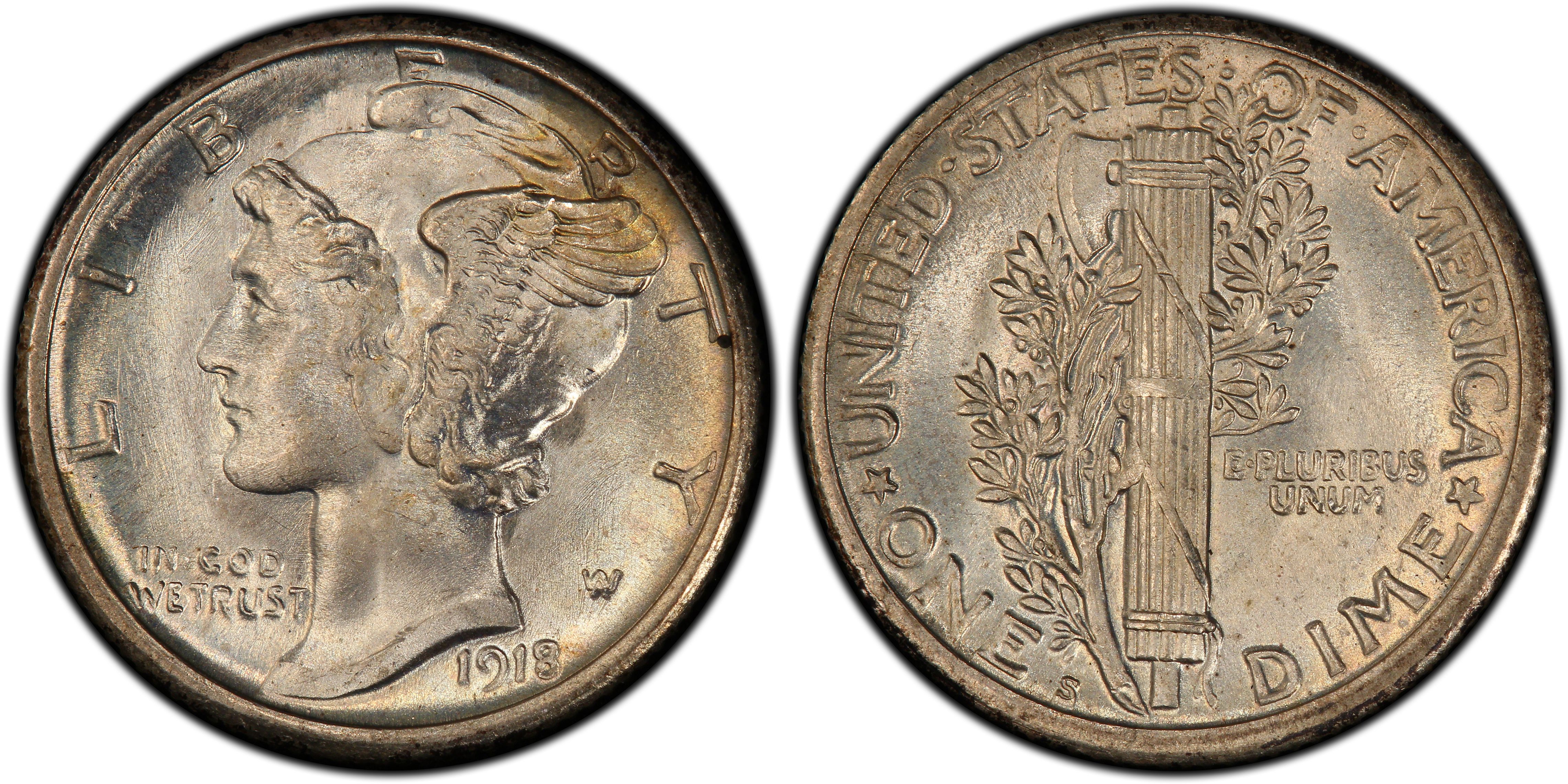
PCGS MS66+
- PCGS #:
- 4920
- Designer:
- Adolph Alexander Weinman
- Edge:
- Reeded
- Diameter:
- 17.90 millimeters
- Weight:
- 2.50 grams
- Mintage:
- 19,300,000
- Mint:
- San Francisco
- Metal:
- 90% Silver, 10% Copper
- Auction Record:
- $7,200 • MS66 • 01-14-2019 • Heritage Auctions
Rarity and Survival Estimates Learn More
| Survival Estimate | |
|---|---|
| All Grades | 3,500 |
| 60 or Better | 600 |
| 65 or Better | 80 |
| Numismatic Rarity | |
|---|---|
| All Grades | R-4.3 |
| 60 or Better | R-5.8 |
| 65 or Better | R-8.2 |
| Relative Rarity By Type All Specs in this Type | |
|---|---|
| All Grades | 9 / 80 TIE |
| 60 or Better | 36 / 80 TIE |
| 65 or Better | 24 / 80 TIE |
| Relative Rarity By Series All Specs in this Series | |
|---|---|
| All Grades | 9 / 80 TIE |
| 60 or Better | 36 / 80 TIE |
| 65 or Better | 24 / 80 TIE |
Condition Census What Is This?
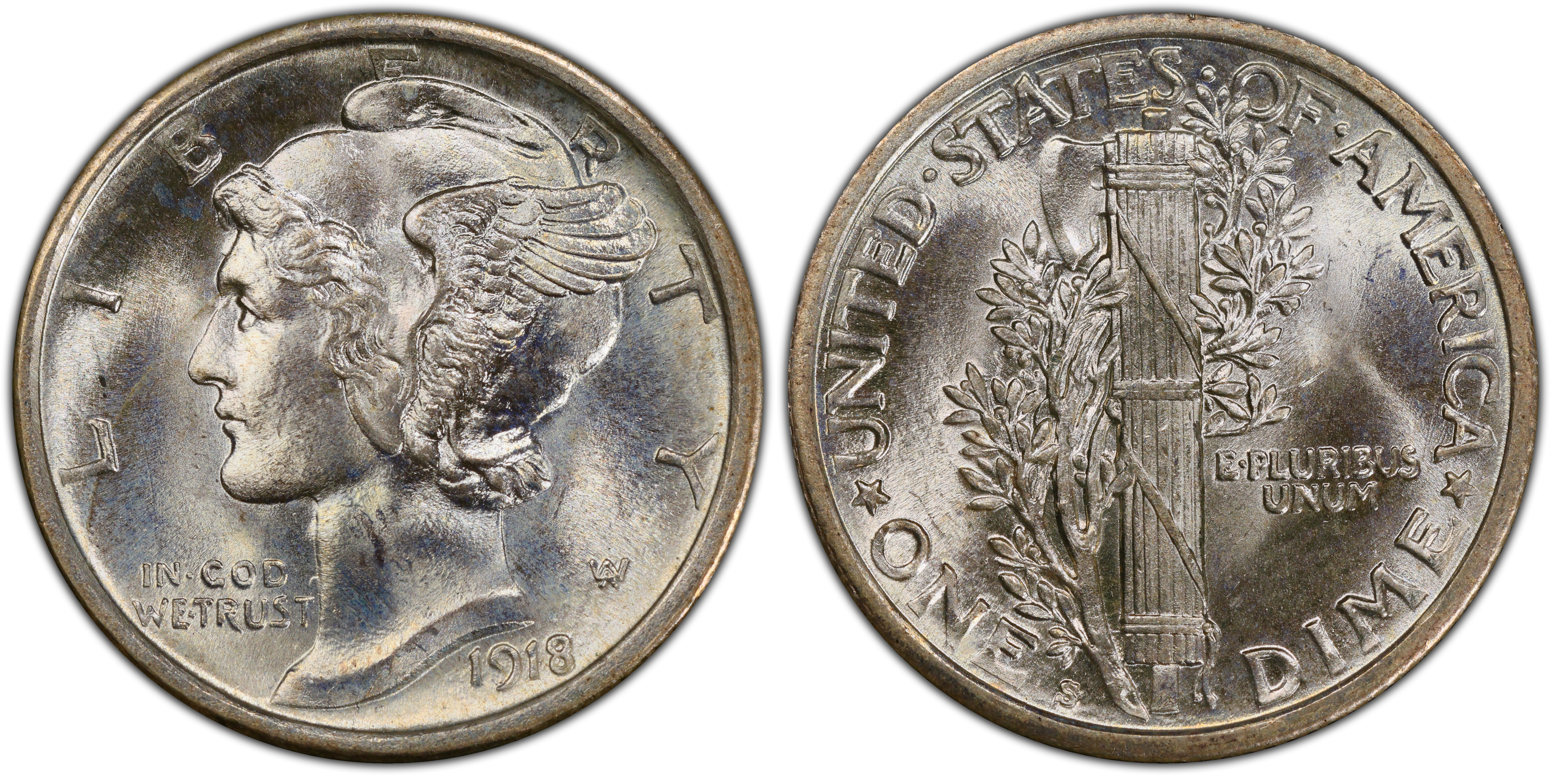 #1 PCGS MS67
|
|
#2 PCGS MS66+
Heritage Auctions, Decmber 3, 2015, Lot 3684 - $1,528; Dell Loy Hansen Collection. Predominantly brilliant with faint traces of golden-brown toning. |
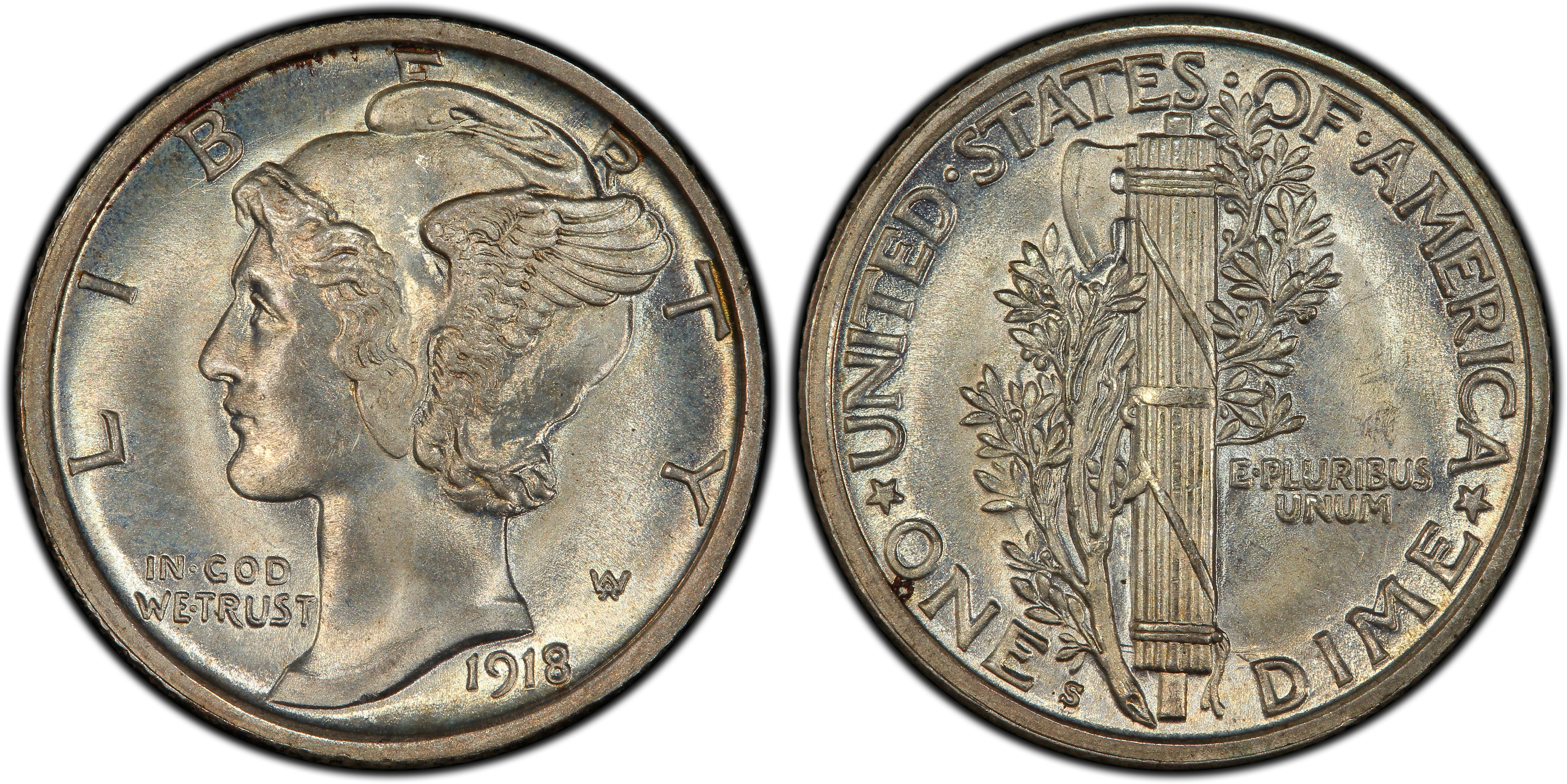 #2 PCGS MS66+
Heritage Auctions, December 5, 2013, Lot 3329 - $2,115; "SES Collection" (PCGS Set Registry). Pearlescent toning with hints of gold. Dark toning spot below O of ONE. |
|
#2 PCGS MS66+
GreatCollections, February 26, 2023, Lot 1292686 - $1,816.88. Predominantly brilliant. Small tick to the left of Liberty's eye. Wispy gold toning on the lower half of the reverse. |
| #2 PCGS MS66+ |
United States Mint records reveal that San Francisco utilized 73 obverse and 66 reverse dies to strike 19,300,000 1918-S Mercury Dimes (#4920, #4921). While it is a testament to the skill of the coiners that the average die survived more than 277,000 impressions, such high-volume production required compromises. Consequently, the 1918-S is typically characterized by a soft strike, making Full Bands (FB) examples—especially in Gem grades—exceptionally difficult to locate. According to PCGS population data, Mint State coins without Full Bands outnumber those that do by a 4:1 ratio. Despite this discrepency, the grade distribution follows a remarkably similar pattern for both categories. The population peaks at MS64, before dropping by about 50% for MS65. This "Gem" cliff continues in the higher grades. Superb Gems are truly outliers and MADHATTER's PCGS MS67+FB example is the single finest known in either category.
Vintage Market Snippet
- April 1976: New York dealer Joel D. Coen offered choice BU 1918-S Mercury Dimes for $150 in The Numismatist.
* * *