

PCGS PR68

PCGS PR68
- PCGS #:
- 3988
- Designer:
- James Earle Fraser
- Edge:
- Plain
- Diameter:
- 21.20 millimeters
- Weight:
- 5.00 grams
- Mintage:
- 1,520
- Mint:
- Philadelphia
- Metal:
- 75% Copper, 25% Nickel
- Auction Record:
- $96,938 • PR68 • 09-02-2021 • Legend Rare Coin Auctions
Major Varieties
- 1913 5C Type 1
Rarity and Survival Estimates Learn More
| Survival Estimate | |
|---|---|
| All Grades | 900 |
| 60 or Better | 825 |
| 65 or Better | 550 |
| Numismatic Rarity | |
|---|---|
| All Grades | R-5.2 |
| 60 or Better | R-5.3 |
| 65 or Better | R-5.9 |
| Relative Rarity By Type All Specs in this Type | |
|---|---|
| All Grades | 1 / 1 |
| 60 or Better | 1 / 1 |
| 65 or Better | 1 / 1 |
| Relative Rarity By Series All Specs in this Series | |
|---|---|
| All Grades | 2 / 8 TIE |
| 60 or Better | 2 / 8 TIE |
| 65 or Better | 2 / 8 TIE |
Condition Census What Is This?
 #1 PR68 PCGS grade
Gerald Forsythe Collection |
 #1 PR68 PCGS grade
“Old West” Collection |
| #1 PR68 PCGS grade |
| #1 PR68 PCGS grade |
|
#5 PR67+ PCGS grade
Stack's/Bowers 8/2016:3042, $4,700 |
 #5 PR67+ PCGS grade
|
| #5 PR67+ PCGS grade |
 #5 PR67+ PCGS grade
|
| #5 PR67+ PCGS grade |
| #5 PR67+ PCGS grade |
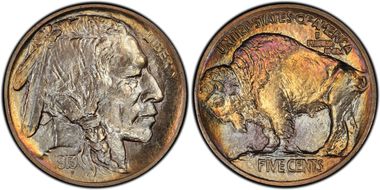
In 1913, the new Buffalo Nickel appeared to enthusiastic reception from the public. The Mint made the normal strikes for circulation and Proofs for sale to collectors. Proof Buffalo Nickels were given the matte finish that first appeared on Lincoln Cents in 1909, which was a framatic change from the brilliant Proofs of previous years. The matte finish is definitely an acquired taste, because it is not dramatically different, at first glance, from a normal circulation strike. However, a well-made matte Proof has crisp details, mark-free surfaces, and a sharply-squared border.
A large percentage of the reported mintage of matte Proof 1913 Type I Nickels have been certified by PCGS (337 out of 1,520, as of February 2012). Of these, the majority appear in the grade range between PR-64 and PR-66. The finest examples certified by PCGS are three PR-68s.