
PCGS MS65+

PCGS MS65+
- PCGS #:
- 8520
- Designer:
- Bela Lyon Pratt
- Edge:
- Reeded
- Diameter:
- 21.60 millimeters
- Weight:
- 8.36 grams
- Mintage:
- 915,000
- Mint:
- Philadelphia
- Metal:
- 90% Gold, 10% Copper
- Auction Record:
- $24,000 • MS65 • 08-22-2021 • Heritage Auctions
Major Varieties
- 1911 $5
Go To Grade
Current Auctions - PCGS Graded
Current Auctions - NGC Graded
For Sale Now at Collectors Corner - PCGS Graded
For Sale Now at Collectors Corner - NGC Graded
Rarity and Survival Estimates Learn More
| Survival Estimate | |
|---|---|
| All Grades | 32,166 |
| 60 or Better | 20,666 |
| 65 or Better | 135 |
| Numismatic Rarity | |
|---|---|
| All Grades | R-2.6 |
| 60 or Better | R-2.7 |
| 65 or Better | R-7.6 |
| Relative Rarity By Type All Specs in this Type | |
|---|---|
| All Grades | 21 / 24 TIE |
| 60 or Better | 21 / 24 TIE |
| 65 or Better | 19 / 24 TIE |
| Relative Rarity By Series All Specs in this Series | |
|---|---|
| All Grades | 21 / 24 TIE |
| 60 or Better | 21 / 24 TIE |
| 65 or Better | 19 / 24 TIE |
Condition Census What Is This?
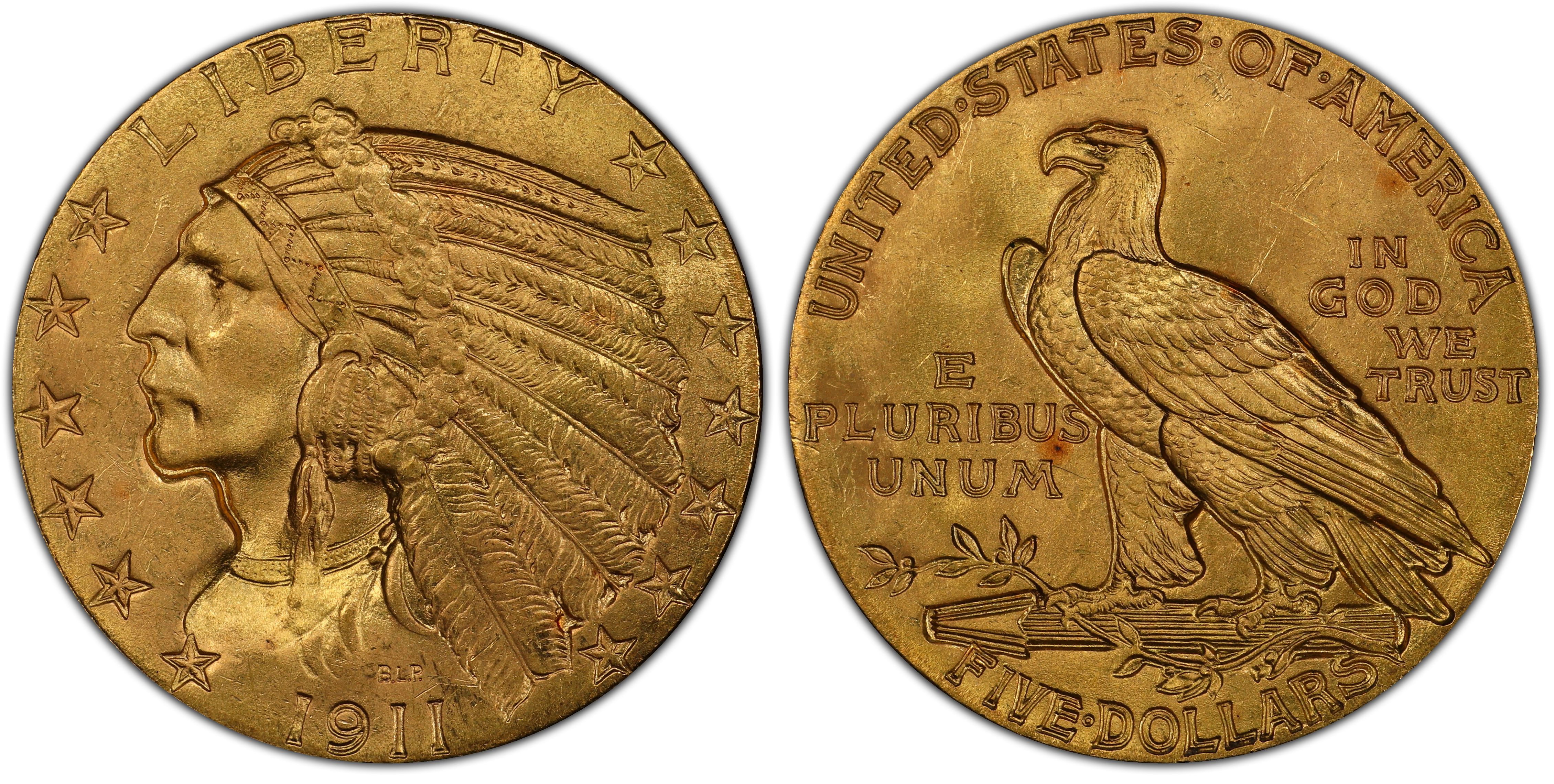 #1 MS66 PCGS grade
|
| #1 MS66 PCGS grade |
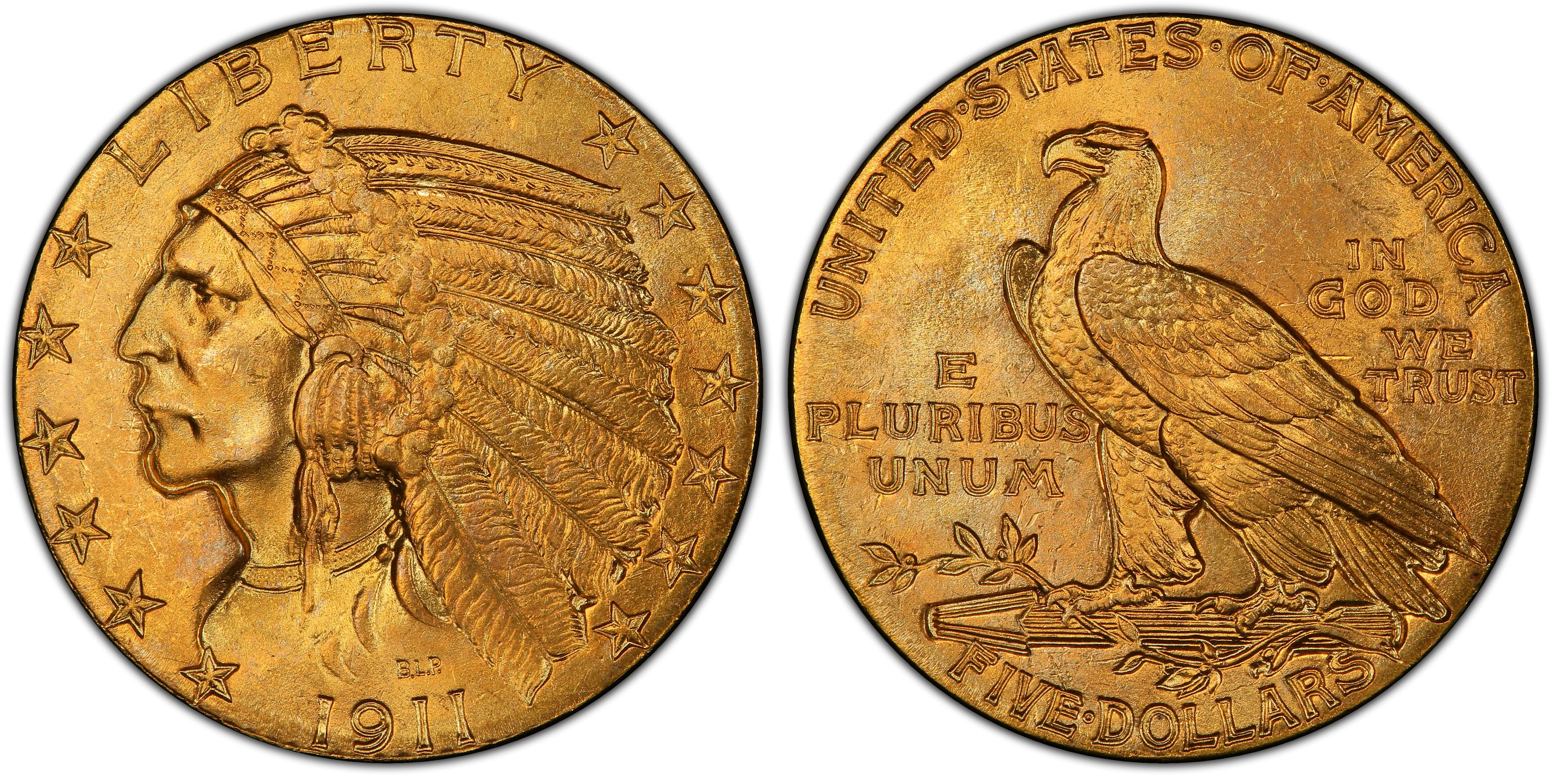 #3 MS65+ PCGS grade
Heritage 11/2016:5522, $16,450 - D.L. Hansen Collection |
| #3 MS65+ PCGS grade |
| #3 MS65+ PCGS grade |
 #6 MS65 PCGS grade
|
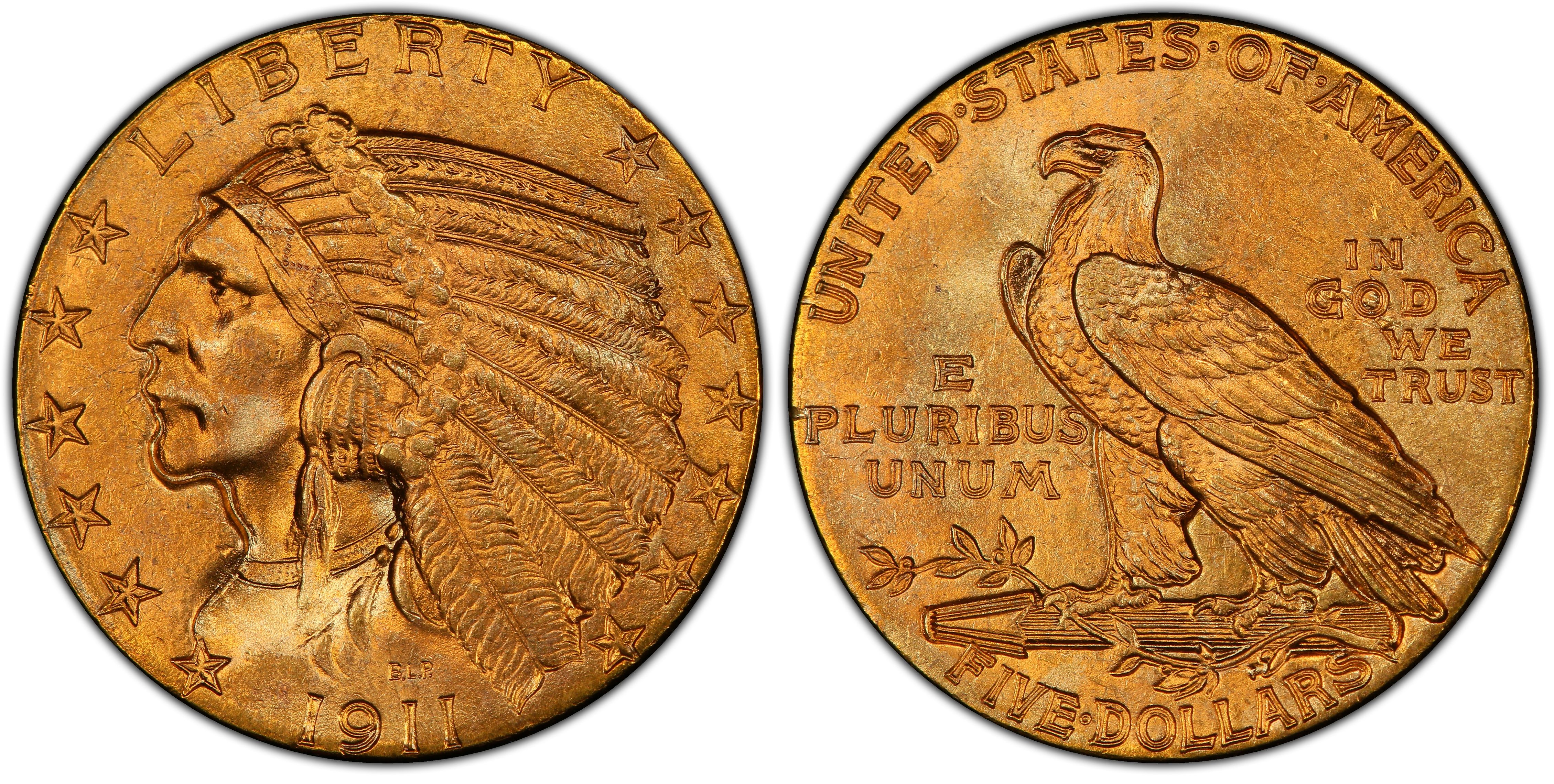 #6 MS65 PCGS grade
|
| #6 MS65 PCGS grade |
| #6 MS65 PCGS grade |
| #6 MS65 PCGS grade |
David Akers (1975/88):
The 1911 is one of the most common issues of the type, and examples in the MS-60 to 63 range are obtainable with some regularity. In MS-64, however, the 1911 is rare but still obtainable with some searching. True gems are very difficult to find and superb quality pieces, although a few do exist, are nearly impossible to locate. Note: Only the 1908 can be found in MS-65 on a fairly regular basis. Although "common" by the standards of this extremely "difficult" series, the 1911 is certainly not common in gem condition in any absolute sense.
Like the quarter eagle of the same date, the 1911 half eagle is usually not really well struck, particularly on the obverse where some of the feathers in the headdress are weak. The surfaces are typically quite granular and the lustre is only good at best, never radiant. Color is generally light to medium yellow or greenish yellow gold but some pale orange gold examples are also known.
Like the quarter eagle of the same date, the 1911 half eagle is usually not really well struck, particularly on the obverse where some of the feathers in the headdress are weak. The surfaces are typically quite granular and the lustre is only good at best, never radiant. Color is generally light to medium yellow or greenish yellow gold but some pale orange gold examples are also known.