
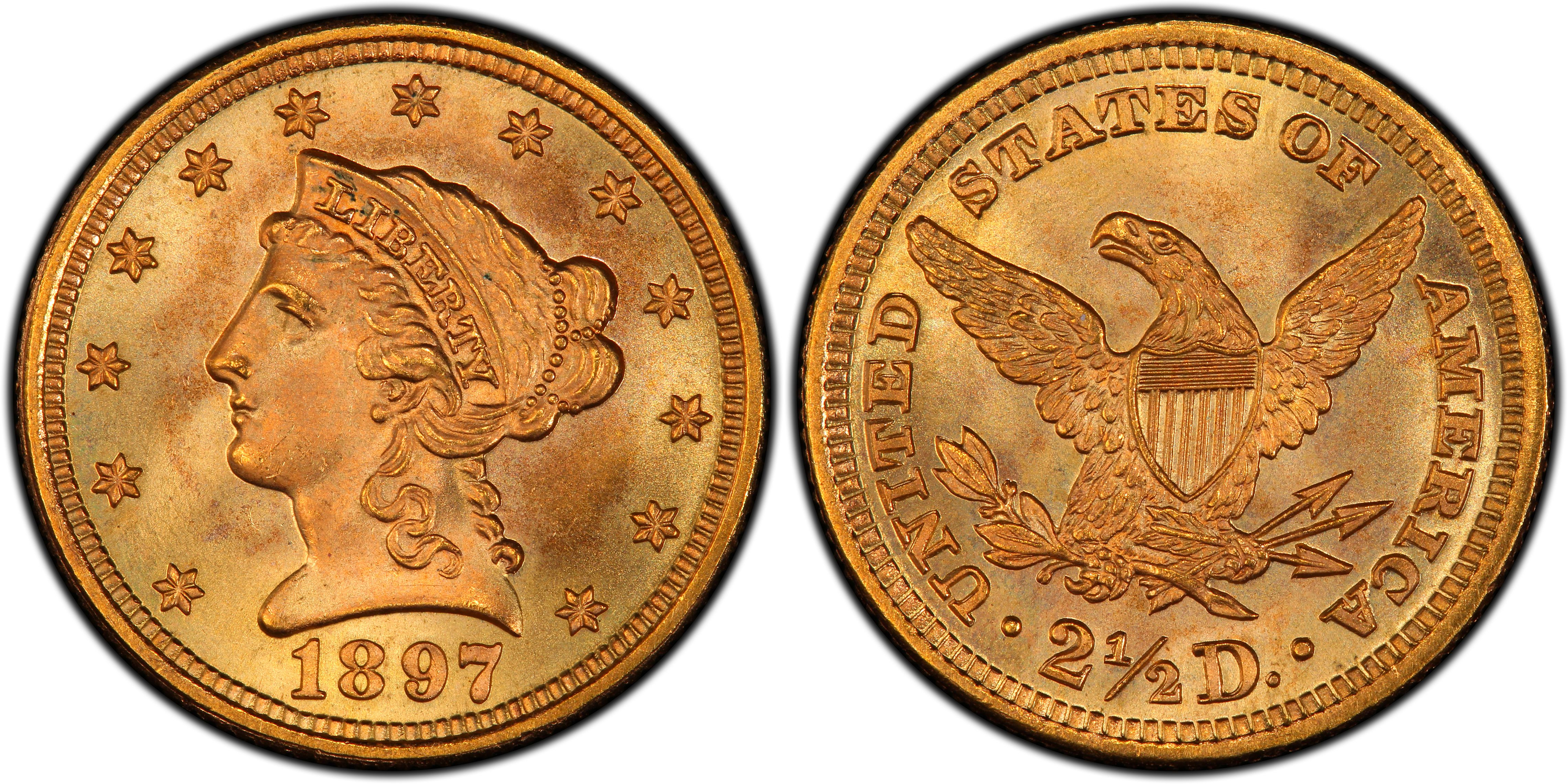
PCGS MS68

PCGS MS67+
- PCGS #:
- 7849
- Designer:
- Christian Gobrecht
- Edge:
- Reeded
- Diameter:
- 18.00 millimeters
- Weight:
- 4.18 grams
- Mintage:
- 29,768
- Mint:
- Philadelphia
- Metal:
- 90% Gold, 10% Copper
- Auction Record:
- $30,550 • MS68 • 06-02-2014 • Goldberg Auctioneers
Major Varieties
- 1897 $2.50
Go To Grade
Current Auctions - PCGS Graded
Current Auctions - NGC Graded
For Sale Now at Collectors Corner - PCGS Graded
For Sale Now at Collectors Corner - NGC Graded
Rarity and Survival Estimates Learn More
| Survival Estimate | |
|---|---|
| All Grades | 5,000 |
| 60 or Better | 1,500 |
| 65 or Better | 120 |
| Numismatic Rarity | |
|---|---|
| All Grades | R-4.0 |
| 60 or Better | R-4.8 |
| 65 or Better | R-7.8 |
| Relative Rarity By Type All Specs in this Type | |
|---|---|
| All Grades | 138 / 147 TIE |
| 60 or Better | 133 / 147 TIE |
| 65 or Better | 61 / 147 |
| Relative Rarity By Series All Specs in this Series | |
|---|---|
| All Grades | 138 / 147 TIE |
| 60 or Better | 133 / 147 TIE |
| 65 or Better | 61 / 147 |
Condition Census What Is This?
 #1 MS68 PCGS grade
|
 #2 MS67 PCGS grade
|
| #2 MS67 PCGS grade |
| #2 MS67 PCGS grade |
| #2 MS67 PCGS grade |
| #2 MS67 PCGS grade |
| #2 MS67 PCGS grade |
| #2 MS67 PCGS grade |
|
#2 MS67 PCGS grade
Heritage 1/2009:5253
|
| #2 MS67 PCGS grade |
David Akers (1975/88):
A moderately scarce date. Most known specimens are uncirculated or proof. This date is significantly underpriced, as are the 1896, 1898, and 1899. All four of these dates are more rare for example than the key to the Indian Head quarter eagle series, the 1911-D, and yet they sell for only a fraction of the price of the latter. (None of them, however, are as rare in uncirculated condition as the 1911-D.)