

PCGS MS64
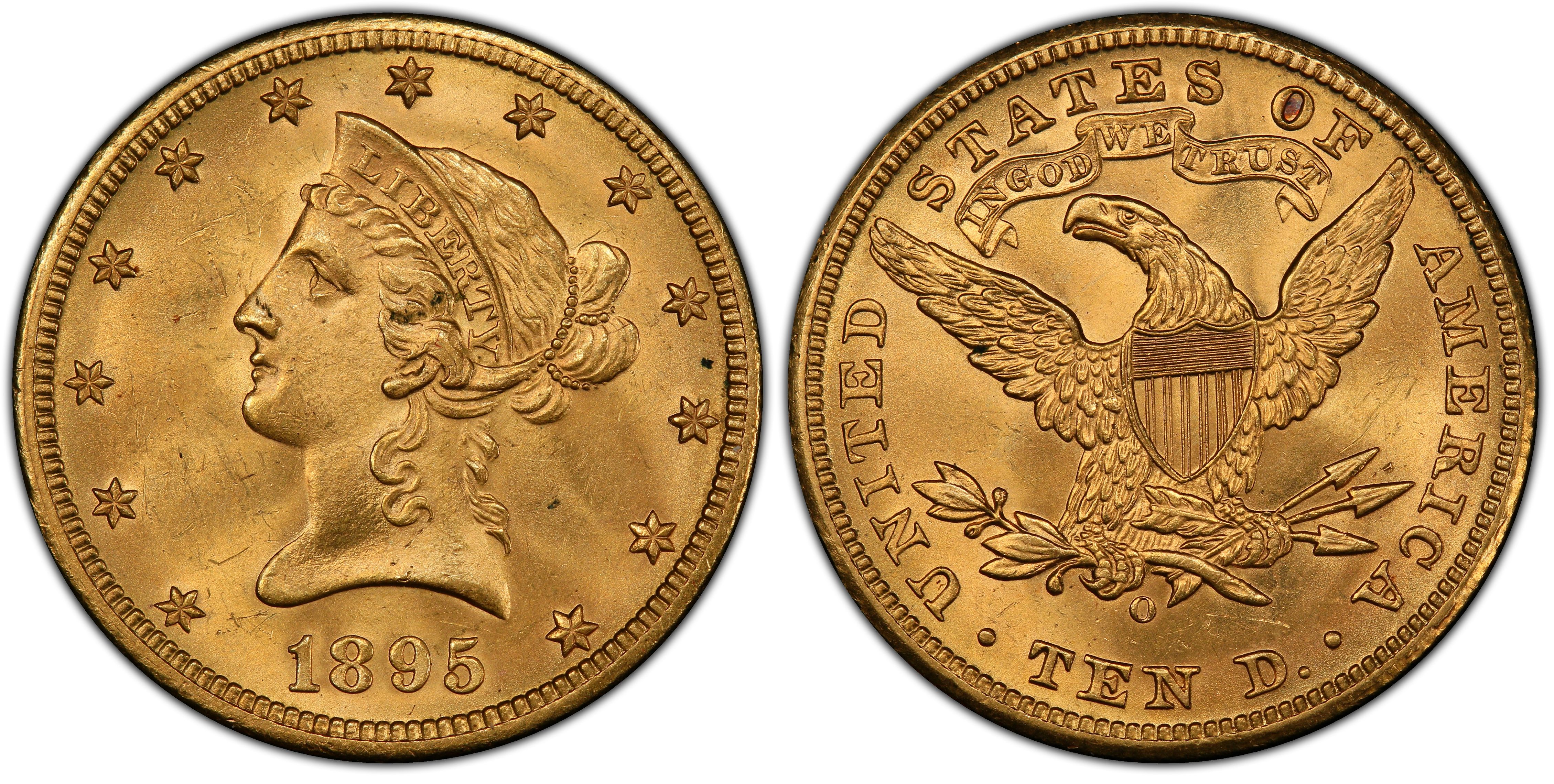
PCGS MS64
- PCGS #:
- 8733
- Designer:
- Christian Gobrecht
- Edge:
- Reeded
- Diameter:
- 26.80 millimeters
- Weight:
- 16.70 grams
- Mintage:
- 98,000
- Mint:
- New Orleans
- Metal:
- 90% Gold, 10% Copper
- Auction Record:
- $18,400 • MS63 • 08-13-2006 • Heritage Auctions
Go To Grade
Current Auctions - PCGS Graded
Current Auctions - NGC Graded
For Sale Now at Collectors Corner - PCGS Graded
For Sale Now at Collectors Corner - NGC Graded
Rarity and Survival Estimates Learn More
| Survival Estimate | |
|---|---|
| All Grades | 1,200 |
| 60 or Better | 475 |
| 65 or Better | |
| Numismatic Rarity | |
|---|---|
| All Grades | R-4.9 |
| 60 or Better | R-6.0 |
| 65 or Better | R-10.1 |
| Relative Rarity By Type All Specs in this Type | |
|---|---|
| All Grades | 67 / 117 TIE |
| 60 or Better | 55 / 117 TIE |
| 65 or Better | 1 / 117 |
| Relative Rarity By Series All Specs in this Series | |
|---|---|
| All Grades | 133 / 183 TIE |
| 60 or Better | 108 / 183 TIE |
| 65 or Better | 1 / 183 |
Condition Census What Is This?
 #1 MS63 PCGS grade
Ellen D Collection (PCGS Set Registry) - Simpson Collection |
| #1 MS63 PCGS grade |
| #1 MS63 PCGS grade |
| #1 MS63 PCGS grade |
| #1 MS63 PCGS grade |
| #1 MS63 PCGS grade |
| #1 MS63 PCGS grade |
| #1 MS63 PCGS grade |
| #1 MS63 PCGS grade |
| #1 MS63 PCGS grade |
Doug Winter:
The 1895-O is similar in overall and high grade rarity to the 1892-O and the 1893-O eagles. It is another issue that has become far more available in the past decade due to the discovery of a group of hoards.
The 1895-O is almost never seen below AU55 and most of the surviving examples grade AU58 to MS61. It is scarce in properly graded MS62 and rare in MS63. I have never seen or heard of a piece that graded higher than MS63.
STRIKE: This issue is among the better struck New Orleans eagles from the 1890’s. It is generally seen with crisp details at the centers. The first few stars at the left are sometimes weak at the centers and the 89 in the date is sometimes a bit faint as well.
SURFACES: The surfaces are almost always found with a liberal amount of abrasions. They are not as heavily abraded as the 1892-O or the 1893-O but it is almost impossible to locate a piece that does not have a “choppy” appearance.
LUSTER: The 1895-O eagle has above-average luster. It is very frosty with far more “life” than most of the other With Motto dates from this mint. It is sometimes seen with semi-prooflike fields and a few fully prooflike pieces are known.
COLORATION: The natural coloration ranges from orange-gold to green-gold with most coins showing the latter. Some have an “inner ring” of color at the borders which give the surfaces a two-tone appearance. There are still a decent number of original coins available although a number have been dipped in recent years.
EYE APPEAL: Many 1895-O eagles have fairly good eye appeal. These coins tend to be lustrous with good detail and decent color but they show numerous bagmarks in the fields which limit the grade.
DIE CHARACTERISTICS: Some pieces show minor machine doubling on the reverse legend. These have been described as “doubled dies” in some catalogs but they are not.
MAJOR VARIETIES: There is a single variety known.
Variety One: The date is heavy and a bit low, with the 1 closer to the denticles than the truncation. The reverse is the same as that seen on the 1894-O eagle.
The 1895-O is almost never seen below AU55 and most of the surviving examples grade AU58 to MS61. It is scarce in properly graded MS62 and rare in MS63. I have never seen or heard of a piece that graded higher than MS63.
STRIKE: This issue is among the better struck New Orleans eagles from the 1890’s. It is generally seen with crisp details at the centers. The first few stars at the left are sometimes weak at the centers and the 89 in the date is sometimes a bit faint as well.
SURFACES: The surfaces are almost always found with a liberal amount of abrasions. They are not as heavily abraded as the 1892-O or the 1893-O but it is almost impossible to locate a piece that does not have a “choppy” appearance.
LUSTER: The 1895-O eagle has above-average luster. It is very frosty with far more “life” than most of the other With Motto dates from this mint. It is sometimes seen with semi-prooflike fields and a few fully prooflike pieces are known.
COLORATION: The natural coloration ranges from orange-gold to green-gold with most coins showing the latter. Some have an “inner ring” of color at the borders which give the surfaces a two-tone appearance. There are still a decent number of original coins available although a number have been dipped in recent years.
EYE APPEAL: Many 1895-O eagles have fairly good eye appeal. These coins tend to be lustrous with good detail and decent color but they show numerous bagmarks in the fields which limit the grade.
DIE CHARACTERISTICS: Some pieces show minor machine doubling on the reverse legend. These have been described as “doubled dies” in some catalogs but they are not.
MAJOR VARIETIES: There is a single variety known.
Variety One: The date is heavy and a bit low, with the 1 closer to the denticles than the truncation. The reverse is the same as that seen on the 1894-O eagle.