

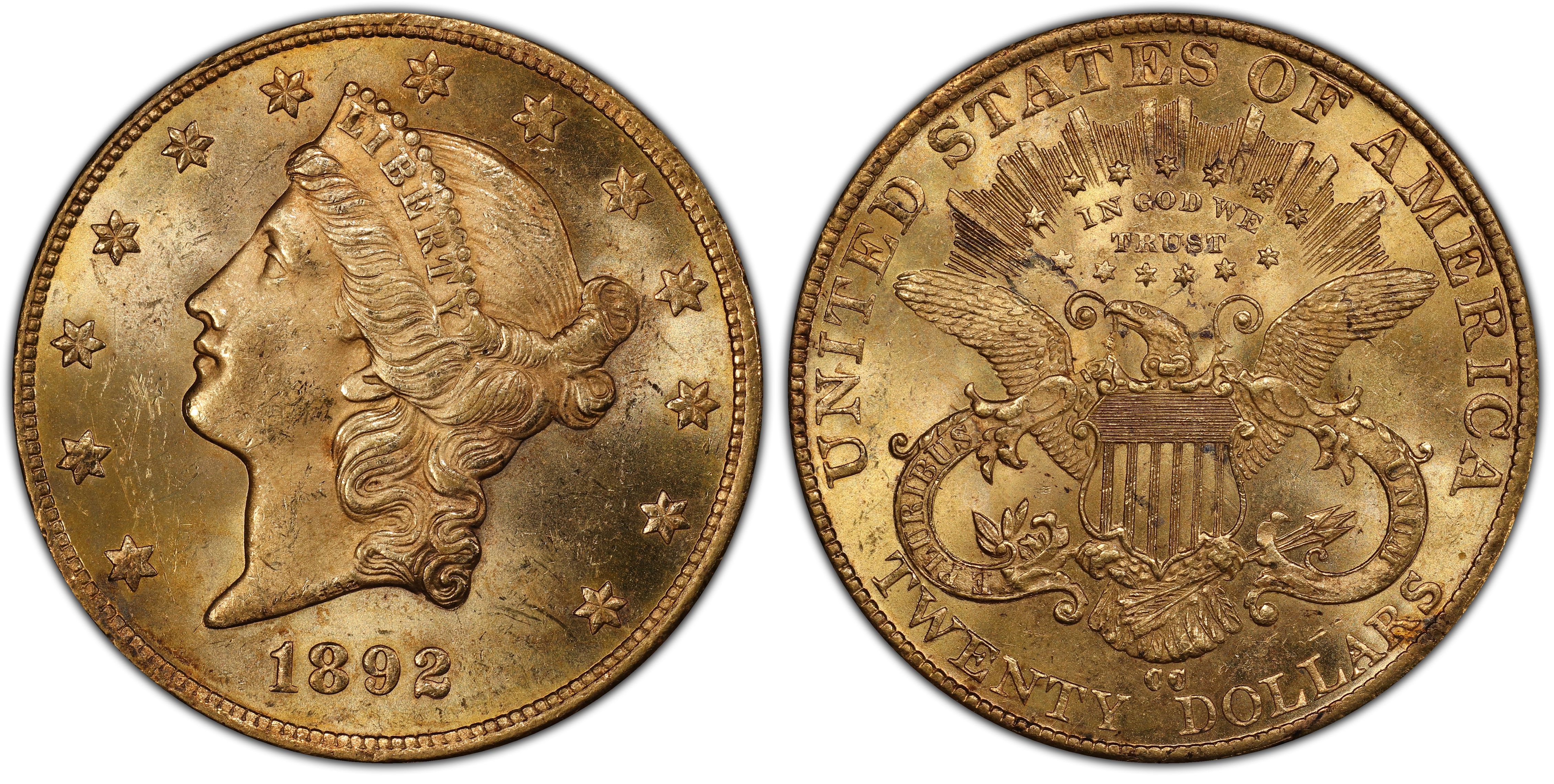
PCGS MS63

PCGS MS63
- PCGS #:
- 9020
- Designer:
- James Barton Longacre
- Edge:
- Reeded
- Diameter:
- 34.00 millimeters
- Weight:
- 33.40 grams
- Mintage:
- 27,265
- Mint:
- Carson City
- Metal:
- 90% Gold, 10% Copper
- Auction Record:
- $96,000 • MS63 • 03-02-2025 • Heritage Auctions
Go To Grade
Current Auctions - PCGS Graded
Current Auctions - NGC Graded
For Sale Now at Collectors Corner - PCGS Graded
For Sale Now at Collectors Corner - NGC Graded
Rarity and Survival Estimates Learn More
| Survival Estimate | |
|---|---|
| All Grades | 1,487 |
| 60 or Better | 250 |
| 65 or Better | |
| Numismatic Rarity | |
|---|---|
| All Grades | R-4.8 |
| 60 or Better | R-6.6 |
| 65 or Better | R-10.1 |
| Relative Rarity By Type All Specs in this Type | |
|---|---|
| All Grades | 17 / 73 TIE |
| 60 or Better | 18 / 73 |
| 65 or Better | 1 / 73 |
| Relative Rarity By Series All Specs in this Series | |
|---|---|
| All Grades | 50 / 148 TIE |
| 60 or Better | 75 / 148 TIE |
| 65 or Better | 1 / 148 |
Condition Census What Is This?
 #1 MS63 PCGS grade
AWA Collection - D.L. Hansen Collection |
 #1 MS63 PCGS grade
Bob Williams Collection - Heritage 6/2018:4257, $66,000 |
|
#1 MS63 PCGS grade
Heritage 4/2008:2504 - Rusty Goe, 4/2008 - Battle Born Collection - Stack’s/Bowers 8/2012:11056, $40,250 |
|
#1 MS63 PCGS grade
Stack’s/Bowers 6/2013:2594, $44,062.50 |
| #1 MS63 PCGS grade |
| #1 MS63 PCGS grade |
|
#7 MS62+ PCGS grade
Stack's/Bowers & Sotheby's 2/2016:246, $28,200 |
| #7 MS62+ PCGS grade |
| #7 MS62+ PCGS grade |
| #7 MS62+ PCGS grade |
David Akers (1975/88):
The 1892-CC is a scarce but not rare coin. It is a little more rare than the lower mintage 1893-CC in terms of population rarity and it is considerably more rare than the 1893-CC in Unc. The 1892-CC is usually seen in EF or AU condition although there are numerous VF examples around as well. Average uncirculated (MS-60) specimens are scarce but can be located without a great deal of difficulty. Choice quality uncs are very scarce and true gems are rare. This is another date that was considered quite rare in Unc. until the 1960's when many turned up in Europe.