
PCGS MS68

PCGS MS68
- PCGS #:
- 7590
- Designer:
- James Barton Longacre
- Edge:
- Reeded
- Diameter:
- 14.30 millimeters
- Weight:
- 1.70 grams
- Mintage:
- 28,950
- Mint:
- Philadelphia
- Metal:
- 90% Gold, 10% Copper
- Auction Record:
- $24,675 • MS68+ • 03-26-2020 • Legend Rare Coin Auctions
Rarity and Survival Estimates Learn More
| Survival Estimate | |
|---|---|
| All Grades | 6,000 |
| 60 or Better | 5,800 |
| 65 or Better | 1,500 |
| Numismatic Rarity | |
|---|---|
| All Grades | R-3.8 |
| 60 or Better | R-3.8 |
| 65 or Better | R-4.8 |
| Relative Rarity By Type All Specs in this Type | |
|---|---|
| All Grades | 48 / 49 |
| 60 or Better | 48 / 49 |
| 65 or Better | 41 / 49 |
| Relative Rarity By Series All Specs in this Series | |
|---|---|
| All Grades | 78 / 81 TIE |
| 60 or Better | 79 / 81 |
| 65 or Better | 61 / 81 |
Condition Census What Is This?
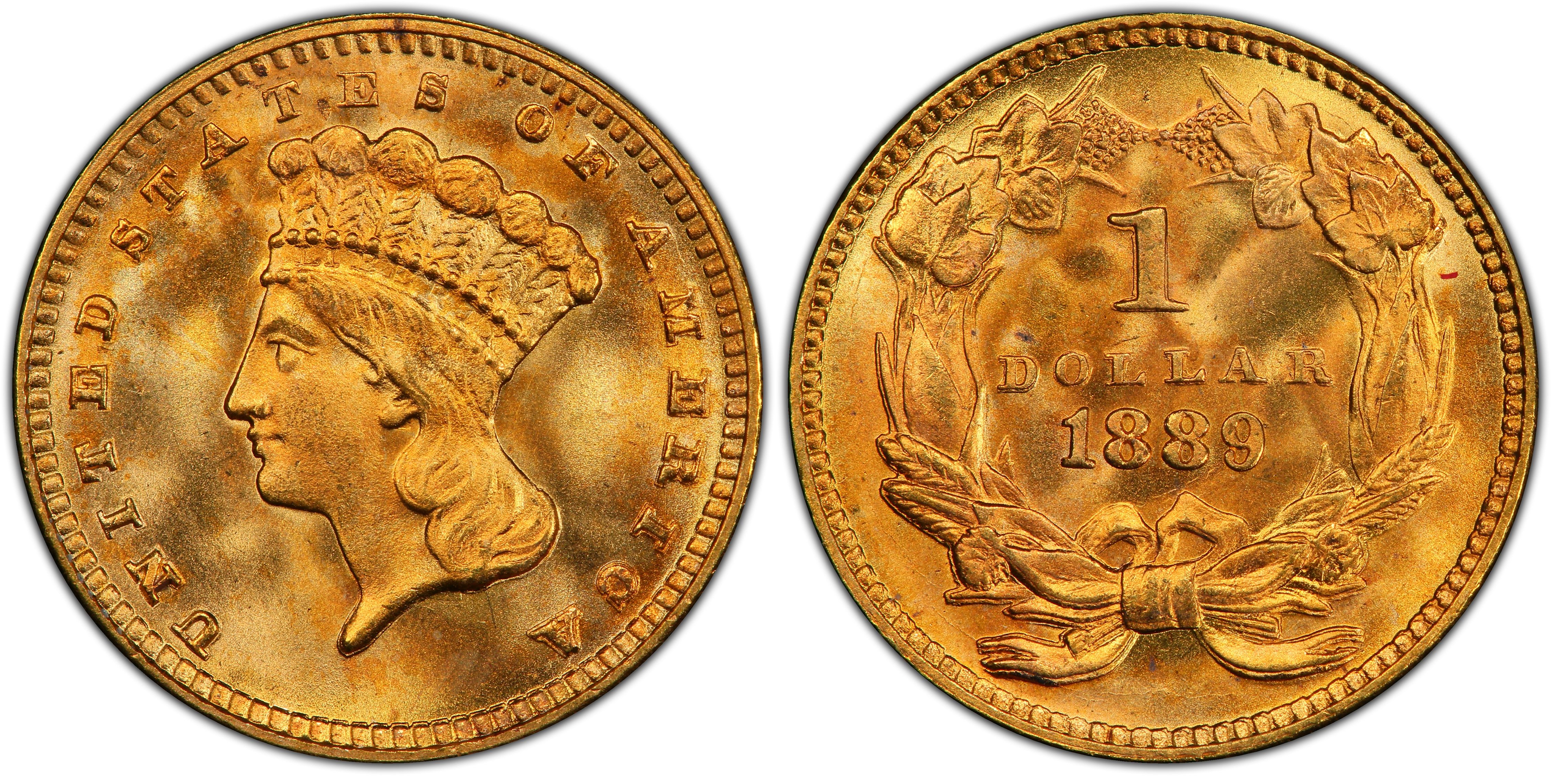 #1 PCGS MS68+
As NGC MS68 #3603614-002. Heritage Auctions, December 5, 2013, Lot 3789 – $7,637.50. As PCGS MS68 #32601847. "The Coronet Gold Collection," Legend Rare Coin Auctions, October 24, 2019, Lot 160 - $14,687.50. As PCGS MS68+ #32601847. Legend Rare Coin Auctions, March 26, 2020, Lot 391 - $24,675; Dell Loy Hansen; "The D.L. Hansen. One Dollar Gold Date Set" (PCGS Set Registry). Virtually pristine surfaces minus the following mintmade features: Two tiny ticks on Liberty's cheek and neck. Planchet void between T and E of STATES and above Liberty's head peace below F. Long die crack and along the left and bottom periphery of the reverse. Clash images are apparent on both sides. Dark spot above D of DOLLAR and below the knot. |
|
#2 PCGS MS68
Stack’s Bowers, March 2015, Lot 7331 – $8,518.75; Heritage Auctions, January 31, 2019, Lot 3772 – $6,600; Heritage Auctions, June 6, 2019, Lot 3189 – $6,614.40; Heritage Auctions, November 17, 2023, Lot 3641 – $6,900. Discolorations near copper spots below UN and T of UNITED. Planchet void between T and E of STATES. On the reverse, there are die clash images visible inside the wreath. Two contact marks on the right side of the space between the two descending ribbons. Circular die crack along the periphery. |
|
#2 PCGS MS68
As PCGS MS68 #41713014. Heritage Auctions, November 16, 2023, Lot 3118 – $8,400. On the reverse, there are two tiny ticks above 1. Diagonal hairline scratch above O of DOLLAR. Planchet void below D. Die crack along the left and bottom periphery of the reverse. |
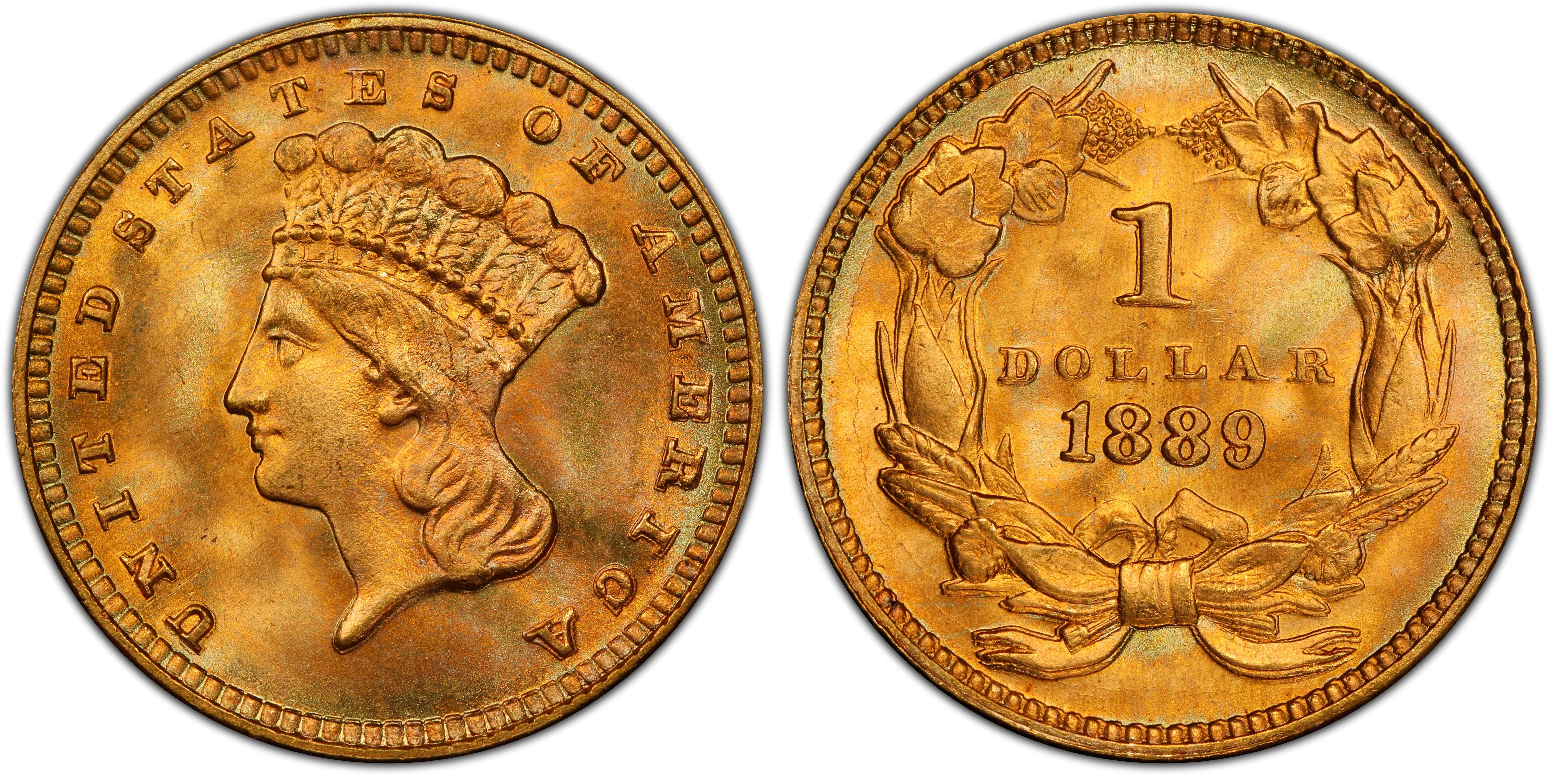 #2 PCGS MS68
Legend Rare Coin Auctions, June 25, 22015, Lot 391 - Passed;“ Legend Rare Coin Auctions, September 9, 2016, Lot 462 - $12,337.50; "The Bender Family Collection, Part I,” Heritage Auctions, August 24, 2022, Lot 3855 – $10,500. Swirling streaks of green gold against a rich orange gold backdrop. A die crack is visible along the left and bottom periphery of the reverse. Tick between 1 and DOLLAR. |
|
#2 PCGS MS68
Heritage Auctions, November 6, 2014, Lot 3903 – $7,931.25. Squiggly lint mark in the left obverse field below E. A die crack is visible along the left and bottom periphery of the reverse. |
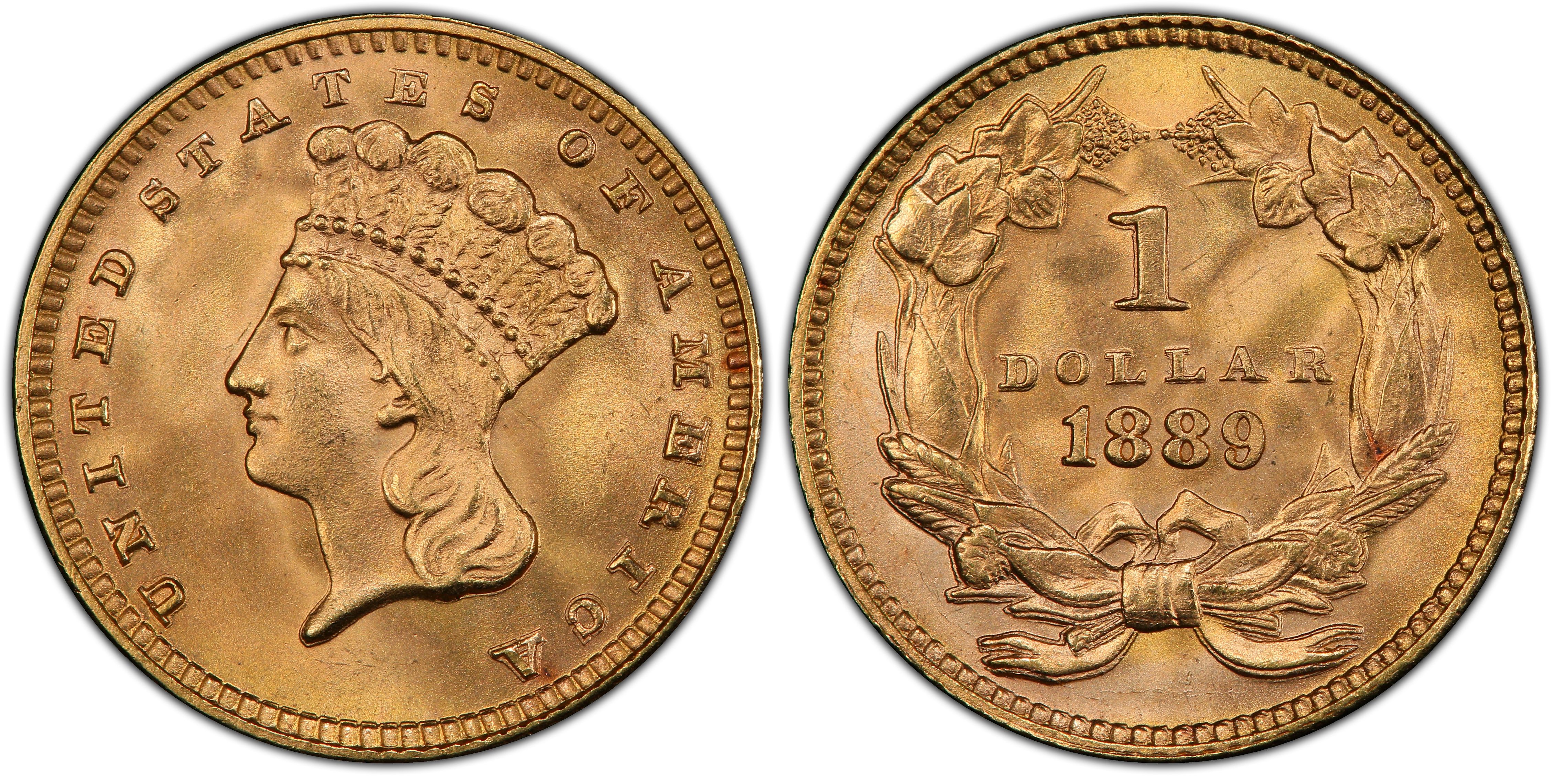 #2 PCGS MS68
Stack’s Bowers, May 20, 2020, Lot 4142 – $6,900. A die crack is visible along the left and bottom periphery of the reverse. |
 #2 PCGS MS68
Heritage Auctions, February 4, 2016, Lot 3344 – $7,931.25. Scattered spots on obverse, one prominent one below E of AMERICA. A die crack is visible along the left and bottom periphery of the reverse. |
|
#2 PCGS MS68
|
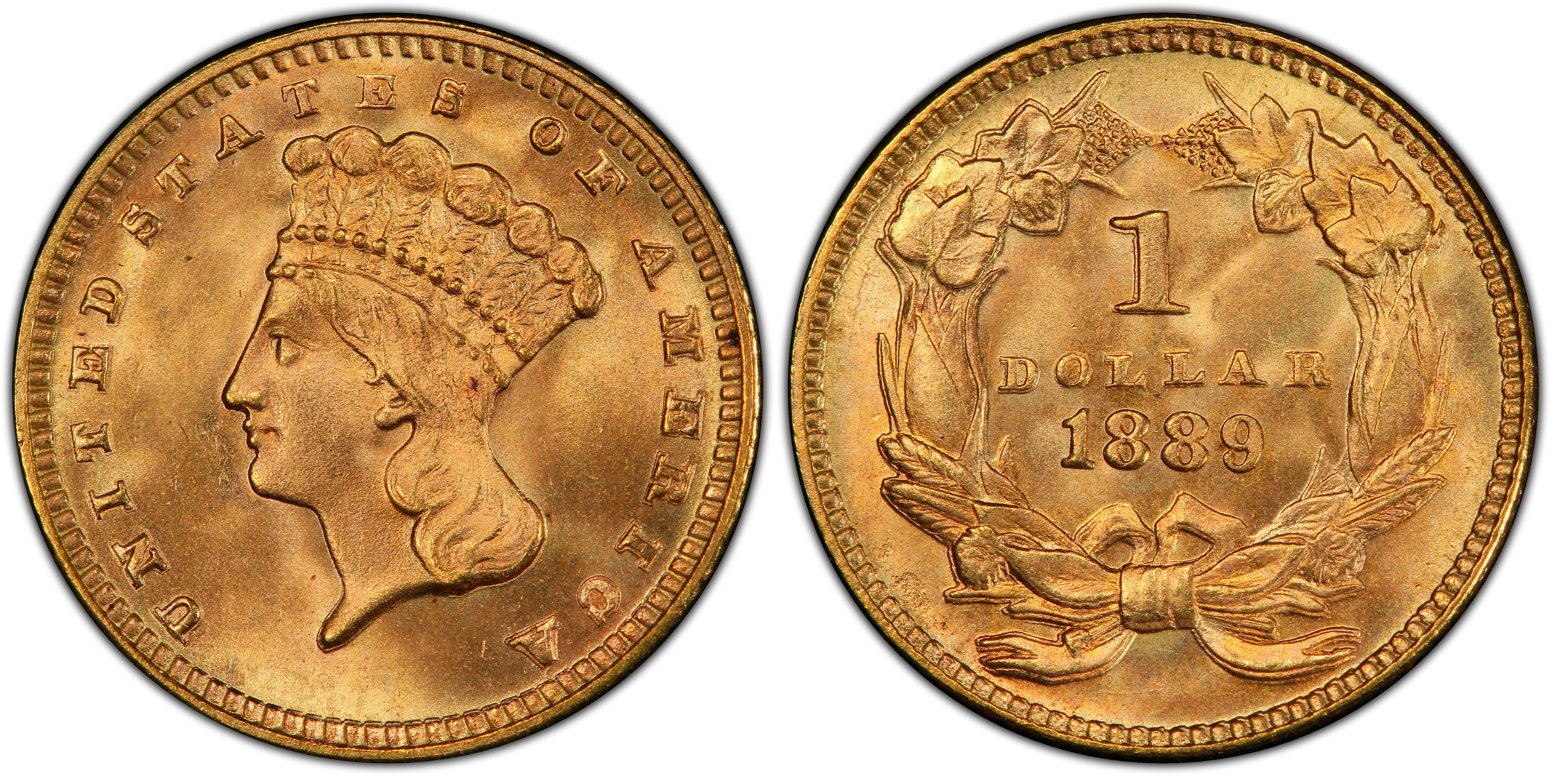 #2 PCGS MS68
|
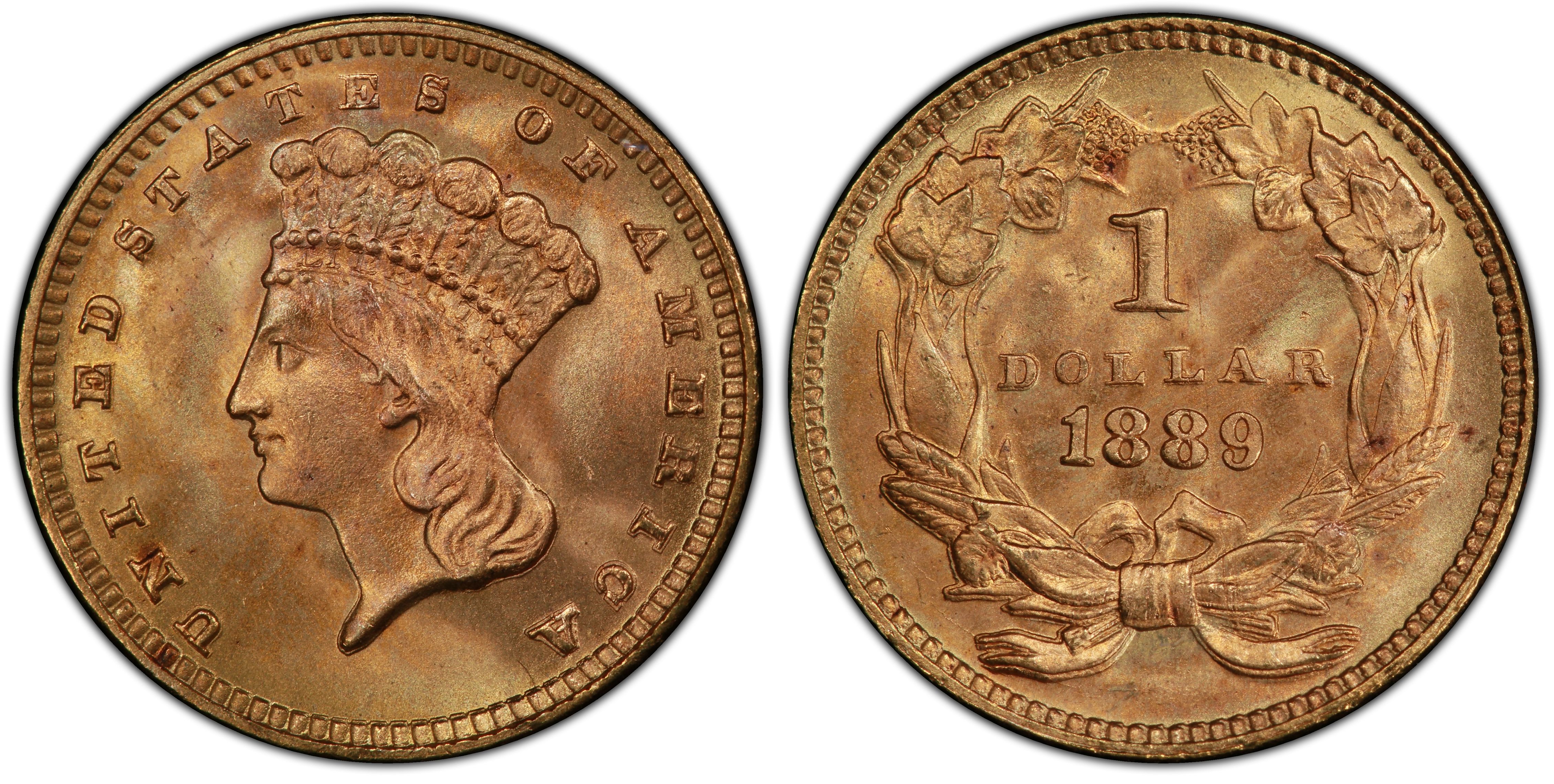 #2 PCGS MS68
|
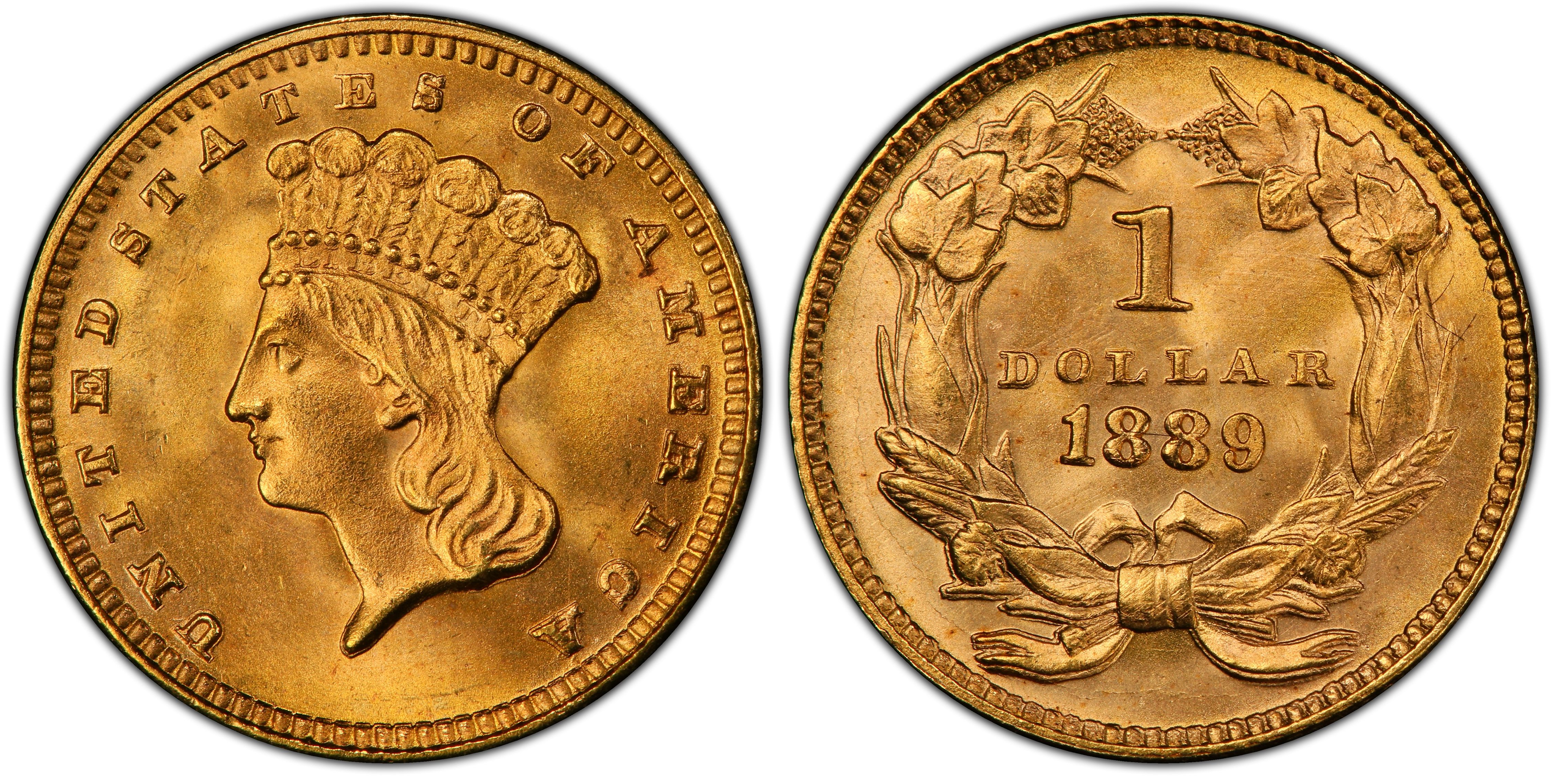 #2 PCGS MS68
|
 #2 PCGS MS68
|
 #2 PCGS MS68
|
| #2 PCGS MS68 |
| #2 PCGS MS68 |
The Gold Dollar, a diminutive denomination introduced in 1849 to help circulate the massive amounts of gold discovered in California, initially saw strong mintages exceeding four million coins in the 1850s.
However, the denomination never recovered from the economic disruptions caused by the American Civil War. The cash-strapped Union Treasury Department couldn't keep specie (gold and silver coins) in circulation and was forced to issue Greenbacks (fiat paper currency).
The Confederacy faced an even worse situation, issuing unbacked interest-bearing notes. These notes lost value almost immediately; by October 1862, they were trading at roughly 20% of face value. By the war’s end, they were virtually worthless.
Post-War Resumption and Elimination
In the aftermath of the war, paper money continued to circulate widely. It was not until the passage of the Specie Payment Resumption Act on January 14, 1875, that the government officially announced its intention to return to a gold-backed, convertible currency. While the Mint ramped up gold production for some denominations starting in 1878 in preparation, Resumption officially began on January 1, 1879.
Unfortunately for the Gold Dollar, a renewed push to put the coin into circulation was not in the cards. The denomination took its final bow in 1889 after the United States Assay Commission met on February 13. The Commission submitted a report to Congress urging the elimination of the Gold Dollar, Three-Dollar Gold coin, and the Three-Cent Nickel, citing their lack of utility in commerce and the ongoing speculation in their low-mintage issues.
The Final Mintage (1889)
The final production year saw the Philadelphia Mint produce 28,950 business strikes and 1,779 Proofs. This total mintage is in the upper half of annual figures for the Type 3, Indian Princess, Large Head design, which entered production in 1856. The 1889 Gold Dollar (#7590) was saved in significant numbers, making it plentiful in grades through PCGS MS66. Many Superb Gems survive as well, but very few have the necessary eye appeal, strike, and surface preservation to earn PCGS's top grades of MS68 and MS68+.
* * *