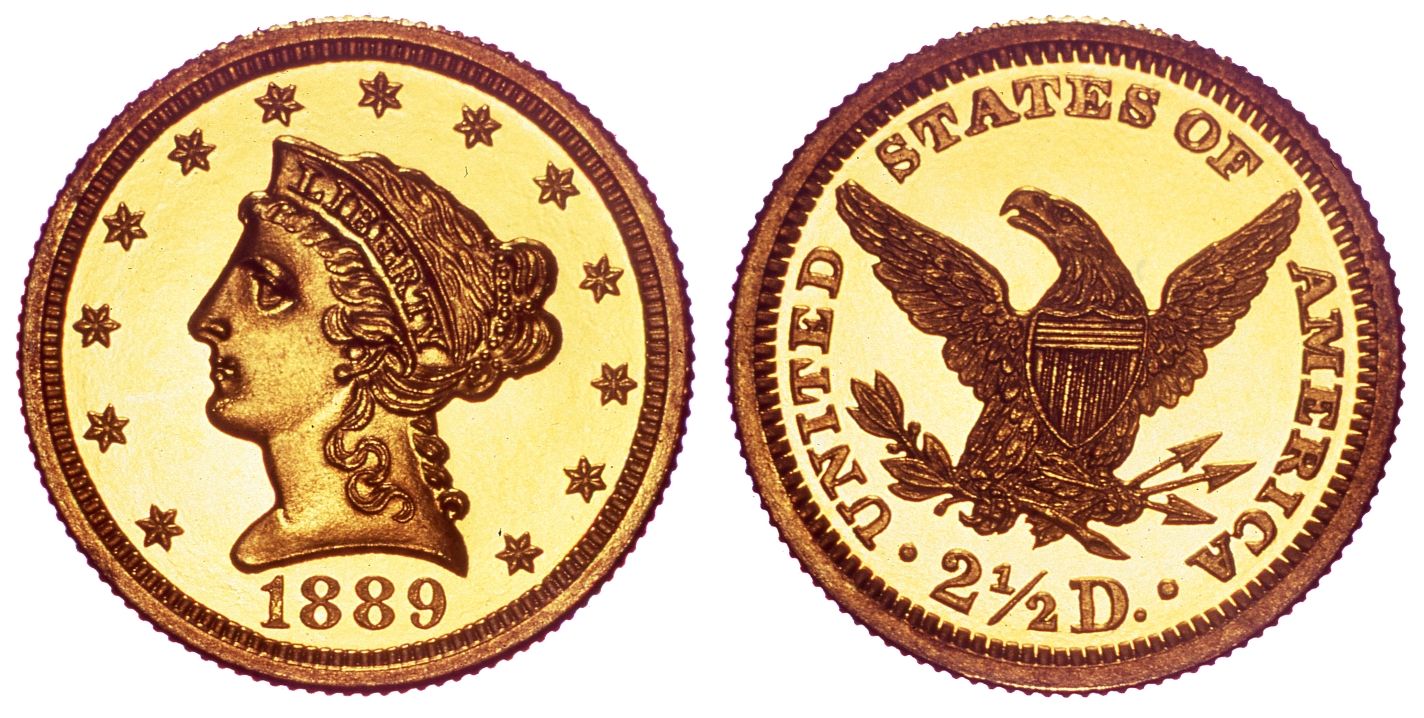
- PCGS #:
- 7915
- Designer:
- Christian Gobrecht
- Edge:
- Reeded
- Diameter:
- 18.00 millimeters
- Weight:
- 4.18 grams
- Mintage:
- 48
- Mint:
- Philadelphia
- Metal:
- 90% Gold, 10% Copper
- Auction Record:
- $24,000 • PR64 • 03-01-1980 • Bowers & Ruddy
Go To Grade
Current Auctions - PCGS Graded
Current Auctions - NGC Graded
For Sale Now at Collectors Corner - PCGS Graded
For Sale Now at Collectors Corner - NGC Graded
Rarity and Survival Estimates Learn More
| Survival Estimate | |
|---|---|
| All Grades | 35 |
| 60 or Better | 33 |
| 65 or Better | 14 |
| Numismatic Rarity | |
|---|---|
| All Grades | R-8.8 |
| 60 or Better | R-8.8 |
| 65 or Better | R-9.4 |
| Relative Rarity By Type All Specs in this Type | |
|---|---|
| All Grades | 34 / 60 TIE |
| 60 or Better | 34 / 60 TIE |
| 65 or Better | 34 / 60 TIE |
| Relative Rarity By Series All Specs in this Series | |
|---|---|
| All Grades | 34 / 60 TIE |
| 60 or Better | 34 / 60 TIE |
| 65 or Better | 34 / 60 TIE |
Condition Census What Is This?
| #1 PR66 PCGS grade |
| #2 PR65 PCGS grade |
| #2 PR65 PCGS grade |
| #2 PR65 PCGS grade |
| #2 PR65 PCGS grade |
| #2 PR65 PCGS grade |
| #7 PR64 PCGS grade |
| #7 PR64 PCGS grade |
| #7 PR64 PCGS grade |
| #7 PR64 PCGS grade |
David Akers (1975/88):
This is one of the real "sleeper" dates in the series in proof. I have seen fewer proofs of this date than of any other quarter eagle after 1880, including the highly regarded 1881 and 1885. However, because the 1889 is more common as a business strike, the price of the proof has been somewhat depressed in relation to the other dates of the 1880's.