
PCGS PR68
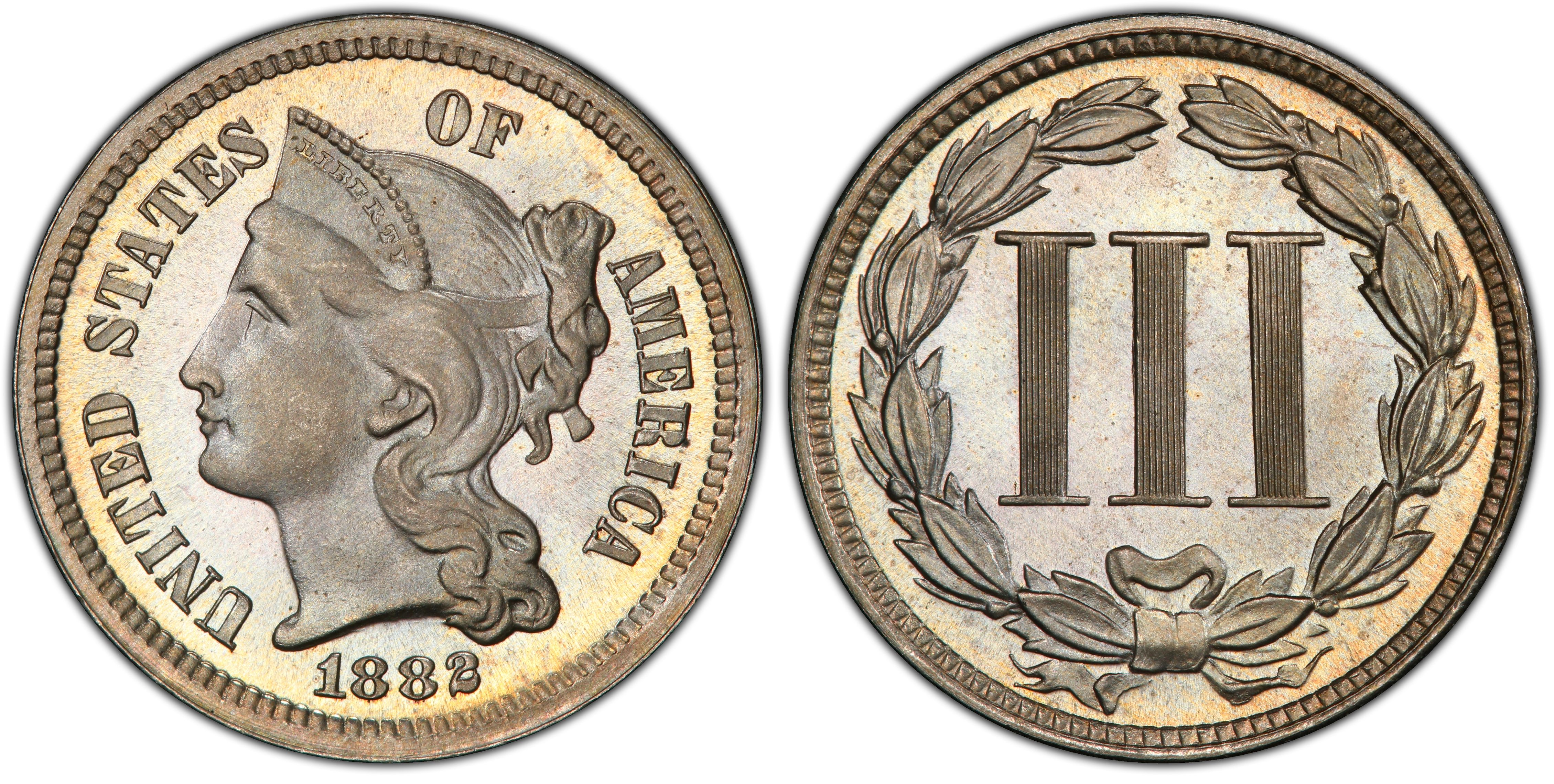
PCGS PR68
- PCGS #:
- 3778
- Designer:
- James Barton Longacre
- Edge:
- Plain
- Diameter:
- 17.90 millimeters
- Weight:
- 1.94 grams
- Mintage:
- 3,100
- Mint:
- Philadelphia
- Metal:
- 75% Copper, 25% Nickel
- Auction Record:
- $13,200 • PR68+ • 01-24-2021 • Heritage Auctions
Rarity and Survival Estimates Learn More
| Survival Estimate | |
|---|---|
| All Grades | 2,700 |
| 60 or Better | 2,500 |
| 65 or Better | 1,600 |
| Numismatic Rarity | |
|---|---|
| All Grades | R-4.4 |
| 60 or Better | R-4.5 |
| 65 or Better | R-4.7 |
| Relative Rarity By Type All Specs in this Type | |
|---|---|
| All Grades | 17 / 26 TIE |
| 60 or Better | 17 / 26 TIE |
| 65 or Better | 25 / 26 |
| Relative Rarity By Series All Specs in this Series | |
|---|---|
| All Grades | 17 / 26 TIE |
| 60 or Better | 17 / 26 TIE |
| 65 or Better | 25 / 26 |
Condition Census What Is This?
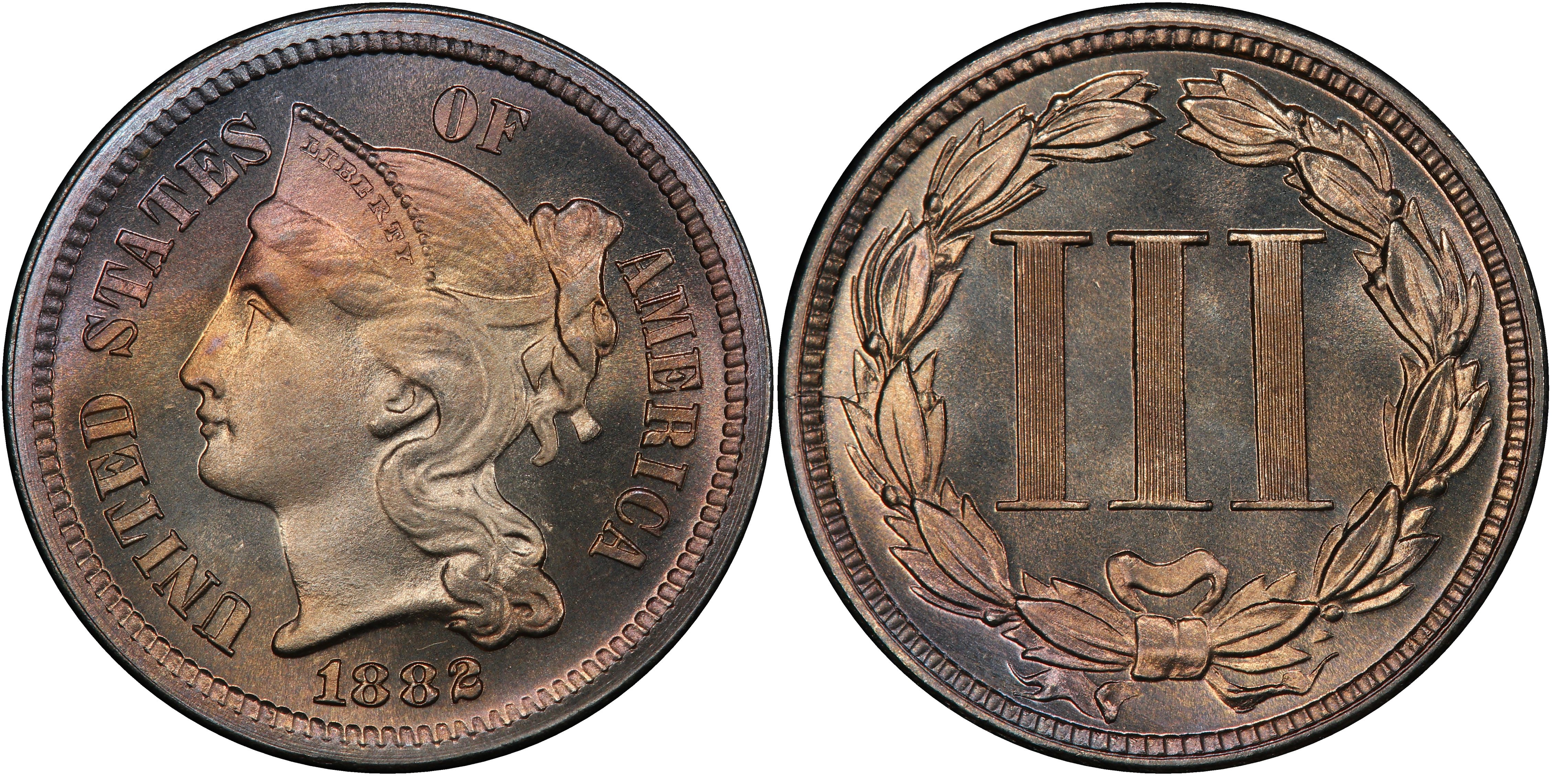 #1 PCGS PR68+
|
 #2 PCGS PR68
David Lawrence Rare Coins, February 9, 2020, Lot 9121 - $3,150. Tick to the right of Liberty's ear. Pin-sized planchet void below second A of AMERICA. Gold and peach toning. |
|
#2 PCGS PR68
"The Vinoy Collection of U.S. Type Coins," GreatCollections, May 13, 2018, Lot 57028 - $3,397.50; Heritage Auctions, September 9, 2018, Lot 3408 - $3,120; "The Endsleigh Nadine Collection" (PCGS Set Registry). Old Green Holder. Pale golden toning along the periphery. |
| #2 PCGS PR68 |
| #2 PCGS PR68 |
|
#2 PCGS PR68
Heritage Auctions, March 1, 2009, Lot 484 - $5,750. |
|
#2 PCGS PR68
|
|
#2 PCGS PR68
Gold toning with aubergine and magenta color around the reverse periphery. |
| #2 PCGS PR68 |
| #2 PCGS PR68 |
| #2 PCGS PR68 |
The 1882 Three-Cent Nickel Proof
Often unfairly dismissed as a mere "type set" filler, the Three-Cent Nickel is an approachable 19th-century American coin series. with very few coins that would stand in the way of a dedicated collector seeking to assemble a full set of business strikes or Proofs.
Starting in 1865, the Mint produced Proof versions for every year of the coin’s production. For issues struck through 1876, mintages typically ranged between 600 and 1,100 pieces. In 1878 (the second of two consecutive Proof-only years), production surged to over 2,000 pieces. From that point until the series’ termination in 1889, Proofs remained plentiful, with annual outputs routinely exceeding 3,000.
Varieties and Die States
The 1882 Three-Cent Nickel Proof (#3778) has a reported mintage of 3,100 and boasts a high survival rate in "Gem" (PCGS Proof 65) or better. In his definitive work, United States Proof Coins, Volume II: Nickel (2023), numismatist John Dannreuther identifies five die marriages for this year, struck from two obverse and three reverse dies.
Dannreuther differentiates the obverse dies by the date’s position relative to the denticles below. The JD-2 variety, for instance, is unknown in "Perfect Die State"; it consistently displays a diagnostic die crack running from 10 o’clock to the left wreath leaves. The overwhelming majority of known 1882 Proofs are of the JD-1 variety, which was likely the primary die pair used for the initial production run. On many JD-1 examples, one can observe a series of long vertical and diagonal die lines running through the center of the reverse.
Survival Rate
The 1882 Three-Cent Nickel Proof, despite having a mintage considerably lower than the 1882 business strike (3,436 vs. 22,200), is actually the more common of the two coins in today’s market. To date, PCGS has certified approximately 43% of the original Proof mintage, yet only 16.9% of those graded exhibit any degree of Cameo contrast. Deep Cameos are exceptionally rare, with only five examples certified to date; the three finest known specimens are currently tied at PR67DCAM.
Vintage Market Snippets
The U.S. Mint originally sold the 1882 Three-Cent Nickel Proof individually and as part of the annual Minor Proof Set (Cent, Three-Cent, and Nickel) and the Silver Proof Set. Records indicate approximately 2,000 Minor Proof Sets were sold that year. Historically, some numismatists recognized the value of these coins early on. A.M. Smith, publisher of the Illustrated History of the U.S. Mint (1881), was known to have purchased them in quantity, reportedly owning at least 17 Minor Sets and 48 individual 1882 Three-Cent Nickels.
* * *