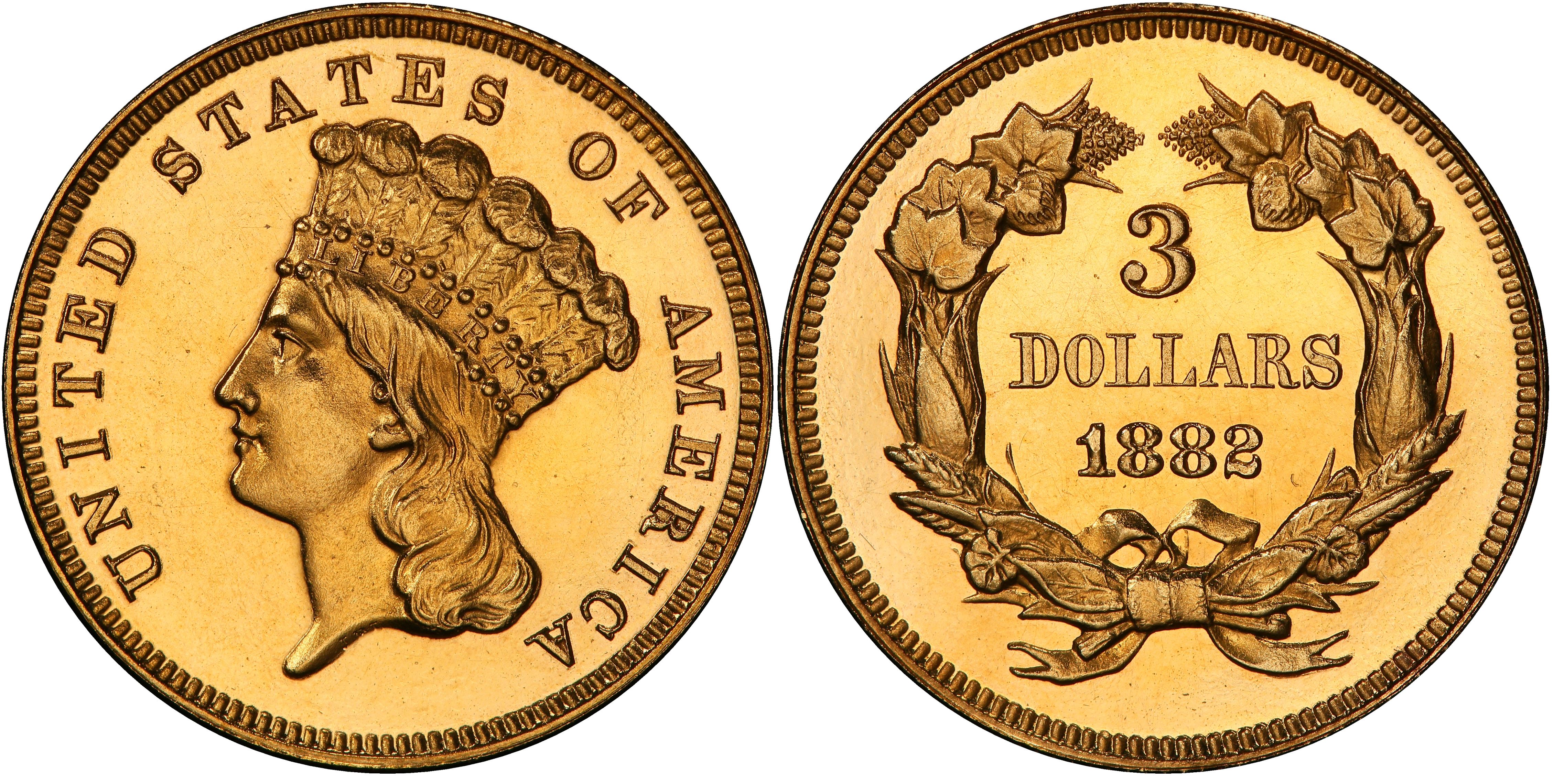
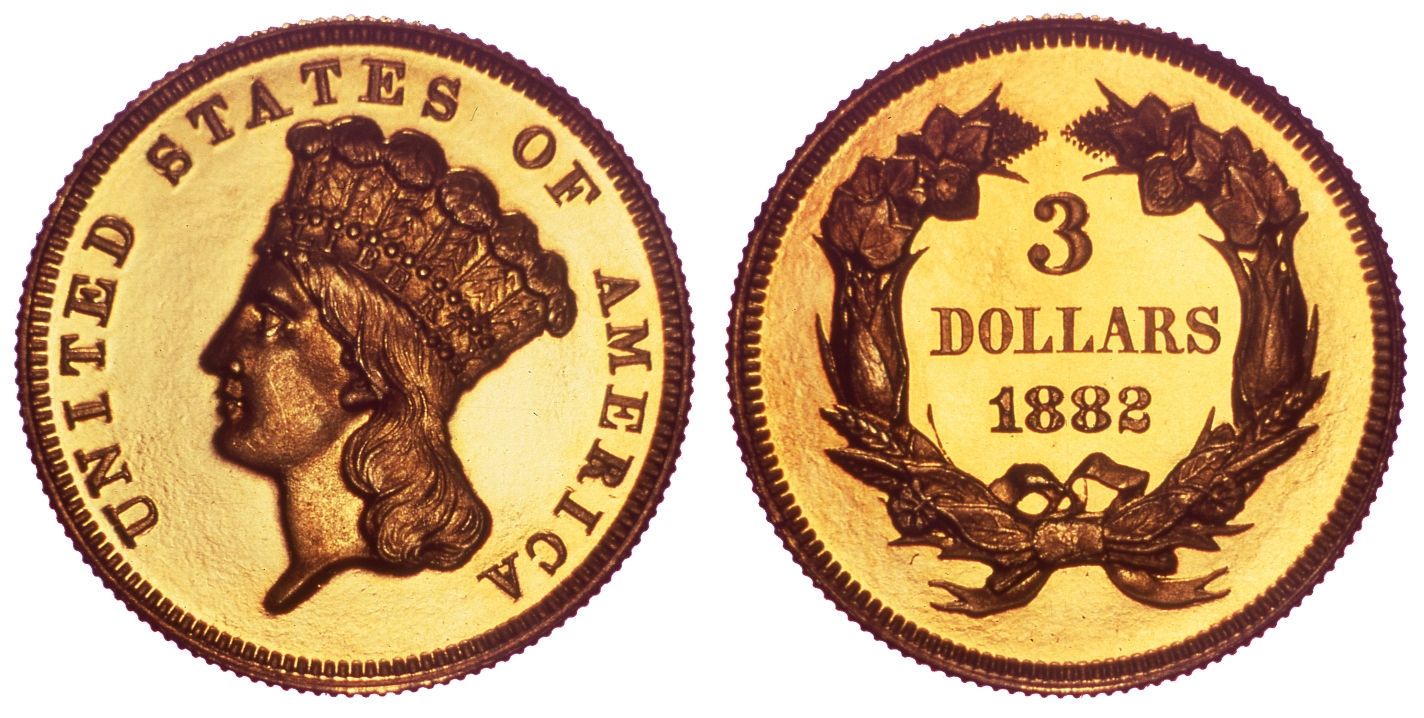
ex Trompeter collection

PCGS PR62
- PCGS #:
- 8046
- Designer:
- James Barton Longacre
- Edge:
- Reeded
- Diameter:
- 20.50 millimeters
- Weight:
- 5.02 grams
- Mintage:
- 76
- Mint:
- Philadelphia
- Metal:
- 90% Gold, 10% Copper
- Auction Record:
- $36,000 • PR64 • 06-21-2024 • Stack's Bowers
Go To Grade
Current Auctions - PCGS Graded
Current Auctions - NGC Graded
For Sale Now at Collectors Corner - PCGS Graded
For Sale Now at Collectors Corner - NGC Graded
Rarity and Survival Estimates Learn More
| Survival Estimate | |
|---|---|
| All Grades | 55 |
| 60 or Better | 50 |
| 65 or Better | 20 |
| Numismatic Rarity | |
|---|---|
| All Grades | R-8.4 |
| 60 or Better | R-8.5 |
| 65 or Better | R-9.1 |
| Relative Rarity By Type All Specs in this Type | |
|---|---|
| All Grades | 30 / 37 TIE |
| 60 or Better | 30 / 37 |
| 65 or Better | 29 / 37 TIE |
| Relative Rarity By Series All Specs in this Series | |
|---|---|
| All Grades | 30 / 37 TIE |
| 60 or Better | 30 / 37 |
| 65 or Better | 29 / 37 TIE |
Condition Census What Is This?
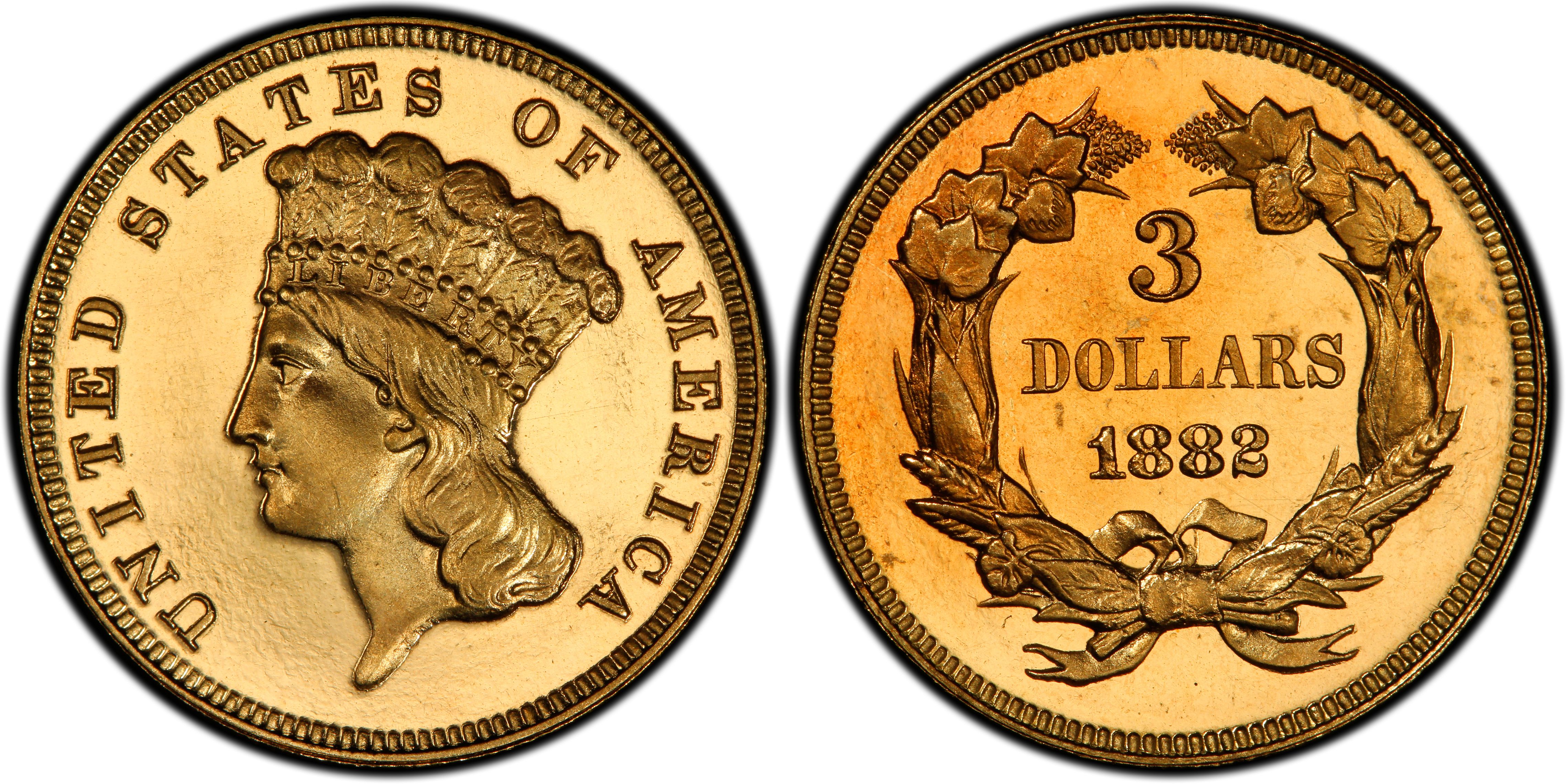 #1 PR65 PCGS grade
|
| #1 PR65 PCGS grade |
| #3 PR64 PCGS grade |
| #3 PR64 PCGS grade |
| #3 PR64 PCGS grade |
| #3 PR64 PCGS grade |
| #3 PR64 PCGS grade |
| #3 PR64 PCGS grade |
| #3 PR64 PCGS grade |
| #3 PR64 PCGS grade |
David Akers (1975/88):
The proofs all have a normal date. All of the business trikes I have encountered have an abnormality under the 2 in the date. It appears as thoguh it might have been a 2 originally punched too high and for this reason it is called the "High 2" variety. Also, on the proofs, the leaf to the left of the date is partially detached whereas it is solid on the business strikes. Furthermore, there is a prominent recutting on the ends of the ribbon on the uncs that is missing on the proofs.