
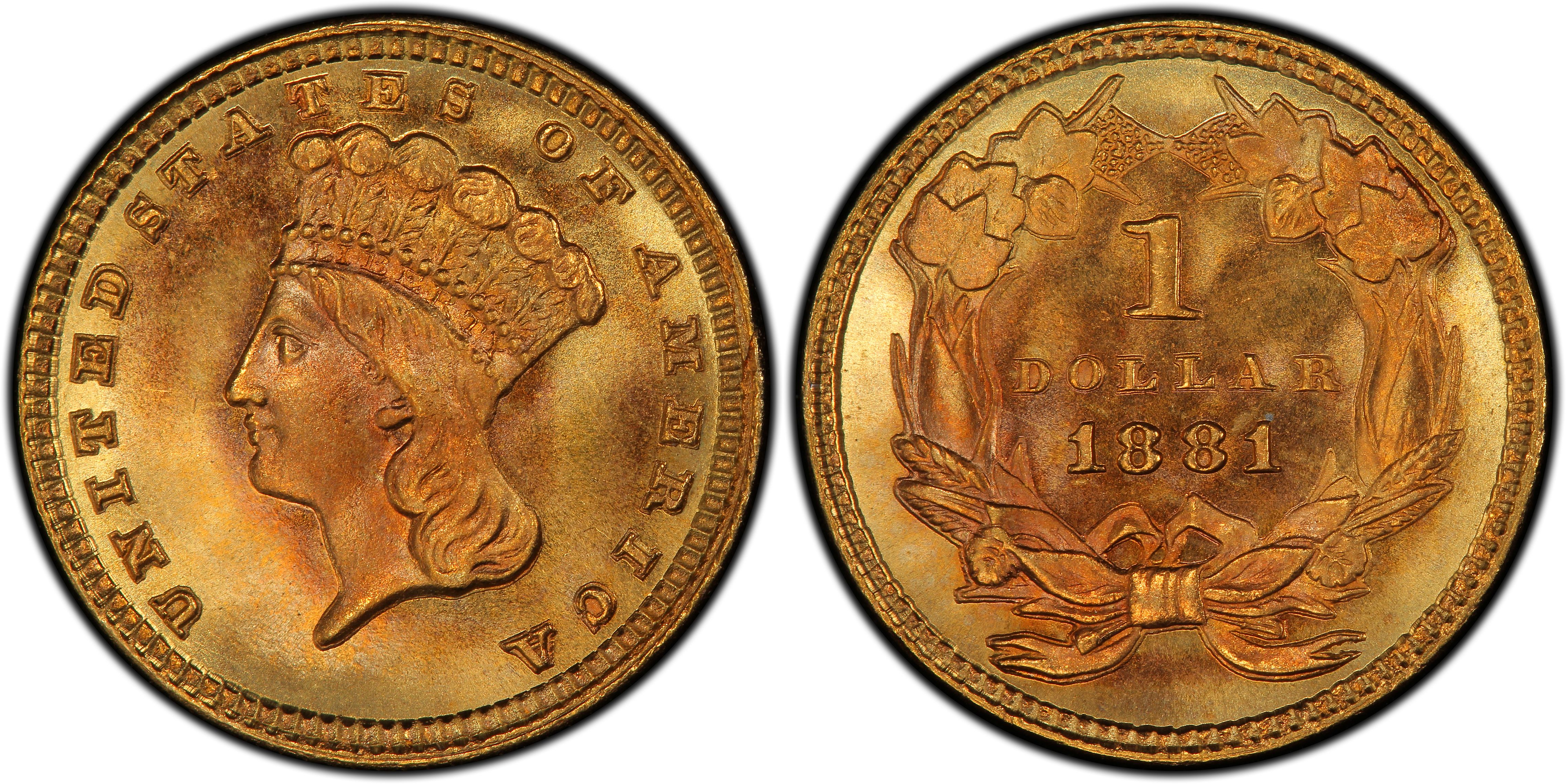
PCGS MS69
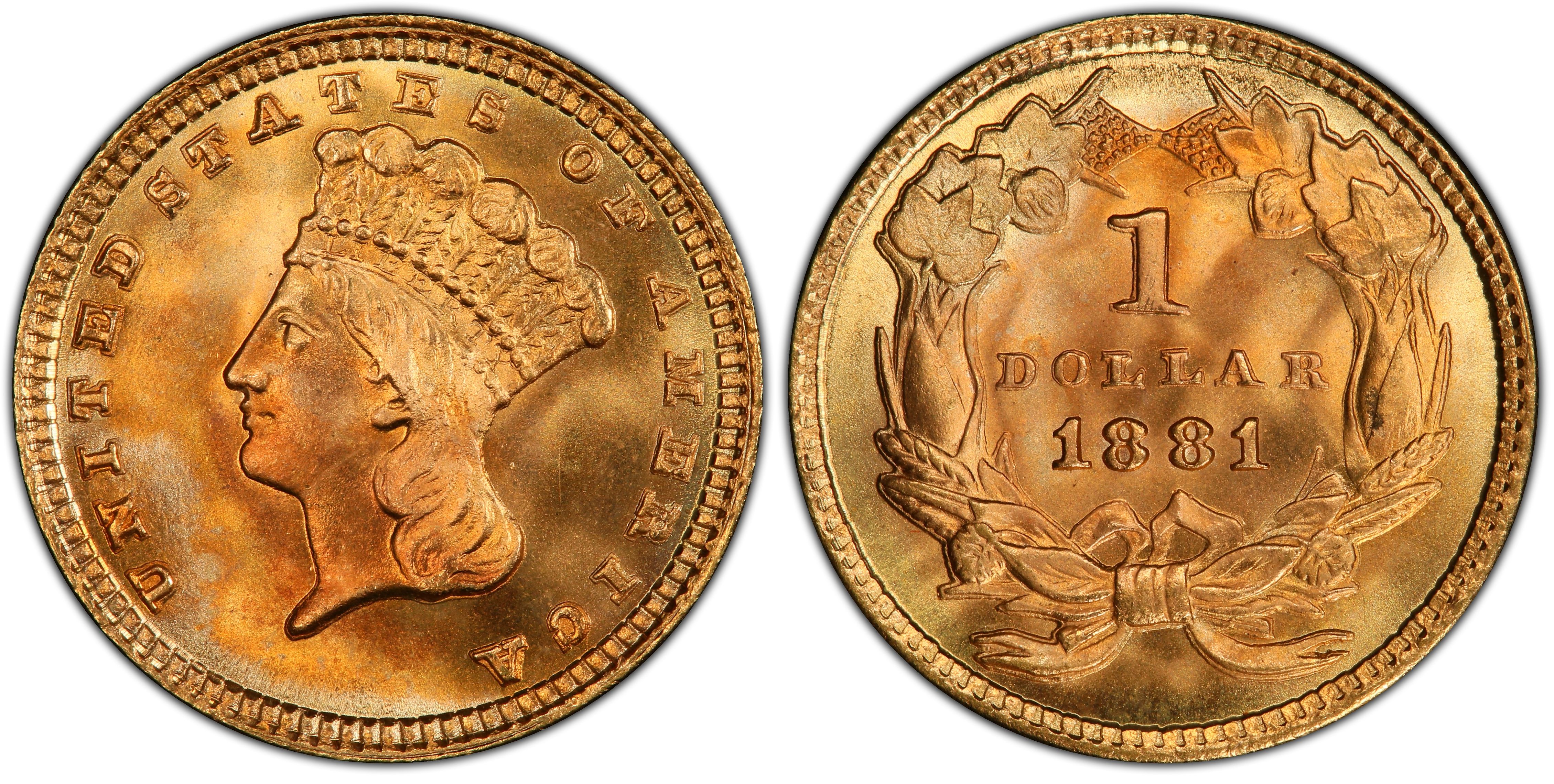
PCGS MS68+
- PCGS #:
- 7582
- Designer:
- James Barton Longacre
- Edge:
- Reeded
- Diameter:
- 14.30 millimeters
- Weight:
- 1.70 grams
- Mintage:
- 7,620
- Mint:
- Philadelphia
- Metal:
- 90% Gold, 10% Copper
- Auction Record:
- $46,800 • MS69 • 01-19-2025 • Heritage Auctions
Go To Grade
Current Auctions - PCGS Graded
Current Auctions - NGC Graded
For Sale Now at Collectors Corner - PCGS Graded
For Sale Now at Collectors Corner - NGC Graded
Rarity and Survival Estimates Learn More
| Survival Estimate | |
|---|---|
| All Grades | 1,500 |
| 60 or Better | 1,400 |
| 65 or Better | 500 |
| Numismatic Rarity | |
|---|---|
| All Grades | R-4.8 |
| 60 or Better | R-4.8 |
| 65 or Better | R-6.0 |
| Relative Rarity By Type All Specs in this Type | |
|---|---|
| All Grades | 39 / 49 TIE |
| 60 or Better | 41 / 49 TIE |
| 65 or Better | 37 / 49 |
| Relative Rarity By Series All Specs in this Series | |
|---|---|
| All Grades | 62 / 81 TIE |
| 60 or Better | 66 / 81 TIE |
| 65 or Better | 57 / 81 |
Condition Census What Is This?
| #1 MS68+ PCGS grade |
 #2 MS68 PCGS grade
Simpson Collection |
 #2 MS68 PCGS grade
|
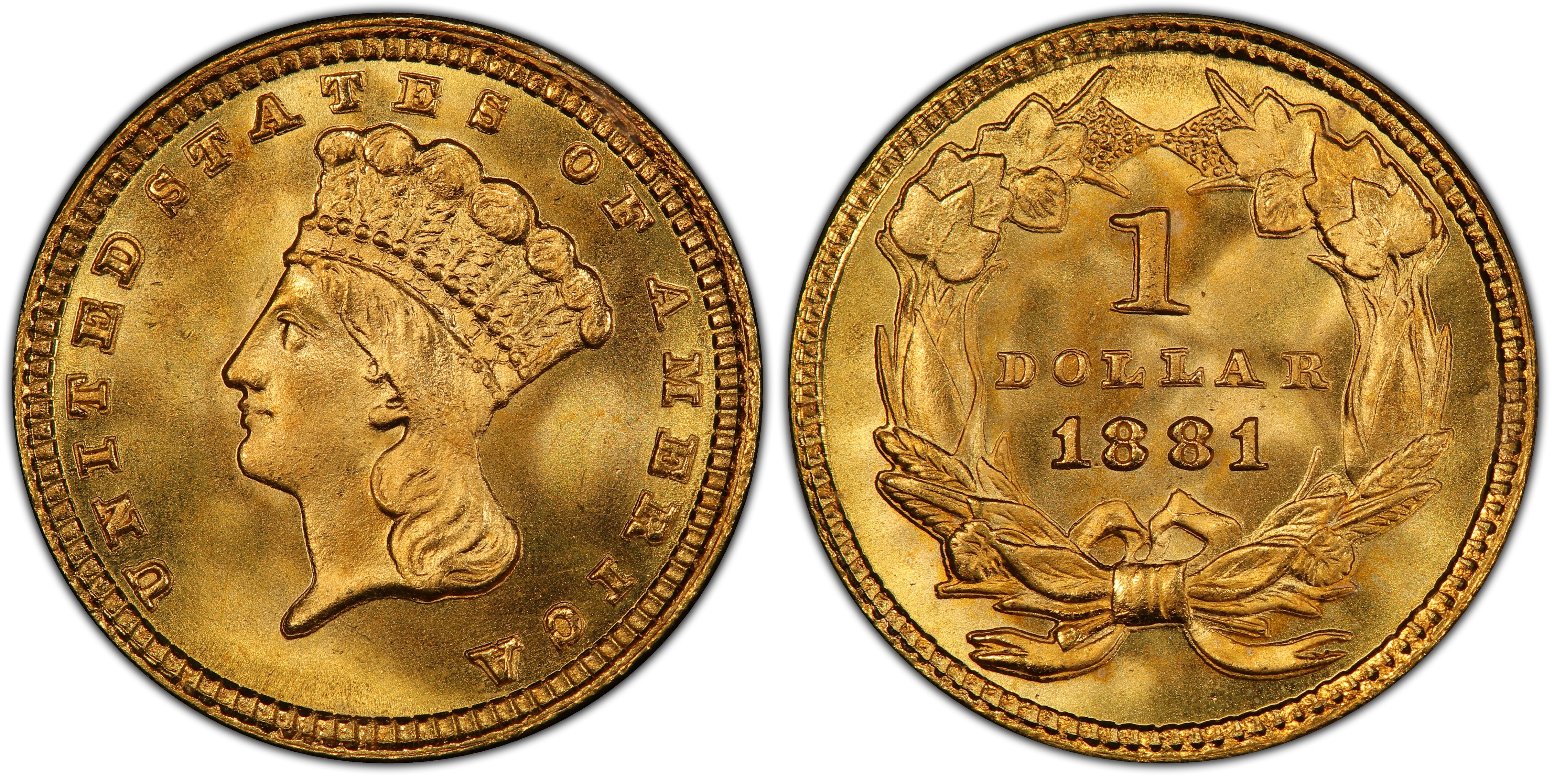 #2 MS68 PCGS grade
Heritage 8/2010:3391, $12,650 |
|
#2 MS68 PCGS grade
Heritage 7/2010:4529, not sold |
|
#2 MS68 PCGS grade
Heritage 1/2008:3701, $10,379.90 |
|
#2 MS68 PCGS grade
Heritage 1/2010:2090, $10,637.50 |
| #2 MS68 PCGS grade |
| #2 MS68 PCGS grade |
| #2 MS68 PCGS grade |
David Akers (1975/88):
Despite the substantially higher mintage, the 1881 is about equal in rarity to the 1880. Circulated specimens are rare, and most of the available 1881 gold dollars are uncirculated and generally very choice. The famous Leon Lindheim hoard of 54 "proofs" was purchased several years ago by Paramount. It included 46 circulation strikes and only 8 proofs. All were purchased as proofs and so it should be obvious that many deceptive first strikes exist of this date, as well as of all the other dates from 1875 to 1889. The true proofs of 1881 are distinguishable by a small unfinished area in the die between the lower left part of the D in DOLLAR and the wreath.