
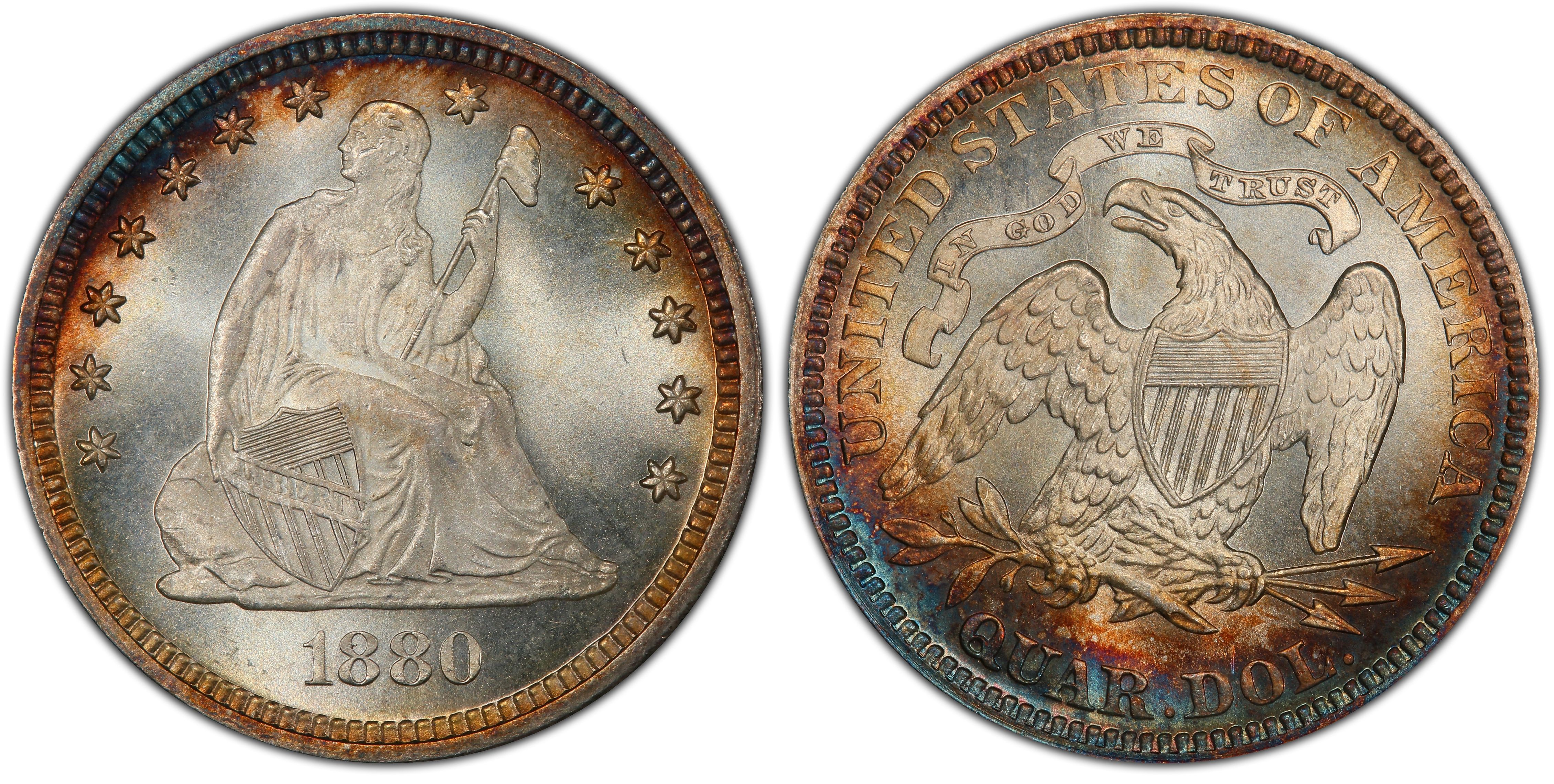
PCGS MS68
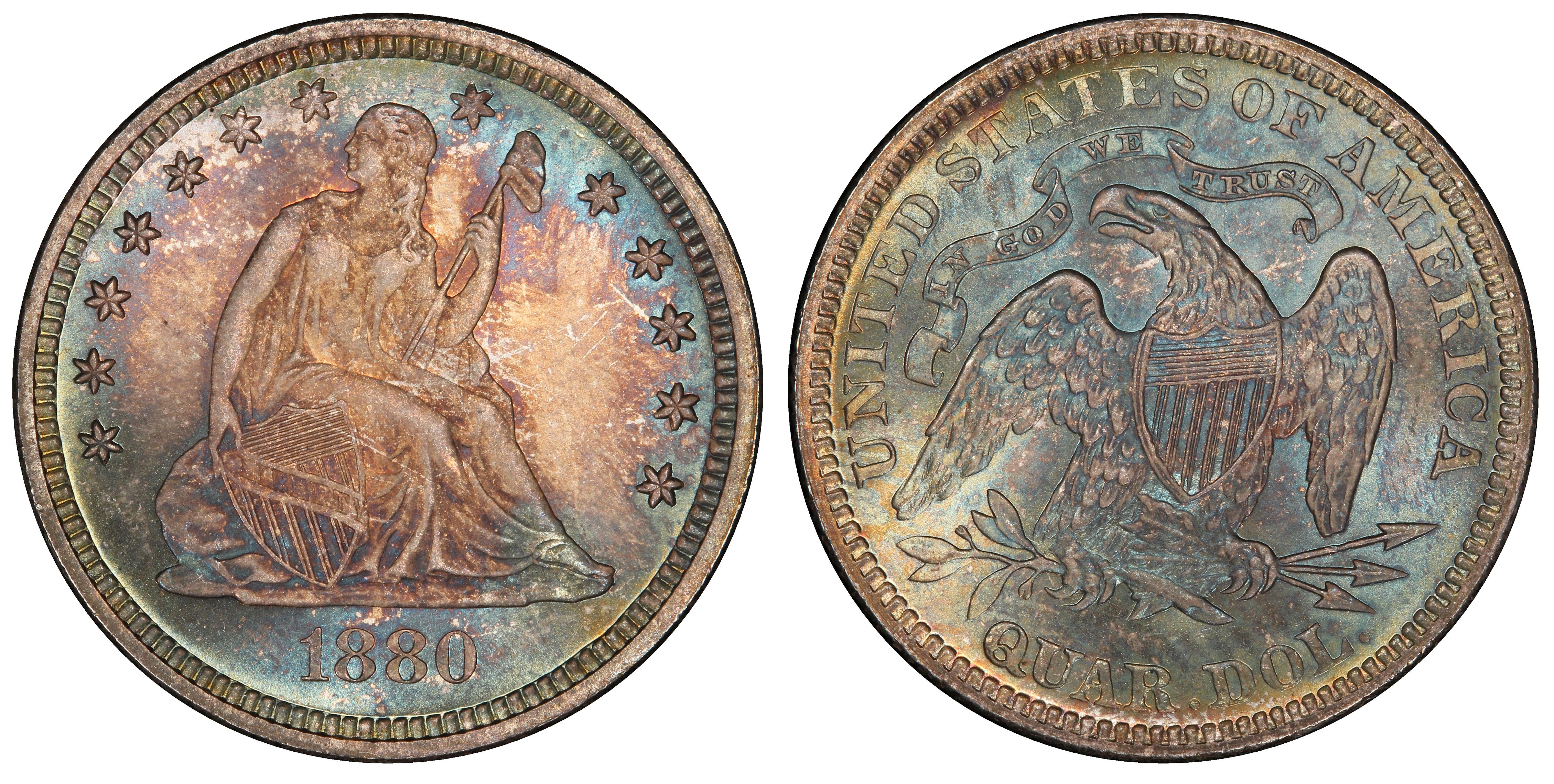
PCGS MS67+
- PCGS #:
- 5512
- Designer:
- Robert Ball Hughes/Christian Gobrecht
- Edge:
- Reeded
- Diameter:
- 24.30 millimeters
- Weight:
- 6.30 grams
- Mintage:
- 13,600
- Mint:
- Philadelphia
- Metal:
- 90% Silver, 10% Copper
- Auction Record:
- $21,150 • MS68 • 04-23-2014 • Heritage Auctions
Go To Grade
Current Auctions - PCGS Graded
Current Auctions - NGC Graded
For Sale Now at Collectors Corner - PCGS Graded
For Sale Now at Collectors Corner - NGC Graded
Rarity and Survival Estimates Learn More
| Survival Estimate | |
|---|---|
| All Grades | 2,000 |
| 60 or Better | 350 |
| 65 or Better | 100 |
| Numismatic Rarity | |
|---|---|
| All Grades | R-4.6 |
| 60 or Better | R-6.3 |
| 65 or Better | R-8.0 |
| Relative Rarity By Type All Specs in this Type | |
|---|---|
| All Grades | 36 / 48 TIE |
| 60 or Better | 37 / 48 TIE |
| 65 or Better | 37 / 48 TIE |
| Relative Rarity By Series All Specs in this Series | |
|---|---|
| All Grades | 94 / 114 TIE |
| 60 or Better | 91 / 114 TIE |
| 65 or Better | 77 / 114 TIE |
Condition Census What Is This?
|
#1 MS68 PCGS grade
Heritage 4/2014:5580, $21,150 |
|
#2 MS67 PCGS grade
Heritage 4/2013:1979, $6,527.13 |
| #2 MS67 PCGS grade |
| #2 MS67 PCGS grade |
| #2 MS67 PCGS grade |
| #2 MS67 PCGS grade |
| #2 MS67 PCGS grade |
| #2 MS67 PCGS grade |
| #2 MS67 PCGS grade |
| #2 MS67 PCGS grade |
Gordon Wrubel:
Philadelphia Mint circulation strike quarters from 1879 to 1889 have low mintages ranging from 5,000 to 15,200. The reason for these tiny mintage figures was the Bland-Allison Silver Act of 1878. The Act mandated the minting of prodigious amounts of dollar coins to satisfy Western mining interests. This taxed the Mint's coining and die making machinery which resulted in meager production of sorely needed minor coinage. This situation was not corrected until 1892 with the introduction of the new Barber coinage.
With survival estimates in the 15% range, circulation strike 1879 to 1889 quarters were, and still are, highly sought by date collectors and hoarded by some.
Quickfinder Notes: With the 1880 mintage of 13,600 "business" strike pieces, it is sometimes difficult to distinguish proof-like first strikes from proofs. The same difficulty is encountered when examining well worn specimens. Proof expert, John Dannreuther, notes some positional date differences between proof and mint state specimens. But, on this date, there is also a "tell" on the reverse. On Mint State pieces, the second, recessed, undulation of the scroll from the left is FULL and COMPLETE. On proofs the interior of that part of the scroll has been polished away and only TWO THIN OUTER BORDER LINES remain.
We have noted two proof die EXCEPTIONS to the "COMPLETE SCROLL" rule. One is a very rare "proof only" issue which uses the Type I reverse die of 1872 engraved by James B. Longacre. This issue has a fully struck scroll but can be identified by a DIE CUT from the left border of the shield into the feathers. The second COMPLETE SCROLL die used on proofs is from the Type II reverse hub created by Charles Barber. This die is identified by TWO RAISED LUMPS on the first undulation at the left end of the scroll and also some raised DIE FLAWS at the CENTER of the SHIELD.
With survival estimates in the 15% range, circulation strike 1879 to 1889 quarters were, and still are, highly sought by date collectors and hoarded by some.
Quickfinder Notes: With the 1880 mintage of 13,600 "business" strike pieces, it is sometimes difficult to distinguish proof-like first strikes from proofs. The same difficulty is encountered when examining well worn specimens. Proof expert, John Dannreuther, notes some positional date differences between proof and mint state specimens. But, on this date, there is also a "tell" on the reverse. On Mint State pieces, the second, recessed, undulation of the scroll from the left is FULL and COMPLETE. On proofs the interior of that part of the scroll has been polished away and only TWO THIN OUTER BORDER LINES remain.
We have noted two proof die EXCEPTIONS to the "COMPLETE SCROLL" rule. One is a very rare "proof only" issue which uses the Type I reverse die of 1872 engraved by James B. Longacre. This issue has a fully struck scroll but can be identified by a DIE CUT from the left border of the shield into the feathers. The second COMPLETE SCROLL die used on proofs is from the Type II reverse hub created by Charles Barber. This die is identified by TWO RAISED LUMPS on the first undulation at the left end of the scroll and also some raised DIE FLAWS at the CENTER of the SHIELD.