1870 3CN (Regular Strike)
Series: Liberty Head Three Cent Nickels 1865-1889

PCGS MS67

PCGS MS66+
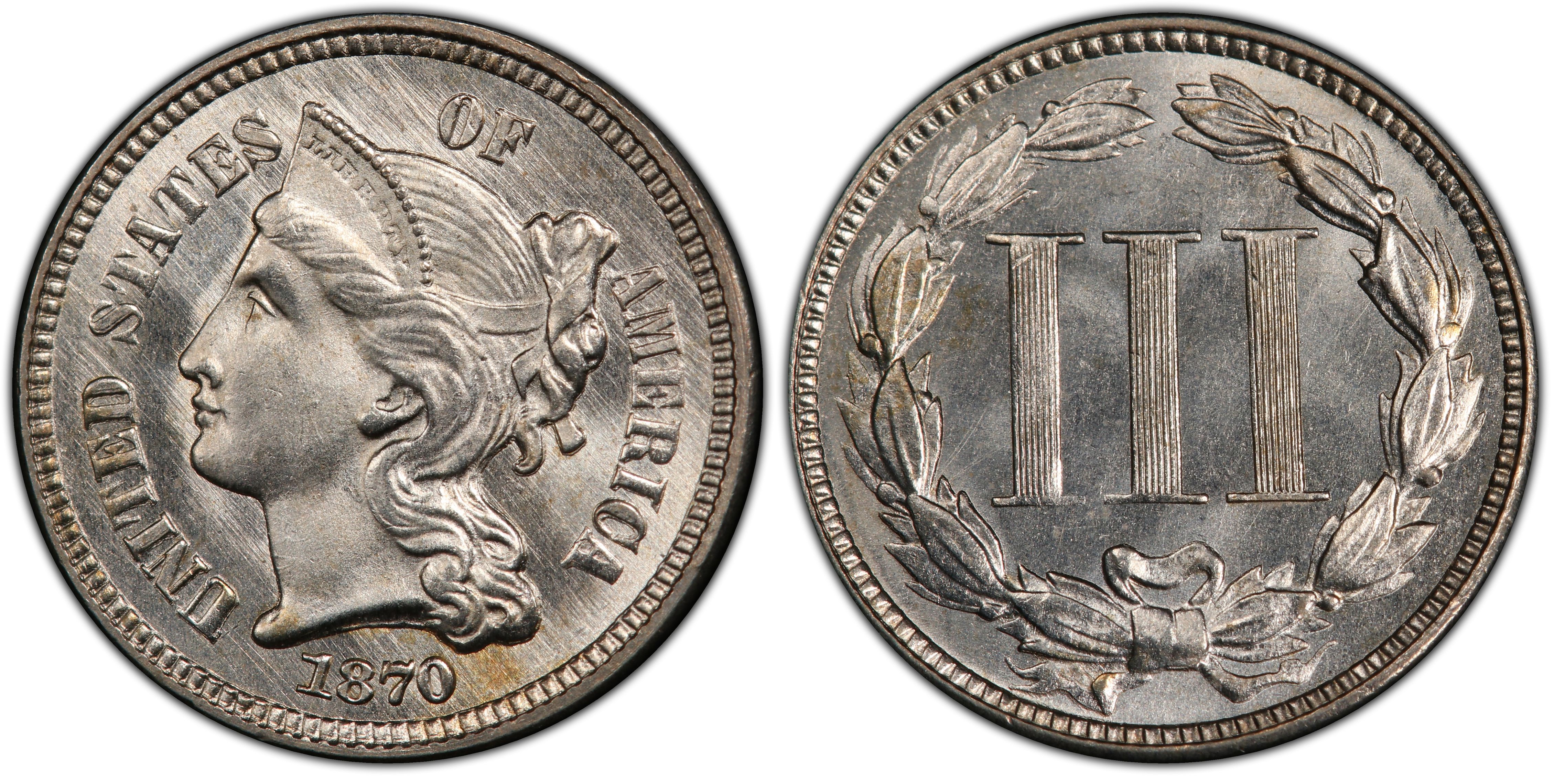
PCGS MS66+
- PCGS #:
- 3736
- Designer:
- James Barton Longacre
- Edge:
- Plain
- Diameter:
- 17.90 millimeters
- Weight:
- 1.94 grams
- Mintage:
- 1,335,000
- Mint:
- Philadelphia
- Metal:
- 75% Copper, 25% Nickel
- Auction Record:
- $6,900 • MS67 • 06-02-2005 • Heritage Auctions
Major Varieties
- 1870 3CN
Go To Grade
Current Auctions - PCGS Graded
Current Auctions - NGC Graded
For Sale Now at Collectors Corner - PCGS Graded
For Sale Now at Collectors Corner - NGC Graded
Rarity and Survival Estimates Learn More
| Survival Estimate | |
|---|---|
| All Grades | 8,000 |
| 60 or Better | 750 |
| 65 or Better | 200 |
| Numismatic Rarity | |
|---|---|
| All Grades | R-3.4 |
| 60 or Better | R-5.5 |
| 65 or Better | R-7.0 |
| Relative Rarity By Type All Specs in this Type | |
|---|---|
| All Grades | 18 / 23 |
| 60 or Better | 16 / 23 TIE |
| 65 or Better | 15 / 23 TIE |
| Relative Rarity By Series All Specs in this Series | |
|---|---|
| All Grades | 18 / 23 |
| 60 or Better | 16 / 23 TIE |
| 65 or Better | 15 / 23 TIE |
Condition Census What Is This?
| #1 MS66 PCGS grade |
| #1 MS66 PCGS grade |
| #1 MS66 PCGS grade |
| #1 MS66 PCGS grade |
| #1 MS66 PCGS grade |
| #1 MS66 PCGS grade |
| #1 MS66 PCGS grade |
| #1 MS66 PCGS grade |
| #1 MS66 PCGS grade |
| #1 MS66 PCGS grade |
Ron Guth:
The 1870 Three-Cent Nickel mimics the 1869, as both have similar mintages and nearly identical populations and grade distributions among the coins graded by PCGS. The most frequently-seen grade is MS-64, just slightly ahead of MS-63. The finest examples are fifteen at the MS66 level.
Clashmarks are less frequent on this date than they are on the 1869, but the strike is equally as nice. Collectors should attempt to find examples that show as many of the vertical lines as possible on the reverse.