1859 $2.50 Old Reverse (Regular Strike)
Series: Liberty Head $2 1/2 1840-1907

PCGS MS64

REVERSE COMPARISON
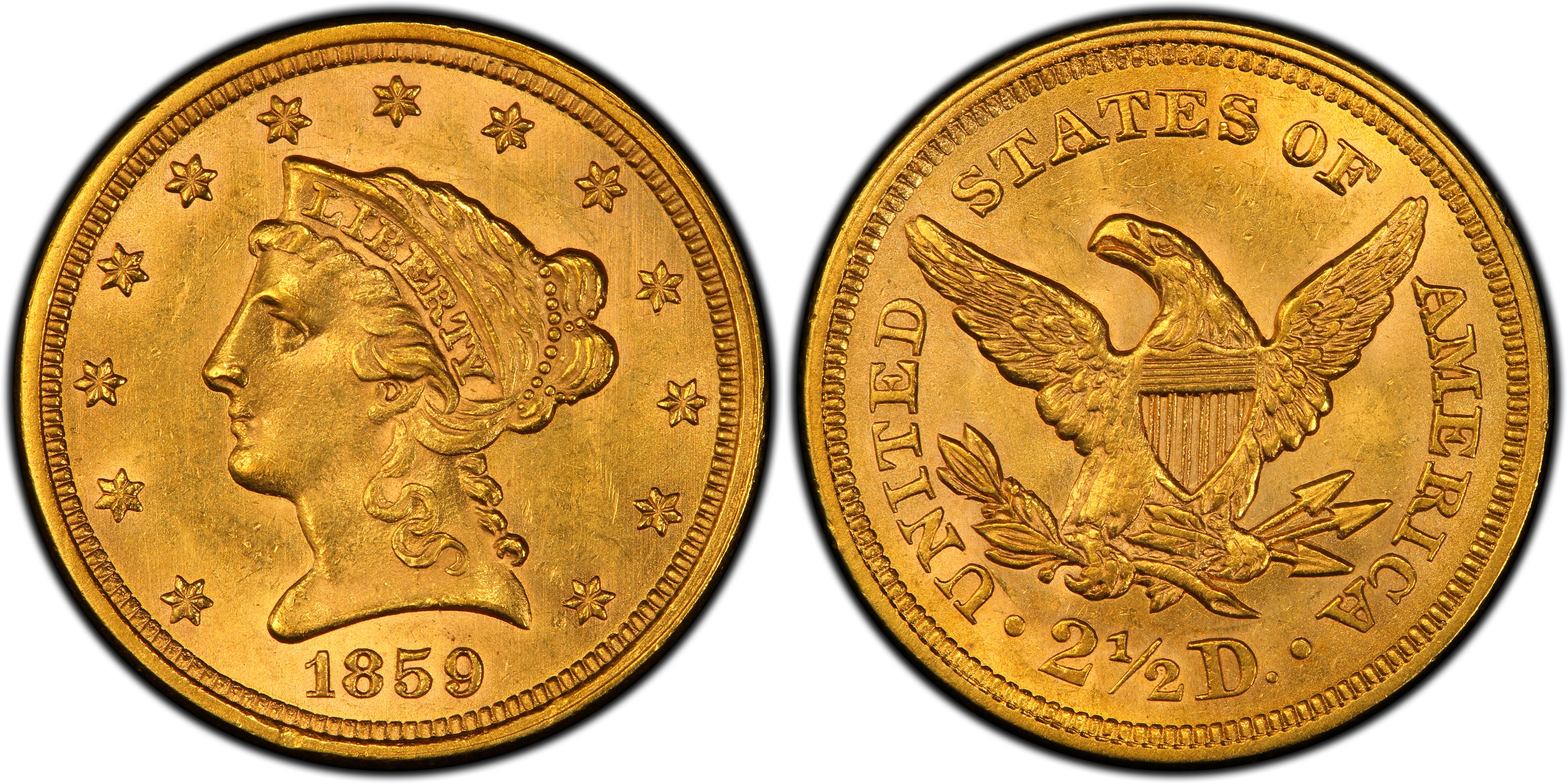
PCGS MS64
- PCGS #:
- 97788
- Designer:
- Christian Gobrecht
- Edge:
- Reeded
- Diameter:
- 18.00 millimeters
- Weight:
- 4.18 grams
- Mintage:
- 39,364
- Mint:
- Philadelphia
- Metal:
- 90% Gold, 10% Copper
- Auction Record:
- $46,000 • MS67 • 03-31-2011 • Stack's Bowers
Go To Grade
Current Auctions - PCGS Graded
Current Auctions - NGC Graded
For Sale Now at Collectors Corner - PCGS Graded
For Sale Now at Collectors Corner - NGC Graded
Rarity and Survival Estimates Learn More
| Survival Estimate | |
|---|---|
| All Grades | 75 |
| 60 or Better | 10 |
| 65 or Better | 1 |
| Numismatic Rarity | |
|---|---|
| All Grades | R-8.2 |
| 60 or Better | R-9.5 |
| 65 or Better | R-10.0 |
| Relative Rarity By Type All Specs in this Type | |
|---|---|
| All Grades | 19 / 147 TIE |
| 60 or Better | 57 / 147 TIE |
| 65 or Better | 1 / 147 TIE |
| Relative Rarity By Series All Specs in this Series | |
|---|---|
| All Grades | 19 / 147 TIE |
| 60 or Better | 57 / 147 TIE |
| 65 or Better | 1 / 147 TIE |
Condition Census What Is This?
|
#1 MS64 PCGS grade
Norweb Collection - Heritage 1/2016:6376, $8,812.50 |
|
#1 MS64 PCGS grade
Heritage 11/2012:4779, $7,637.50 |
| #1 MS64 PCGS grade |
|
#4 MS63 PCGS grade
Heritage 3/2016:5042, $4,700 |
| #4 MS63 PCGS grade |
| #4 MS63 PCGS grade |
| #4 MS63 PCGS grade |
| #4 MS63 PCGS grade |
| #4 MS63 PCGS grade |
| #4 MS63 PCGS grade |
Gordon Wrubel:
Quickfinder Notes: There is a very simple way to distinguish the Old Reverse from the New Reverse die. Just look at the "O" in "OF". The Old Reverse has an OVAL "O", and the New Reverse has a ROUND "O". The branch mint issues of Dahlonega and San Francisco (none were issued by the Charlotte Mint in 1859), all use the Old Reverse die. The 1861 Old Reverse is about twice as rare as the New Reverse and carries a hefty premium.