1855 1/2C, RD (Regular Strike)
Series: Braided Hair Half Cents 1849-1857

PCGS MS66RD
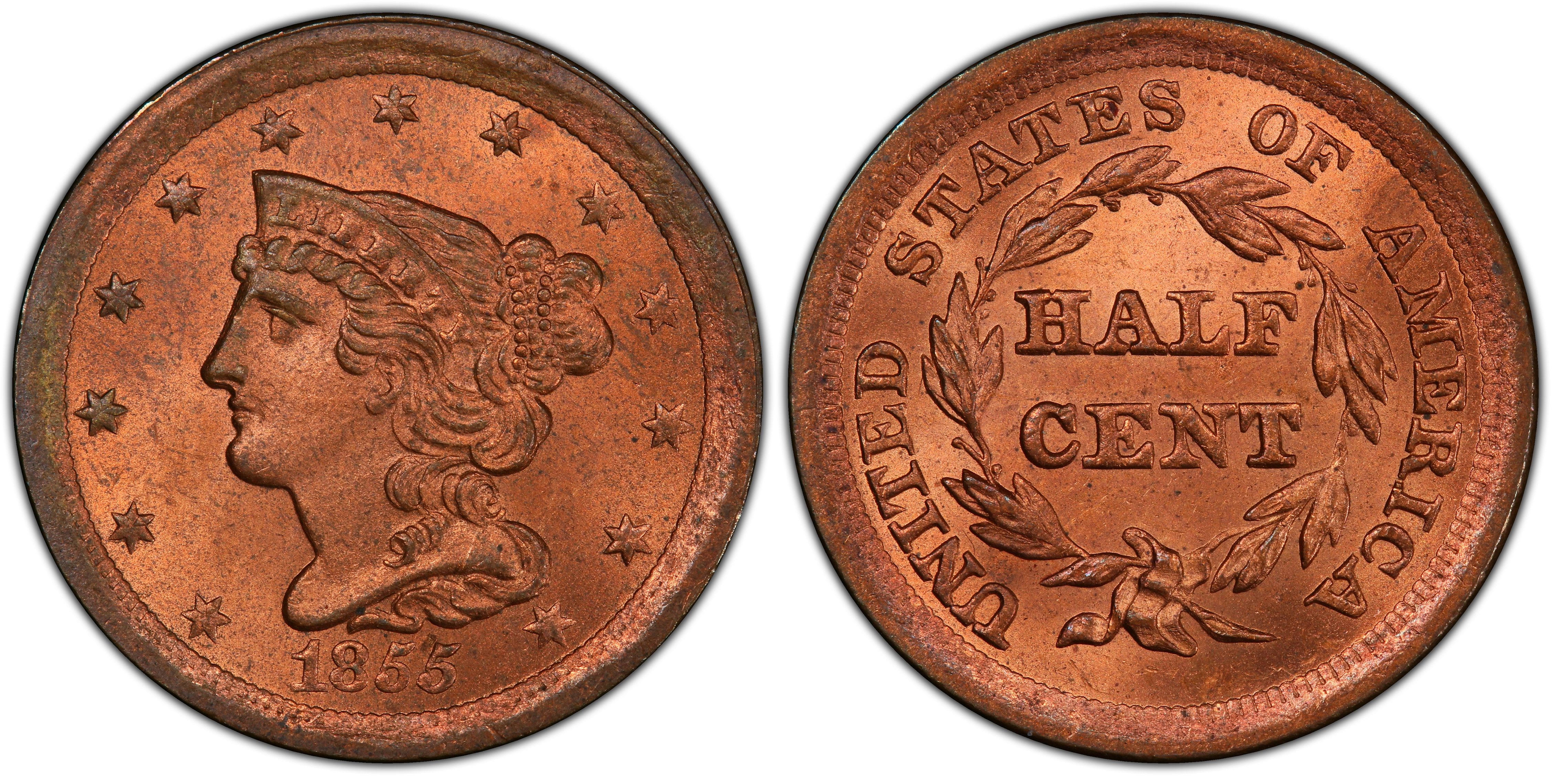
PCGS MS65+RD

PCGS MS65+RD
- PCGS #:
- 1235
- Designer:
- Christian Gobrecht
- Edge:
- Plain
- Diameter:
- 23.00 millimeters
- Weight:
- 5.44 grams
- Mintage:
- 56,500
- Mint:
- Philadelphia
- Metal:
- Copper
- Auction Record:
- $14,688 • MS65+RD • 05-17-2018 • Legend Rare Coin Auctions
Rarity and Survival Estimates Learn More
| Survival Estimate | |
|---|---|
| All Grades | 500 |
| 60 or Better | 500 |
| 65 or Better | 50 |
| Numismatic Rarity | |
|---|---|
| All Grades | R-6.0 |
| 60 or Better | R-6.0 |
| 65 or Better | R-8.5 |
| Relative Rarity By Type All Specs in this Type | |
|---|---|
| All Grades | 6 / 7 |
| 60 or Better | 6 / 7 |
| 65 or Better | 4 / 7 |
| Relative Rarity By Series All Specs in this Series | |
|---|---|
| All Grades | 6 / 7 |
| 60 or Better | 6 / 7 |
| 65 or Better | 4 / 7 |
Condition Census What Is This?
|
#1 PCGS MS66RD
As PCGS MS66RD #42771679. GreatCollections, August 29, 2021, Lot 1032227; Stack's Bowers, April 5, 2022, Lot 3006 - $13,200. |
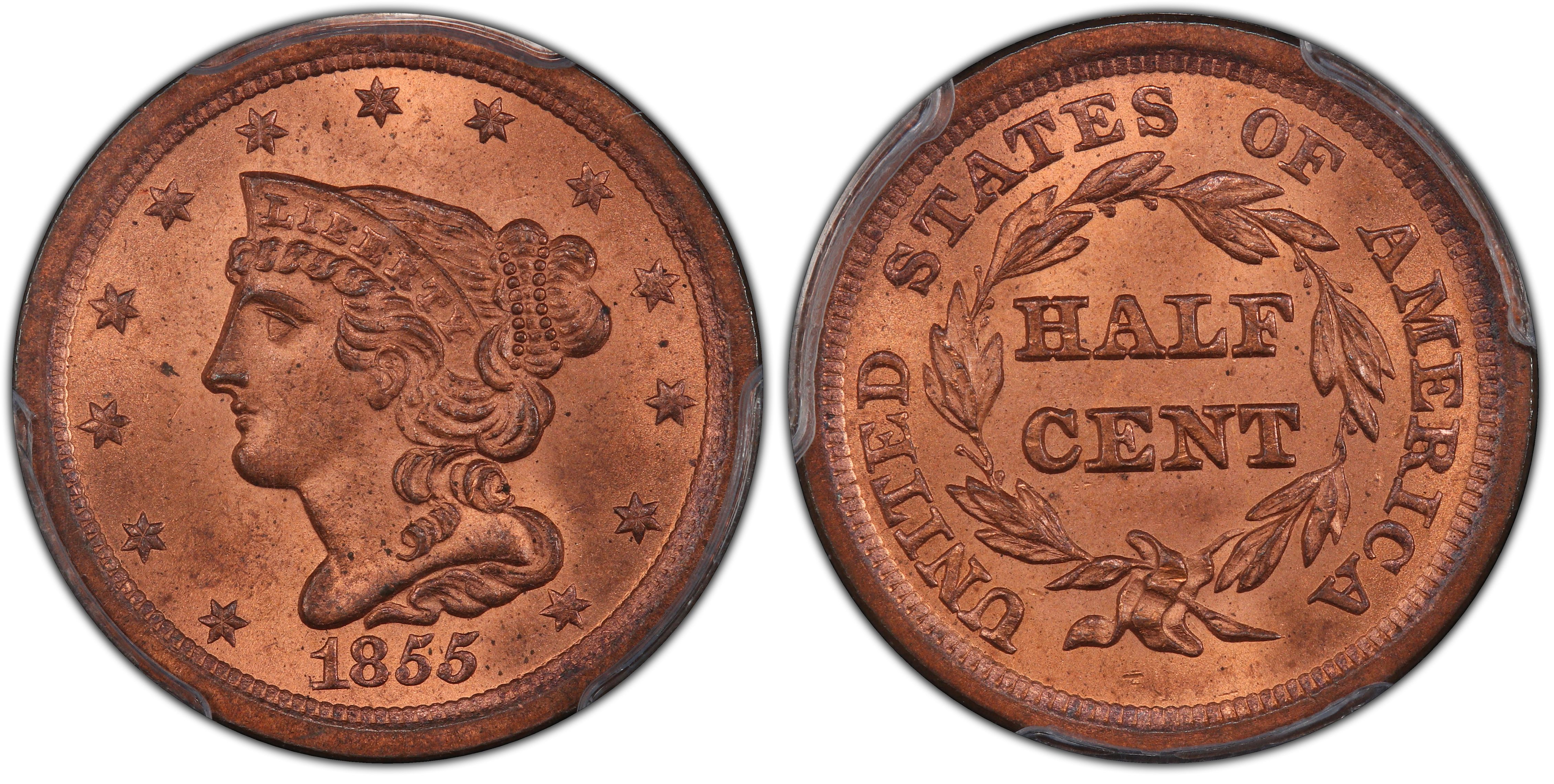 #2 PCGS MS65+RD
Legend Rare Coin Auctions, May 17, 2018, Lot 302 – $14.687.50; Heritage Auctions, January 11, 2023, Lot 3050 – $10,200. Dark spot in the left obverse field to the right of Liberty’s nose. Carbon spot between stars 10 and 11. |
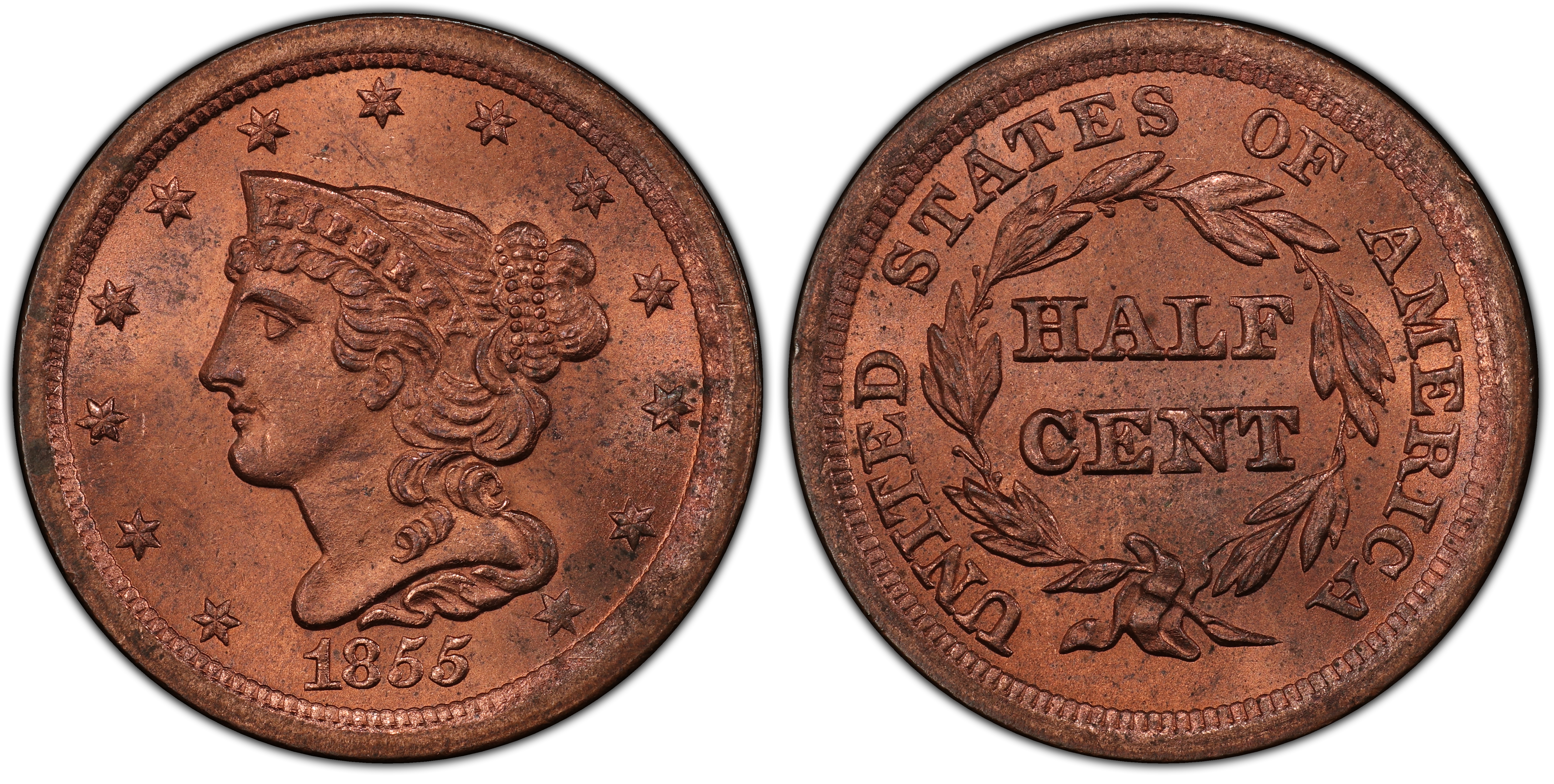 #2 PCGS MS65+RD
Heritage Auctions, November 20, 2020, Lot 3287 - $5,493.60; Heritage Auctions, February 9, 2023, Lot 3008 - $6,600. "HTW Design Set" (PCGS Set Registry). Tiny scattered carbon spots throughout, especially on the right field of the obverse. Vertical hit on chin. Two small scratches to the right of star three. |
 #2 PCGS MS65+RD
As PCGS MS65RD #25011685. Stack's Bowers, August 14, 2013, Lot 1469 - $5,287.50. As PCGS MS65+RD #35028681. Stack’s Bowers, June 2018, Lot 1062 - $5,520; GreatCollections, January 26, 2020, Lot 791801. Tick on chin. Tiny scattered carbon flecks, primarily on the rightside obverse. |
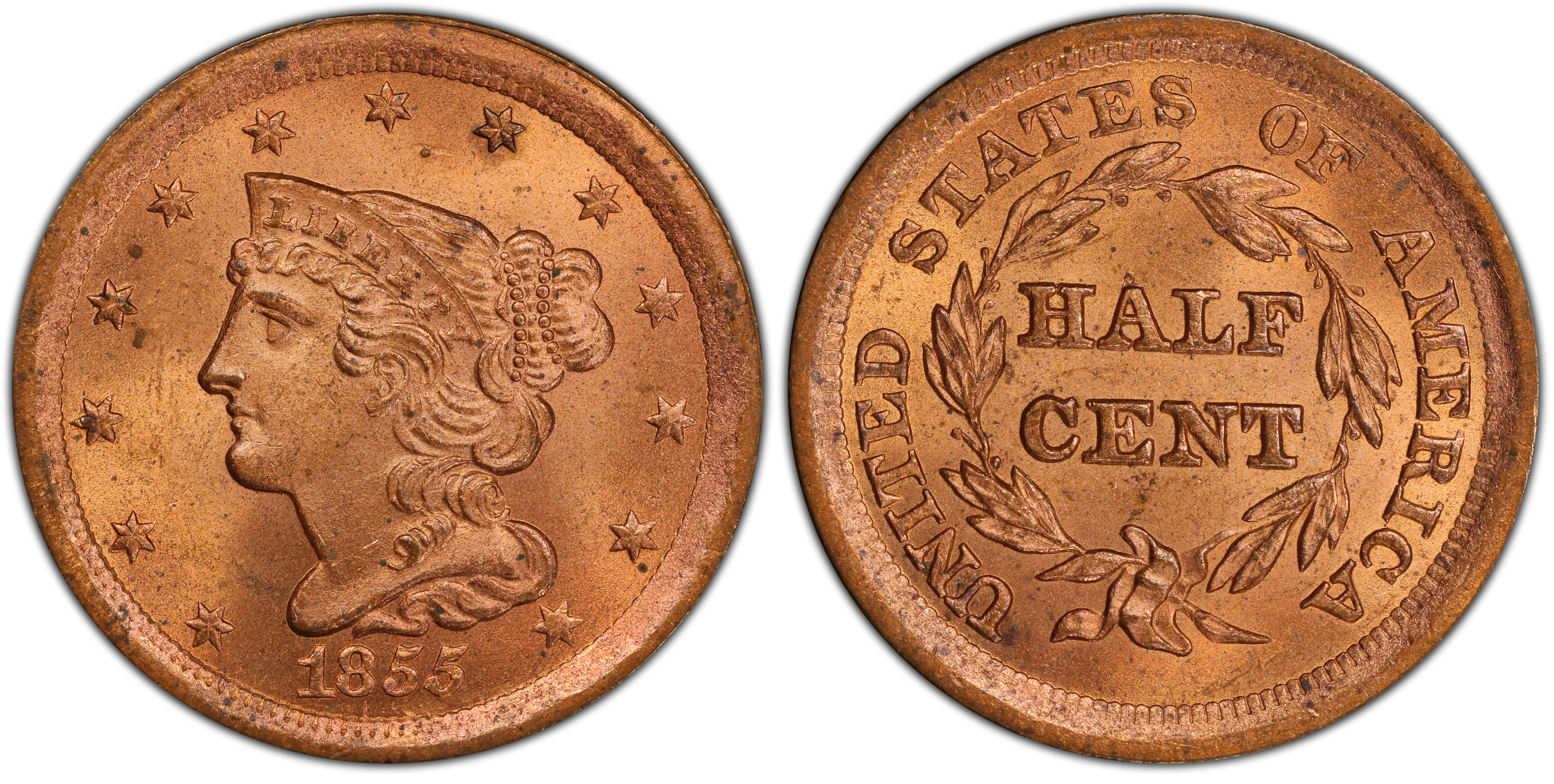 #2 PCGS MS65+RD
Heritage Auctions, January 8, 2020, Lot 3054 - $5,160. Two carbon spots at star 4. Tick below 8. |
|
#2 PCGS MS65+RD
|
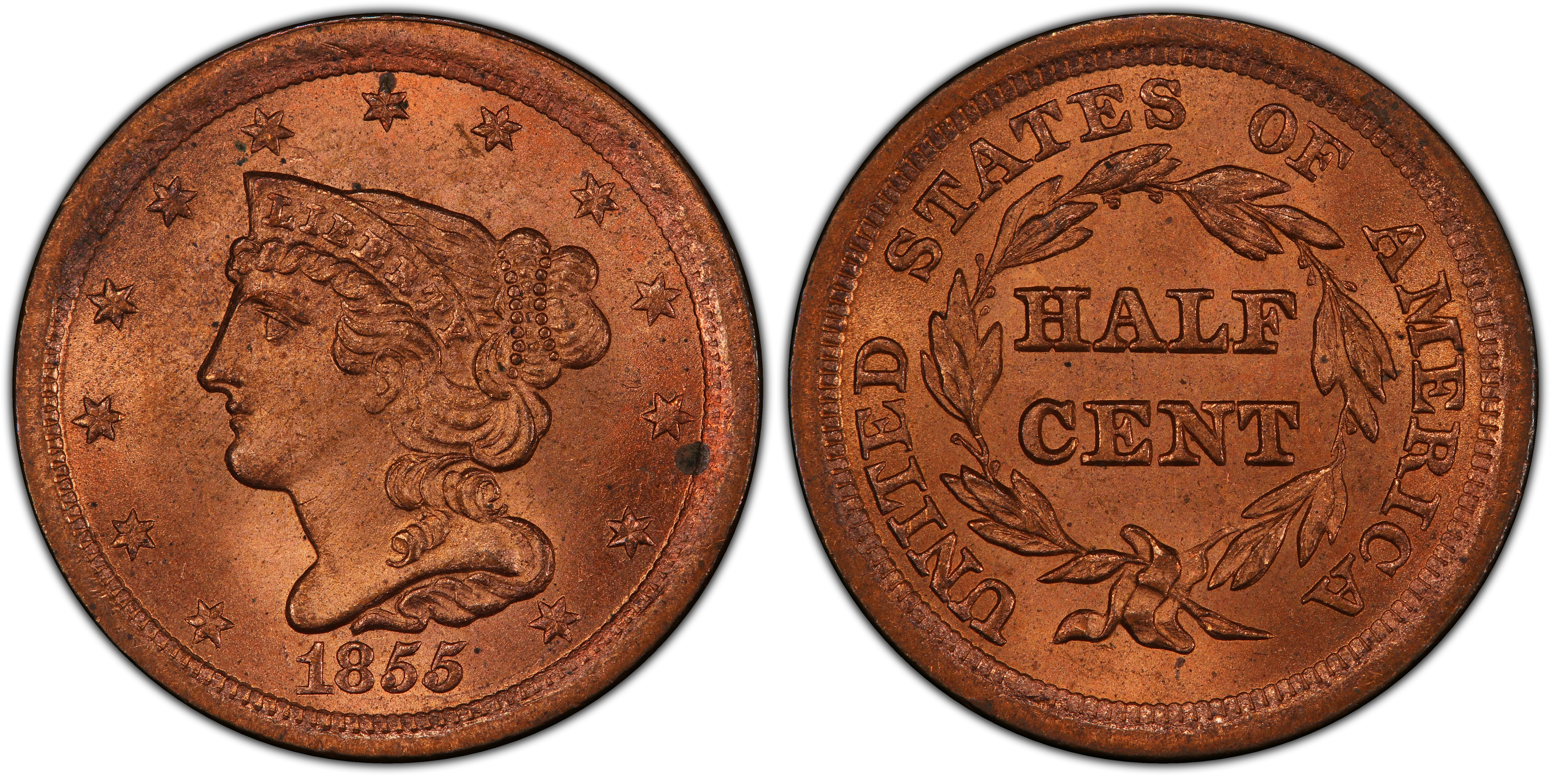 #2 PCGS MS65+RD
|
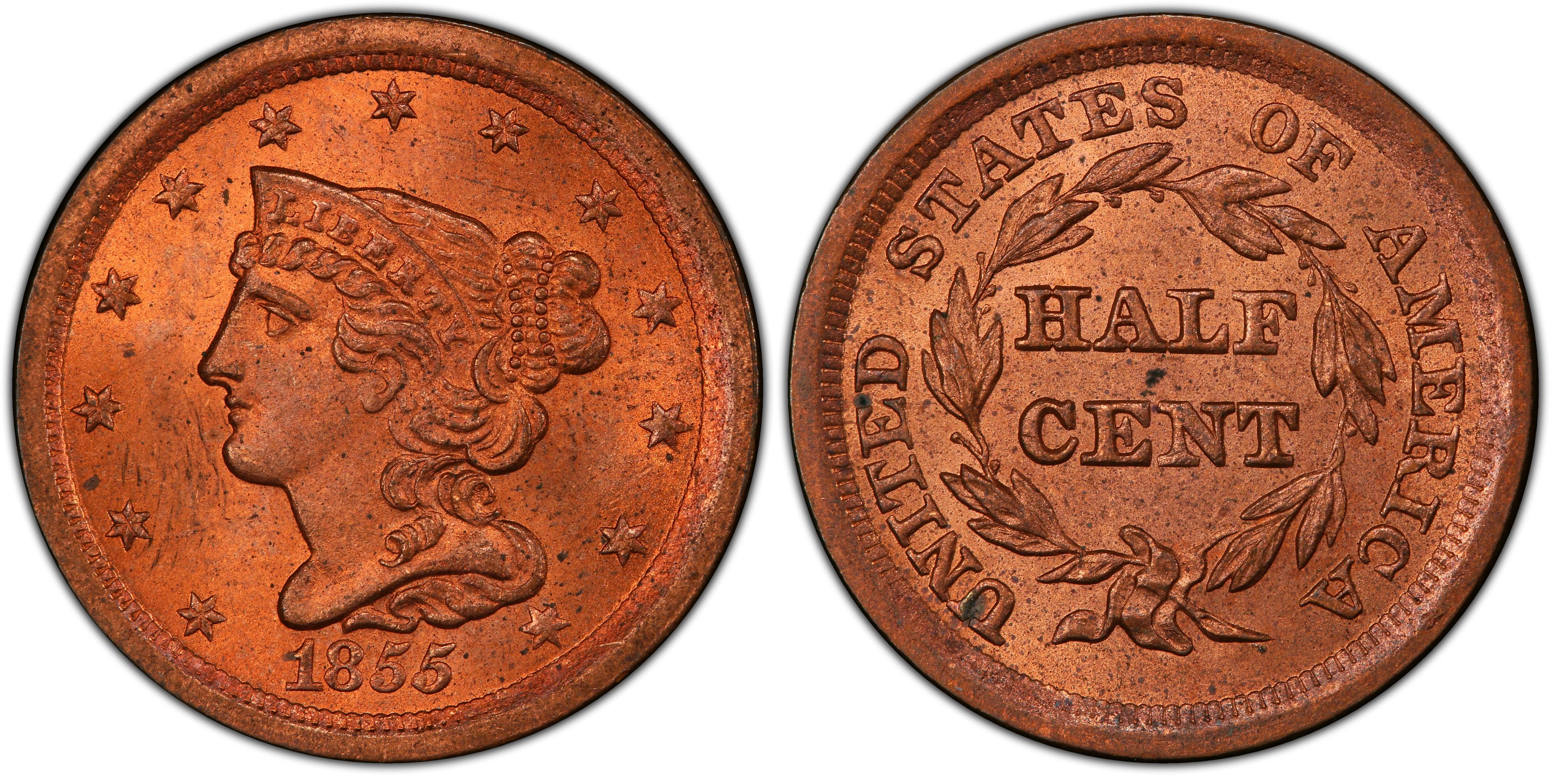 #2 PCGS MS65+RD
|
The Philadelphia Mint struck 56,500 circulation strike Braided Hair Half Cents in 1855. This amount, insuficient to achieve widespread use, was a fraction of the number of the Braided Hair Large Cents struck that year. In fact, the production ratio was 27.87:1 (Large Cents to Half Cents). As large as this disparity seems, this was actually a favorable ratio for the Half Cent in the 1850s, as the typical year saw ratios ranging from 51 to 111. Only 1857, when Large Cent production was winding down, did the gap between the two denominations close below 10:1.
The United States Mint would continue to produce this copper coin for only two more years. When Congress acted to discontinue the half cent and reduce the size of the large cent to its now familiar smaller version, it was simultaneously introducing a coin that was no longer backed by its metal value. Econimically, American merchants and the public had already moved on from the half cent denomination.
Key 1855 Braided Hair Half Cent Characteristics
- Catalog Numbers: Only one die pair was used to strike all 1855 Braided Hair Half Cents. This classified by collectors using several guides: Cohen-1, Eckberg 1-A, Breen-1.
- Date Style: All 1855 half cents were struck with the Slanted 5 date style.
- Denticles: Denticles (the tooth-like ornaments around the rim) from the 2 o’clock to 7 o’clock positions are typically missing or weakly defined.
- Rarity: Rarity-1.
Survival and Hoards
While many Braided Hair Half Cents are typically found in circulated grades or in Red Brown condition, the 1855 Braided Hair Half Cent is notably different. Many examples of this issue survive in Mint State Red.
In fact, a running joke among members of the copper collecting community is that the Mint never stopped making 1855 Half Cents. The prevalence of so many Mint State Red examples is the result of hoards. At least two significant caches have yielded these high-grade examples:
- The Putnam Hoard: Named after Judge John P. Putnam, a member of the United States Assay Commission, who acquired between 50 and 75 pieces from the Philadelphia Mint around the time of the 1864 Assay. These coins were later dispersed in multiple lots during W. Elliot Woodward’s sale of the A.W. Matthews Collection, held on December 16-18, 1885.
- The French Hoard: This was a much larger cache, reportedly containing 500 Mint State Red 1855 half cents, which was acquired by New York coin dealer Charlie French in the 1940s. According to numismatic historian Q. David Bowers, these coins gradually entered the market "with little fanfare" until they were all sold "by about 1960."
The hoard coins generally display some degree of carbon spotting, but many are brightly colored and exhibit exceptional eye appeal
* * *