
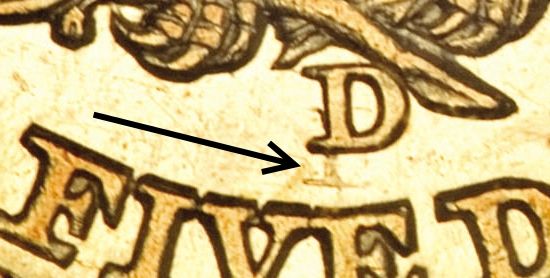
CLOSEUP OF MINTMARK
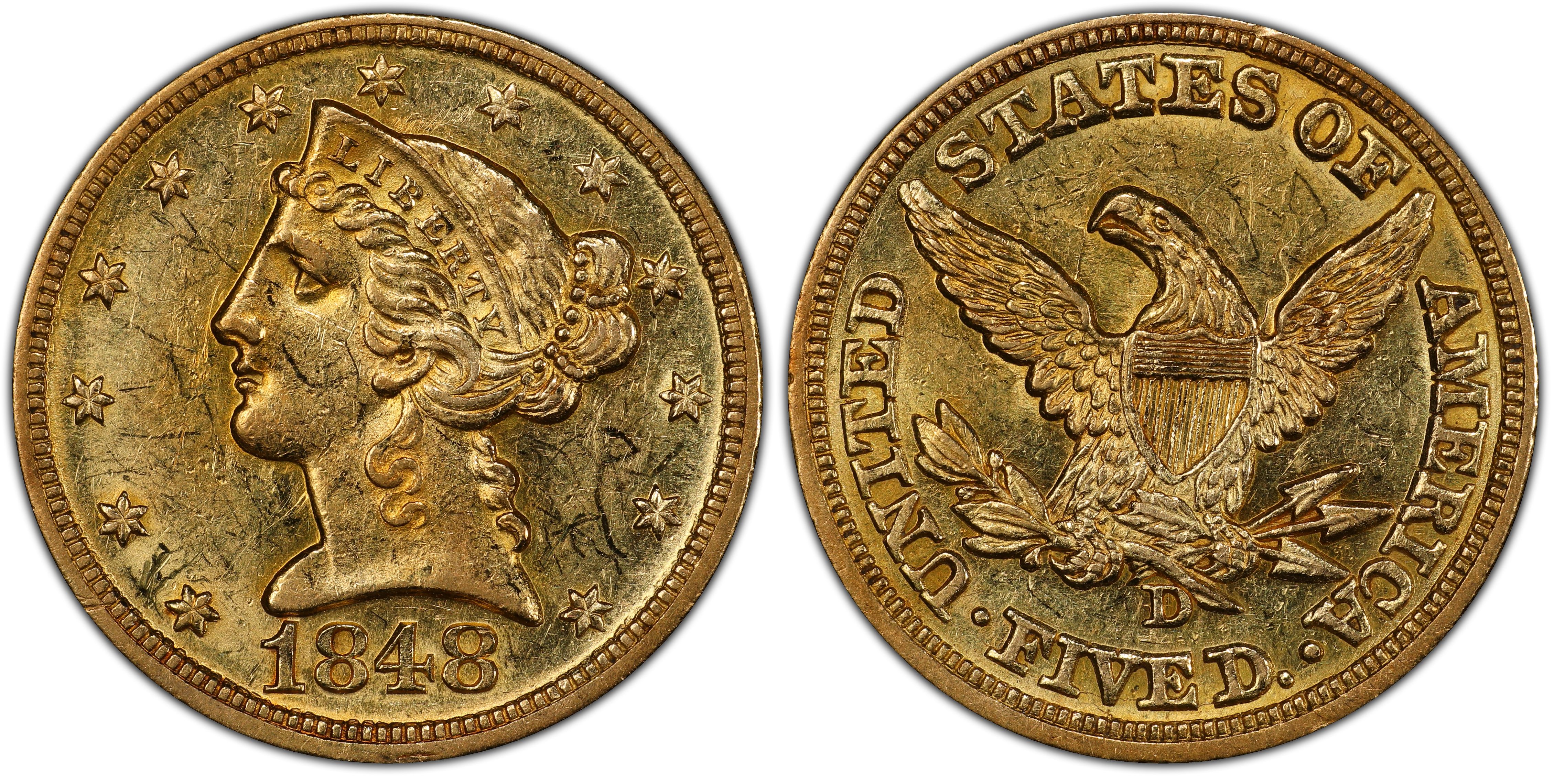
PCGS MS61
- PCGS #:
- 8239
- Designer:
- Christian Gobrecht
- Edge:
- Reeded
- Diameter:
- 21.65 millimeters
- Weight:
- 8.36 grams
- Mintage:
- 47,465
- Mint:
- Dahlonega
- Metal:
- 90% Gold, 10% Copper
- Auction Record:
- $29,900 • MS62 • 05-28-2008 • Heritage Auctions
Go To Grade
Current Auctions - PCGS Graded
Current Auctions - NGC Graded
For Sale Now at Collectors Corner - PCGS Graded
For Sale Now at Collectors Corner - NGC Graded
Rarity and Survival Estimates Learn More
| Survival Estimate | |
|---|---|
| All Grades | 35 |
| 60 or Better | 2 |
| 65 or Better | |
| Numismatic Rarity | |
|---|---|
| All Grades | R-8.8 |
| 60 or Better | R-9.9 |
| 65 or Better | R-10.1 |
| Relative Rarity By Type All Specs in this Type | |
|---|---|
| All Grades | 7 / 112 TIE |
| 60 or Better | 7 / 112 TIE |
| 65 or Better | 1 / 112 |
| Relative Rarity By Series All Specs in this Series | |
|---|---|
| All Grades | 8 / 218 TIE |
| 60 or Better | 13 / 218 TIE |
| 65 or Better | 1 / 218 |
Condition Census What Is This?
 #1 MS62 PCGS grade
Heritage 5/2008:3232, $29,900 |
|
#2 MS61 PCGS grade
Recovered from the wreck of the S.S. Central America |
|
#2 MS61 PCGS grade
American Numismatic Rarities 8/2006:1404, not sold |
| #4 AU58 PCGS grade |
| #4 AU58 PCGS grade |
| #4 AU58 PCGS grade |
| #4 AU58 PCGS grade |
| #8 AU55 PCGS grade |
| #8 AU55 PCGS grade |
| #8 AU55 PCGS grade |
Doug Winter:
The 1848-D is often regarded as one of the more common Dahlonega half eagles. This is most definitely not the case as it is actually quite scarce in any grade and very rare in high grades.
The 1848-D half eagle is a scarce and undervalued issue. Most grade Very Fine to Extremely Fine. Any coin grading About Uncirculated is rare and any About Uncirculated example with good eye appeal is very rare. In Mint State, the 1848-D half eagle is extremely rare.
STRIKE: The quality of strike depends on which die variety a specific coin is. Many examples are very poorly struck and show pronounced flatness at the obverse center and heavy die swelling. Others have clashmarks at the mouth of Liberty and behind the head and weakness on the neck feathers of the eagle. The reverse is generally better struck, even on the coins which show extreme weakness on the obverse. Any example with a sharp overall strike is very rare. For more information on strike, refer to Die Varieties below.
SURFACES: Most 1848-D half eagles have numerous abrasions on the surfaces. This is one of the most difficult Dahlonega half eagles to locate with clean fields. Examples exist with matte-like surfaces from exposure to seawater. These coins have Mint State sharpness but are generally accorded the same value as an Extremely Fine coin with original surfaces.
LUSTER: This date shows below average quality luster. On the few original, higher grade coins that exist, the luster is usually frosty in its texture. On the typical piece the luster is impaired and has a slightly grainy texture.
COLORATION: Due to the fact that so many have been cleaned, it is very difficult to find an 1848-D half eagle with pleasing natural coloration. The few original pieces which exist have darker green-gold or orange-gold hues.
EYE APPEAL: The 1848-D is one of the most difficult Dahlonega half eagles to locate with good eye appeal. Many are very poorly struck and most show serious, detracting abrasions. A piece with good eye appeal is legitimately rare and it deserves to sell for a significant premium over a typical example.
PERSONAL OBSERVATIONS: The 1848-D half eagle is actually one of the hardest Dahlonega issues of any denomination to locate with good eye appeal. Most are either poorly struck or have been cleaned at one time. I cannot recall having seen more than two or three pieces that I felt were genuinely attractive and have seen only one (the Duke’s Creek coin) that I felt was unquestionably Uncirculated.
DIE VARIETIES:
Variety 19-N: D Over Low D variety. The reverse was used to strike coins in both 1848 and in 1849. The mintmark was originally punched too low and to the left, then effaced. The upright of the second mintmark is over the upright of the E in FIVE. The left edge of the mintmark is over the left edge of the E in FIVE while the right edge is over the right edge of the E. The mintmark touches the stem at the upper right and is close to the feather. At least two die states are known:
STATE I: Traces of the first mintmark punch can be plainly seen under light magnification. This doubling is not as clear as on the 1846-D over D but most of the first mintmark is clear. This variety is very rare and it should sell for a very significant premium. In order for an 1848-D over D to sell for a substantial premium, traces of the first D must be very clear. Late die state coins (see below) are not nearly as desirable and should not sell for a premium.
STATE II: The first mintmark punch has either been effaced or it has worn off the die and it is either invisible or barely visible. This is by far the most common Die State for Variety 19-N.
Variety 20-N: The obverse is similar to that described above except that the date is slightly further to the right with the left base of the 1 above the right center of the denticle. The mintmark is large, away from the feather and upright in its placement. There is a reverse crack above the eagle’s right wing to the field above the arrowhead.
The 1848-D half eagle is a scarce and undervalued issue. Most grade Very Fine to Extremely Fine. Any coin grading About Uncirculated is rare and any About Uncirculated example with good eye appeal is very rare. In Mint State, the 1848-D half eagle is extremely rare.
STRIKE: The quality of strike depends on which die variety a specific coin is. Many examples are very poorly struck and show pronounced flatness at the obverse center and heavy die swelling. Others have clashmarks at the mouth of Liberty and behind the head and weakness on the neck feathers of the eagle. The reverse is generally better struck, even on the coins which show extreme weakness on the obverse. Any example with a sharp overall strike is very rare. For more information on strike, refer to Die Varieties below.
SURFACES: Most 1848-D half eagles have numerous abrasions on the surfaces. This is one of the most difficult Dahlonega half eagles to locate with clean fields. Examples exist with matte-like surfaces from exposure to seawater. These coins have Mint State sharpness but are generally accorded the same value as an Extremely Fine coin with original surfaces.
LUSTER: This date shows below average quality luster. On the few original, higher grade coins that exist, the luster is usually frosty in its texture. On the typical piece the luster is impaired and has a slightly grainy texture.
COLORATION: Due to the fact that so many have been cleaned, it is very difficult to find an 1848-D half eagle with pleasing natural coloration. The few original pieces which exist have darker green-gold or orange-gold hues.
EYE APPEAL: The 1848-D is one of the most difficult Dahlonega half eagles to locate with good eye appeal. Many are very poorly struck and most show serious, detracting abrasions. A piece with good eye appeal is legitimately rare and it deserves to sell for a significant premium over a typical example.
PERSONAL OBSERVATIONS: The 1848-D half eagle is actually one of the hardest Dahlonega issues of any denomination to locate with good eye appeal. Most are either poorly struck or have been cleaned at one time. I cannot recall having seen more than two or three pieces that I felt were genuinely attractive and have seen only one (the Duke’s Creek coin) that I felt was unquestionably Uncirculated.
DIE VARIETIES:
Variety 19-N: D Over Low D variety. The reverse was used to strike coins in both 1848 and in 1849. The mintmark was originally punched too low and to the left, then effaced. The upright of the second mintmark is over the upright of the E in FIVE. The left edge of the mintmark is over the left edge of the E in FIVE while the right edge is over the right edge of the E. The mintmark touches the stem at the upper right and is close to the feather. At least two die states are known:
STATE I: Traces of the first mintmark punch can be plainly seen under light magnification. This doubling is not as clear as on the 1846-D over D but most of the first mintmark is clear. This variety is very rare and it should sell for a very significant premium. In order for an 1848-D over D to sell for a substantial premium, traces of the first D must be very clear. Late die state coins (see below) are not nearly as desirable and should not sell for a premium.
STATE II: The first mintmark punch has either been effaced or it has worn off the die and it is either invisible or barely visible. This is by far the most common Die State for Variety 19-N.
Variety 20-N: The obverse is similar to that described above except that the date is slightly further to the right with the left base of the 1 above the right center of the denticle. The mintmark is large, away from the feather and upright in its placement. There is a reverse crack above the eagle’s right wing to the field above the arrowhead.