
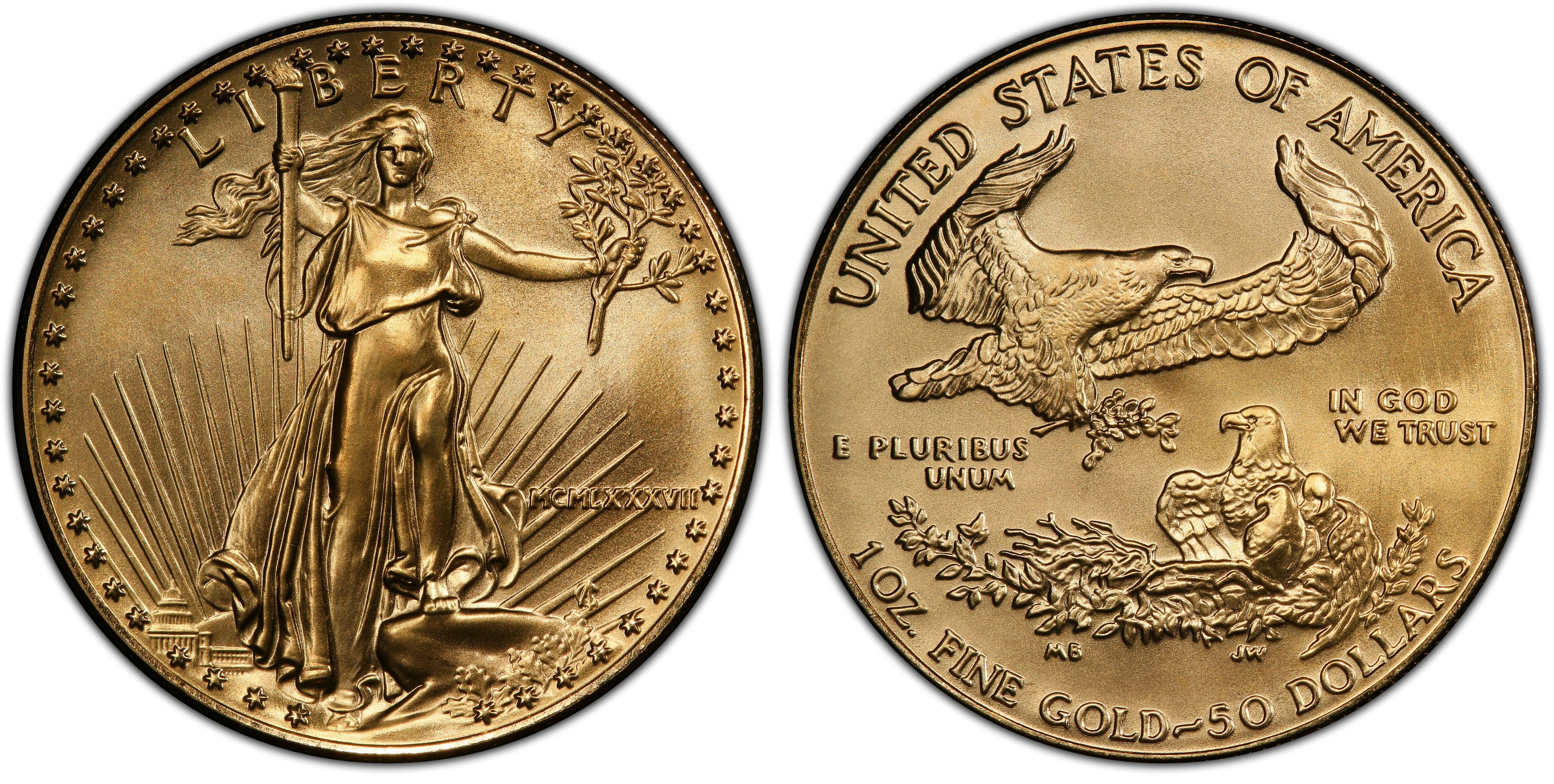
PCGS MS70

PCGS MS70
- PCGS #:
- 9814
- Designer:
- Augustus Saint Gaudens/Miley Busiek
- Edge:
- Reeded
- Diameter:
- 32.70 millimeters
- Weight:
- 33.93 grams
- Mintage:
- 1,045,500
- Mint:
- Philadelphia
- Metal:
- 91.67% Gold, 3% Silver, 5.33% Copper
- Auction Record:
- $5,000 • MS70 • 04-24-2013 • Heritage Auctions
Major Varieties
- 1987 $50 Gold Eagle
Go To Grade
Current Auctions - PCGS Graded
Current Auctions - NGC Graded
For Sale Now at Collectors Corner - PCGS Graded
For Sale Now at Collectors Corner - NGC Graded
Rarity and Survival Estimates Learn More
| Survival Estimate | |
|---|---|
| All Grades | 850,000 |
| 60 or Better | N/A |
| 65 or Better | N/A |
| Numismatic Rarity | |
|---|---|
| All Grades | R-1.2 |
| 60 or Better | |
| 65 or Better | |
| Relative Rarity By Type All Specs in this Type | |
|---|---|
| All Grades | 18 / 20 |
| 60 or Better | 1 / 20 TIE |
| 65 or Better | 1 / 20 TIE |
| Relative Rarity By Series All Specs in this Series | |
|---|---|
| All Grades | N/A |
| 60 or Better | N/A |
| 65 or Better | N/A |
Condition Census What Is This?
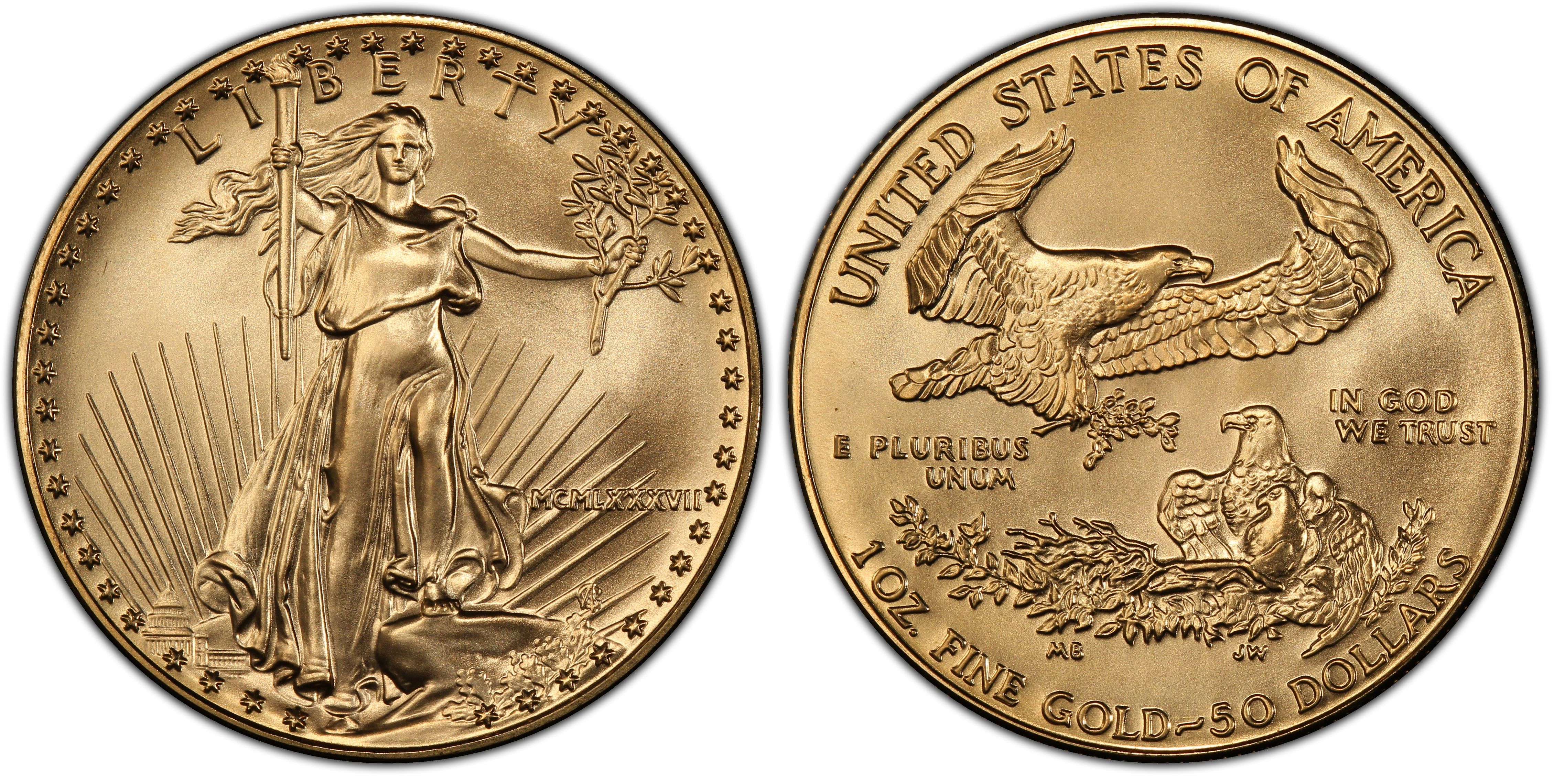 #1 MS70 PCGS grade
|
| #1 MS70 PCGS grade |
| #1 MS70 PCGS grade |
| #1 MS70 PCGS grade |
| #1 MS70 PCGS grade |
| #1 MS70 PCGS grade |
| #1 MS70 PCGS grade |
| #1 MS70 PCGS grade |
| #1 MS70 PCGS grade |
| #1 MS70 PCGS grade |
Jaime Hernandez:
This is the second year of issue for the Gold Eagles. The mintage for the 1987 $50 Uncirculated Gold Eagle was well over 1 million. Making it one of the most common issues in the $50 Uncirculated Gold Eagle series. Examples up to about MS68 are very common. In MS69 they may be a little more difficult to find because of there large weight causing them to get scuffs and scratches. Examples in MS70 are very tough to locate and bring a significant premium over MS69 examples.