1976-S $1 Clad Type 1, DCAM (Proof)
Series: Eisenhower Dollars 1971-1978
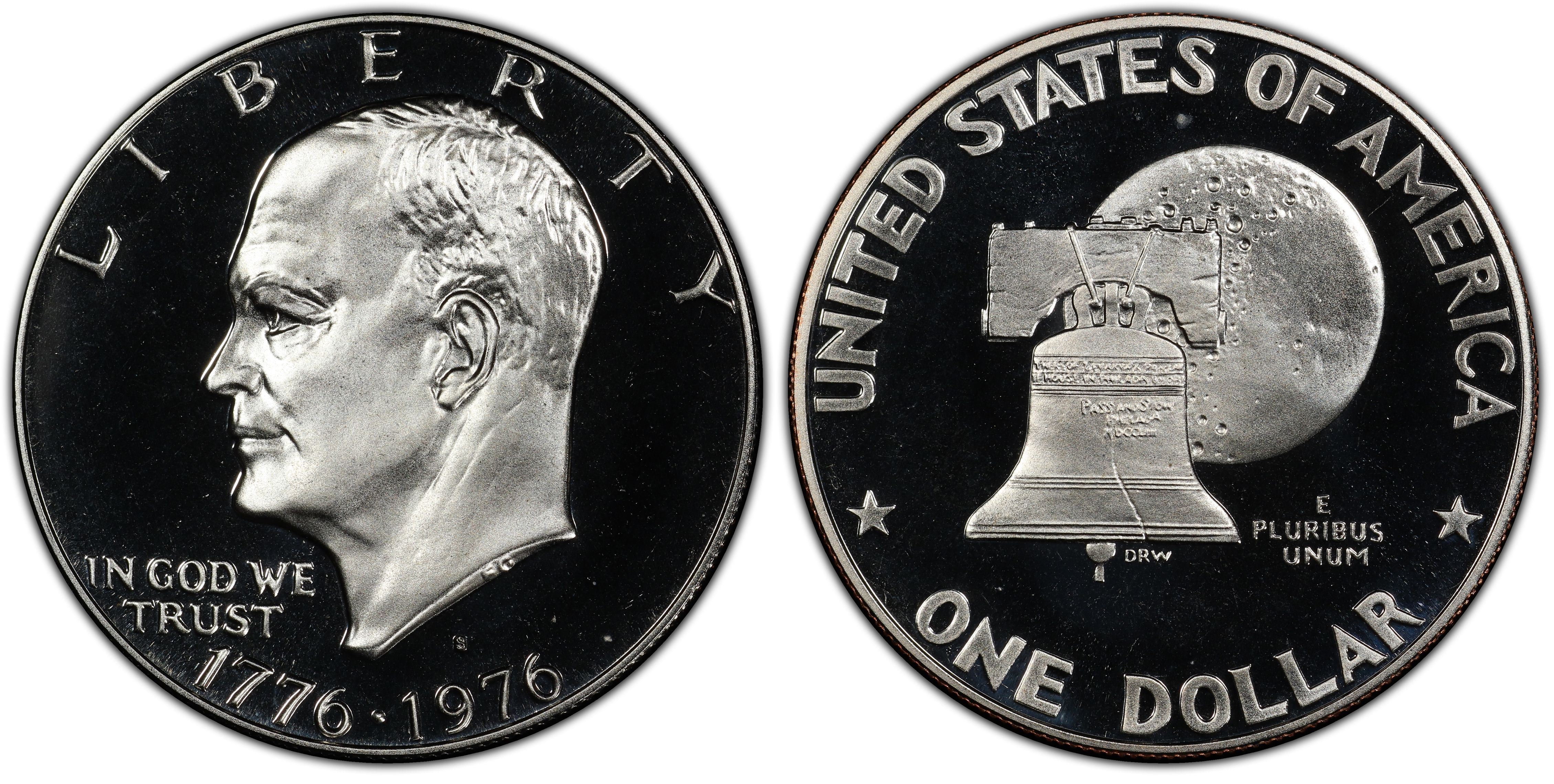
PCGS PR70DCAM
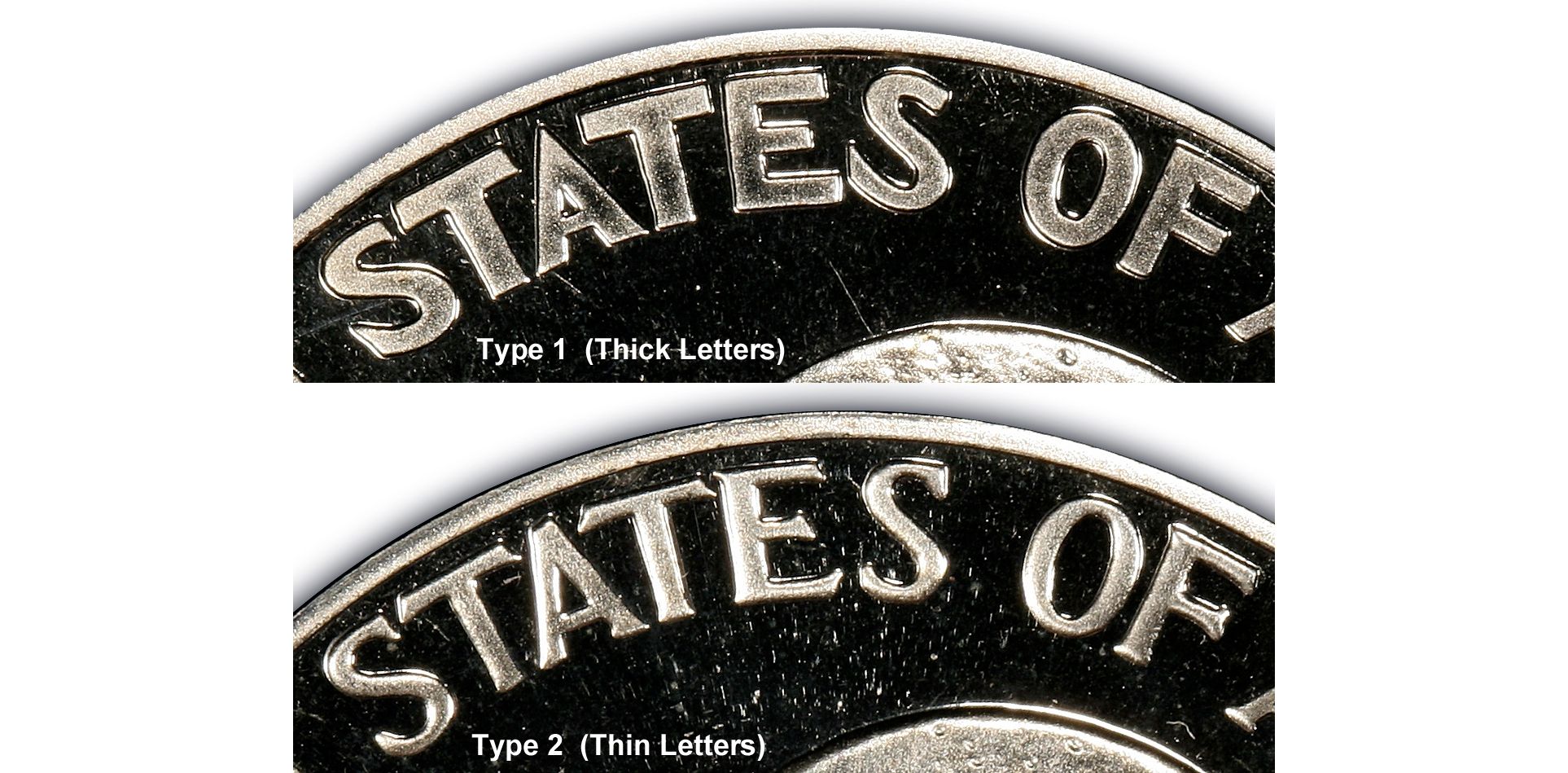
TYPE COMPARISON
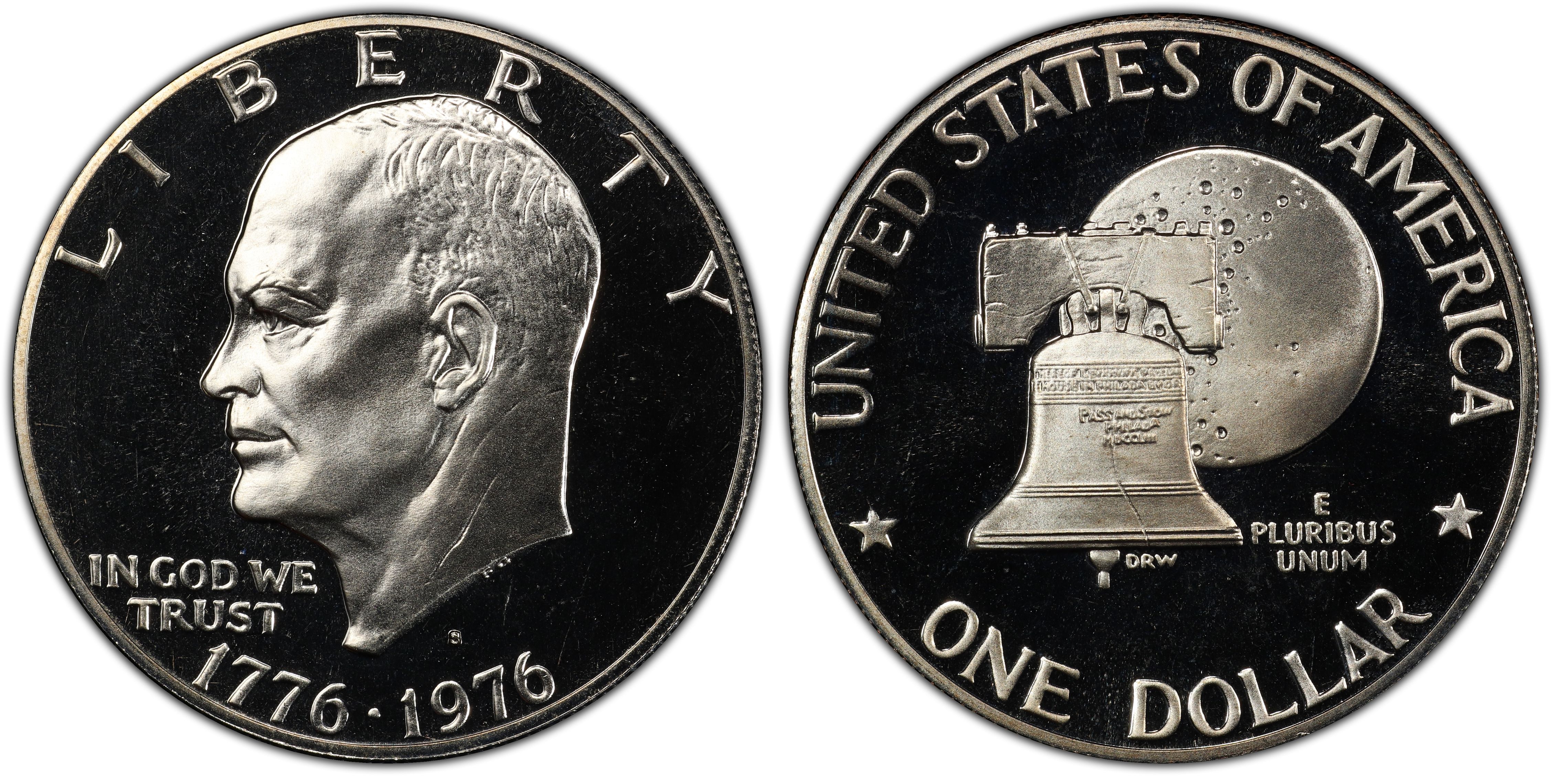
PCGS PR70DCAM
- PCGS #:
- 97434
- Designer:
- Frank Gasparro/Michael Collins & James Cooper
- Edge:
- Reeded
- Diameter:
- 38.50 millimeters
- Weight:
- 22.70 grams
- Mintage:
- N/A
- Mint:
- San Francisco
- Metal:
- 75% Copper, 25% Nickel over a pure Copper center
- Auction Record:
- $25,300 • PR70 • 07-07-2011 • Heritage Auctions
Major Varieties
- 1976-S $1 Clad Type 1
- 1976-S $1 Clad Type 1, CAM
- 1976-S $1 Clad Type 1, DCAM
- 1976-S $1 Clad Type 2
- 1976-S $1 Clad Type 2, CAM
- 1976-S $1 Clad Type 2, DCAM
Die Varieties
- 1976-S (1975) $1 Clad Type 1 1975 Proof Set, CAM
- 1976-S (1975) $1 Clad Type 1 1975 Proof Set
- 1976-S $1 Clad Type 1 Joe Orlando Signature, DCAM
- 1976-S $1 Clad Type 1 Thomas Cleveland MSS, DCAM
- 1976-S (1975) $1 Clad Type 1 1975 Proof Set, DCAM
- 1976-S $1 Clad Type 1 David Hall Signature, DCAM
- 1976-S $1 Clad Type 1 Miles Signature, DCAM
Rarity and Survival Estimates Learn More
| Survival Estimate | |
|---|---|
| All Grades | 2,304,814 |
| 60 or Better | 2,304,814 |
| 65 or Better | 1,959,092 |
| Numismatic Rarity | |
|---|---|
| All Grades | R-1.0 |
| 60 or Better | R-1.0 |
| 65 or Better | R-1.0 |
| Relative Rarity By Type All Specs in this Type | |
|---|---|
| All Grades | 1 / 2 TIE |
| 60 or Better | 1 / 2 TIE |
| 65 or Better | 1 / 2 TIE |
| Relative Rarity By Series All Specs in this Series | |
|---|---|
| All Grades | 4 / 11 TIE |
| 60 or Better | 4 / 11 TIE |
| 65 or Better | 4 / 11 TIE |
Condition Census What Is This?
| #1 PR70DCAM PCGS grade |
| #2 PR69DCAM PCGS grade |
| #2 PR69DCAM PCGS grade |
| #2 PR69DCAM PCGS grade |
| #2 PR69DCAM PCGS grade |
| #2 PR69DCAM PCGS grade |
| #2 PR69DCAM PCGS grade |
| #2 PR69DCAM PCGS grade |
| #2 PR69DCAM PCGS grade |
| #2 PR69DCAM PCGS grade |
The U.S. Mint struck several different 1976-S Proof Eisenhower Dollars this year. it struck this Clad Type 1 which has thicker lettering and no serifs at the end of the lettering. The Type 2 Clad has thinner letters with serifs on most letters. Finally it also struck a 1976-S Proof Eisenhower Dollar but made out of Silver. All the three different types are very common up to PR67 or 68 Deep Cameo condition. In PR69 Deep Cameo they are a little more challenging to locate but still out there with proper searching. In PR70 condition all three different Types are really scarce and any example in perfect PCGS PR70 Deep Cameo condition usually commands thousands of dollars or more.