
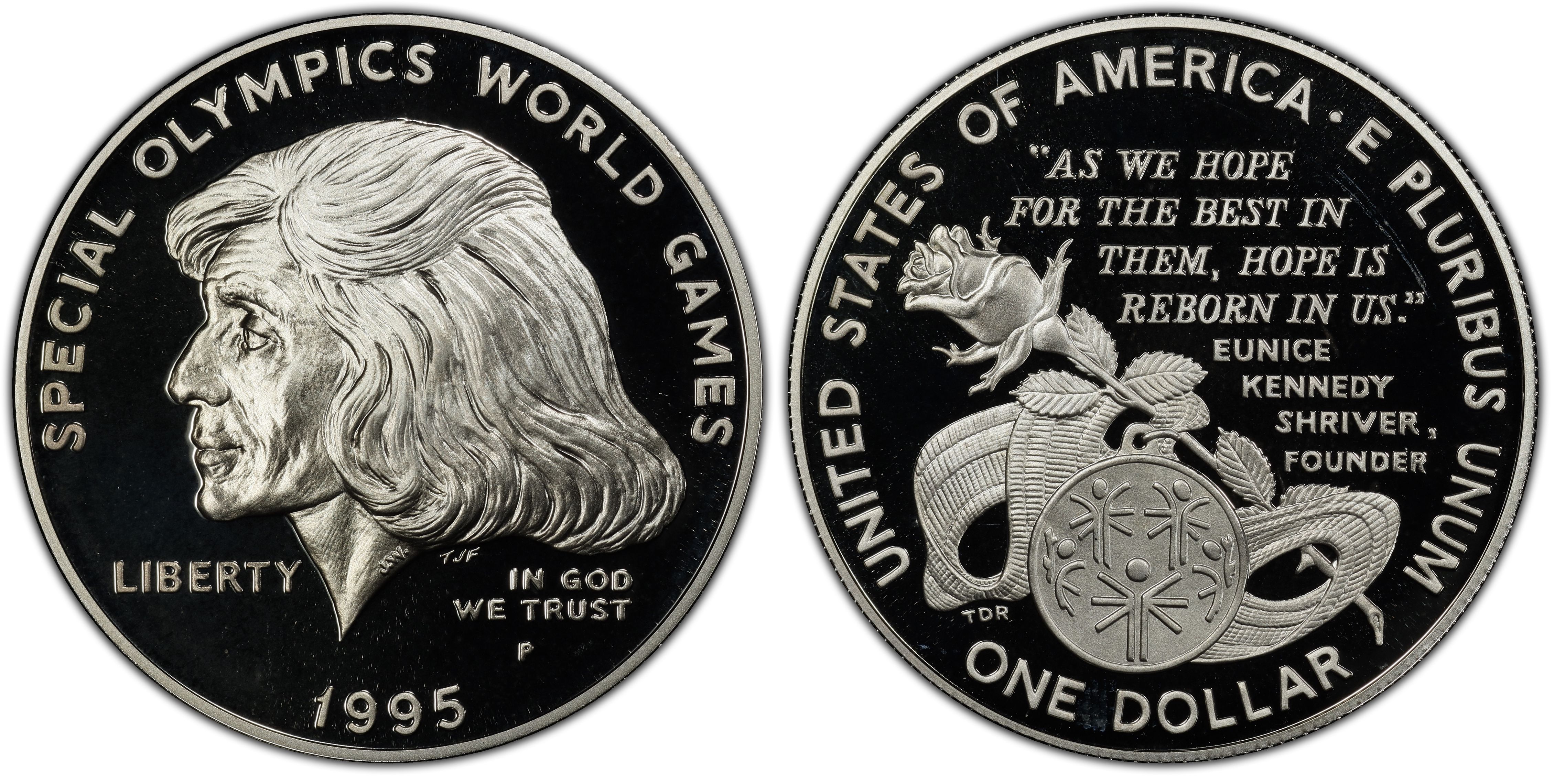
PCGS PR70DCAM
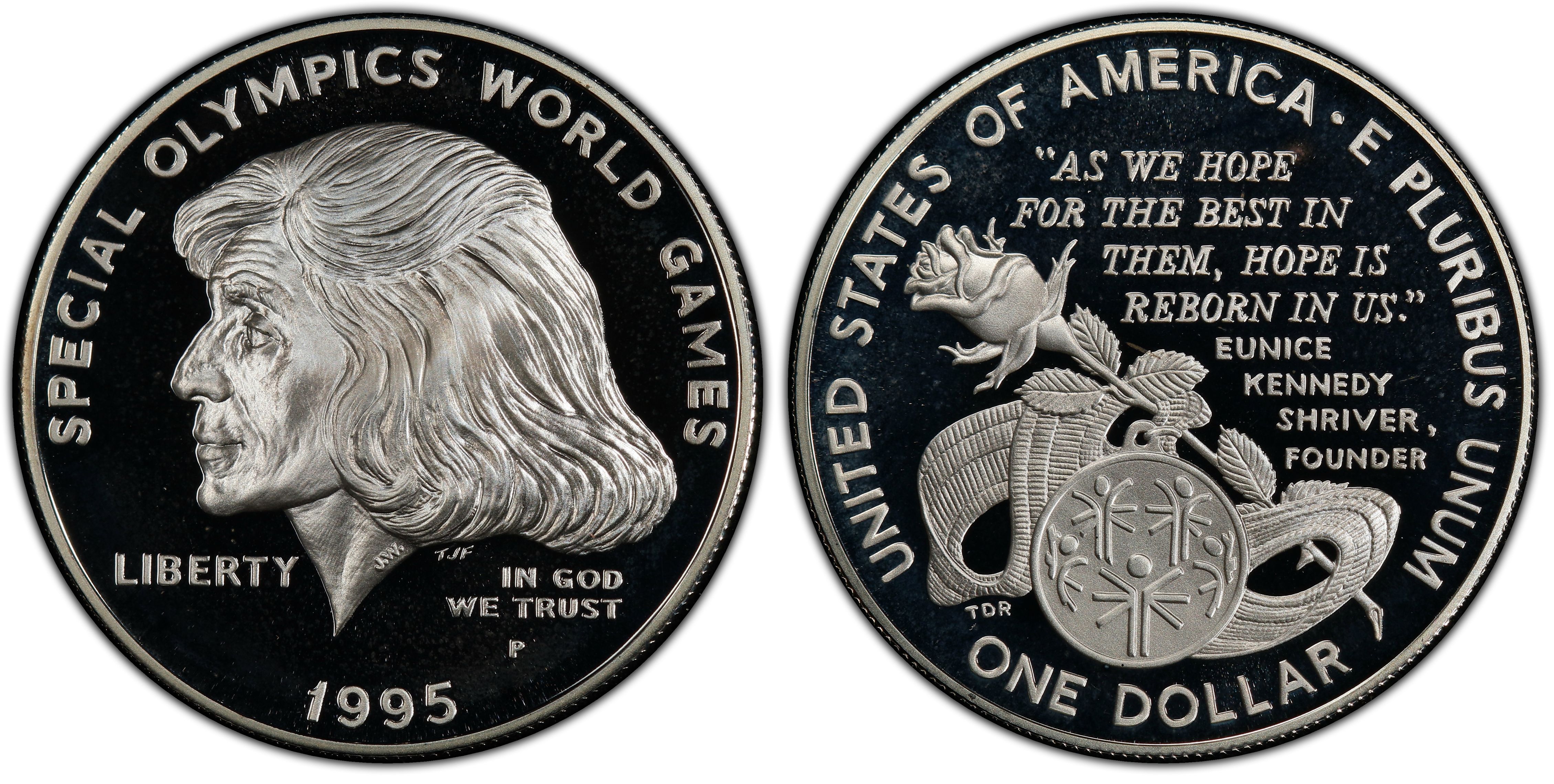
PCGS PR69DCAM
- PCGS #:
- 9705
- Designer:
- T. James Ferrell/Thomas D. Rogers
- Edge:
- Reeded
- Diameter:
- 38.10 millimeters
- Weight:
- 26.73 grams
- Mintage:
- 351,764
- Mint:
- Philadelphia
- Metal:
- 90% Silver, 10% Copper
- Auction Record:
- $814 • PR70 • 06-22-2008 • Heritage Auctions
Major Varieties
- 1995-P $1 Special Olympics, DCAM
Condition Census What Is This?
|
#1 PR70DCAM PCGS grade
eBay December 10, 2025 - $75. Trader Bae purple label. |
|
#1 PR70DCAM PCGS grade
GreatCollections, January 22, 2023, Lot 1296081 - $86.07; "The bobdock Collection" (PCGS Set Registry). |
|
#1 PR70DCAM PCGS grade
GreatCollections, July 17, 2022, Lot 1192876 - $119.26. |
|
#1 PR70DCAM PCGS grade
GreatCollections, October 16, 2022, Lot 1242793 - $92.25. |
|
#1 PR70DCAM PCGS grade
GreatCollections, February 6, 2022, Lot 1099850 - $146.25. |
1995-P Special Olympics Silver Dollar
The 1995-P Special Olympics Silver Dollar (#9705) was one of several commemorative coins issued in 1995, a year characterized by a high volume of releases, including numerous issues for the 1996 Atlanta Olympic Games and a three-coin set honoring the American Civil War. Authorized by Public Law 103-328 and released on May 2, 1995, this silver dollar holds the distinction of being one of the few U.S. coins to feature a living person. It is also noted for its strong sales performance outside of traditional numismatic circles.
The coin’s obverse features a profile of Eunice Kennedy Shriver, who was 73 years old at the time of issuance. While Shriver’s leadership was fundamental to the growth of the Special Olympics, the decision to depict a living person caused significant friction. Numismatist Reed Hawn, a member of the Citzens Commemorative Coin Advisory Committee (CCCAC) at the time, noted that the advisory panels' objections were essentially overruled to ensure the Kennedy family's preferred theme was adopted.
Further controversy involved Thomas D. Rogers, Sr.’s reverse design, which depicts a Special Olympics medal, a rose, and a quote by Shriver: “As we hope for the best in them, hope is reborn in us”. According to Rogers, the Kennedy family requested that the rose explicitly symbolize Rose Kennedy, Shriver’s mother. Rogers resisted this interpretation, maintaining instead that the rose served as a broader symbol of “Hope”.
Original Sales Performance
Despite the debate surrounding its design, the 1995-P Special Olympics Silver Dollar was among the most successful commemorative issues of the 1990s. Although the law authorized a maximum mintage of 800,000 pieces, actual sales reached:
- Uncirculated: 89,301
- Proof: 351,764
- Total: 441,065
* * *