1979-D SBA$1 (Regular Strike)
Series: Susan B. Anthony Dollars 1979 to Date
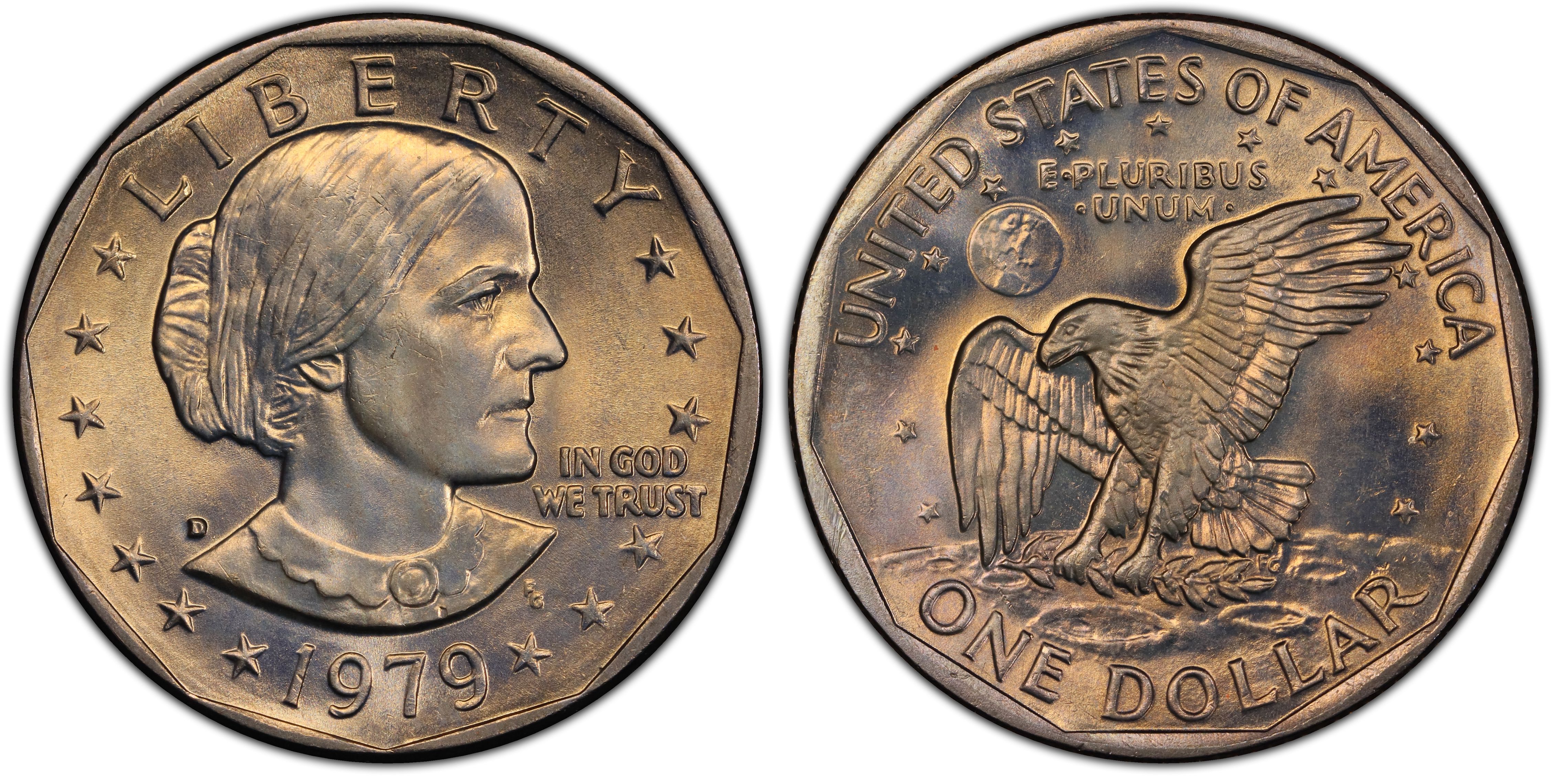
PCGS MS68
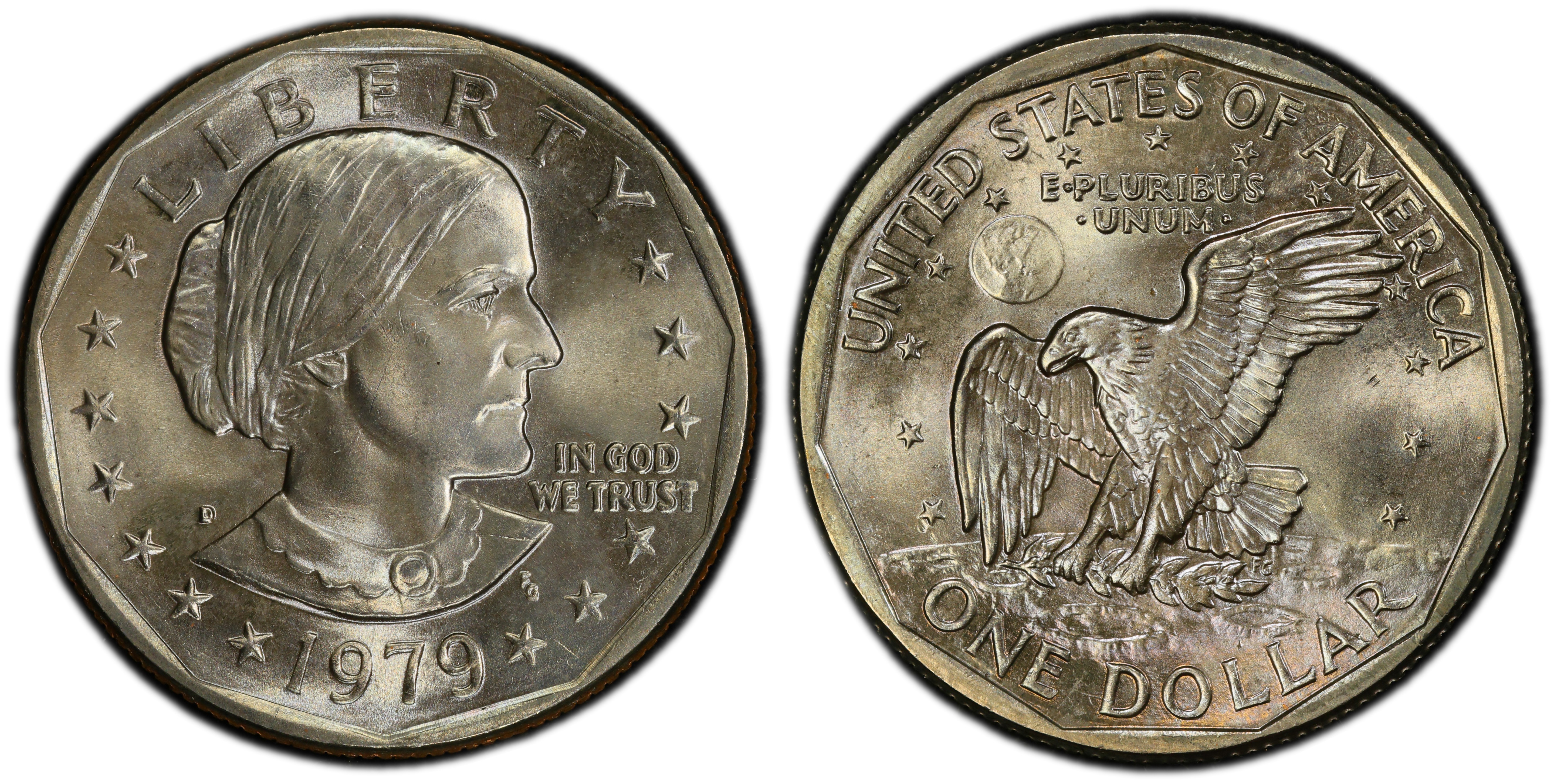
PCGS MS67+

PCGS MS67+
- PCGS #:
- 9572
- Designer:
- Frank Gasparro
- Edge:
- Reeded
- Diameter:
- 26.50 millimeters
- Weight:
- 8.10 grams
- Mintage:
- 288,015,744
- Mint:
- Denver
- Metal:
- 75% Copper, 25% Nickel over a pure Copper center
- Auction Record:
- $1,528 • MS68 • 01-04-2017 • Heritage Auctions
Major Varieties
- 1979-D SBA$1
Go To Grade
Current Auctions - PCGS Graded
Current Auctions - NGC Graded
For Sale Now at Collectors Corner - PCGS Graded
For Sale Now at Collectors Corner - NGC Graded
Rarity and Survival Estimates Learn More
| Survival Estimate | |
|---|---|
| All Grades | 275,000,000 |
| 60 or Better | 28,800,000 |
| 65 or Better | 1,440,000 |
| Numismatic Rarity | |
|---|---|
| All Grades | R-1.0 |
| 60 or Better | R-1.0 |
| 65 or Better | R-1.0 |
| Relative Rarity By Type All Specs in this Type | |
|---|---|
| All Grades | 2 / 12 TIE |
| 60 or Better | 5 / 12 TIE |
| 65 or Better | 11 / 12 TIE |
| Relative Rarity By Series All Specs in this Series | |
|---|---|
| All Grades | 2 / 12 TIE |
| 60 or Better | 5 / 12 TIE |
| 65 or Better | 11 / 12 TIE |
Condition Census What Is This?
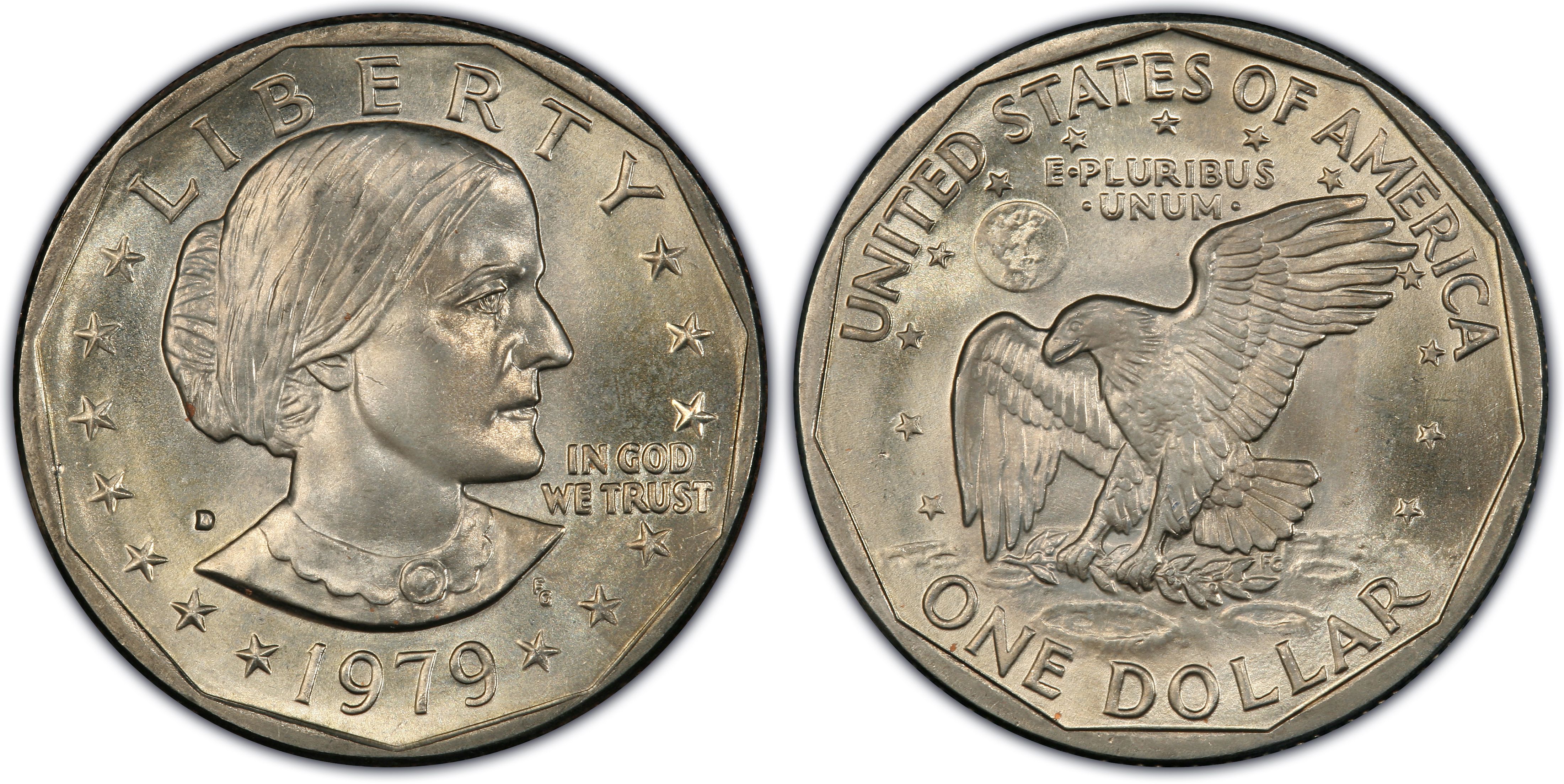 #1 MS67 PCGS grade
|
| #1 MS67 PCGS grade |
| #1 MS67 PCGS grade |
| #1 MS67 PCGS grade |
| #1 MS67 PCGS grade |
| #1 MS67 PCGS grade |
| #1 MS67 PCGS grade |
| #1 MS67 PCGS grade |
| #1 MS67 PCGS grade |
| #1 MS67 PCGS grade |
Jaime Hernandez:
This is the first year in which the Mint struck Susan B. Anthony Dollars. Most coins are common and can still be found in circulation although bank tellers, or store clerks and most of the public set these aside almost every time they see them in circulation. The Federal Reserve still has plenty of them but most banks don't want the coins. Only examples in MS66 condition or higher seem to be scarce. In MS67 condition they become very scarce with possibly no more than 500 examples in existence.