
PCGS PR67

PCGS PR66+
- PCGS #:
- 9209
- Designer:
- Augustus Saint Gaudens
- Edge:
- Lettered
- Diameter:
- 34.00 millimeters
- Weight:
- 33.40 grams
- Mintage:
- 74
- Mint:
- Philadelphia
- Metal:
- 90% Gold, 10% Copper
- Auction Record:
- $324,000 • PR68 • 01-15-2023 • Heritage Auctions
Major Varieties
- 1912 $20
Rarity and Survival Estimates Learn More
| Survival Estimate | |
|---|---|
| All Grades | 49 |
| 60 or Better | 47 |
| 65 or Better | 28 |
| Numismatic Rarity | |
|---|---|
| All Grades | R-8.5 |
| 60 or Better | R-8.5 |
| 65 or Better | R-8.9 |
| Relative Rarity By Type All Specs in this Type | |
|---|---|
| All Grades | 6 / 9 |
| 60 or Better | 6 / 9 |
| 65 or Better | 6 / 9 |
| Relative Rarity By Series All Specs in this Series | |
|---|---|
| All Grades | 11 / 14 |
| 60 or Better | 11 / 14 |
| 65 or Better | 11 / 14 |
Condition Census What Is This?
|
#1 PR67 PCGS grade
Victoria Rose Collection - Heritage 1/2013:5973, $82,250 - Stack's/Bowers 3/2013:2199, $117,500 - Heritage 8/2013:5936, $211,500 |
 #2 PR67 PCGS grade
|
|
#2 PR66+ PCGS grade
|
| #4 PR66 PCGS grade |
| #4 PR66 PCGS grade |
| #4 PR66 PCGS grade |
| #4 PR66 PCGS grade |
| #4 PR66 PCGS grade |
| #4 PR66 PCGS grade |
| #10 PR65 PCGS grade |
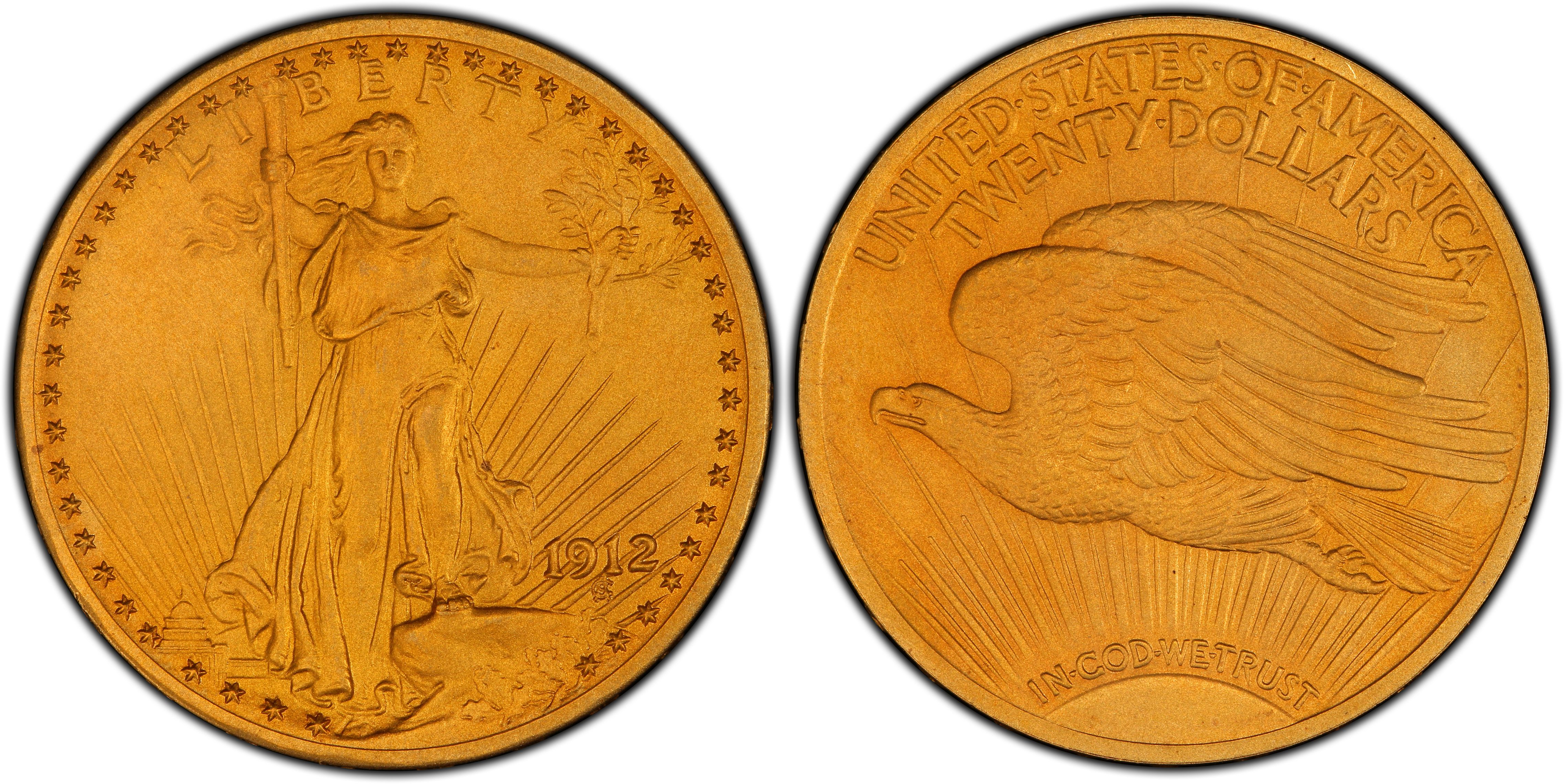
David Akers, the great guru of gold coins, guessed that 20 to 25 Matte Proof 1912 Double Eagles survived out of the original mintage of 74 pieces. The experts at PCGS suggest a population of between 45-55 pieces. The PCGS Population Report shows roughly two dozen grading events, though some duplication may have occurred because of resubmissions. Regardless of the estimates of the surviving population, the Matte Proof 1912 $20 is a decidedly rare coin.
The unusual finish on Matte Proofs was applied to the coins after they were struck. In most cases, Matte Proofs were lightly sandblasted, giving them a muted luster and an appearance that is completely different from that seen on coins made for circulation. Mintages for Matte Proofs are small because collector demand was low, not because the Mint limited production. Collectors had a hard time wrapping their heads around the unusual matte finish, remebering instead the beautiful black-and-white Cameo Proofs of previous decades. In that sense, Matte Proofs are an acquired taste, which once understood, is accepted energetically. The combination of extremely low mintages and the unusual finish have proven irresistible to many collectors.
The finest Matte Proof 1912 $20 is a PCGS PR67 that sold for a record $211,500 in 2013.