
PCGS MS67+

PCGS MS67+
- PCGS #:
- 9177
- Designer:
- Augustus Saint Gaudens
- Edge:
- Lettered
- Diameter:
- 34.00 millimeters
- Weight:
- 33.40 grams
- Mintage:
- 4,323,500
- Mint:
- Philadelphia
- Metal:
- 90% Gold, 10% Copper
- Auction Record:
- $90,000 • MS67+ • 08-28-2022 • Heritage Auctions
Major Varieties
- 1924 $20
Rarity and Survival Estimates Learn More
| Survival Estimate | |
|---|---|
| All Grades | 1,916,666 |
| 60 or Better | 1,400,000 |
| 65 or Better | 210,000 |
| Numismatic Rarity | |
|---|---|
| All Grades | R-1.0 |
| 60 or Better | R-1.0 |
| 65 or Better | R-1.8 |
| Relative Rarity By Type All Specs in this Type | |
|---|---|
| All Grades | 49 / 49 |
| 60 or Better | 49 / 49 |
| 65 or Better | 49 / 49 |
| Relative Rarity By Series All Specs in this Series | |
|---|---|
| All Grades | 53 / 54 TIE |
| 60 or Better | 54 / 54 |
| 65 or Better | 54 / 54 |
Condition Census What Is This?
 #1 PCGS MS68+
As PCGS MS68 #30433196. Heritage Auctions, January 5, 2006, Lot 3610 – $63,250; "The Bella Collection"; "The A & A Saints Collection". As PCGS MS68+ #30433196. Nearly flawless. Tiny mark in ray above O of GOD. |
 #2 PCGS MS67+
GreatCollections, January 21, 2024, Lot 1516969 – $75,937.50. Horizontal mark across rays 9 and 10. Two copper toning spots between rays 21 and 22. |
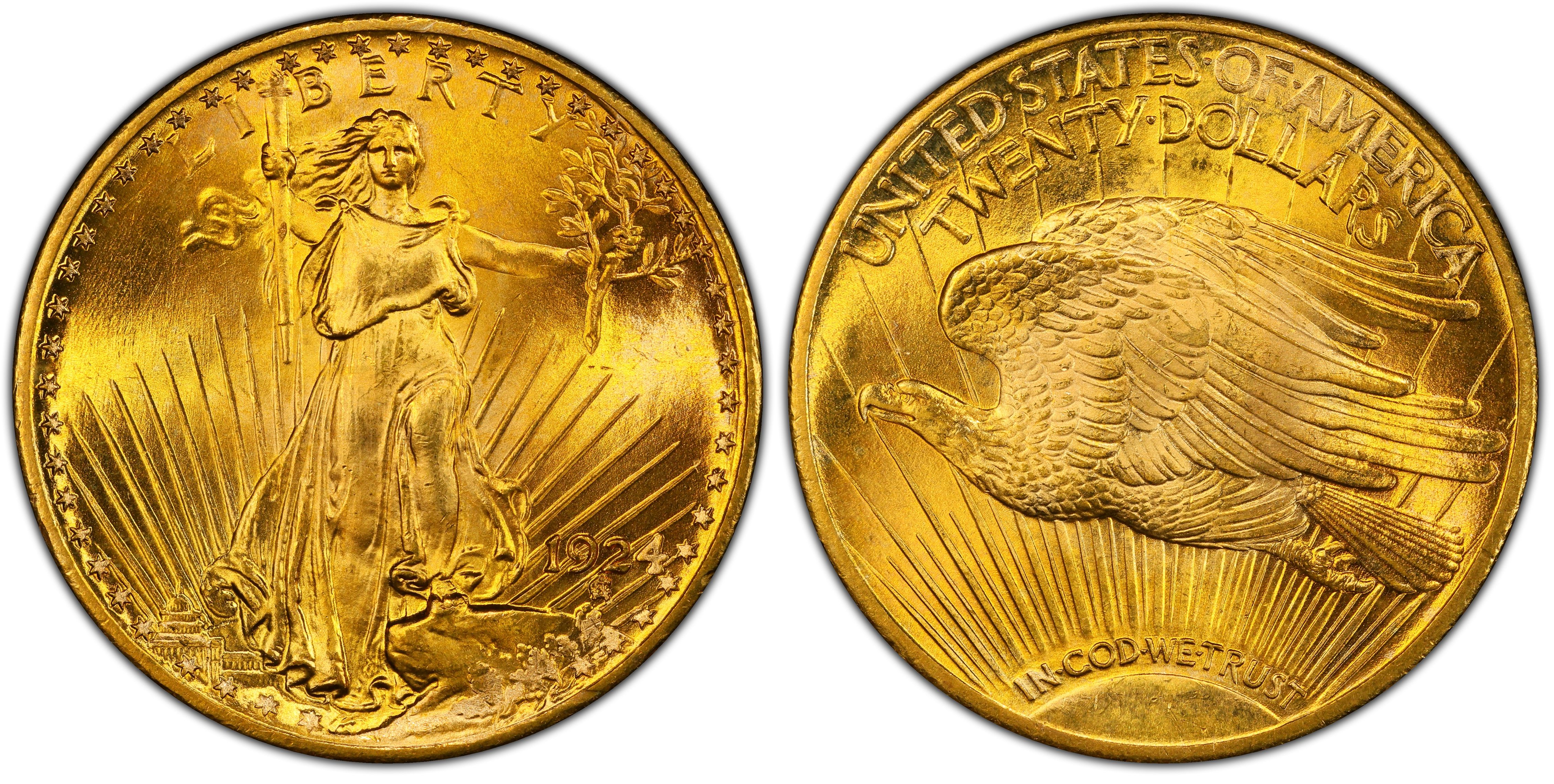 #2 PCGS MS67+
As PCGS MS67+ #16371238. GreatCollections, October 30, 2022, Lot 1249578 – $79,875. As PCGS MS67+ #47216352. Two horizontal ticks below branch. |
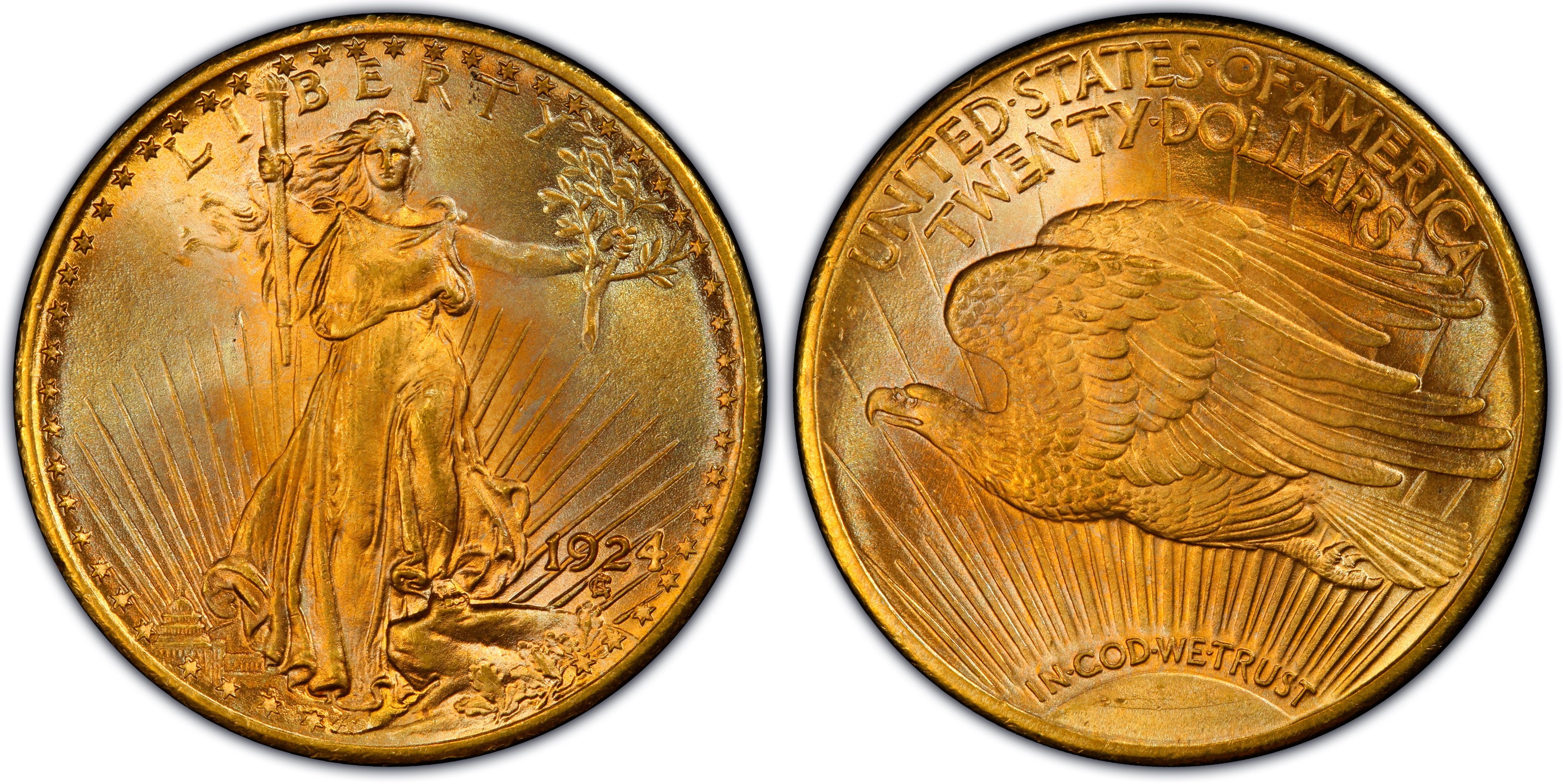 #2 PCGS MS67+
“The Bob R. Simpson Collection, Part IX,” Heritage Auctions, August 22, 2022, Lot 3413 – $90,000. Target orange toning on the obverse. Tiny carbon fleck between rays 9 and 10. Scattered tiny dark toning spots at T in LIBERTY. |
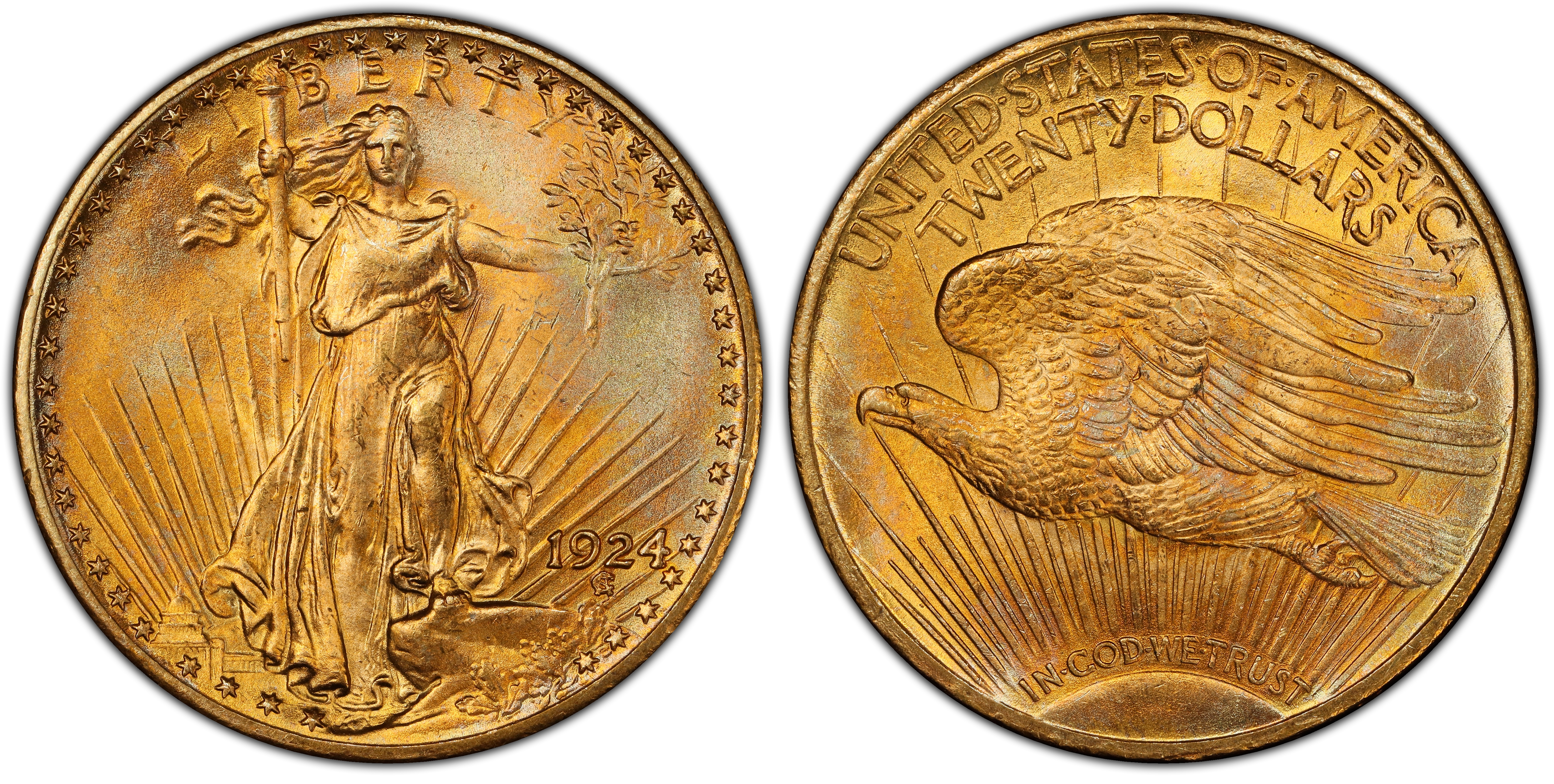 #2 PCGS MS67+
Heritage Auctions, May 5, 2022, Lot 4091 – $45,600; "The Hanalei Bay Saint Collection" (PCGS Set Registry). Scattered orange and ice blue-gold toning. Thin die crack through LIBERTY. |
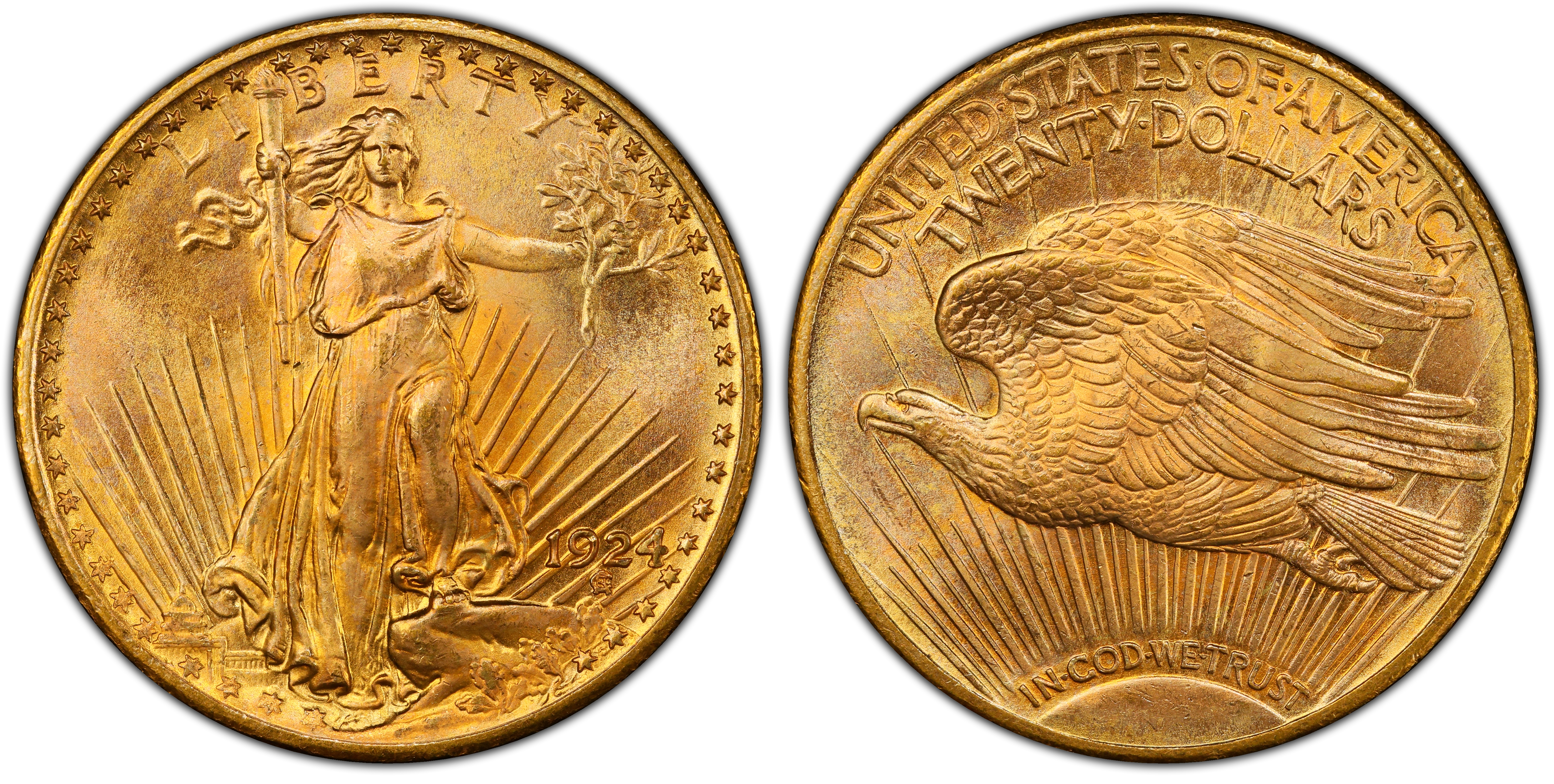 #2 PCGS MS67+
"The Elite Collection" (PCGS Set Registry). Frosty. Tick on ray 12. Orange gold hue in obverse center. A cluster of small ticks on the eagle's left wing. |
 #2 PCGS MS67+
"The Rolla Fox Collection of $20 Saint-Gaudens Gold," Heritage Auctions, January 12, 2020, Lot 4036 - $28,800. A cluster of light marks spans rays 10 and 11 and the hem of Liberty's dress to the left of her knee. A long, curved strike-through is visible across the back of the eagle's left wing. |
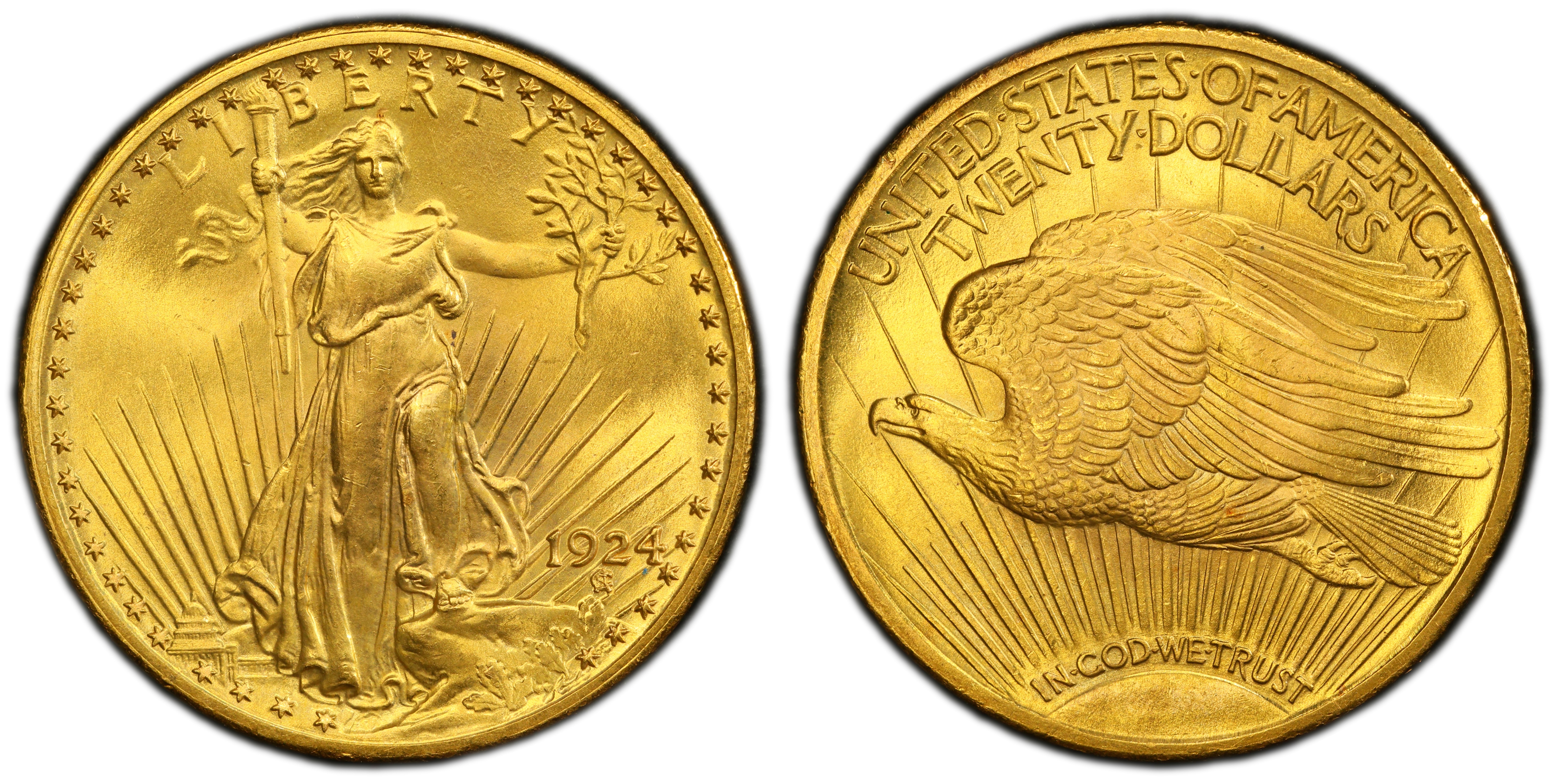 #2 PCGS MS67+
Thin hairline across ray 9 and 10 that terminates in the hem of Liberty's dress. Orange copper toning spot above Liberty's head. |
|
#2 PCGS MS67+
Rim pushes visible on the reverse at 8 o'clock and above 9 o'clock. |
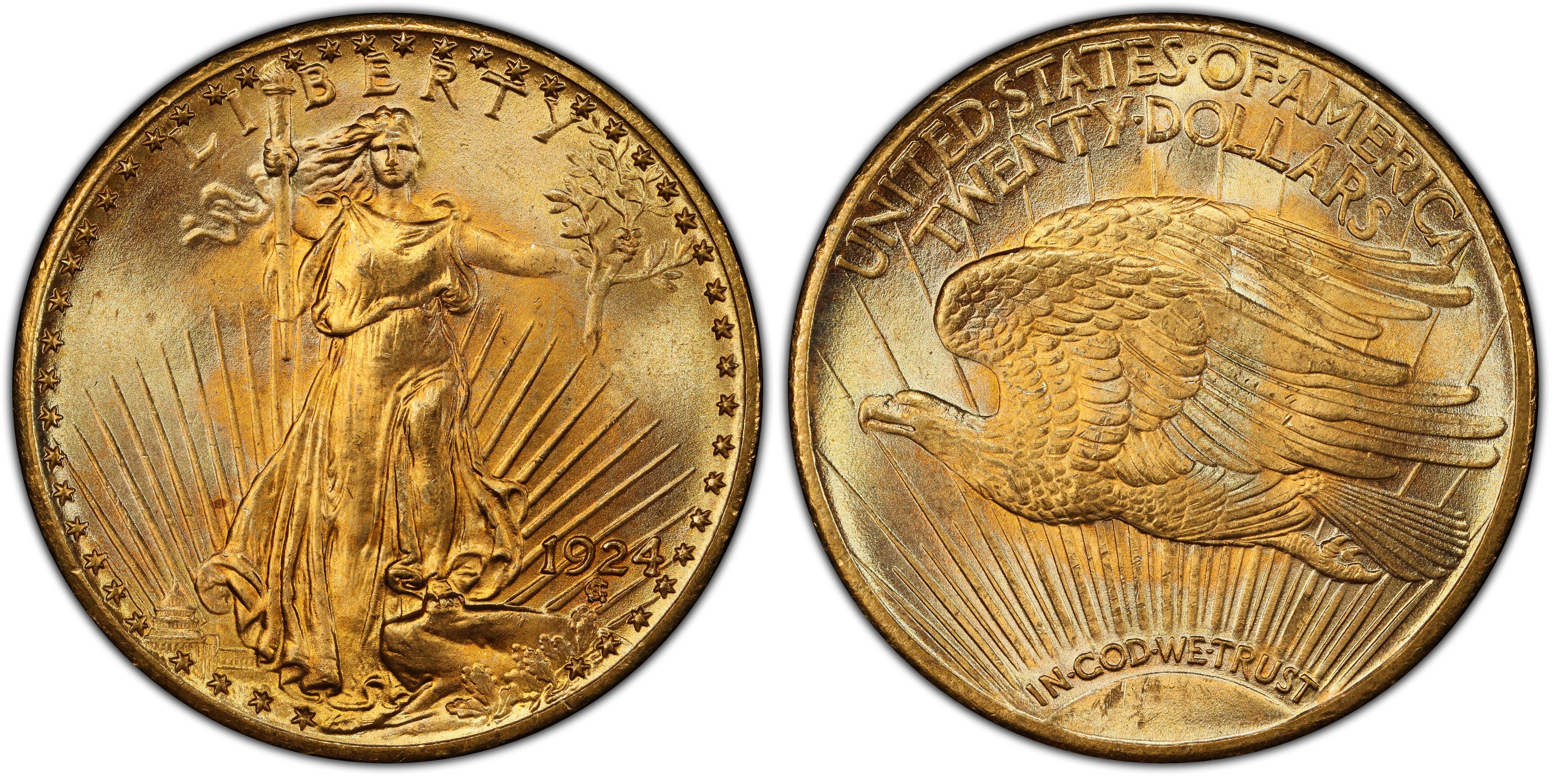 #2 PCGS MS67+
Rust-colored toning spot between rays 7 and 8. Diagonal mark below D of GOD. |
|
#2 PCGS MS67+
Scattered splashes of copper-orange toning on the overse and reverse. |
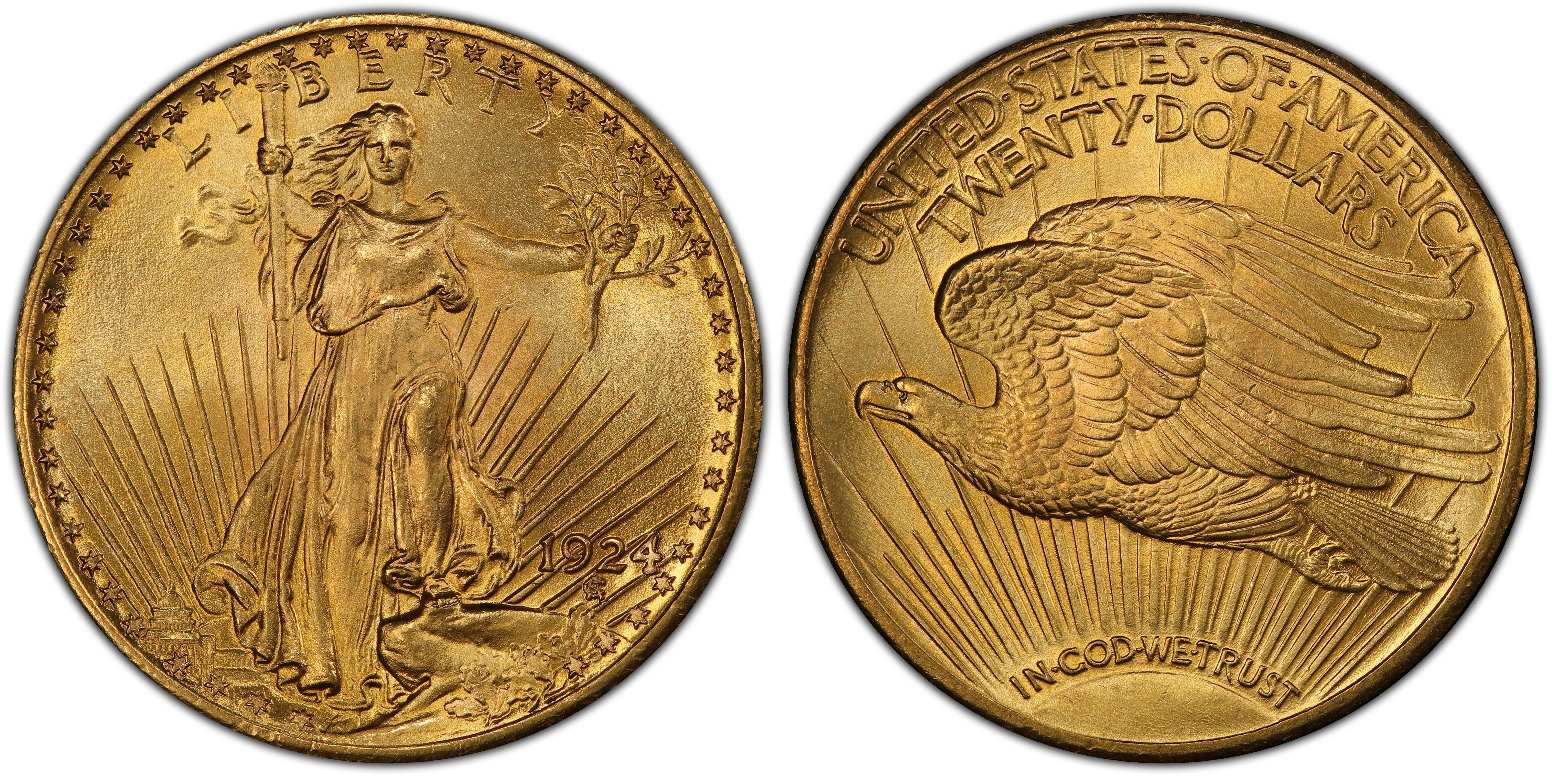 #2 PCGS MS67+
Frosty. Faint ticks on the eagle's left wing. |
 #2 PCGS MS67+
Swirling toning. Ice blue-gold toning along the right side of the obverse. |
The 1924 Saint-Gaudens Double Eagle
The 1924 Saint-Gaudens Double Eagle (#9177) sits at the center of a run of commonly encountered issues within this famous $20 gold series. Following the 1924, collectors frequently encounter the 1925 (PCGS #9180), 1926 (#9183), 1927 (#9186), and 1928 (#9189). In typical lower uncirculated grades, these are generally priced at the prevailing gold spot price plus a modest numismatic premium. At this point in the series, mintmarked issues trade at significant premiums, and any dates later than 1928 (the "late dates") are considered scarce to rare and are priced accordingly.
In total, the Mint struck 4,323,500 examples of the 1924. While the Federal Government recalled the majority of these coins following President Franklin D. Roosevelt’s Executive Order 6102, hundreds of thousands escaped confiscation having been paid out internationally.
Dates like the 1924 are often referred to in the trade as "generic gold," but I have never understood how this term serves the buyer or the seller—especially in the certified coin era. Even so-called "generics" have a threshold where the issue becomes conditionally rare.
PCGS has certified over 360,000 1924 Saint-Gaudens Double Eagles, yet only 3% of those have earned a grade of MS66 or finer, and a mere 0.00044% have reached MS67 or better. Clearly, there is nothing "generic" about such specimens. Furthermore, if you compare the 1924 Saint to American Gold Eagle (AGE) bullion coins, the distinction becomes even clearer. Even if hundreds of thousands of additional 1924s were submitted for encapsulation, the date would never be as "common" as a 1998 AGE (#9937, mintage: 1,468,530) or a 2010 AGE (#415542, mintage: 1,125,000). While modern issues typically grade MS69 and "break down" only at the MS70 level, the 1924 remains far from uniform.
* * *
The 1924 Saint-Gaudens Double Eagle
The 1924 Saint-Gaudens Double Eagle (#9177) sits at the center of a run of commonly encountered issues within this famous $20 gold series. Following the 1924, collectors frequently encounter the 1925 (PCGS #9180), 1926 (#9183), 1927 (#9186), and 1928 (#9189). In typical lower uncirculated grades, these are generally priced at the prevailing gold spot price plus a modest numismatic premium. At this point in the series, mintmarked issues trade at significant premiums, and any dates later than 1928 (the "late dates") are considered scarce to rare and are priced accordingly.
In total, the Mint struck 4,323,500 examples of the 1924. While the Federal Government recalled the majority of these coins following President Franklin D. Roosevelt’s Executive Order 6102, hundreds of thousands escaped confiscation having been paid out internationally.
Dates like the 1924 are often referred to in the trade as "generic gold," but I have never understood how this term serves the buyer or the seller—especially in the certified coin era. Even so-called "generics" have a threshold where the issue becomes conditionally rare.
PCGS has certified over 360,000 1924 Saint-Gaudens Double Eagles, yet only 3% of those have earned a grade of MS66 or finer, and a mere 0.00044% have reached MS67 or better. Clearly, there is nothing "generic" about such specimens. Furthermore, if you compare the 1924 Saint to American Gold Eagle (AGE) bullion coins, the distinction becomes even clearer. Even if hundreds of thousands of additional 1924s were submitted for encapsulation, the date would never be as "common" as a 1998 AGE (#9937, mintage: 1,468,530) or a 2010 AGE (#415542, mintage: 1,125,000). While modern issues typically grade MS69 and "break down" only at the MS70 level, the 1924 remains far from uniform.
* * *