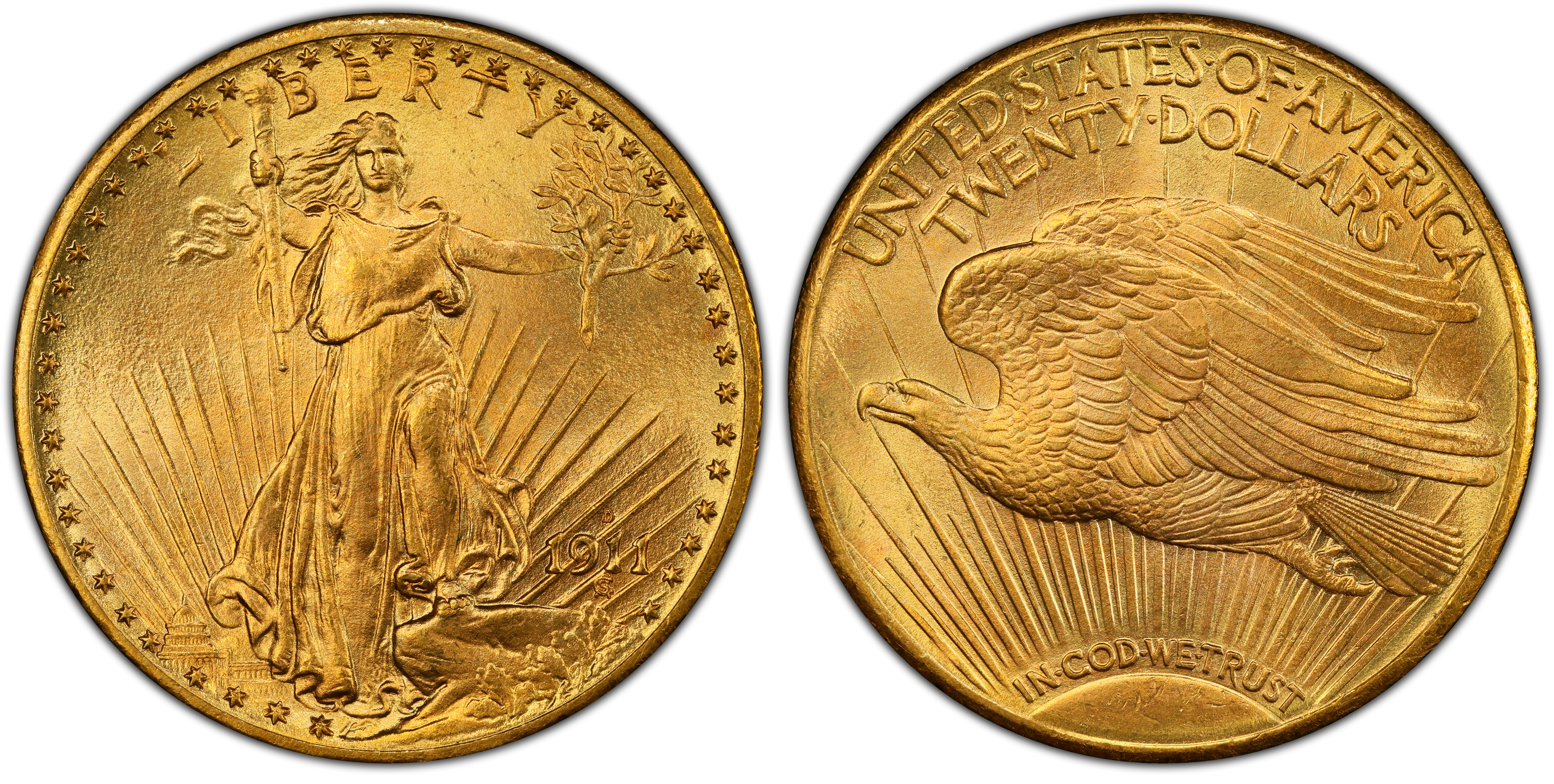
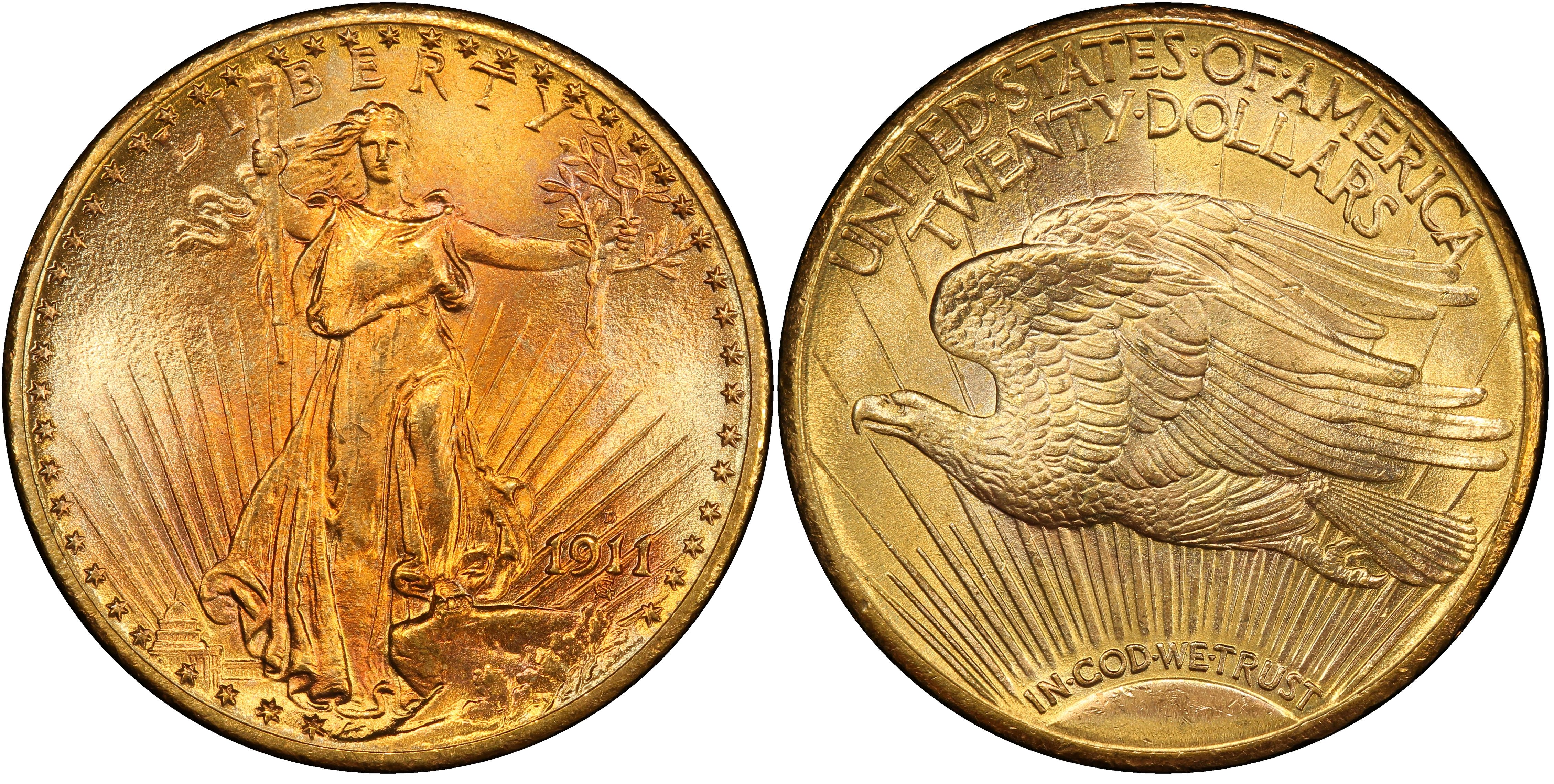
PCGS MS67+

PCGS MS67
- PCGS #:
- 9158
- Designer:
- Augustus Saint Gaudens
- Edge:
- Lettered
- Diameter:
- 34.00 millimeters
- Weight:
- 33.40 grams
- Mintage:
- 846,500
- Mint:
- Denver
- Metal:
- 90% Gold, 10% Copper
- Auction Record:
- $80,500 • MS67 • 01-03-2012 • Heritage Auctions
Go To Grade
Current Auctions - PCGS Graded
Current Auctions - NGC Graded
For Sale Now at Collectors Corner - PCGS Graded
For Sale Now at Collectors Corner - NGC Graded
Rarity and Survival Estimates Learn More
| Survival Estimate | |
|---|---|
| All Grades | 86,666 |
| 60 or Better | 46,666 |
| 65 or Better | 7,500 |
| Numismatic Rarity | |
|---|---|
| All Grades | R-2.1 |
| 60 or Better | R-2.5 |
| 65 or Better | R-3.5 |
| Relative Rarity By Type All Specs in this Type | |
|---|---|
| All Grades | 40 / 49 TIE |
| 60 or Better | 40 / 49 |
| 65 or Better | 42 / 49 |
| Relative Rarity By Series All Specs in this Series | |
|---|---|
| All Grades | 43 / 54 TIE |
| 60 or Better | 43 / 54 |
| 65 or Better | 46 / 54 |
Condition Census What Is This?
 #1 MS67+ PCGS grade
Philip H. Morse Collection - Heritage 11/2005:6597 - Dr. & Mrs. Steven L. Duckor Collection - Heritage 1/2012:4616, $80,500 - Bob R. Simpson Collection |
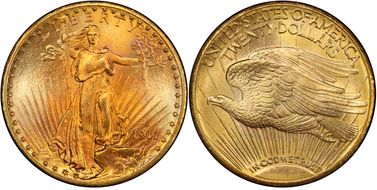 #1 MS67+ PCGS grade
Dr. Thaine B. Price Collection - “Fox” Collection (PCGS Set Registry) |
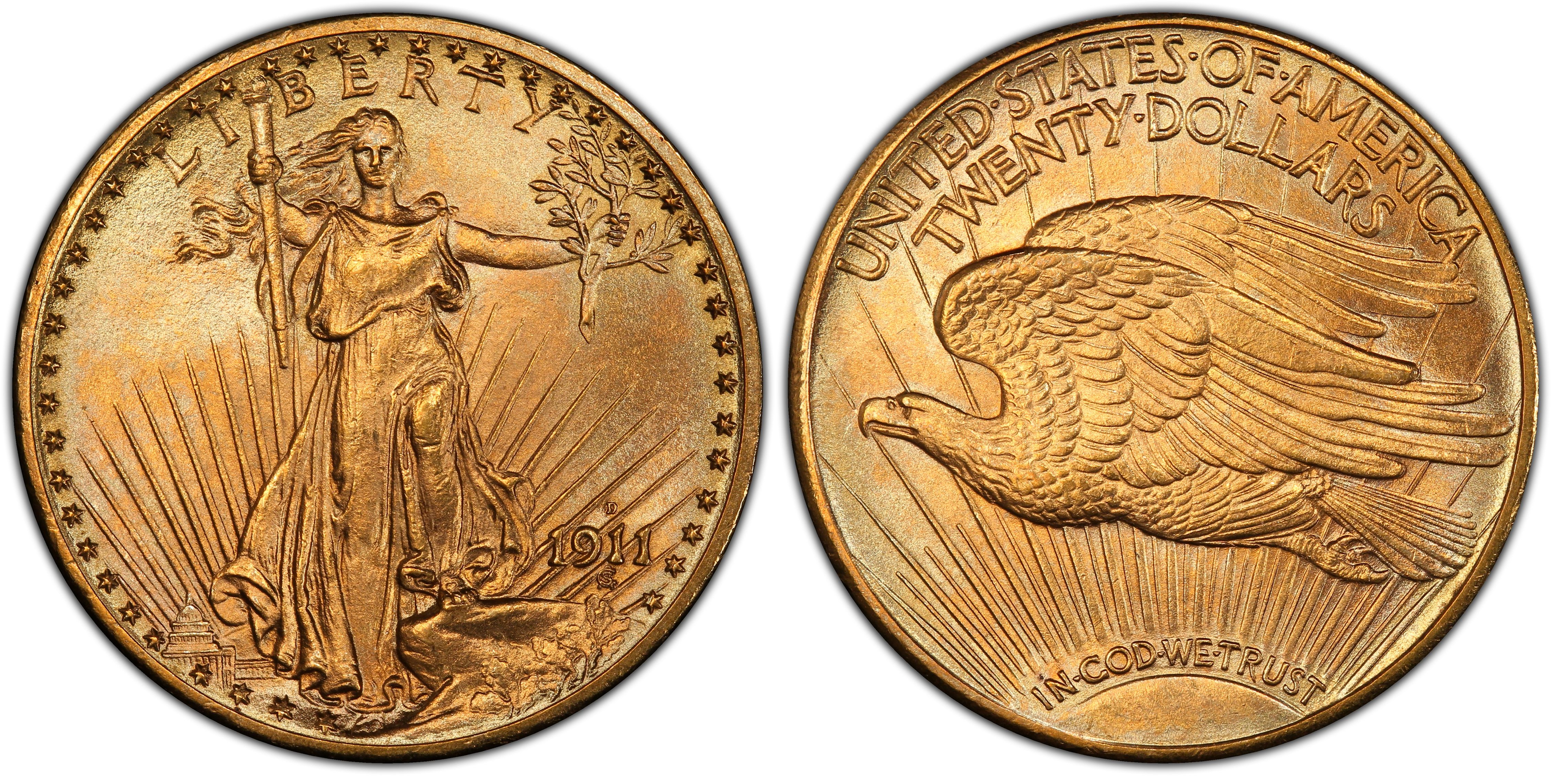 #3 MS67 PCGS grade
|
| #3 MS67 PCGS grade |
| #3 MS67 PCGS grade |
| #3 MS67 PCGS grade |
| #3 MS67 PCGS grade |
| #3 MS67 PCGS grade |
| #3 MS67 PCGS grade |
 #3 MS66+ PCGS grade
“Fox” Collection (PCGS Set Registry) |
David Akers (1975/88):
This is one of the most common dates of the entire series. It is available in quantity in all Mint State grades up to and including MS-64. Even gems are fairly common and can be located with relatively little effort. After the 1908 No Motto, this is the most common of all the early (pre-1920) issues. A small number of superb, nearly perfect examples of this issue are known to exist.
Most examples of this issue have finely granular surfaces and a satiny texture and lustre. However, many specimens are fully frosty. The strike is invariably very sharp, and lustre is no better than average for the series. Color is typically a light to medium orange gold, sometimes with a slight greenish gold tint. The mintmark on many specimens is boldly double punched.
Most examples of this issue have finely granular surfaces and a satiny texture and lustre. However, many specimens are fully frosty. The strike is invariably very sharp, and lustre is no better than average for the series. Color is typically a light to medium orange gold, sometimes with a slight greenish gold tint. The mintmark on many specimens is boldly double punched.