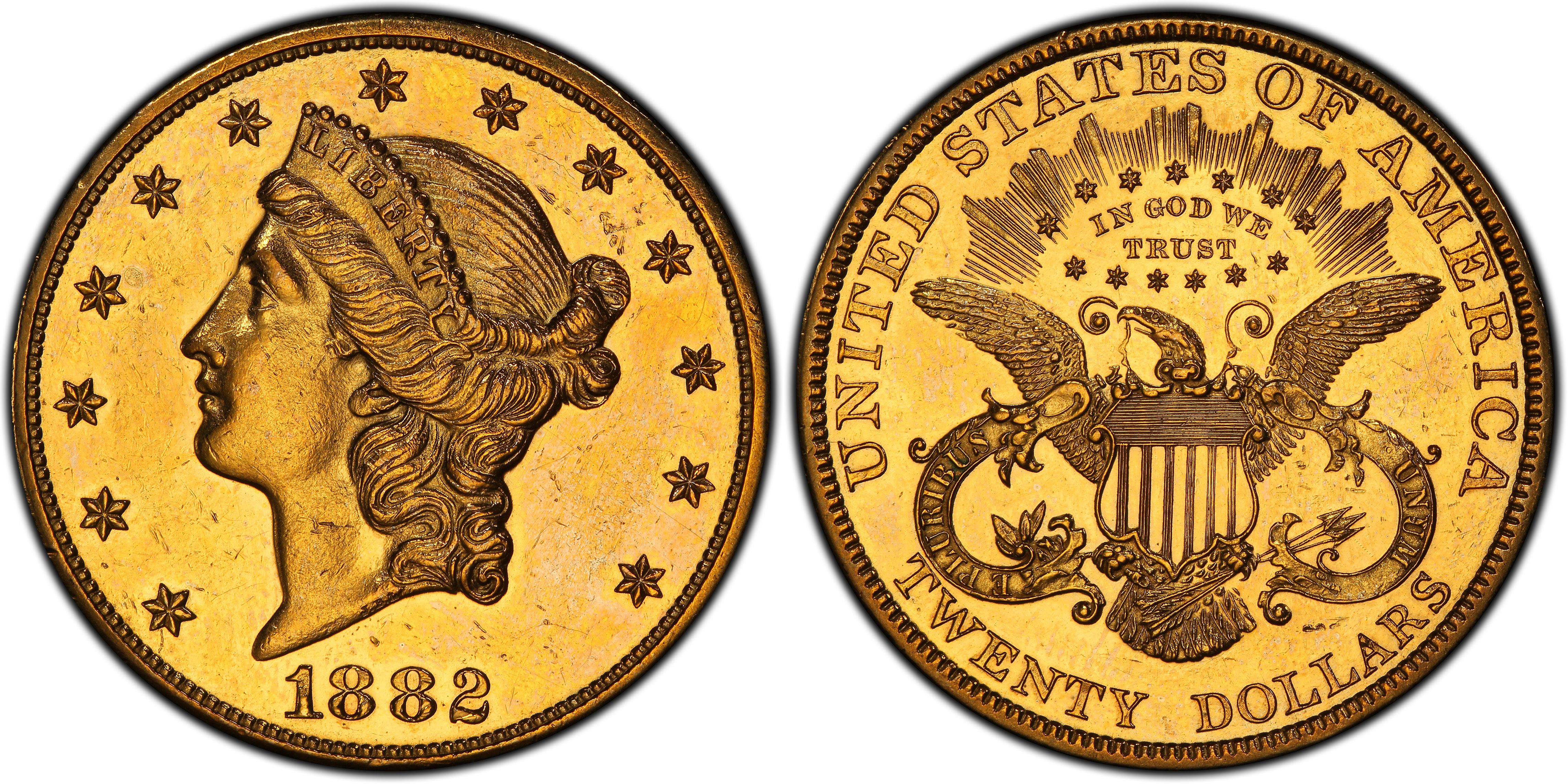
- PCGS #:
- 9098
- Designer:
- James Barton Longacre
- Edge:
- Reeded
- Diameter:
- 34.00 millimeters
- Weight:
- 33.40 grams
- Mintage:
- 59
- Mint:
- Philadelphia
- Metal:
- 90% Gold, 10% Copper
- Auction Record:
- $195,500 • PR65 • 01-15-2008 • Stack's
Go To Grade
Current Auctions - PCGS Graded
Current Auctions - NGC Graded
For Sale Now at Collectors Corner - PCGS Graded
For Sale Now at Collectors Corner - NGC Graded
Rarity and Survival Estimates Learn More
| Survival Estimate | |
|---|---|
| All Grades | 15 |
| 60 or Better | 14 |
| 65 or Better | 5 |
| Numismatic Rarity | |
|---|---|
| All Grades | R-9.3 |
| 60 or Better | R-9.4 |
| 65 or Better | R-9.7 |
| Relative Rarity By Type All Specs in this Type | |
|---|---|
| All Grades | 6 / 31 TIE |
| 60 or Better | 6 / 31 |
| 65 or Better | 9 / 31 TIE |
| Relative Rarity By Series All Specs in this Series | |
|---|---|
| All Grades | 27 / 55 TIE |
| 60 or Better | 25 / 55 TIE |
| 65 or Better | 24 / 55 TIE |
Condition Census What Is This?
| #1 PR65 PCGS grade |
| #1 PR65 PCGS grade |
| #3 PR64 PCGS grade |
| #4 PR63 PCGS grade |
| #5 PR60 PCGS grade |
P. Scott Rubin:
The 1882 Proof Double Eagle is a very rare coin with estimates of about 12 specimens known. Of these, at least three are off the market, since two are in the Smithsonian’s collection and one is in the collection of The American Numismatic Society.
The 1882 $20 gold piece is a very desirable coin, since there are only probably less than thirty specimens known, including both Proof and circulation strikes known. Actually, this number may be on the high side.
Collecting Double Eagles by date and mintmark is a relatively new endeavor in American numismatics. It only became popular in the middle of the twentieth century. Before then the few people who collected Double Eagles were satisfied with a coin of each year with no concern over which mint coined the example.
It appears that the only reason even the small number of Proof of 1882 Double Eagles survived is because a number of wealthy collectors of the day purchased Gold Proof Sets. However, over the years virtually all of these Proof Sets were broken up by denomination collectors or because of the high gold value of the larger denominations. This was especially true of the Double Eagles which for many years did not have high collector demand.
Today, because of these early Proof Set purchases, some of the surviving specimens are of gem quality. The finest appears to be a coin graded Proof-66 Ultra Cameo by NGC that last sold in Heritage’s October, 2012 Auction as lot 6316 for the record price of $293,750. This coin was identified as being from The Gnome at the Shore Collection; this same coin had previously sold in the Goldberg September Sale of 2008 as lot 1294 as part of the Ohringer Family Trust Holdings for $195,500.
The 1882 $20 gold piece is a very desirable coin, since there are only probably less than thirty specimens known, including both Proof and circulation strikes known. Actually, this number may be on the high side.
Collecting Double Eagles by date and mintmark is a relatively new endeavor in American numismatics. It only became popular in the middle of the twentieth century. Before then the few people who collected Double Eagles were satisfied with a coin of each year with no concern over which mint coined the example.
It appears that the only reason even the small number of Proof of 1882 Double Eagles survived is because a number of wealthy collectors of the day purchased Gold Proof Sets. However, over the years virtually all of these Proof Sets were broken up by denomination collectors or because of the high gold value of the larger denominations. This was especially true of the Double Eagles which for many years did not have high collector demand.
Today, because of these early Proof Set purchases, some of the surviving specimens are of gem quality. The finest appears to be a coin graded Proof-66 Ultra Cameo by NGC that last sold in Heritage’s October, 2012 Auction as lot 6316 for the record price of $293,750. This coin was identified as being from The Gnome at the Shore Collection; this same coin had previously sold in the Goldberg September Sale of 2008 as lot 1294 as part of the Ohringer Family Trust Holdings for $195,500.
David Akers (1975/88):
I estimate that 13-15 proofs exist. As a an interesting note on this date, I must mention that I have seen a "love token" made from a proof 1882 Double Eagle. The obverse is very choice with all of its original proof surface while the reverse is beautifully engraved.