
PCGS MS66+

PCGS MS66+
- PCGS #:
- 9053
- Designer:
- James Barton Longacre
- Edge:
- Reeded
- Diameter:
- 34.00 millimeters
- Weight:
- 33.40 grams
- Mintage:
- 842,250
- Mint:
- Denver
- Metal:
- 90% Gold, 10% Copper
- Auction Record:
- $74,750 • MS67 • 03-22-2012 • Stack's Bowers
Go To Grade
Current Auctions - PCGS Graded
Current Auctions - NGC Graded
For Sale Now at Collectors Corner - PCGS Graded
For Sale Now at Collectors Corner - NGC Graded
Rarity and Survival Estimates Learn More
| Survival Estimate | |
|---|---|
| All Grades | 10,250 |
| 60 or Better | 4,750 |
| 65 or Better | 225 |
| Numismatic Rarity | |
|---|---|
| All Grades | R-2.9 |
| 60 or Better | R-4.0 |
| 65 or Better | R-6.7 |
| Relative Rarity By Type All Specs in this Type | |
|---|---|
| All Grades | 40 / 73 TIE |
| 60 or Better | 48 / 73 TIE |
| 65 or Better | 31 / 73 TIE |
| Relative Rarity By Series All Specs in this Series | |
|---|---|
| All Grades | 113 / 148 TIE |
| 60 or Better | 118 / 148 TIE |
| 65 or Better | 43 / 148 TIE |
Condition Census What Is This?
 #1 MS67 PCGS grade
Stack's/Bowers 3/2012:4358, $74,750 |
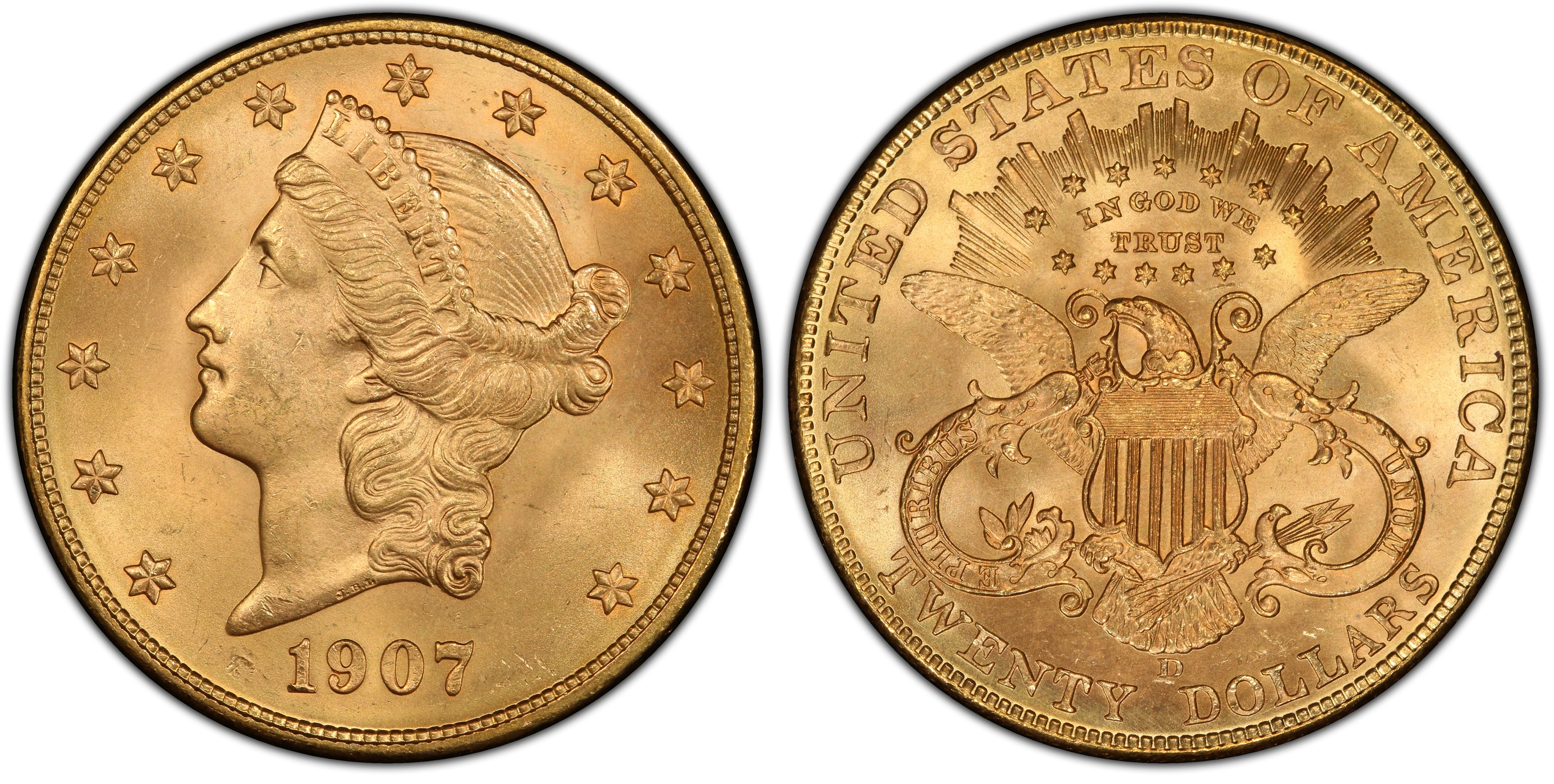 #2 MS66+ PCGS grade
D.L. Hansen Collection |
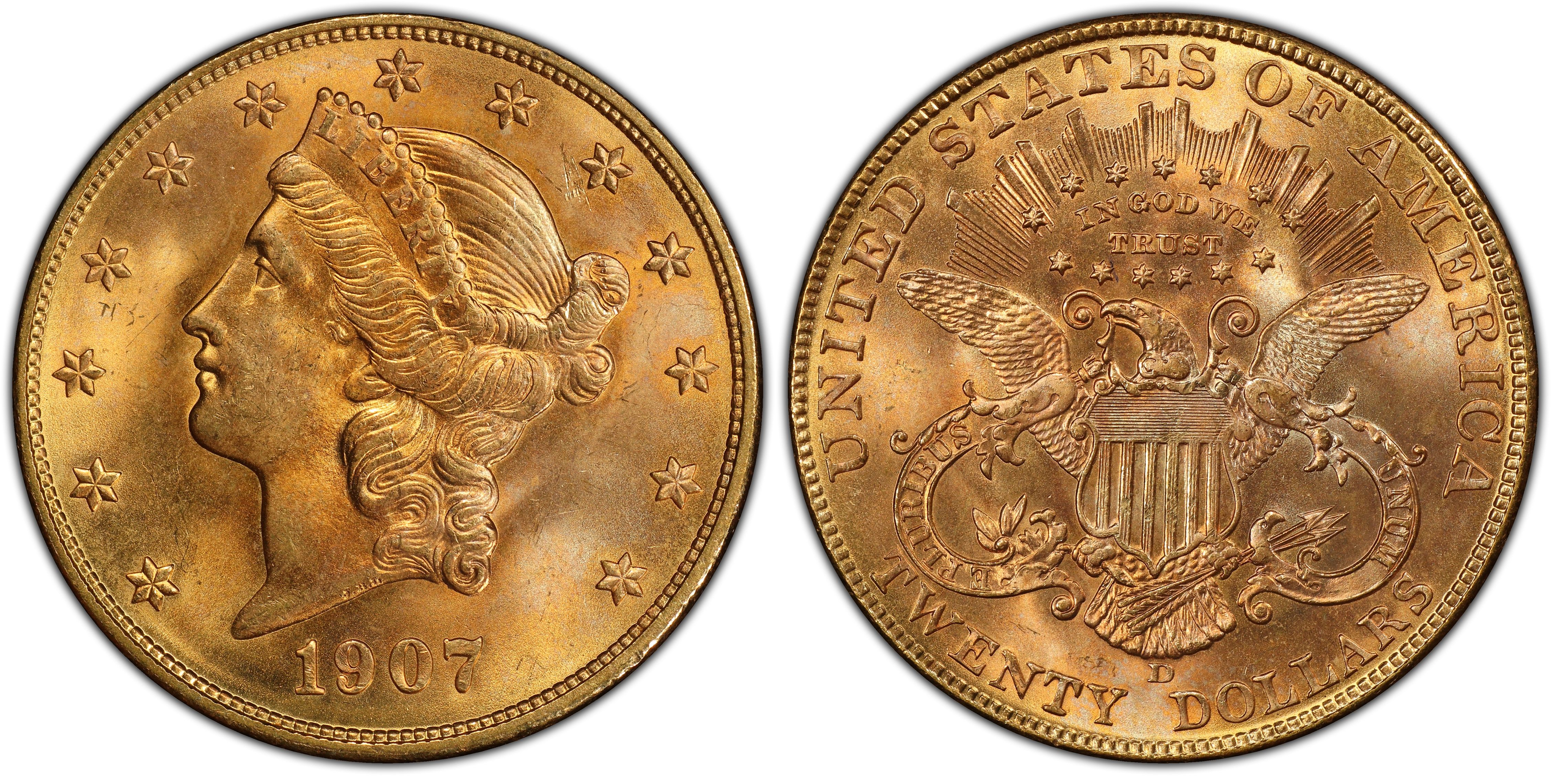 #3 MS66 PCGS grade
|
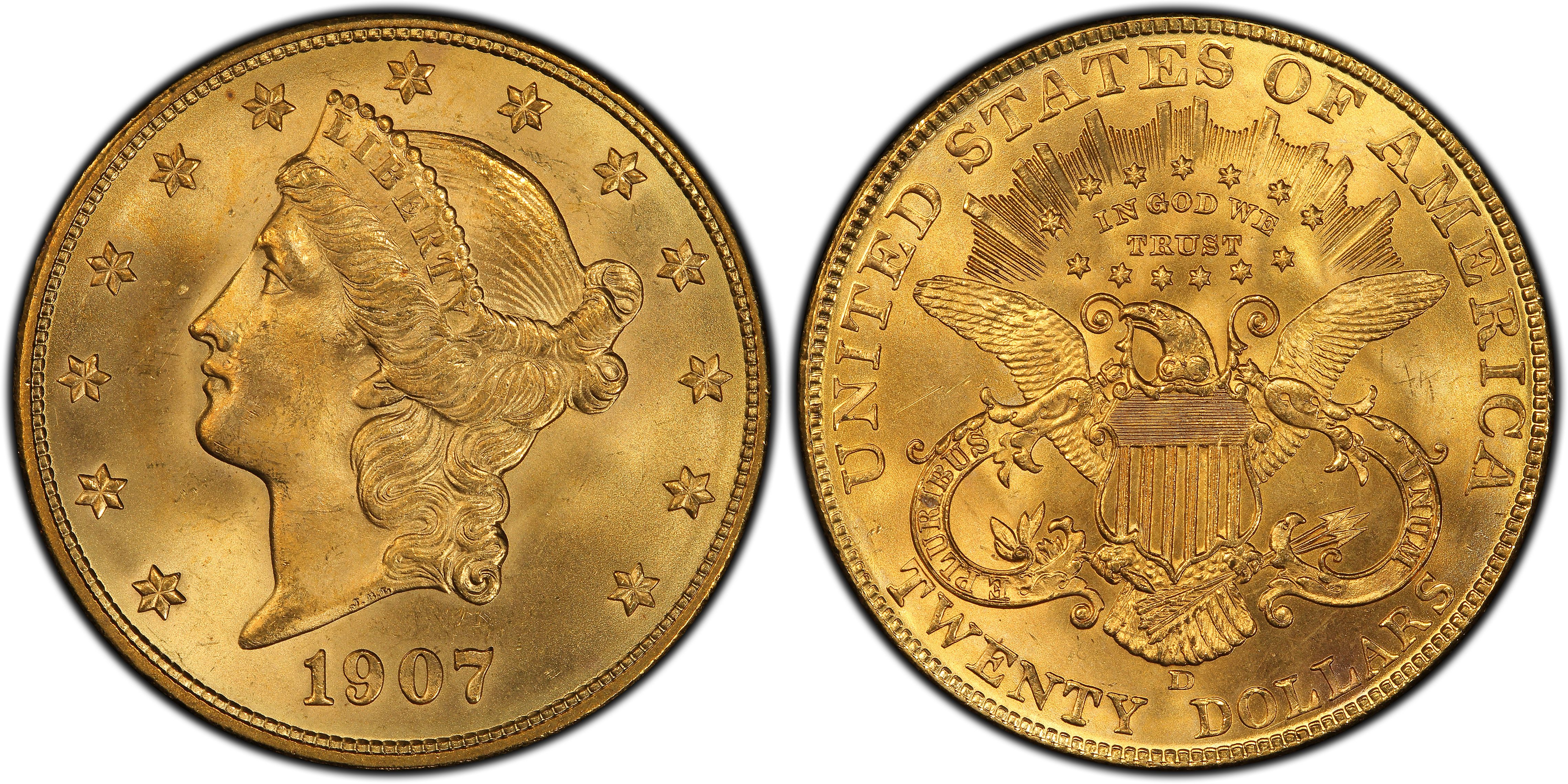 #3 MS66 PCGS grade
|
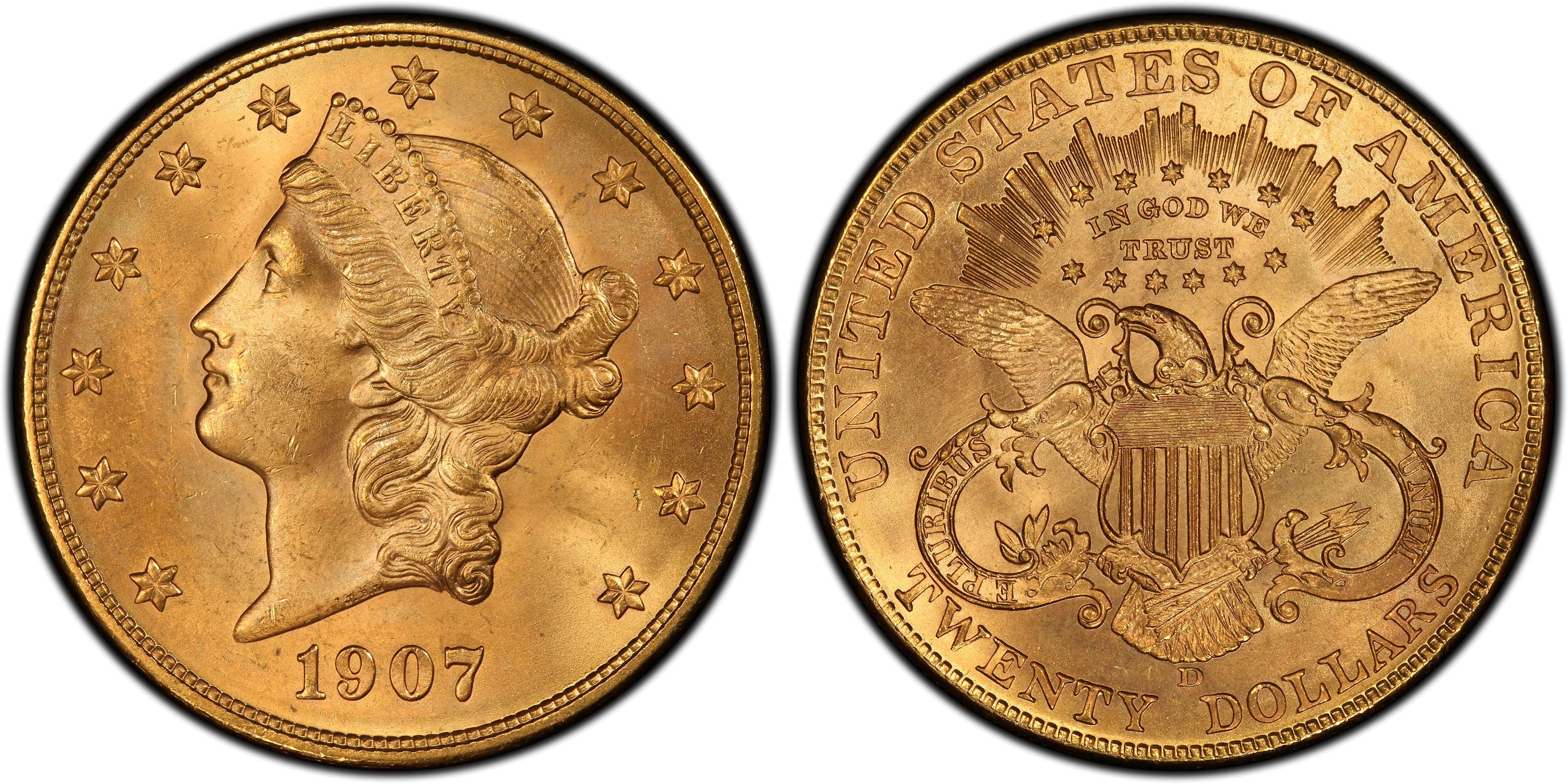 #3 MS66 PCGS grade
|
| #3 MS66 PCGS grade |
| #3 MS66 PCGS grade |
| #3 MS66 PCGS grade |
| #3 MS66 PCGS grade |
| #3 MS66 PCGS grade |
David Akers (1975/88):
The 1907-D is not a rare or even scarce date, but it is also not in the "common date" category. It is far more rare, for example than such issues as the 1895, 1898-S, 1899, 1900, 1901, 1903, 1904, 1904-S, and 1907 to name just a few. As a date, the 1907-D is not as rare as the 1906-D. It is also not as hard to locate in choice or gem uncirculated condition and gems can only be considered scarce at best.