

PCGS MS65
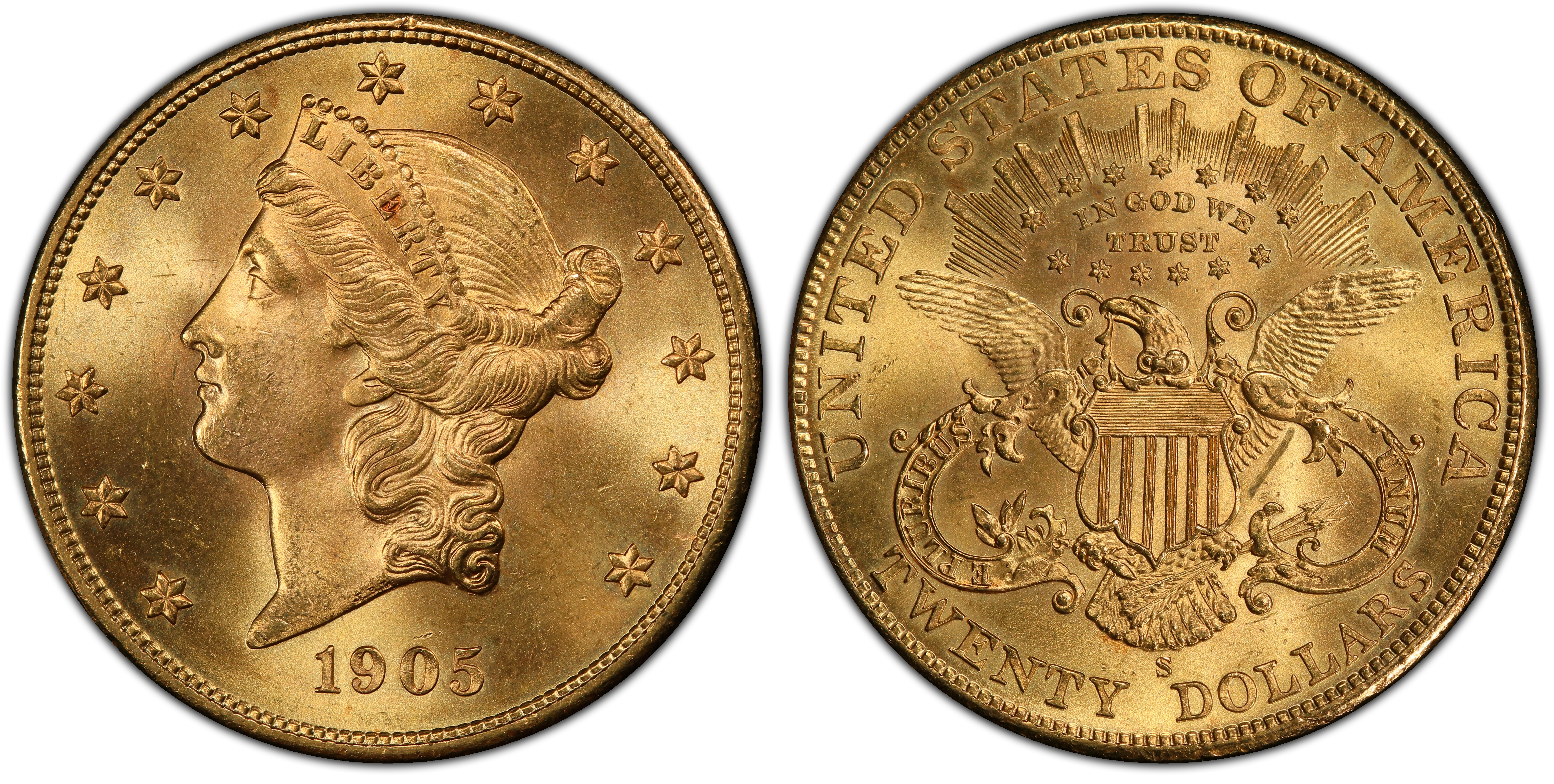
PCGS MS65
- PCGS #:
- 9048
- Designer:
- James Barton Longacre
- Edge:
- Reeded
- Diameter:
- 34.00 millimeters
- Weight:
- 33.40 grams
- Mintage:
- 1,813,000
- Mint:
- San Francisco
- Metal:
- 90% Gold, 10% Copper
- Auction Record:
- $36,000 • MS65+ • 06-20-2021 • Heritage Auctions
Go To Grade
Current Auctions - PCGS Graded
Current Auctions - NGC Graded
For Sale Now at Collectors Corner - PCGS Graded
For Sale Now at Collectors Corner - NGC Graded
Rarity and Survival Estimates Learn More
| Survival Estimate | |
|---|---|
| All Grades | 9,750 |
| 60 or Better | 4,000 |
| 65 or Better | 12 |
| Numismatic Rarity | |
|---|---|
| All Grades | R-3.0 |
| 60 or Better | R-4.2 |
| 65 or Better | R-9.5 |
| Relative Rarity By Type All Specs in this Type | |
|---|---|
| All Grades | 39 / 73 |
| 60 or Better | 45 / 73 TIE |
| 65 or Better | 21 / 73 TIE |
| Relative Rarity By Series All Specs in this Series | |
|---|---|
| All Grades | 112 / 148 |
| 60 or Better | 115 / 148 TIE |
| 65 or Better | 31 / 148 TIE |
Condition Census What Is This?
| #1 MS67 PCGS grade |
| #2 MS65 PCGS grade |
| #2 MS65 PCGS grade |
| #2 MS65 PCGS grade |
| #2 MS65 PCGS grade |
| #2 MS65 PCGS grade |
| #2 MS65 PCGS grade |
| #2 MS65 PCGS grade |
| #2 MS65 PCGS grade |
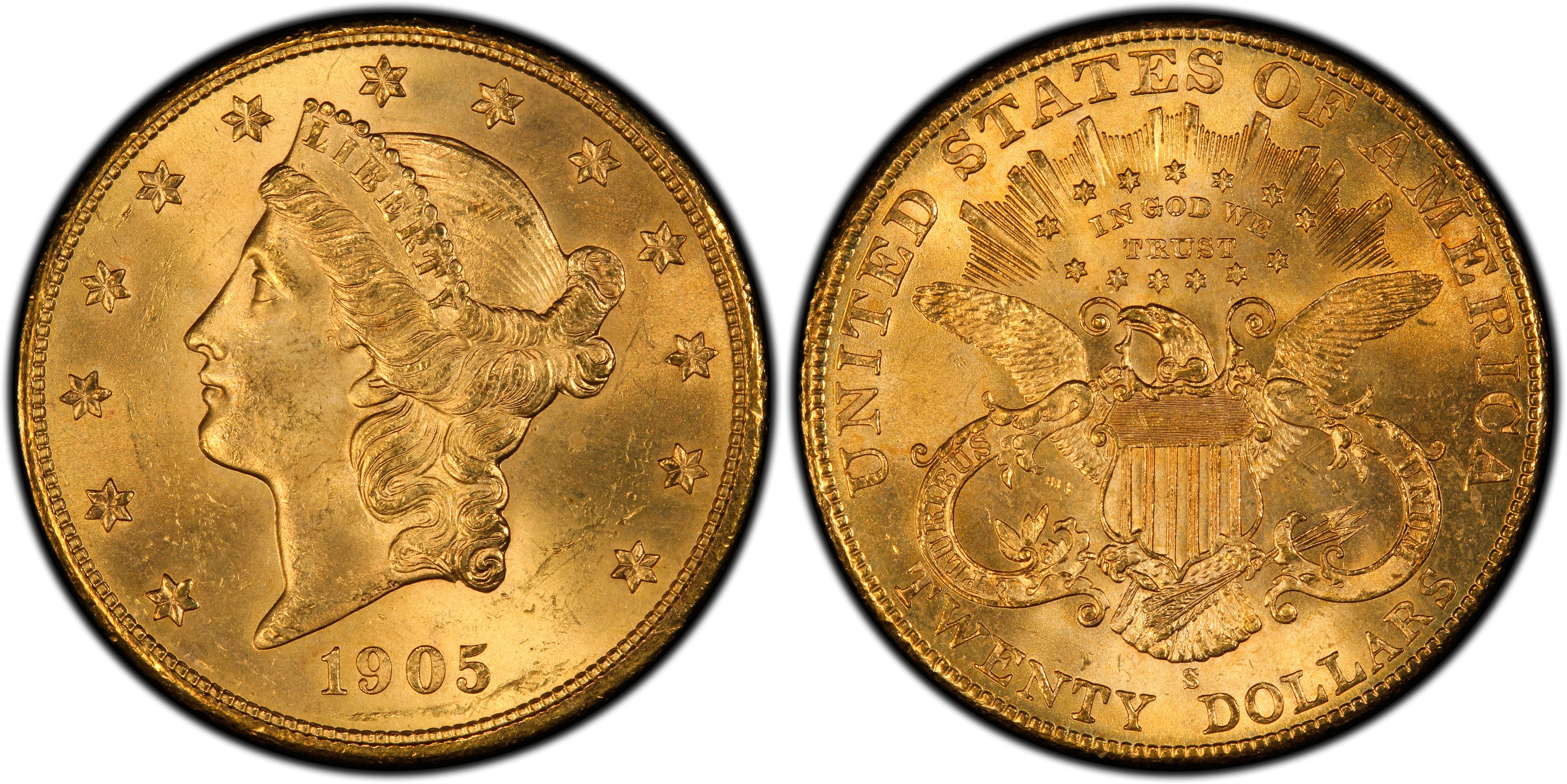 #10 MS64+ PCGS grade
|
David Akers (1975/88):
For years, most collectors and dealers have used mintage figures as their principal guide in determining the rarity of a particular coin. (PCGS CoinFacts editors note: remember, David Akers was writing this in 1982, before PCGS and population reports. But his comments were very accurate for the time and very interesting for us today.) However, as I have stated many times, mintage figures can be very misleading, and the 1905-S is a perfect example of this fact. With a mintage of 1.8 million pieces, the 1905-S should be quite common, even in Unc. Wrong! Choice mint state pieces are very scarce and I have seen no more than a couple of true gems.