
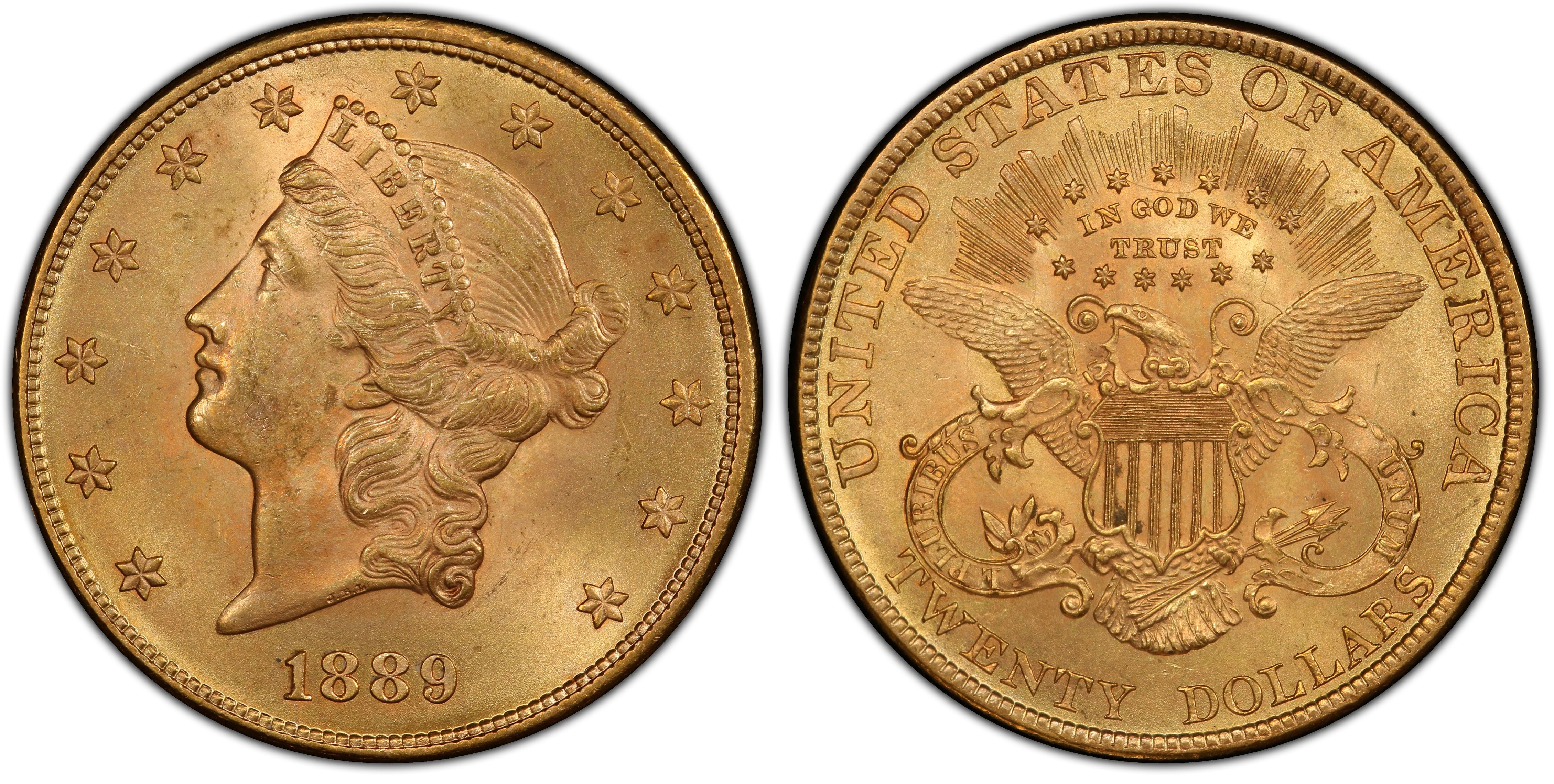
PCGS MS63+
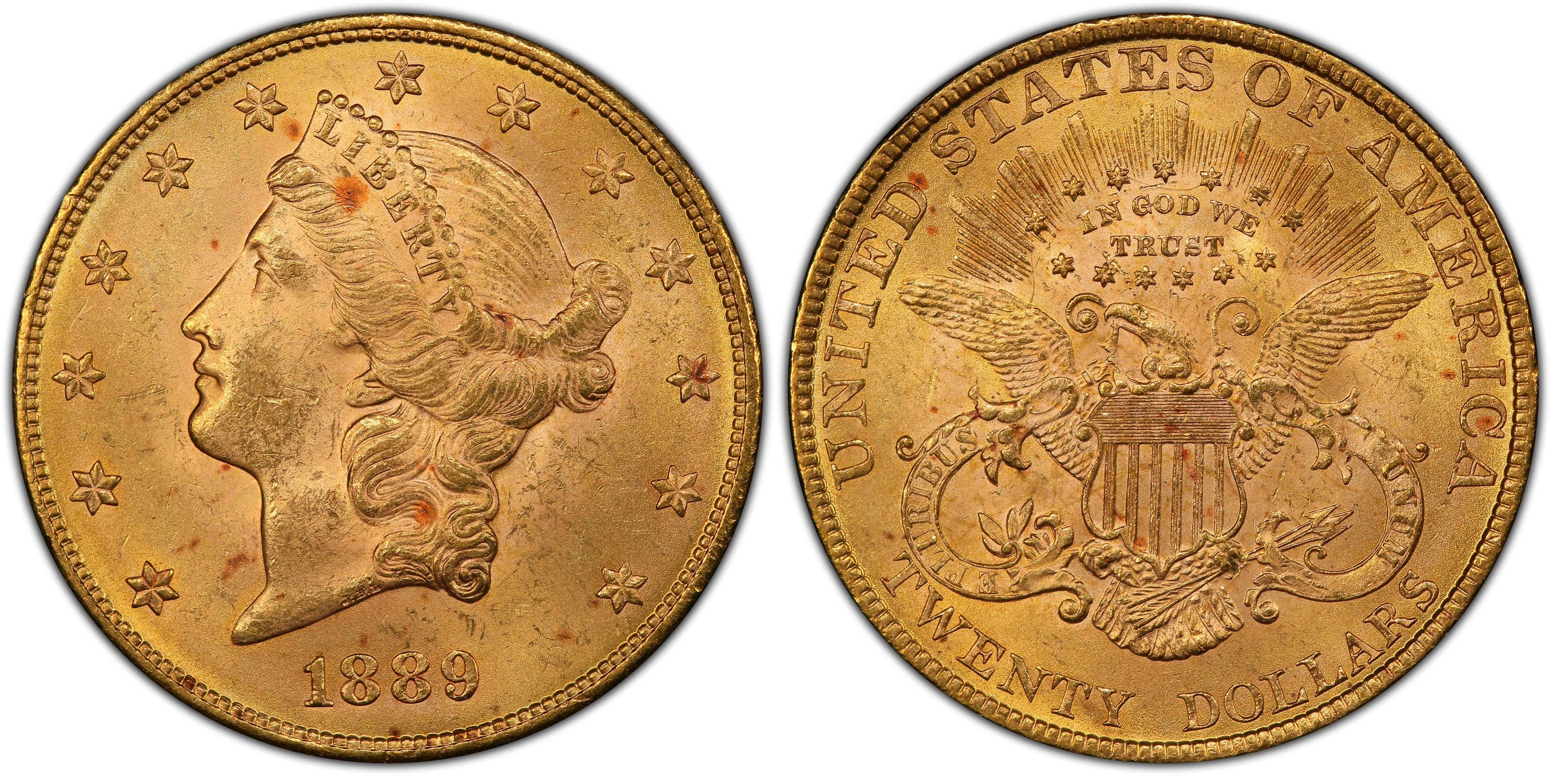
PCGS MS63+
- PCGS #:
- 9010
- Designer:
- James Barton Longacre
- Edge:
- Reeded
- Diameter:
- 34.00 millimeters
- Weight:
- 33.40 grams
- Mintage:
- 44,070
- Mint:
- Philadelphia
- Metal:
- 90% Gold, 10% Copper
- Auction Record:
- $19,800 • MS63+ • 08-09-2020 • Heritage Auctions
Major Varieties
- 1889 $20
Go To Grade
Current Auctions - PCGS Graded
Current Auctions - NGC Graded
For Sale Now at Collectors Corner - PCGS Graded
For Sale Now at Collectors Corner - NGC Graded
Rarity and Survival Estimates Learn More
| Survival Estimate | |
|---|---|
| All Grades | 1,437 |
| 60 or Better | 462 |
| 65 or Better | |
| Numismatic Rarity | |
|---|---|
| All Grades | R-4.8 |
| 60 or Better | R-6.0 |
| 65 or Better | R-10.1 |
| Relative Rarity By Type All Specs in this Type | |
|---|---|
| All Grades | 17 / 73 TIE |
| 60 or Better | 23 / 73 TIE |
| 65 or Better | 1 / 73 |
| Relative Rarity By Series All Specs in this Series | |
|---|---|
| All Grades | 50 / 148 TIE |
| 60 or Better | 84 / 148 TIE |
| 65 or Better | 1 / 148 |
Condition Census What Is This?
| #1 MS65 PCGS grade |
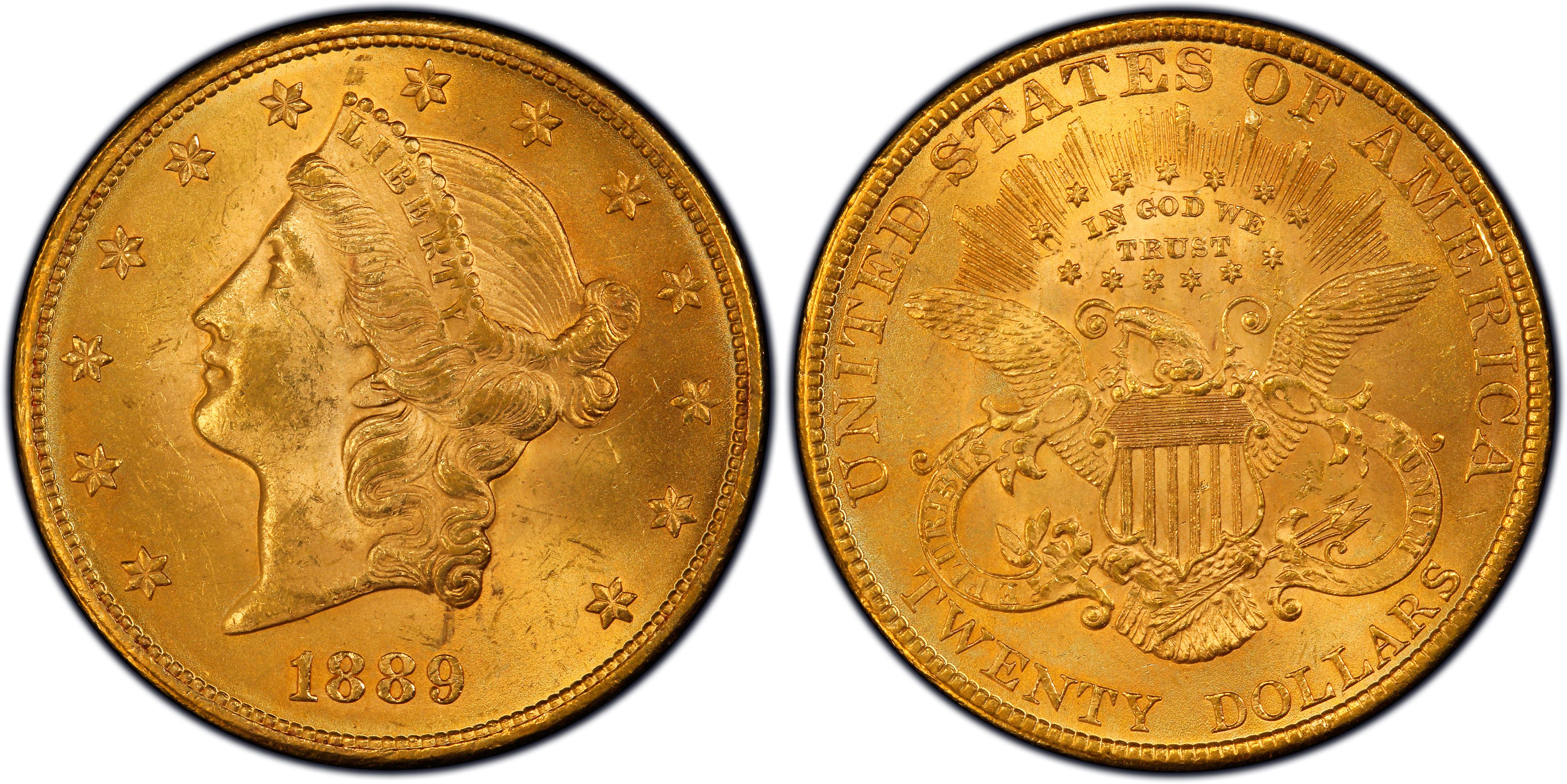 #2 MS63 PCGS grade
|
 #2 MS63 PCGS grade
|
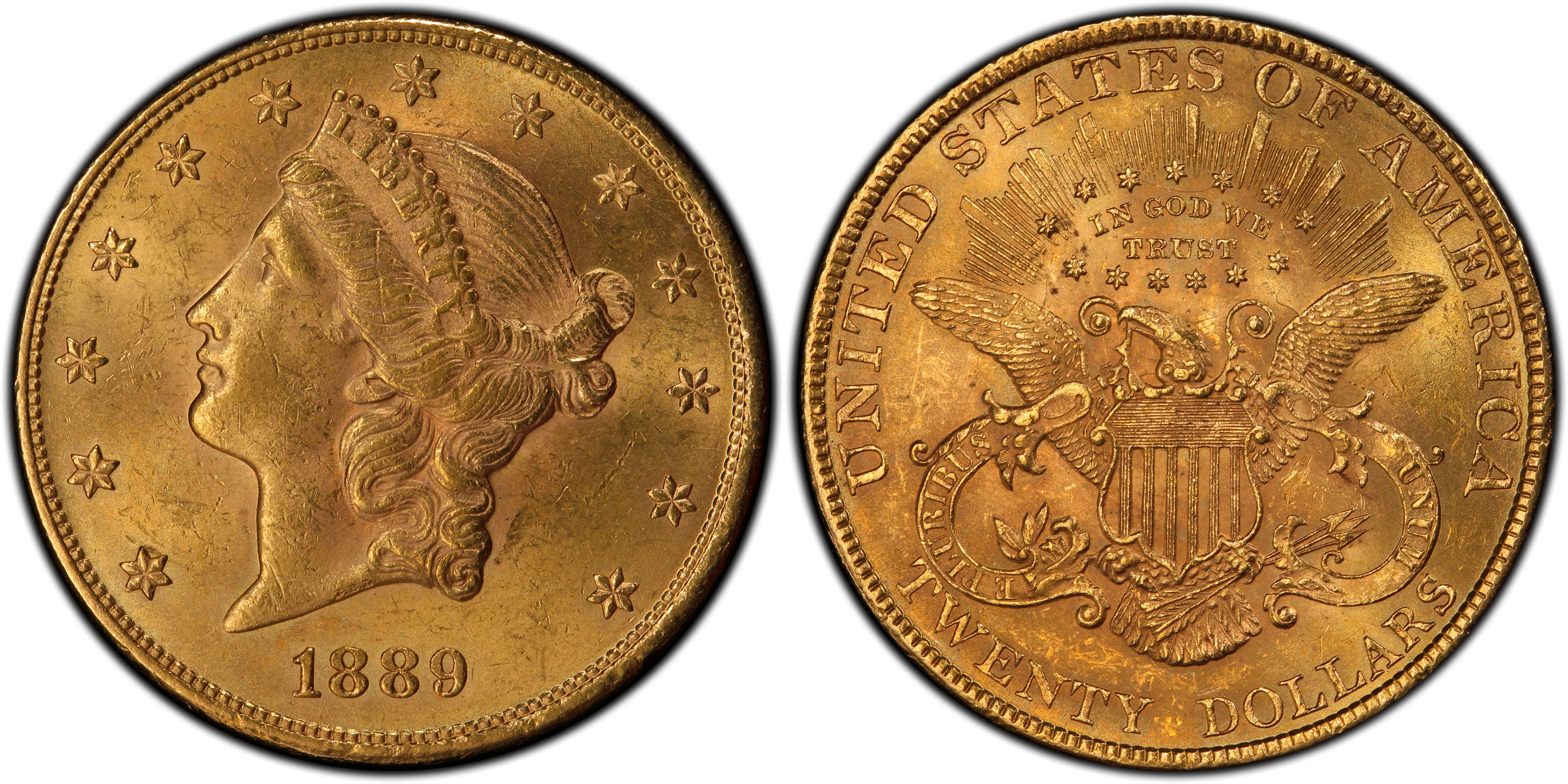 #2 MS63 PCGS grade
|
| #2 MS63 PCGS grade |
| #2 MS63 PCGS grade |
| #2 MS63 PCGS grade |
| #2 MS63 PCGS grade |
| #2 MS63 PCGS grade |
| #2 MS63 PCGS grade |
David Akers (1975/88):
The 1889 is a moderately scarce date but it is not nearly as rare as its low mintage would imply. Overall, it is very similar in rarity to the 1877, 1878 and 1888 but it is not quite as rare as any of them in uncirculated condition. Choice mint state specimens are rare and at the gem level, the 1889 is very rare and almost never available.