
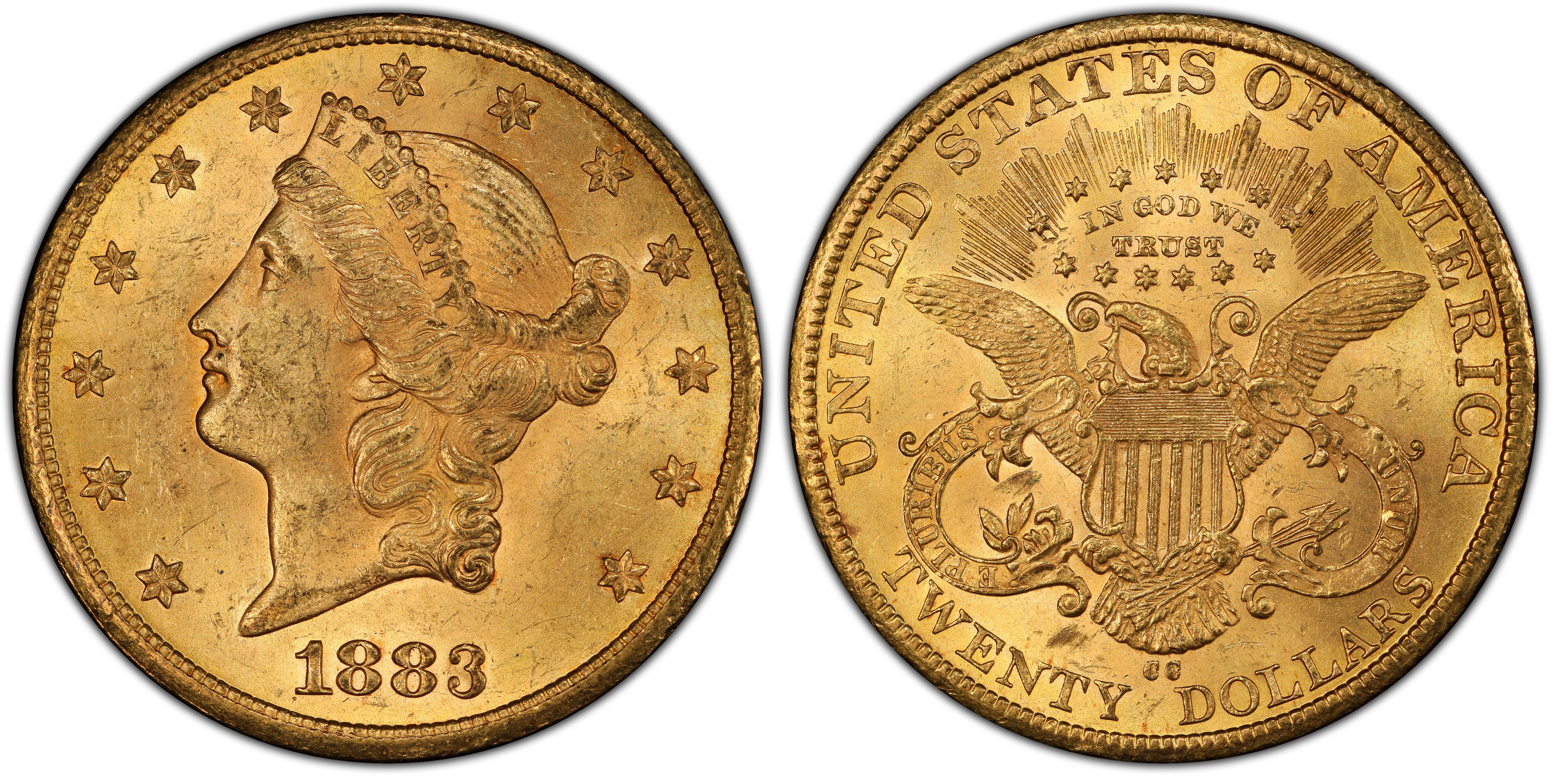
PCGS MS63

PCGS MS63
- PCGS #:
- 8999
- Designer:
- James Barton Longacre
- Edge:
- Reeded
- Diameter:
- 34.00 millimeters
- Weight:
- 33.40 grams
- Mintage:
- 59,962
- Mint:
- Carson City
- Metal:
- 90% Gold, 10% Copper
- Auction Record:
- $84,000 • MS63 • 04-13-2022 • Stack's Bowers
Major Varieties
- 1883-CC $20
Go To Grade
Current Auctions - PCGS Graded
Current Auctions - NGC Graded
For Sale Now at Collectors Corner - PCGS Graded
For Sale Now at Collectors Corner - NGC Graded
Rarity and Survival Estimates Learn More
| Survival Estimate | |
|---|---|
| All Grades | 1,540 |
| 60 or Better | 102 |
| 65 or Better | |
| Numismatic Rarity | |
|---|---|
| All Grades | R-4.7 |
| 60 or Better | R-7.9 |
| 65 or Better | R-10.1 |
| Relative Rarity By Type All Specs in this Type | |
|---|---|
| All Grades | 19 / 73 |
| 60 or Better | 15 / 73 |
| 65 or Better | 1 / 73 |
| Relative Rarity By Series All Specs in this Series | |
|---|---|
| All Grades | 55 / 148 |
| 60 or Better | 67 / 148 |
| 65 or Better | 1 / 148 |
Condition Census What Is This?
| #1 MS63 PCGS grade |
 #1 MS63 PCGS grade
|
| #3 MS62 PCGS grade |
| #3 MS62 PCGS grade |
| #3 MS62 PCGS grade |
| #3 MS62 PCGS grade |
| #3 MS62 PCGS grade |
| #3 MS62 PCGS grade |
| #3 MS62 PCGS grade |
| #3 MS62 PCGS grade |
David Akers (1975/88):
The 1883-CC is one of the more common Carson City Mint Double Eagles, rarer than only the 1876-CC, 1890-CC, 1884-CC and 1875-CC. The 1883-CC is available in a wide range of grades from VF to average uncirculated. Better than Unc-60, the population thins out quickly and although choice mint state specimens are known, they are quite rare.