

PCGS MS63

PCGS MS63
- PCGS #:
- 8992
- Designer:
- James Barton Longacre
- Edge:
- Reeded
- Diameter:
- 34.00 millimeters
- Weight:
- 33.40 grams
- Mintage:
- 51,420
- Mint:
- Philadelphia
- Metal:
- 90% Gold, 10% Copper
- Auction Record:
- $38,400 • MS62 • 04-13-2022 • Stack's Bowers
Go To Grade
Current Auctions - PCGS Graded
Current Auctions - NGC Graded
For Sale Now at Collectors Corner - PCGS Graded
For Sale Now at Collectors Corner - NGC Graded
Rarity and Survival Estimates Learn More
| Survival Estimate | |
|---|---|
| All Grades | 975 |
| 60 or Better | 42 |
| 65 or Better | |
| Numismatic Rarity | |
|---|---|
| All Grades | R-5.0 |
| 60 or Better | R-8.6 |
| 65 or Better | R-10.1 |
| Relative Rarity By Type All Specs in this Type | |
|---|---|
| All Grades | 12 / 73 |
| 60 or Better | 10 / 73 TIE |
| 65 or Better | 1 / 73 |
| Relative Rarity By Series All Specs in this Series | |
|---|---|
| All Grades | 39 / 148 |
| 60 or Better | 47 / 148 TIE |
| 65 or Better | 1 / 148 |
Condition Census What Is This?
 #1 MS63 PCGS grade
|
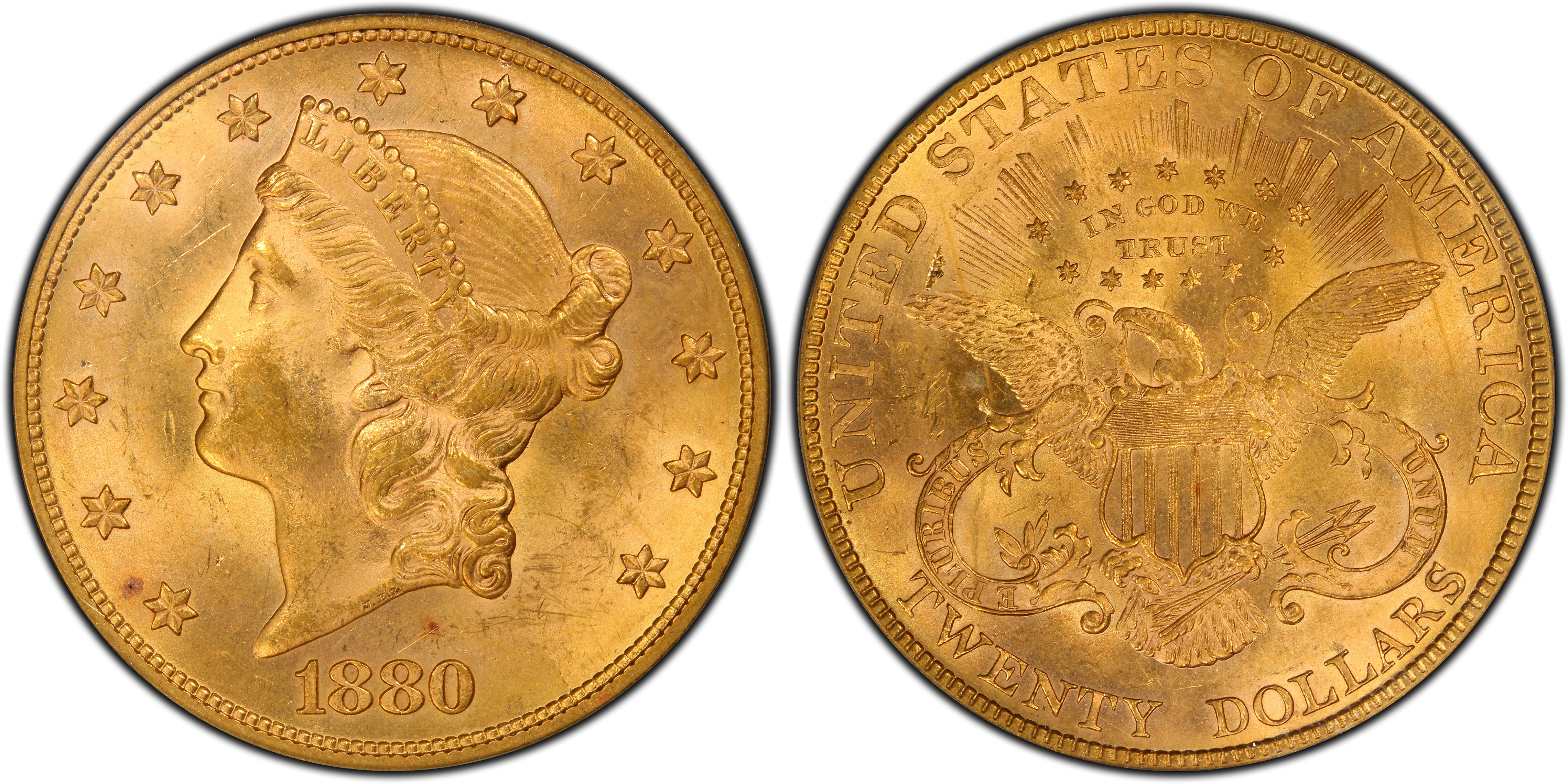 #1 MS63 PCGS grade
Norweb - "Pleasantville" |
| #1 MS63 PCGS grade |
| #1 MS63 PCGS grade |
| #5 MS62 PCGS grade |
| #5 MS62 PCGS grade |
| #5 MS62 PCGS grade |
| #5 MS62 PCGS grade |
| #5 MS62 PCGS grade |
| #10 MS61 PCGS grade |
David Akers (1975/88):
The 1880 is very similar in overall rarity to the 1879 but it is even more difficult to obtain in choice uncirculated condition. As a date, the 1880 is also on a par rarity-wise with the 1855, 1856, 1857, 1858, 1863, 1864, 1869 and 1870. It is more rare in unc. than the first four listed but not quite as rare in mint state as the last four. The majority of 1880 twenties grade VF or EF. In AU condition, the 1880 is very scarce and in average Unc. it is rare. A few choice and gem uncs exist but they are very rare.