

PCGS MS63

PCGS MS63
- PCGS #:
- 8974
- Designer:
- James Barton Longacre
- Edge:
- Reeded
- Diameter:
- 34.00 millimeters
- Weight:
- 33.40 grams
- Mintage:
- 111,151
- Mint:
- Carson City
- Metal:
- 90% Gold, 10% Copper
- Auction Record:
- $48,875 • MS64 • 01-07-2004 • Heritage Auctions
Major Varieties
- 1875-CC $20
Go To Grade
Current Auctions - PCGS Graded
Current Auctions - NGC Graded
For Sale Now at Collectors Corner - PCGS Graded
For Sale Now at Collectors Corner - NGC Graded
Rarity and Survival Estimates Learn More
| Survival Estimate | |
|---|---|
| All Grades | 3,337 |
| 60 or Better | 612 |
| 65 or Better | |
| Numismatic Rarity | |
|---|---|
| All Grades | R-4.3 |
| 60 or Better | R-5.7 |
| 65 or Better | R-10.1 |
| Relative Rarity By Type All Specs in this Type | |
|---|---|
| All Grades | 14 / 31 TIE |
| 60 or Better | 25 / 31 |
| 65 or Better | 1 / 31 |
| Relative Rarity By Series All Specs in this Series | |
|---|---|
| All Grades | 72 / 148 TIE |
| 60 or Better | 89 / 148 TIE |
| 65 or Better | 1 / 148 |
Condition Census What Is This?
| #1 MS64 PCGS grade |
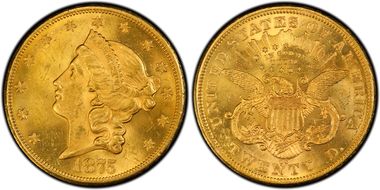 #2 MS63 PCGS grade
|
| #2 MS63 PCGS grade |
| #2 MS63 PCGS grade |
| #2 MS63 PCGS grade |
| #2 MS63 PCGS grade |
| #2 MS63 PCGS grade |
| #2 MS63 PCGS grade |
| #2 MS63 PCGS grade |
| #2 MS63 PCGS grade |
David Akers (1975/88):
Despite the fact that its mintage is slighty less than the mintage of the 1874-CC, the 1875-CC is a much commoner date than the 1874-CC. The difference in rarity is especially evident in Unc. where the 1874-CC is rare and the 1875-CC is relatively common. As a date, the 1875-CC is one of the three most common Carson City Mint twenties (the 1884-CC and the 1890-CC are the other two) and it is also one of the most common in mint state. A substantial number of uncs (literally hundreds of pieces) exist and only in gem condition can the 1875-CC be considered rare.