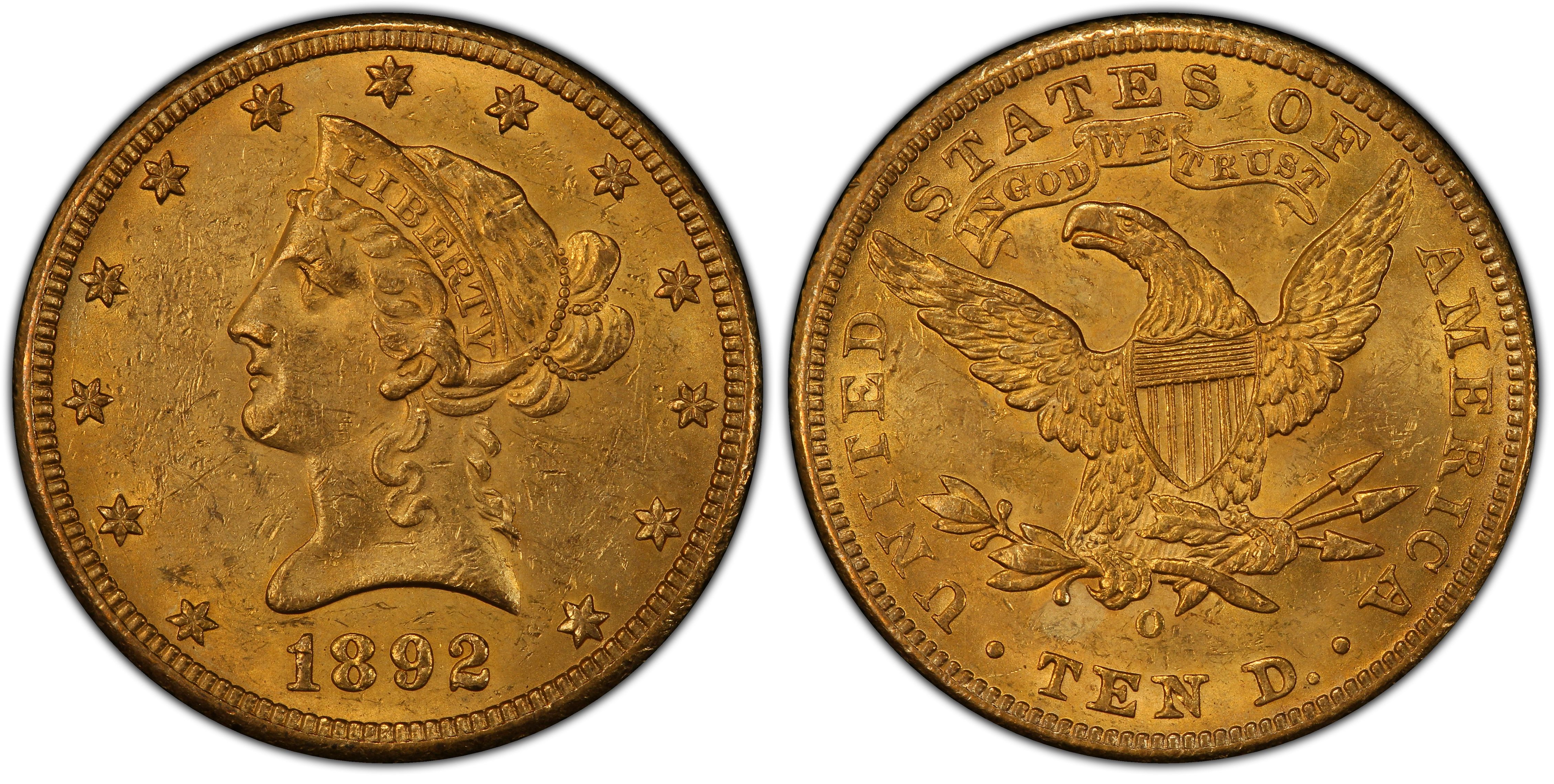
PCGS MS63
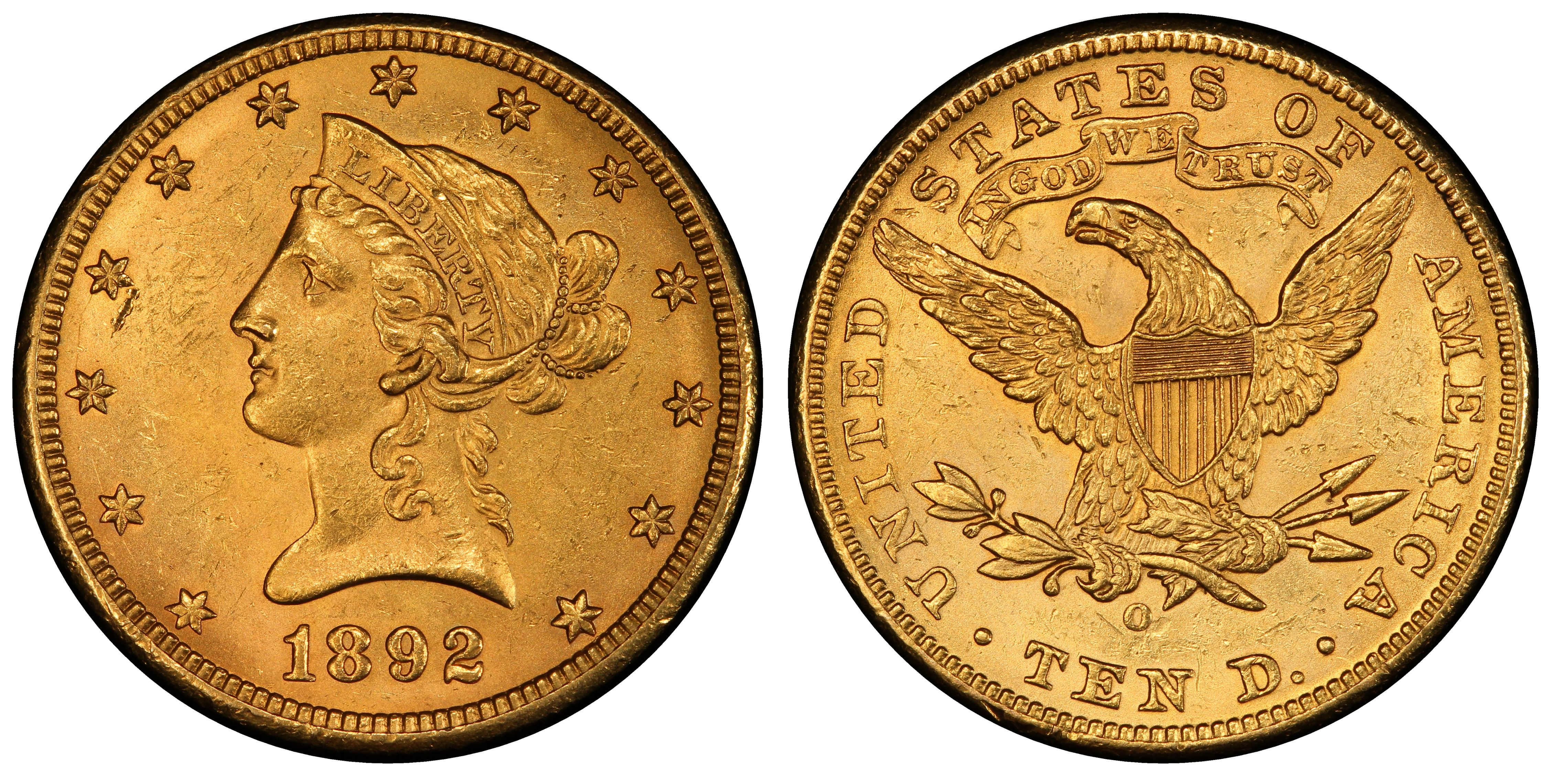
PCGS MS63
- PCGS #:
- 8723
- Designer:
- Christian Gobrecht
- Edge:
- Reeded
- Diameter:
- 26.80 millimeters
- Weight:
- 16.70 grams
- Mintage:
- 28,688
- Mint:
- New Orleans
- Metal:
- 90% Gold, 10% Copper
- Auction Record:
- $12,000 • MS62+ • 04-13-2022 • Stack's Bowers
Major Varieties
- 1892-O $10
Go To Grade
Current Auctions - PCGS Graded
Current Auctions - NGC Graded
For Sale Now at Collectors Corner - PCGS Graded
For Sale Now at Collectors Corner - NGC Graded
Rarity and Survival Estimates Learn More
| Survival Estimate | |
|---|---|
| All Grades | 1,250 |
| 60 or Better | 600 |
| 65 or Better | |
| Numismatic Rarity | |
|---|---|
| All Grades | R-4.9 |
| 60 or Better | R-5.8 |
| 65 or Better | R-10.1 |
| Relative Rarity By Type All Specs in this Type | |
|---|---|
| All Grades | 67 / 117 TIE |
| 60 or Better | 59 / 117 TIE |
| 65 or Better | 1 / 117 |
| Relative Rarity By Series All Specs in this Series | |
|---|---|
| All Grades | 133 / 183 TIE |
| 60 or Better | 112 / 183 TIE |
| 65 or Better | 1 / 183 |
Condition Census What Is This?
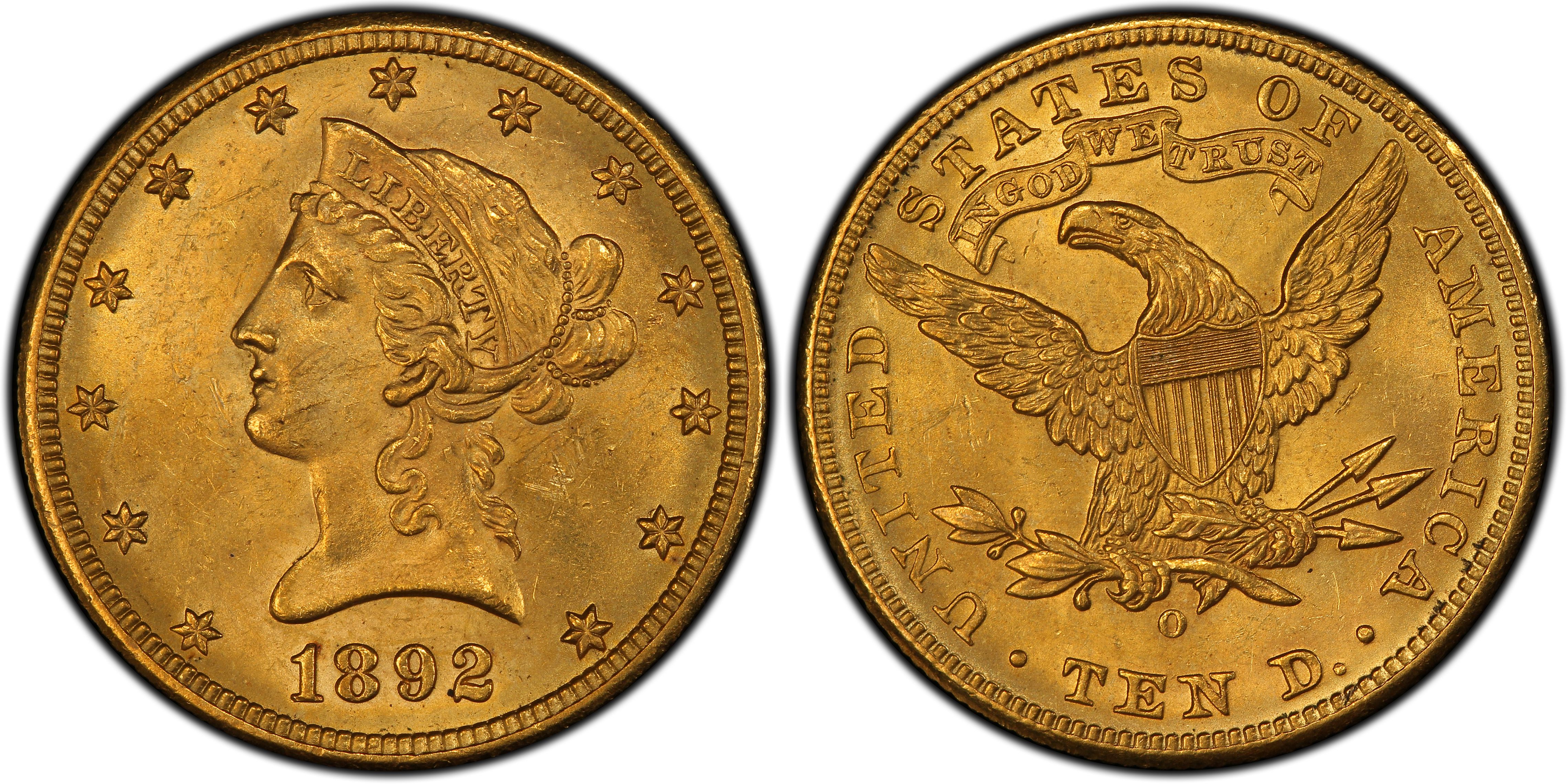 #1 MS63+ PCGS grade
David Hall Collection - Bob R. Simpson Collection |
 #1 MS63 PCGS grade
Heritage 11/2012:5101, $7,343.75 - Heritage 2/2013:21024, $7,931.25 |
|
#1 MS63 PCGS grade
|
| #1 MS63 PCGS grade |
| #1 MS63 PCGS grade |
| #1 MS63 PCGS grade |
| #1 MS63 PCGS grade |
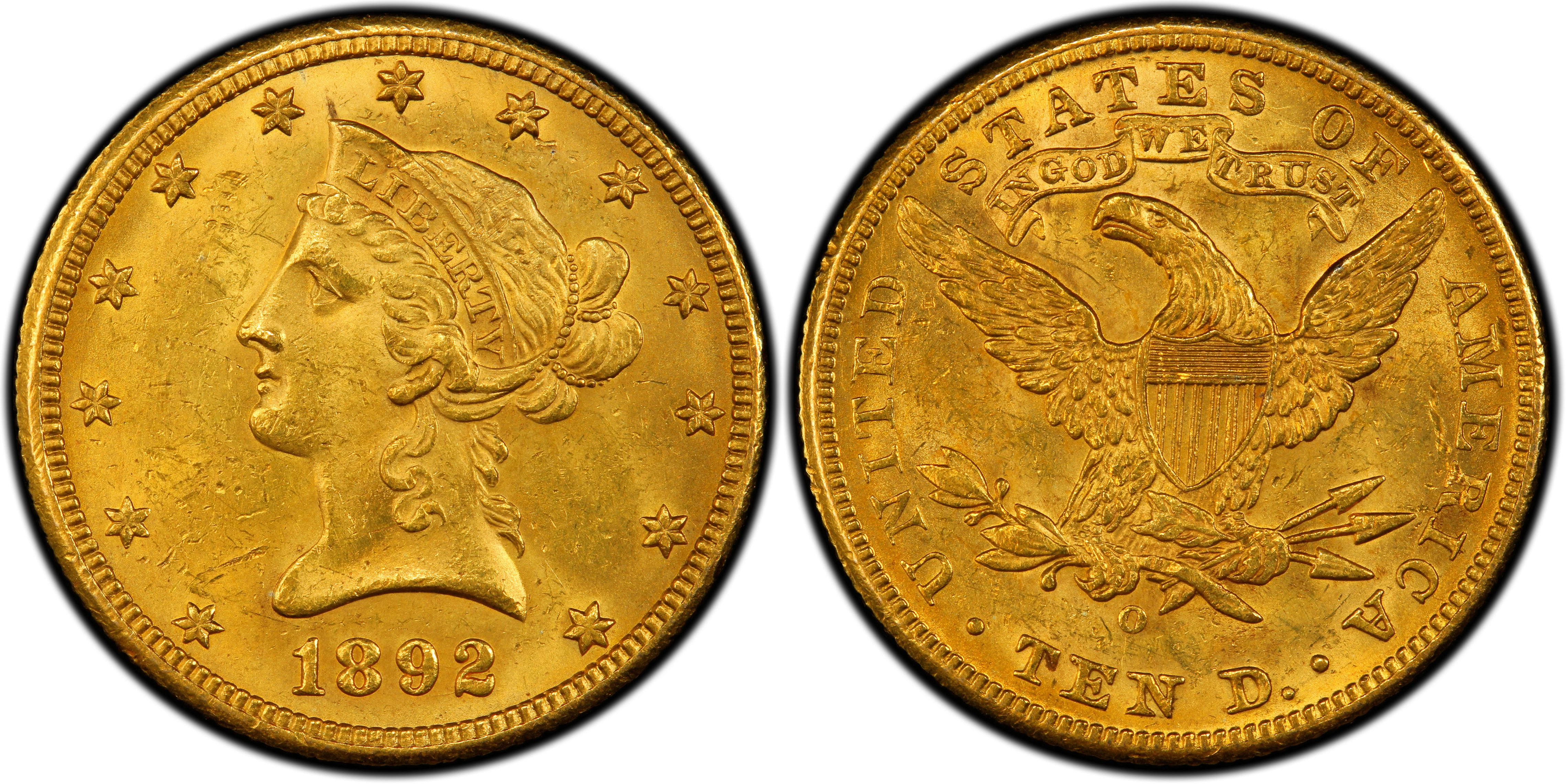 #8 MS62+ PCGS grade
|
 #8 MS62+ PCGS grade
|
| #10 MS62 PCGS grade |
Doug Winter:
The 1892-O is among the more common New Orleans eagles. Its total population appears to have doubled since the first edition of my book. I am aware of at least one significant hoard entering the market around 1994-95 with dozens of Uncirculated pieces coming from this source. Since then, at least one other substantial group has been located. This date is virtually non-existent below AU and it appears that most examples never circulated.
The 1892-O eagle is a common issue in grades up to and including MS61. It is moderately scarce in MS62 and moderately abraded examples at the high end of this grade are actually scarce. I have not personally seen one better than MS62 although PCGS has graded [several in] MS63.
STRIKE: The obverse often shows some weakness on the high spots as well as on a number of the stars. The reverse may be slightly weak on the eagle’s neck.
SURFACES: The surfaces are almost always seen with extensive abrasions on the obverse and the reverse.
LUSTER: The luster is usually frosty with a slightly subdued, granular texture. On many coins, the luster is impaired as a result of numerous clusters of abrasions in the fields.
COLORATION: The coloration most often seen is a rich orange-gold. While a number have been dipped in recent years, it is still fairly easy to find a coin with pleasing natural hues.
EYE APPEAL: Most 1892-O eagles are lustrous and many have good color but nearly every known example is very heavily abraded. Some have a distinctive “inner ring” of color on the obverse. I have never seen one that stood out as being decidedly better than the hundreds of pieces known in the MS60 to MS62 range.
DIE CHARACTERISTICS: There are no prominent die characteristics noted on the obverse or the reverse.
MAJOR VARIETIES: There is a single variety known.
Variety One: The date is slightly low in the field and appears to be closer to the denticles than to the truncation. The mintmark is small and squat with a shape not seen on any other earlier-dated New Orleans eagles of this type. It is far from the arrow feather and placed over the space between the E and the N in TEN.
The 1892-O eagle is a common issue in grades up to and including MS61. It is moderately scarce in MS62 and moderately abraded examples at the high end of this grade are actually scarce. I have not personally seen one better than MS62 although PCGS has graded [several in] MS63.
STRIKE: The obverse often shows some weakness on the high spots as well as on a number of the stars. The reverse may be slightly weak on the eagle’s neck.
SURFACES: The surfaces are almost always seen with extensive abrasions on the obverse and the reverse.
LUSTER: The luster is usually frosty with a slightly subdued, granular texture. On many coins, the luster is impaired as a result of numerous clusters of abrasions in the fields.
COLORATION: The coloration most often seen is a rich orange-gold. While a number have been dipped in recent years, it is still fairly easy to find a coin with pleasing natural hues.
EYE APPEAL: Most 1892-O eagles are lustrous and many have good color but nearly every known example is very heavily abraded. Some have a distinctive “inner ring” of color on the obverse. I have never seen one that stood out as being decidedly better than the hundreds of pieces known in the MS60 to MS62 range.
DIE CHARACTERISTICS: There are no prominent die characteristics noted on the obverse or the reverse.
MAJOR VARIETIES: There is a single variety known.
Variety One: The date is slightly low in the field and appears to be closer to the denticles than to the truncation. The mintmark is small and squat with a shape not seen on any other earlier-dated New Orleans eagles of this type. It is far from the arrow feather and placed over the space between the E and the N in TEN.